Friday, 12 September 2014

Review - Ingenious: Travel Edition

Ingenious: Travel Edition


Ingenious: Travel Edition
Published by The Green Board Game Co.
Designed by Reiner Knizia
For 2 players, aged 8 to adult
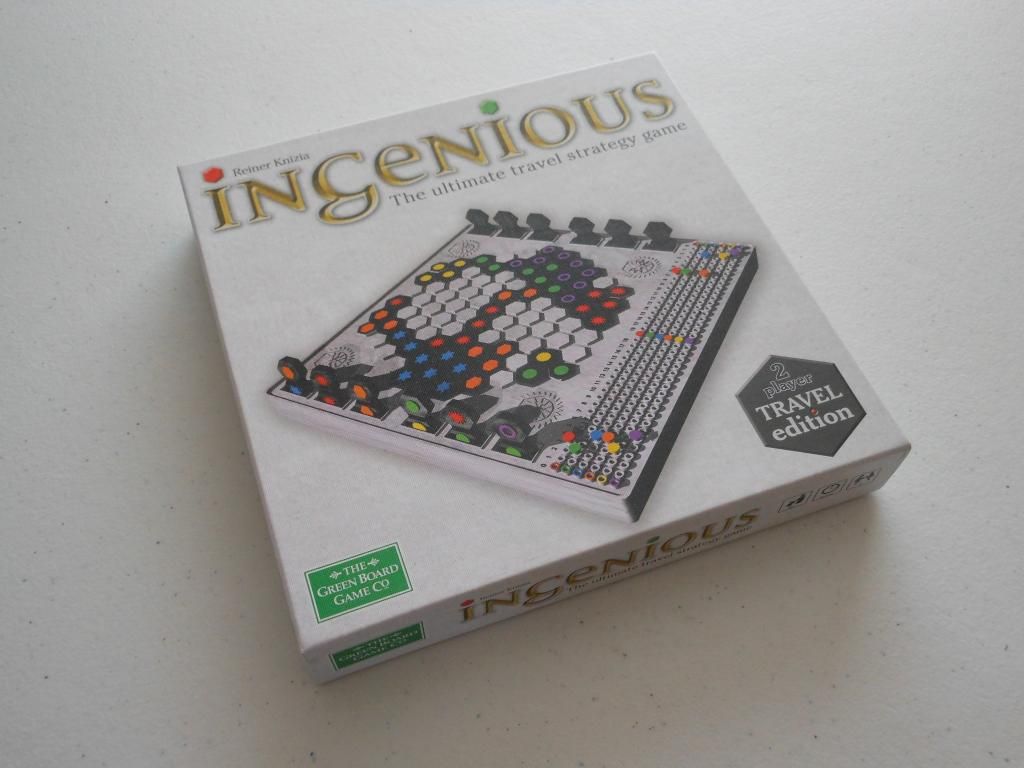
Ingenious: Travel Edition box
It isn't much to look at, I admit...


I've heard about this thing called a vacation, and recently I've been thinking it might be nice to try one.

As a novelist, freelance editor and writer, blogger, dad, and husband, free time isn't something I tend to have in huge quantities.

Now, don't get me wrong; I've done that thing where you go to another country. For example, for Christmas 2013, I took my daughter to Disneyland Paris. It was the most magical experience, and the look of sheer delight on my daughter's face as we passed through the main gates into a world of larger-than-life Disney characters and artificial snow is something I hope I never forget.

It even made going to France tolerable.

(I'm joking. I'm joking.)

(Nothing would make that tolerable.*)

However, going to Disneyland wasn't exactly a vacation. It was a week of running to get to different rides, running to beat other people to the queue to see the princesses, running to find somewhere to eat that wasn't booked solid, running to get a good spot before the parades started, and just running to fit as much as possible into each day.

Endless running.

I still have this recurring nightmare where Mickey Mouse chases me down a long corridor that goes on forever.

But that's besides the point.

The point is, when I was packing for my trip to Disneyland, I optimistically slotted a few games into my luggage, hoping that I would have some time to play games with my wife in the evening while my daughter slept.

What was I thinking? My daughter didn't sleep.

The games never even made it out of the luggage.

But one of the games I packed was Ingenious: Travel Edition. A cute, portable edition of the classic abstract game by Reiner Knizia.

Ingenious is a simple game in which players use tiles shaped like two hexagons fused together with a symbol on each hexagon. At any one time, a player has six pieces in hand, and on a turn, players simply place one piece on the board.
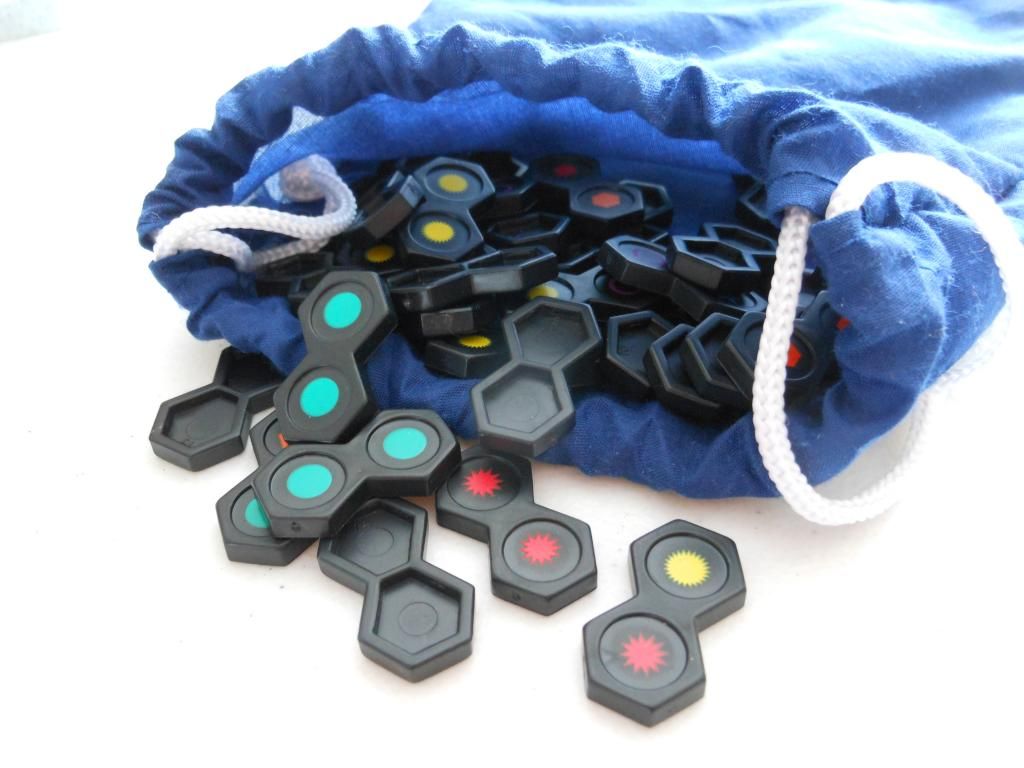
Ingenious: Travel Edition pieces
The cute playing pieces.


Scoring is just as straightforward. When you place a piece, each symbol has up to five adjacent spaces, and these represent the directions in which it is possible to score. You add up all the symbols in a continuous line, in each of the five directions, that match the symbol on the piece played. You score that many points in that colour.
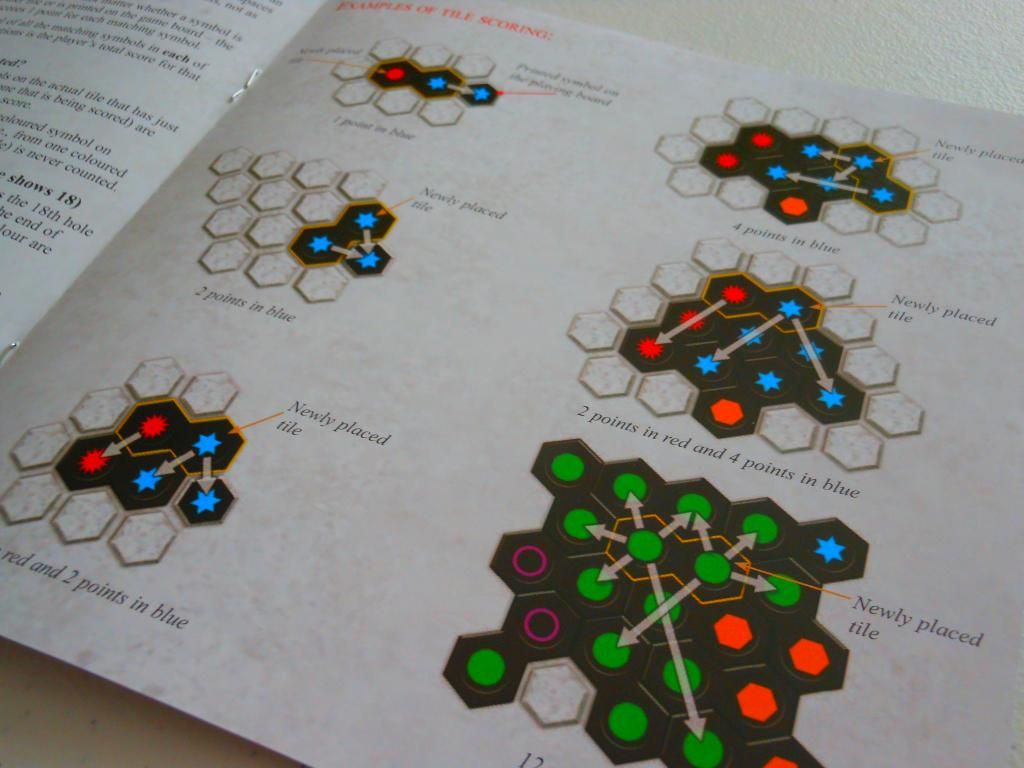

Ingenious: Travel Edition rules
A diagram for scoring, because my description isn't very good.


But here's where it gets really fun: At the end of the game, your final score is your lowest score out of the six different symbols. That means you need to constantly balance what you are doing. Sure, you could score 18 points in blue stars over the course of the game, but if you only score 10 purple rings, then your final score is 10.

Ingenious: Travel Edition playing pieces
More of those cute playing pieces.


The only other rule of note is that, if you score 18 points in any symbol, you get to shout "Ingenious" and place another piece, creating the opportunity to string together combos and really get ahead of your opponent.

And that's basically the whole game. Super streamlined, easy to teach, and about as clever as it gets.

Considering the game boils down to the simple act of placing a single tile, there is an incredible amount of strategy and tactics. Do you play a tile to block your opponent from scoring? Do you race to score lots of points in a single symbol in order to get bonus turns? Do you try to keep all your scores level so you can string together an epic turn where you hit 18 points with multiple symbols one after another?

And when it is your opponent's turn... Oh, the agony. That moment where you know the piece you want to play. You know where you want to play it.

And then your opponent reaches for a tile...

Not there. Don't place it there. Not there. No.

No...

AAARRRRGGGGHHHH!

Infuriating, hilarious, and yes... ingenious.

I have had my copy of Ingenious: Travel Edition for some time now. It was bought for me by a good friend, and I have played it a lot. It has a lovely moulded plastic board, with cute moulded pieces that lock into place so nothing moves around while you are travelling; and it has sweet scoring pegs that remind me of that old game Mastermind.

Ingenious: Travel Edition board
The board, moulded in plastic to prevent pieces sliding around.


Unfortunately, being a travel edition, everything is very small. The pegs are difficult to manipulate, and the playing pieces aren't big enough to feel substantial as you drop them onto the board.

Worst of all, the travel edition is restricted to just two players.

That is why I didn't hesitate to buy the "full-scale" version of Ingenious when I found it in one of my local charity shops (still sealed, and priced at just £3, which is silly). Since then, the travel edition hasn't had a look in, and to be fair, I cannot see myself fumbling around with those little pegs anymore.

As such, despite being a superb game, Ingenious: Travel Edition is not staying in my collection.

I mean, sure, I could keep it for when I go on a vacation sometime. But really, when is it likely I'm ever going to do that?


* Honestly, I am joking. My time in Disneyland Paris was an absolute joy, and the people there were amazing.

I'm going to ramble now... You don't need to read this; it has nothing to do with games.

Every day I queued with my daughter to see a princess. For anybody who has never done this, it involves waiting for around two to three hours in a long corridor with no seats. At the end of the corridor, there are two different screens, and behind each screen is a princess. You get to see one of them, and you do not get to pick.

My daughter had been pestering me to see Rapunzel every day.

Every day we saw Not-Rapunzel.

On the very last day, we got up to the screens, and the woman working the gate smiled and told us we would be going through the screen on the left. While we waited, I took the chance to talk to her, and explained that we really wanted to see Rapunzel, and so far we had not been able to. She smiled kindly at my daughter, and them motioned me towards the screen on the right. Not the one on the left.

We rounded the corner, and there was Rapunzel. My daughter nearly died on the spot. I almost burst into tears. And as Rapunzel chatted to my daughter (and my daughter explained how her favourite princess was Aerial!), the woman who had guided us to this screen popped her head around to see how much happiness her small act of kindness had generated.

I never got to thank that woman. I don't even know her name, and I doubt she will ever read this. And she has probably done the same thing for thousands of families, and for her it might not have been a big deal. But that woman made my daughter's holiday complete, and she enabled me to do something that every dad wants to do for his kids... Make a dream come true.

Wednesday, 20 August 2014

Review - Trivial Pursuit DVD: The Lord of the Rings Trilogy Edition

Trivial Pursuit DVD: The Lord of the Rings Trilogy Edition


Trivial Pursuit DVD: The Lord of the Rings Trilogy Edition
Published by Parker Brothers
Designed by committee

For 2-4 victims, who are old enough to watch The Lord of the Rings movies

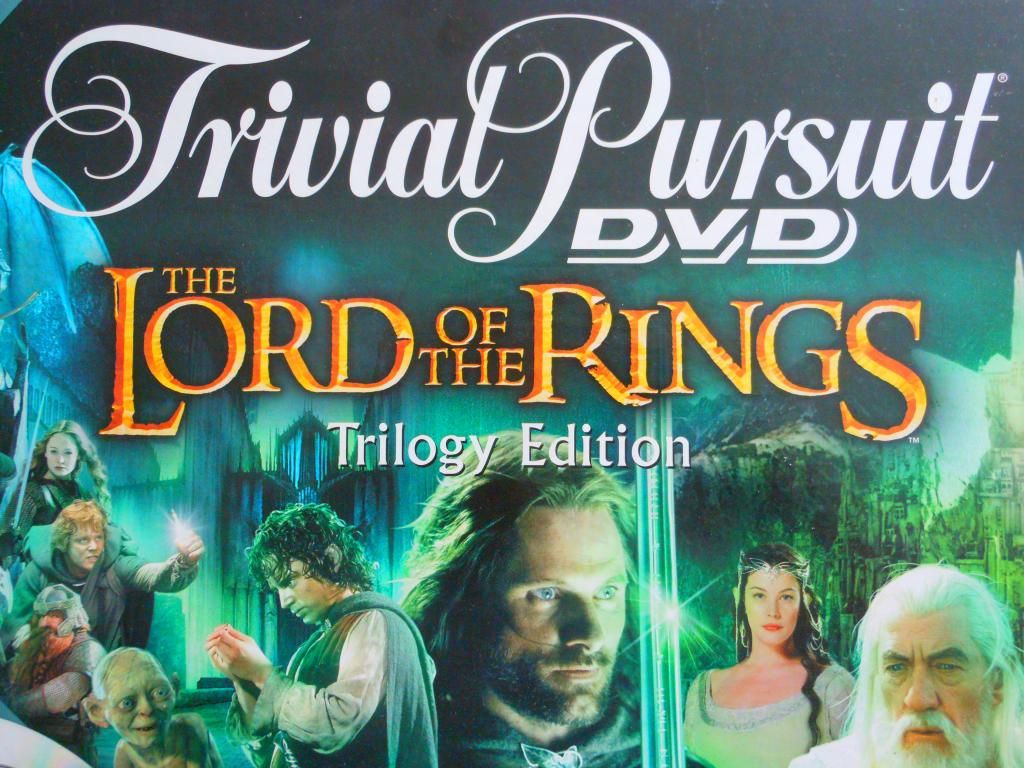
Trivial Pursuit DVD: The Lord of the Rings Trilogy Edition box
Look at Gandalf... He has just been asked a tough question, I reckon.


I love board games. You should know that by now.

But not all board games.

I am a huge fan of thematic games that draw you into a story: Those games that allow you to explore a world with a gradually evolving character, facing insurmountable odds, and triumphing in the face of evil. Give me a fantasy setting, a sword to swing, and a dragon to slay, and I am one happy camper.

My fondness for fantastic adventures probably stems from my love of The Lord of the Rings (the books and the movies, I don't discriminate), although I find it interesting that many games based on the works of Tolkien are a bit shit... But that's another story.

While thematic games, storytelling games, and deeply strategic games fill me with joy, other types of games fill me with dread. For example, I have a strong dislike for word games, which I find terminally dull.

However, what I really hate, are trivia games.

I find trivia games pointless. They introduce pawns, and dice, and boards, and a set of rules, and... Why? If you want to play a trivia game, ask people a bunch of questions. The winner is the person who answers the most questions correctly. You don't need all those other things. You don't need to roll dice and move around a board.

You don't need Trivial bloody Pursuit.

Ah yes, Trivial Pursuit. One of the worst trivia games ever made. Now, that is not a statement I make lightly. It is a statement backed up by countless Christmases gathering around with the family to waste hours of the most magical day of the year doing something mundane.

The game is just poorly designed.

First of all, you have to answer questions often, but only rarely is there any reason to.

You see (for those of you who live under a rock), the aim of Trivial Pursuit is to move around the board collecting "cheeses" or "pies" or whatever you want to call them. There are six different flavours of "cheese," each representing a different type of trivia, and you get the "cheeses" by landing on certain spaces on the board and correctly answering a question from the related category. However, there is only one space on the board for collecting each type of cheese. If you land on any other space on the board, you still get asked a question, but there is no chance of winning a "cheese."

Why?

Why make a game where most of the time you are answering questions for no reason?

Astute readers may also have noted a second major problem: Roll and move. To win those "cheeses" you have to land on the correct spaces, and you have to land by exact count. Most of the game is spent wandering backwards and forwards, desperately attempting to land on one of the spaces you need.

So yes, this makes the game go on forever, especially if, when someone finally lands on the correct space, they get the bloody question wrong.

Finally, Trivial Pursuit has the same major flaw that all trivia games have: The person who knows the most has a massive advantage, and is likely to steamroll the opposition. This is compounded in Trivial Pursuit, as correctly answering a question allows a player to roll and move again. Play against someone really good, and you could be waiting a long time between turns. (In fact, it is possible for a really good player to win the game in a single turn.)

It is safe to say, I hate Trivial Pursuit.

And this leads us to our interesting experiment for the day... What happens when you combine something I love (The Lord of the Rings) with something I hate (Trivial Pursuit).

The obvious answer is: Trivial Pursuit DVD: The Lord of the Rings Trilogy Edition.

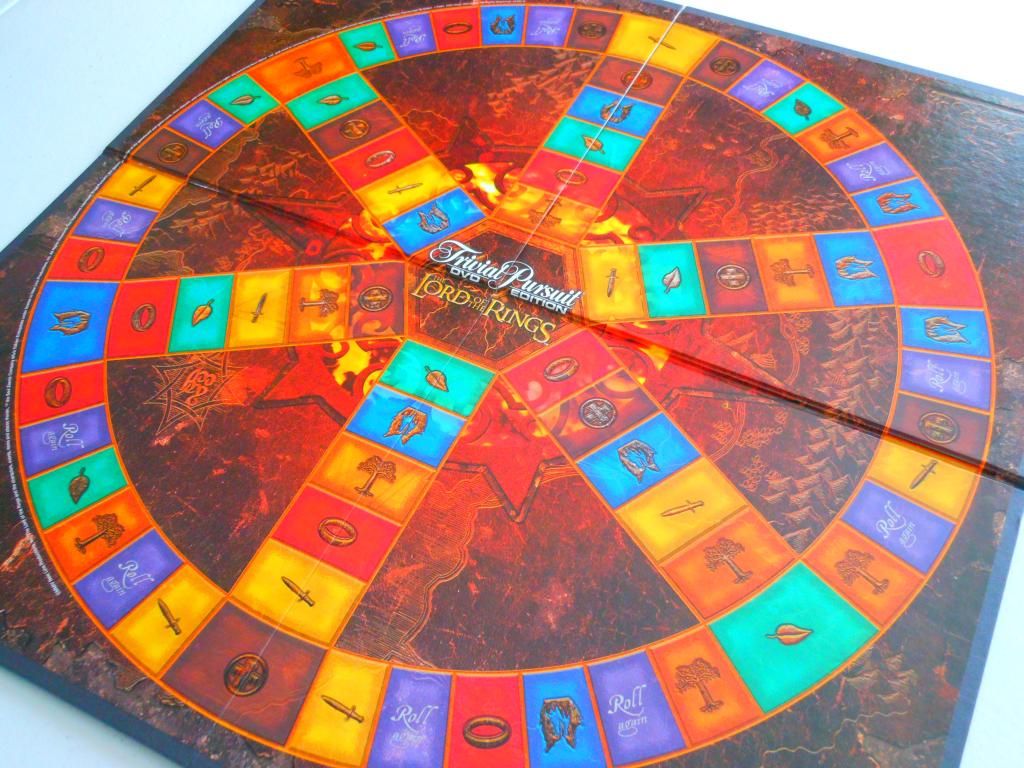
Trivial Pursuit DVD: The Lord of the Rings Trilogy Edition board
It's Trivial Pursuit. What did you expect?


The even more obvious answer is: a bloody horrible mess.

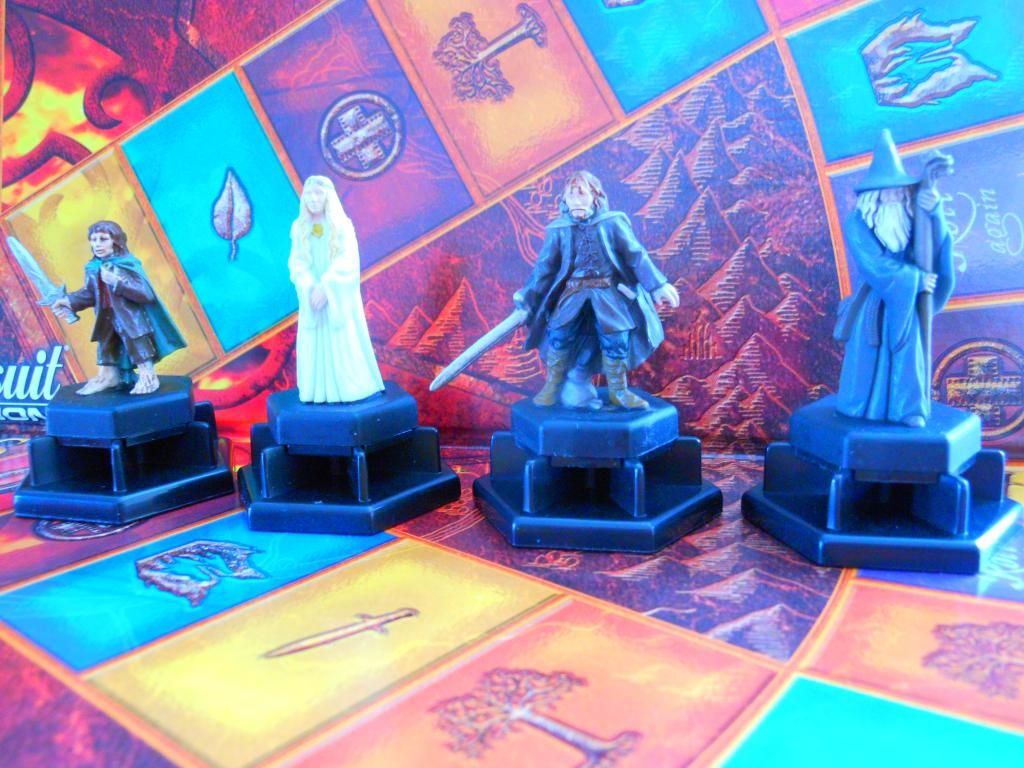
This version of the "classic" family board game plays much the same as any other edition, except all of the questions are based on the characters and events from Tolkien's world (as seen in the movies by Peter Jackson), and the playing pieces are really rather lovely pawns depicting Gandalf, Frodo, Aragorn, and Galadriel.

Trivial Pursuit DVD: The Lord of the Rings Trilogy Edition pawns
The pieces are nicer than this photograph makes them look.


But does basing the game around The Lord of the Rings make it better?

Well, no...

And yes...

But, mainly no.

It is better for me. I know a lot about the subject matter, so I tend to get my questions right more often. Plus, there are two DVDs in the game that have clips from the movie, so occasionally you get to watch some of that.

But there's a problem. It is the problem all trivia games have, only for the first time ever I get to view that problem from the other side of the fence: The person who knows the most is going to win. In this case, that person is me.

Trivial Pursuit DVD: The Lord of the Rings Trilogy Edition cards
Over 2,400 questions! Kill me, already!


And the problem is compounded because the whole game is based on a single specialist subject. Sure, The Lord of the Rings is popular... but not in my gaming group.

My wife has watched the movies a few times, one of my friends has seen the movies once, and one of my friends has read the books. If I was to play against all three of them combined, I would still win, because there are no general knowledge questions to level the playing field.

And so, this game doesn't get played in my house.

Ever.

To be honest, even if I did know enough people who were into the subject matter, it still wouldn't get played.

After all, it's still Trivial Pursuit.

Saturday, 16 August 2014

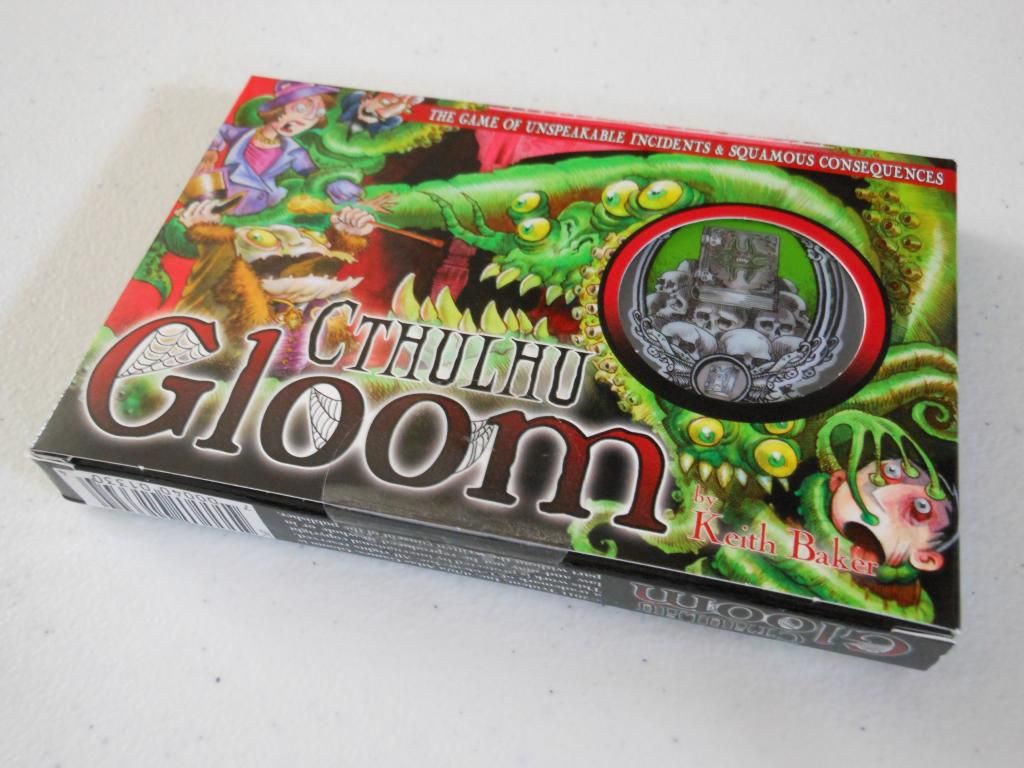
Review - Cthulhu Gloom

Cthulhu Gloom


Cthulhu Gloom
Designed by Keith Baker
Published by Atlas Games

For 2-5 players, aged 13 to adult

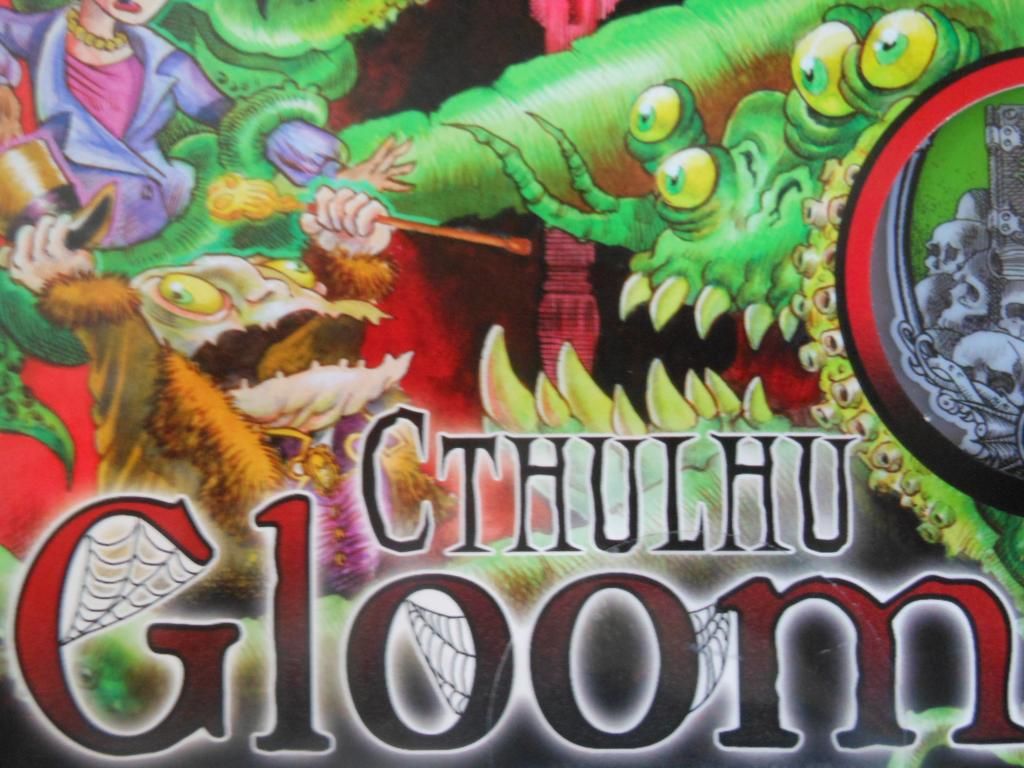
Cthulhu Gloom box
Looks inviting...

Recently, I was in Swindon, which as we all know is a place that terraformers are expressly forbidden from recreating. I was in the lift (or the elevator, depending on where you come from) at the car park, with an elderly woman, and a couple of guys and a woman around my age. We were squashed uncomfortably into the lift with our bags, and that awkward silence descended. You know the kind of silence I mean. The kind that makes you want to break wind.

Anyway, we were all shuffling our feet, and trying not to make eye contact in case anyone thought we were weird. All very British.

Then the woman who was about my age chirped up with, "You ever get that awkward moment where you're in the lift and realise you can't remember what floor your car is on?"

One of the guys smiled, and said, "I was literally just thinking the same thing."

By the time the lift stopped on my floor, everyone was laughing and chatting. I left them to it, with a cheerful, "Good luck" as I headed for my car.

So, why am I telling you this?

Mainly because I don't have any interesting anecdotes to tell you. But also, it reminded me how much better life is when you reach out to the people around you; when you stop and speak to someone rather than casting your eyes down or pretending to check messages on your iPhone. In our lives, we spend so much time being insular, and shutting people out, and putting on a front, and pretending we know where our car is.

When you stop doing that, the world gets a little brighter.

And that is what I love about board games. I love getting people together to talk and interact; to laugh and have fun.

Recently, I found and fell in love with a game called Winter Tales. It is a storytelling game, and it creates the most wonderful setting for a group of friends to craft a fantastical adventure. However, it is a game where the story is more important than winning. That's great; but sometimes people want to laugh and have fun and WIN.

Cthulhu Gloom fits the bill perfectly.

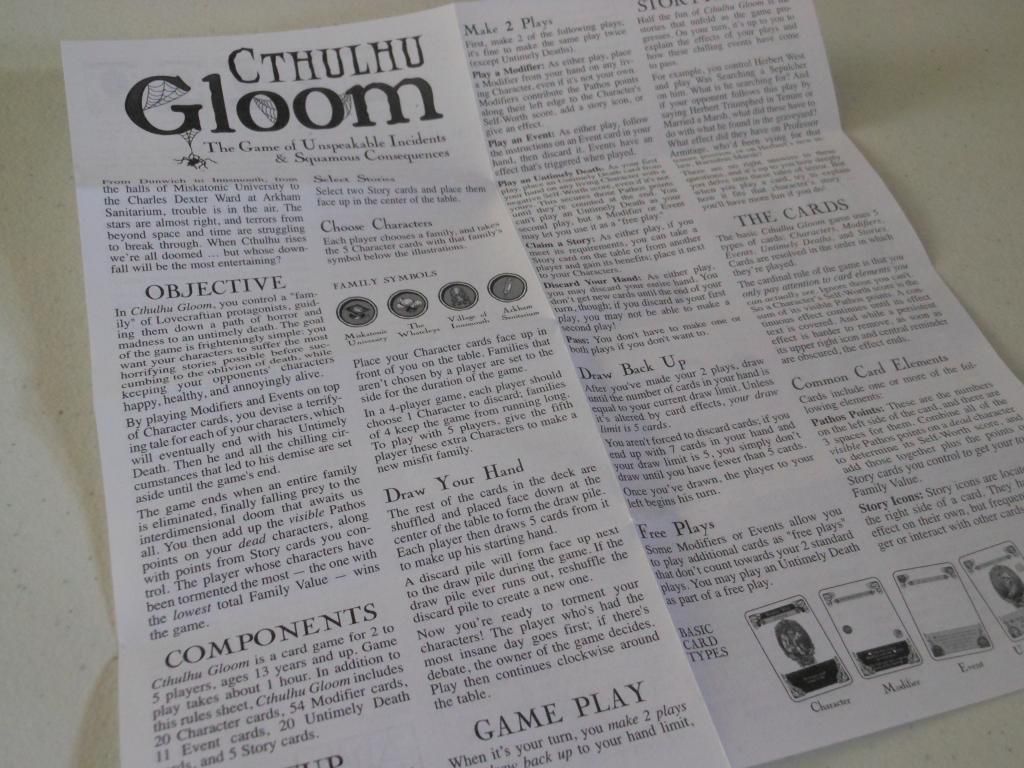
Cthulhu Gloom rules
The rules could be nicer.

Cthulhu Gloom is the inevitable Lovecraftian retheme of the game Gloom. It is a simple card game with a fiendishly entertaining goal: Players have five family members under their control, and must make them as miserable as possible before killing them off. At the point any one family is wiped out, everyone adds up how miserable their dead family members are, and the person who generated the most misery wins.

It sounds macabre, and it is.

It sounds miserable, but it most certainly isn't.

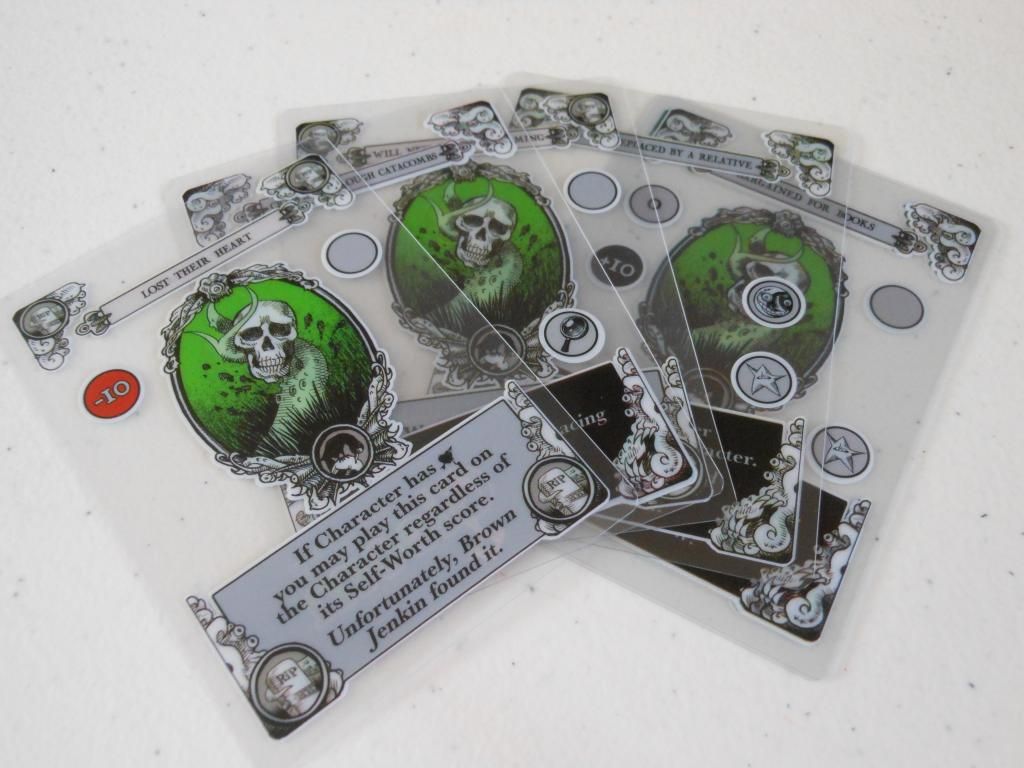
The game is actually exceptionally simple. Players have a hand of events, modifiers, and untimely death cards, and on each turn players take two actions, which normally involves playing two of those cards. Modifiers are played directly over the top of family members, making them happier or sadder, and also giving them other characteristics called "story icons," which other cards key off. This unique method of applying modifiers to the characters is achieved through the use of transparent cards. As the cards are stacked, certain elements show through from the card below, while other elements are blocked out.

Cthulhu Gloom cards
The transparent cards are cool.


It sounds a bit gimmicky, and I suppose it is. But it also works beautifully.

Over the course of the game, characters may transform into monstrous apparitions, gain special abilities, become more miserable, die, come back from the dead...

It's just great.

But it is also, at the very heart of it, just a "screw you" card game with limited strategies. You usually play bad cards (er, good cards, I mean) on other players, and good cards (I mean, bad cards) on yourself. You try to mutate your characters so they have the correct combinations of "story icons" to trigger events, make them unhappy, and then kill them, while trying to ensure your opponents stay happy and very much alive.

What really lifts the game, giving it the boost it needs to become truly entertaining, is the optional storytelling rule. Every card has a title, and maybe a funny piece of flavour text and a picture, but ultimately, each one is a blank canvas. A blank canvas for the players to fill with their own brand of storytelling.

For example, one of the untimely death cards is titled, "Will never stop screaming." But why? What does it mean? What did the unfortunate victim see?

Was it Swindon?

The rules encourage players to create a backstory for every card they play, to flesh out these tales of woe. And that, for me, makes this game an absolute joy.

At its core, it is a simple card game with a very basic rules set, but like the layers you make with the transparent cards, it is possible to layer the basic game with a layer of storytelling that really brings the game to life... er...death. Whatever.

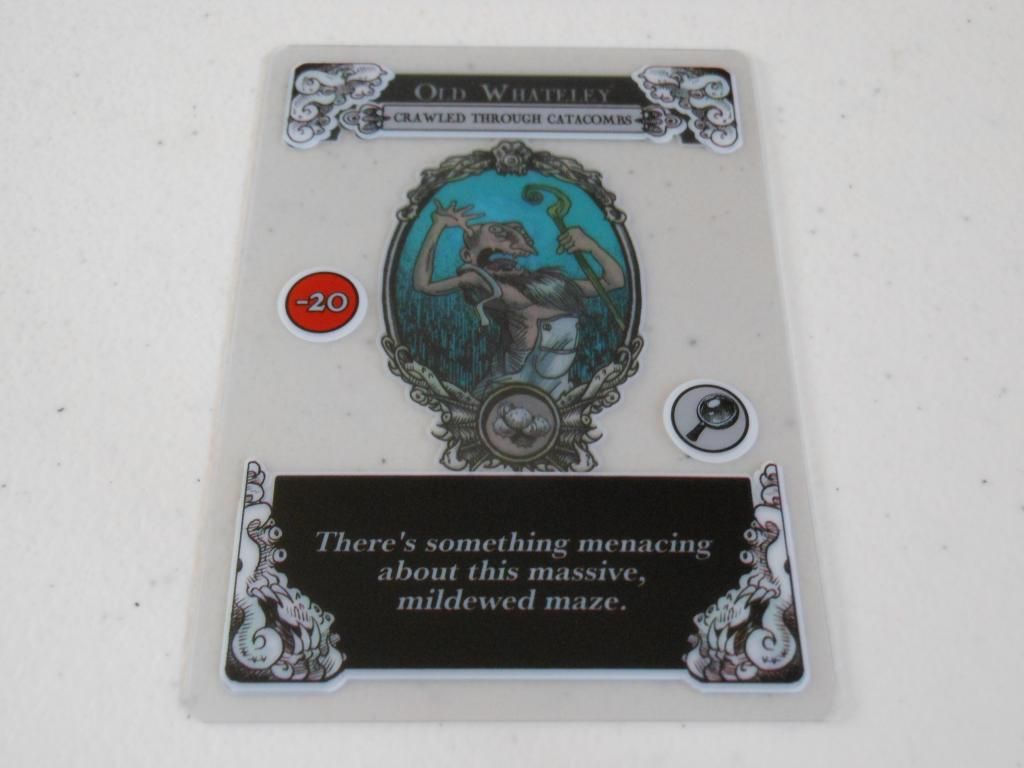
Cthulhu Gloom card in play
Old Whateley didn't enjoy crawling through catacombs.


Now, there are some down sides. Isn't there always?

First of all, the deck of cards is relatively small. In one game, you will probably see most of the modifiers and untimely deaths. Some variance is added by the random addition of two story cards for players to fight over, but there are only five of those. After a couple of games, you have seen everything the game has to offer, and that does hamper the storytelling aspect slightly. Basically, if players get this to the table often, then they are going to start regurgitating the same old stories as they see the same old cards time and time again.

It is also worth noting that storytelling games are not for everyone. Some people are too shy, and some people are not very good at making things up on the fly. If you have a gaming group like that, you can still play Cthulhu Gloom, but you are missing out on one of the best aspects, and you may find the game a little too light and repetitive to have staying power. I really wouldn't recommend the game to groups who do not intend to embrace the storytelling concept.

Finally, and it has to be mentioned... Cthulhu.

H P Lovecraft is one of my favourite authors, and his writing has had a huge influence on me; but even I begin to tire of all the Lovecraftian board games on the market. It is almost as tiresome as the number of zombie games. Furthermore, for people who do not know the works of Lovecraft, many of the jokes and characters in the game are going to go right over their heads. For those people, I would recommend good old regular Gloom instead, which has the same macabre vibe, but without the Cthulhu theme.

And that's it really. I don't have anything else negative to say about the game. The plastic, transparent cards shuffle well, and work perfectly; the art is excellent; the jokes are genuinely funny; and the game is solid without the storytelling, and truly joyous with the storytelling.

Cthulhu Gloom family members
The Whateley family are a fun bunch.


It may be a game about making people miserable, yet it has the potential to create such mirth. But it is important to do it with the right group of people. Which is a good rule of thumb for riding on the lifts in Swindon too.

Friday, 1 August 2014

Review - Early Words

Early Words


Early Words
Designed by M. Twinn
Published by Child's Play
For 2-10 players, aged 6 to adult


I have a tendency to bang on a bit. You may have noticed.

Some people say I just like the sound of my own keyboard; but it's more than that.

I love to tell stories.

I love to express opinions, and open dialogues with other people with similar interests.

But I don't love word games.

Scrabble, Boggle, Get A Letter, Unspeakable Words, Upwords... The list of word games I have owned or played is depressingly long.

People assume that I like them because of what I do; but I like them about as much as I imagine a builder likes bricks.

Bricks aren't particularly interesting. What is interesting is seeing how those bricks are combined to create something beautiful, like a house.

So no, word games are not for me. And Early Words has done absolutely nothing to change my opinion.

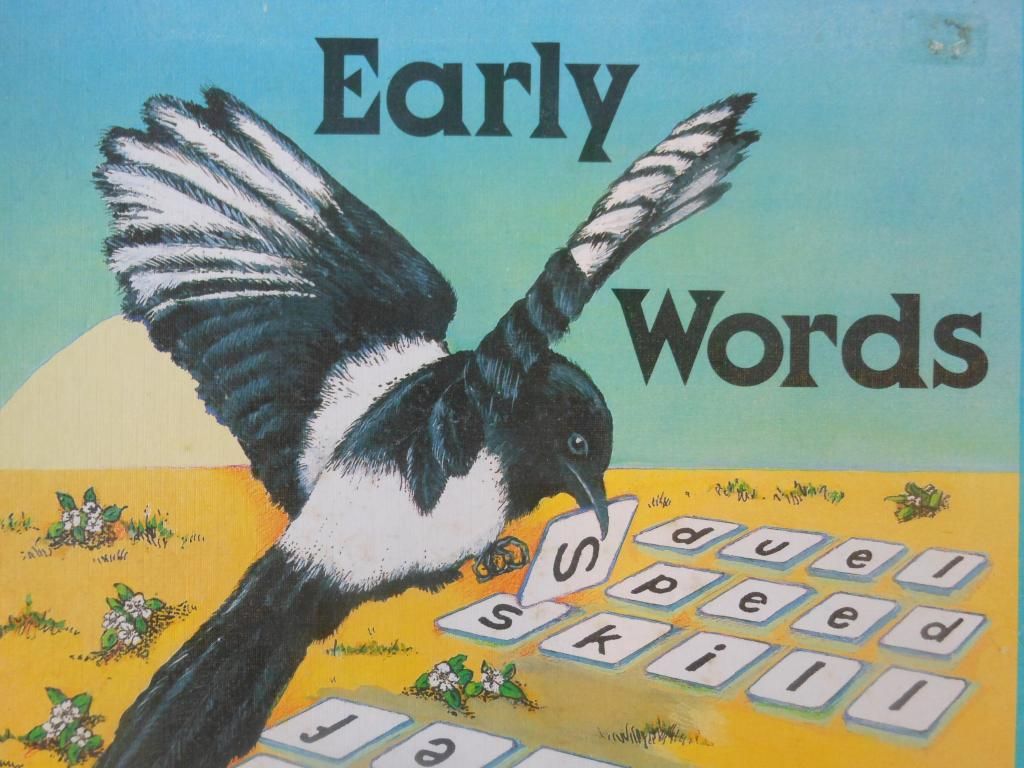
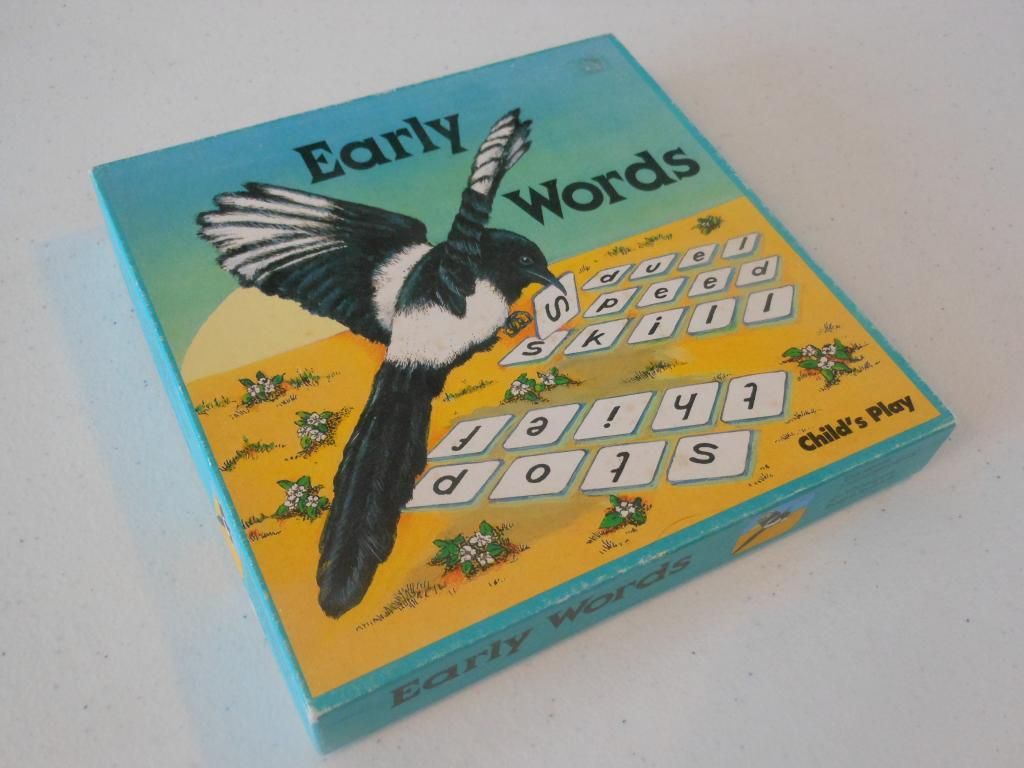
Early Words box
Stop thief!


The game is incredibly simple. In turns, each player flips over the top card from a deck. Each card contains a letter, with some cards representing multiple letters (for example, the "q" doubles up as a "b"). When a player is able to make a word with the revealed cards, he or she takes the letters and lays them out on the table. The first player to make a certain number of words (based on the number of players) wins.

The wrinkle in the rules that makes things slightly more interesting is the ability to steal words from other players. If you realise you have letters that you can add to an existing word another player made, you can take that word for yourself, and add the extra letters to make the new word. The only rule here is that you must make a new word, rather than making a word that has the same root as the original (no pluralising of singulars allowed).

A "legal" steal might be adding "ten" to the end of "kit" to make "kitten;" or adding the letters "c," "e," and "t," and then rearranging all of the letters to spell "ticket."

The interesting thing about this is that it encourages players to make longer, more complex words. Players who quickly grab the first three-letter words they see tend to have those words stolen away, while players who create longer words usually still have control over those words at the end of the game.

Of course, every time a player steals a word it gets longer, making it harder for anyone else to steal it.

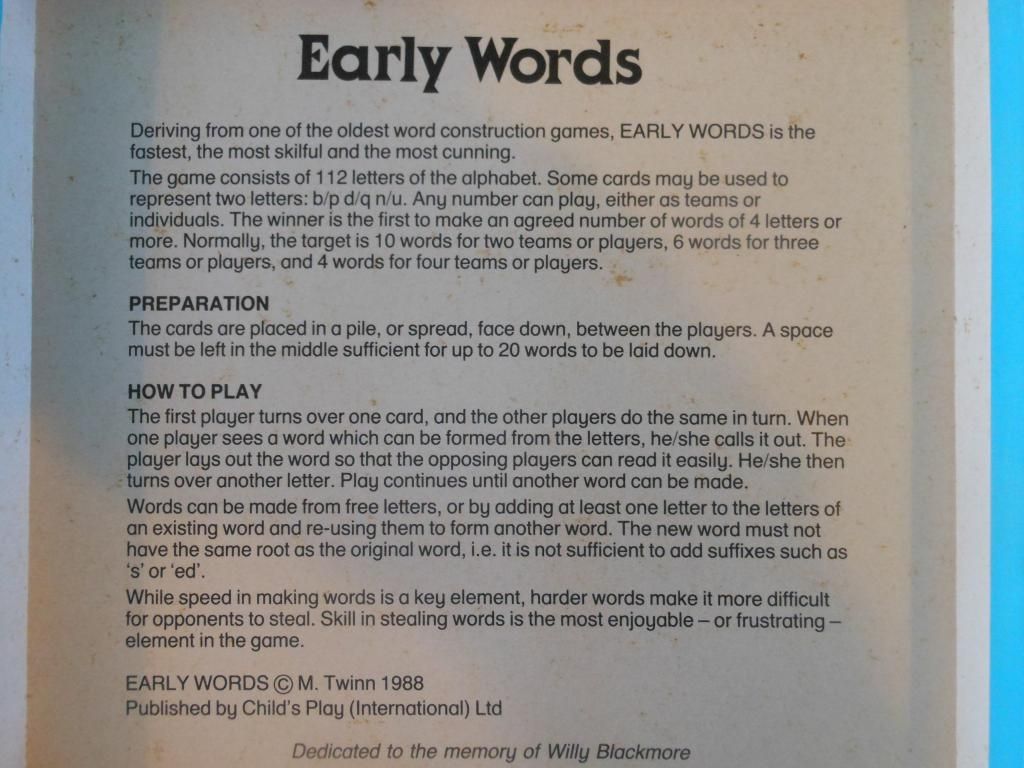
Early Words rules
Rules in the box lid.


The problems with the game should be obvious. As with most word games, the winner is going to be the person with the best vocabulary. There is no skill involved, and the only luck comes from turning over a card each turn, so it is not easy to level the playing field, and younger players are going to have a hard time against older players. This is made even worse because of the stealing mechanism. At least in other word games weaker players get to nab some points by using smaller, easier words. Here, trying to go for small words is actively discouraged as it is just gifting your opponent with the chance to steal from you.

Furthermore, turns often take a long time, particularly towards the end of the game when there are lots of words on the table and everyone is looking for ways to steal them. Word games are generally quite tedious, and Early Words really starts to drag in the final stages.

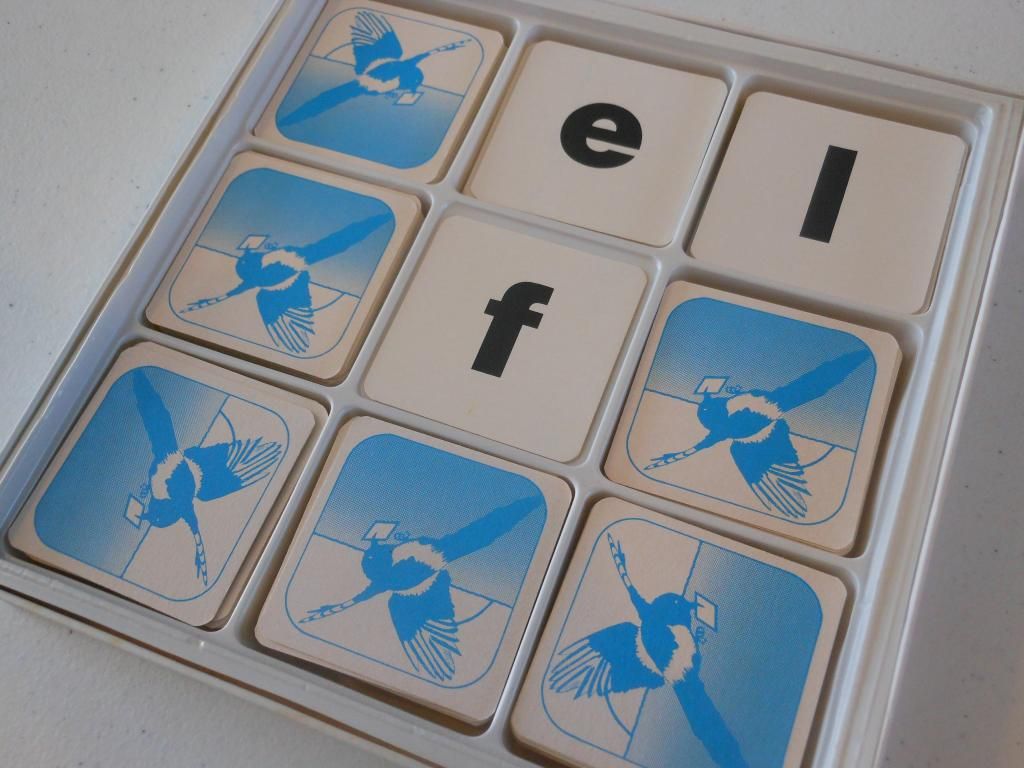
Early Words cards
I can't make a word with these blasted letters!


Okay, it has good educational value, as with any other word game; but that alone does not make it worth playing. And the bland cards, completely devoid of artwork, are hardly going to inspire the imagination.

And that's all I have to say about that.

Tuesday, 29 July 2014

Review - The Lord of the Rings: The Battle of Helm's Deep

The Battle of Helm's Deep


The Lord of the Rings: The Battle of Helm's Deep
Produced by LEGO
Designed by Nicolas Assenbrunner and Cephas Howard
For 2 players, aged 8 to adult


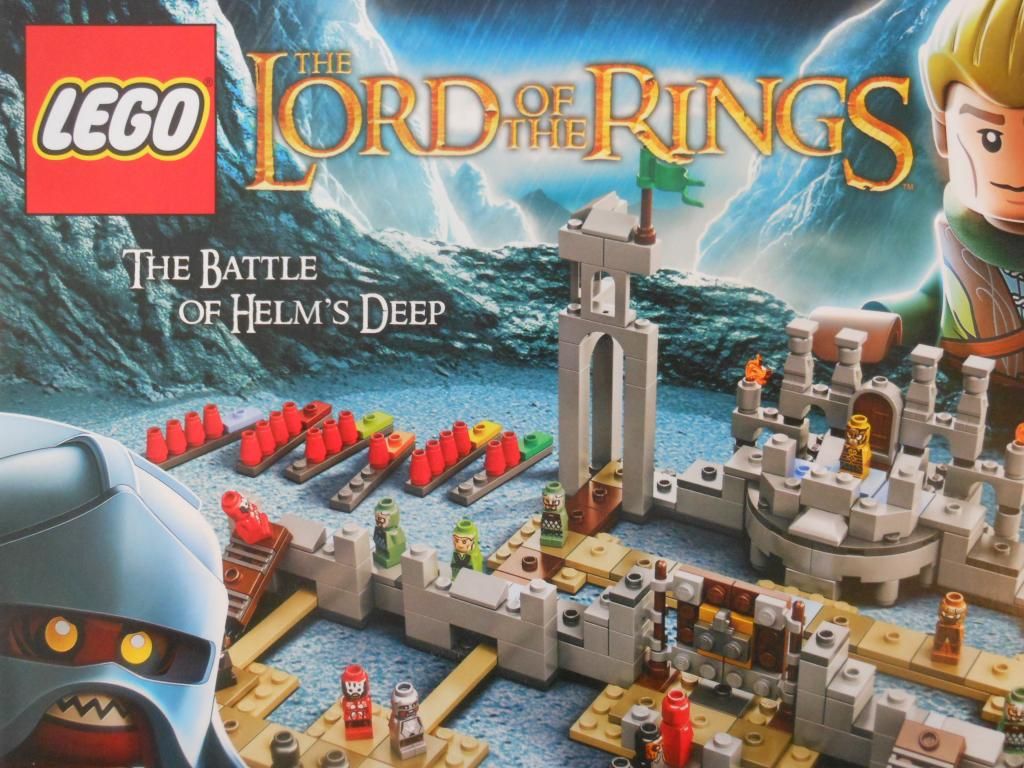
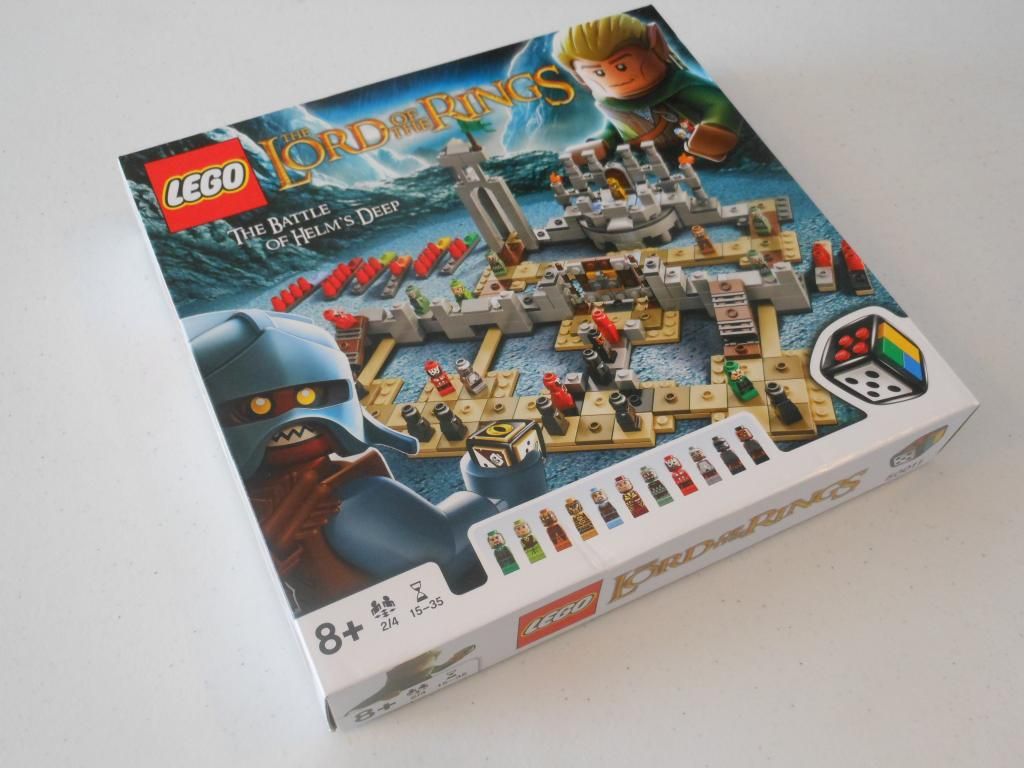
The Battle of Helm's Deep LEGO game
Look - LEGOlas is on the front cover. (See what I did there?)


Sometimes parents do bad things. They don't mean to; they just do.

When I was young, I didn't particularly like sports, and I spent most of my time reading, and living in fantasy worlds. My parents used to worry that I didn't get out enough, and that I spent too much time on my own.

They didn't need to worry; they were doing a pretty stand-up job raising me. And I was happy.

But I remember one day, when I was about fourteen years old, I was building something out of LEGO. My mum said, "Aren't you too old to be playing with LEGO?"

Now that hurt.

It made me feel childish and stupid.

I don't want you to think badly of my mum. I know that what she said, everything she ever did, came from a place of love. She was merely concerned because she saw me doing something that she did not consider to be "normal," and she has never been very good at keeping her opinions to herself. I think she would be mortified if she knew how much it upset me at the time.

Nevertheless, I lied to my mum that day. I told her I was checking all the pieces of the LEGO were there so I could sell it.

And then I sold it.

Fast forward over 20 years, and here I am. The boy who created fantasy worlds in his head now puts those fantasy worlds on paper, has a family of his own, and yes... he plays with LEGO.

I am fortunate. I have a daughter who absolutely loves LEGO, and we spend hours at a time playing with her collection of Marvel characters, or building houses for her Simpsons minifigures to live in. It is one of my favourite things in the world, and I love to see what creative things she makes, and the stories she invents as she plays.

Of course, as much as I love LEGO, my real passion is for board games; so when LEGO started making board games, it seemed like it was a match made in heaven.

Sadly, most of the LEGO games were mediocre at best, and there are very few of them that are really worth owning.

One of the exceptions is The Battle of Helm's Deep.

The Battle of Helm's Deep LEGO
LEGO is so cool.


Okay, I admit, I am predisposed to like this game. It is based on The Lord of the Rings movies, and it is made with LEGO. Even if the game was the worst game in the world, it would still have a place on my shelf.

But, perhaps surprisingly, the game is good.

I mean, not really good. Not astounding.

But good.

The game represents the climactic final scenes of The Lord of the Rings: The Two Towers, when the Uruk-hai army crashes against the defences of Helm's Deep. How do I know it is based on the movie rather than the book? Because one of the characters defending the walls is Haldir, of course.

So, the first thing to do before playing is set up the board. This took my daughter about an hour with my help, but she is only three years old. Older children (or adults) should have the game pieced together in about 20 minutes.

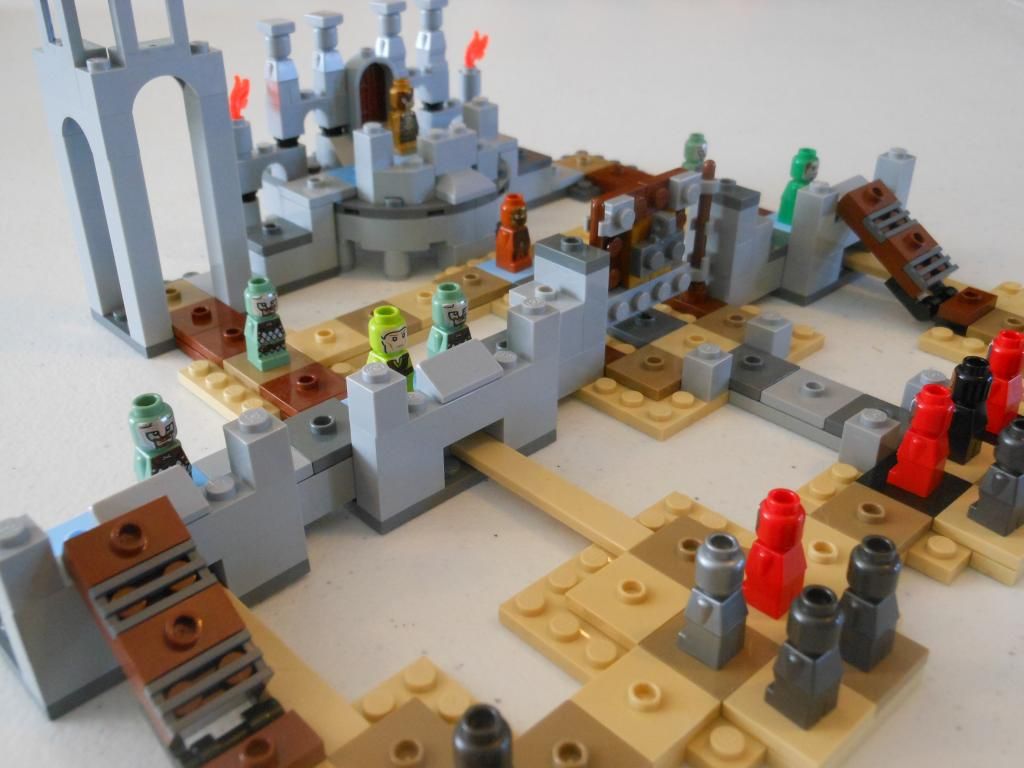
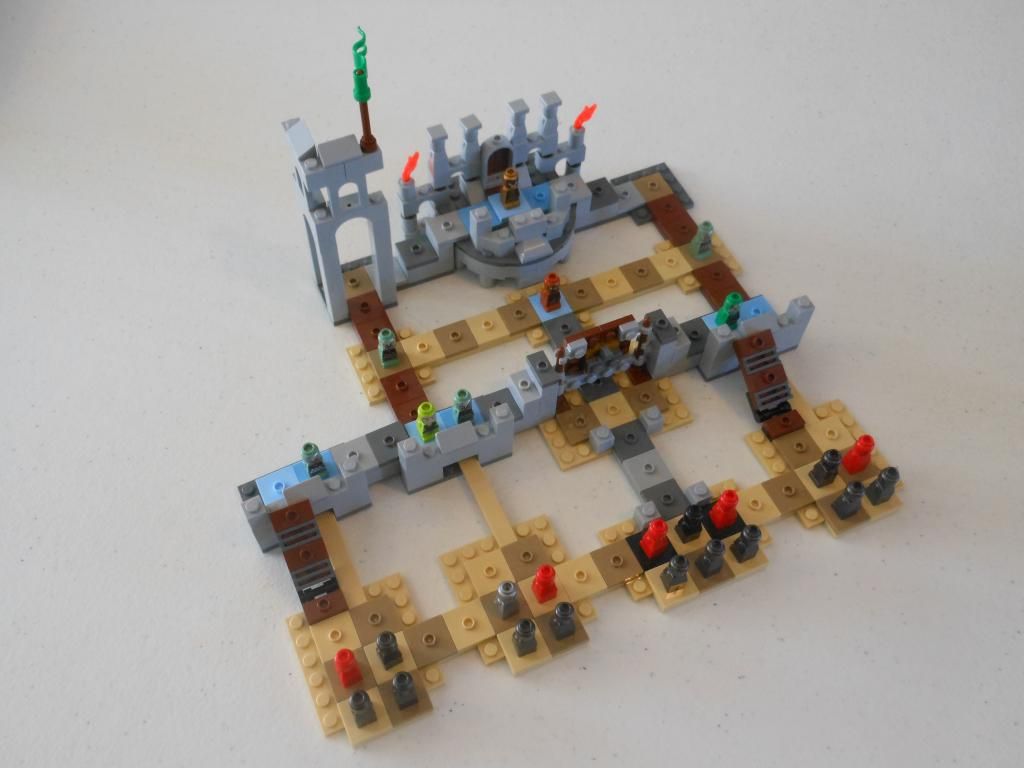
Once assembled, the game looks pretty impressive. It is small, but the level of detailing is good. It genuinely looks like Helm's Deep, with towers, flags, siege ladders, and pillars. Really very beautiful in that LEGO kind of way.

The Battle of Helm's Deep board game
I'd be lyin' if I said I didn't think that looked awesome.


One player gets a massive army of Uruk-hai with two leaders, and the other player gets a small selection of named heroes and Rohirrim footsoldiers. The named characters and leaders have four hit-points each and get special powers, and everyone else has only one hit point and can safely be classified as "meat shield." And I should note: these are microfigures, which are about one third the height of a LEGO minifigure.

The aim of the game is simple. The bad guys need to storm the walls, and then kill all the good guys or get one Uruk-hai piece to a specific space at the far end of the board. The good guys need to kill both of the enemy leaders.

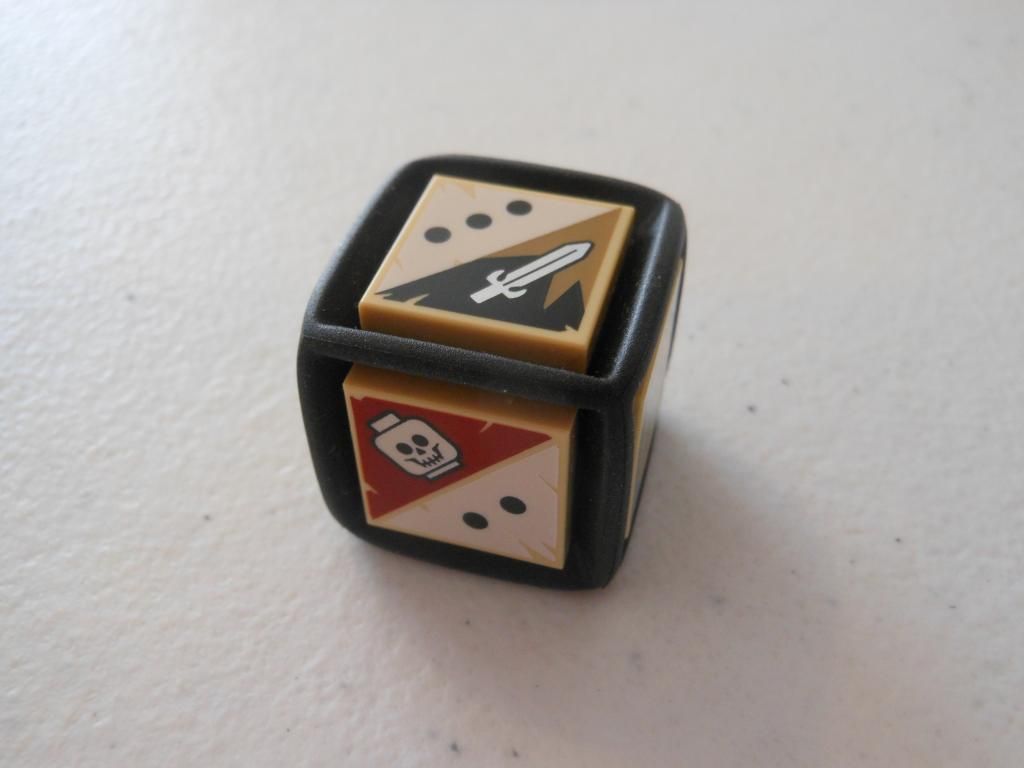
Turns go quickly, and always start with the player rolling a custom dice. Two faces on the dice have The One Ring icon, two faces have three pips and a sword icon, and two faces have two pips and a skull icon, so there is basically a 33 percent chance of each result.


The Battle of Helm's Deep custom LEGO dice
LEGO  - probably the best custom dice in the world.


After rolling, the player selects one piece to move the number of pips on the dice, and can then make a standard attack with that same piece. If the ring shows up, the player gets to move one piece four spaces or use a special power.

Uruk-hai berserkers have the power to move two spaces and automatically inflict two wounds on an adjacent figure; the Uruk-hai archer gets to make a ranged attack (measured with a piece of string that pops onto the figure's head); and the Uruk-hai general gets to spawn new Uruk-hai soldiers to replace the ones that die.

For the forces of good, Aragorn and Gimli have the same power as the berserkers; Haldir and Legolas have the archer ability; and Eowyn and Théoden have the ability to heal any character for two hit points.

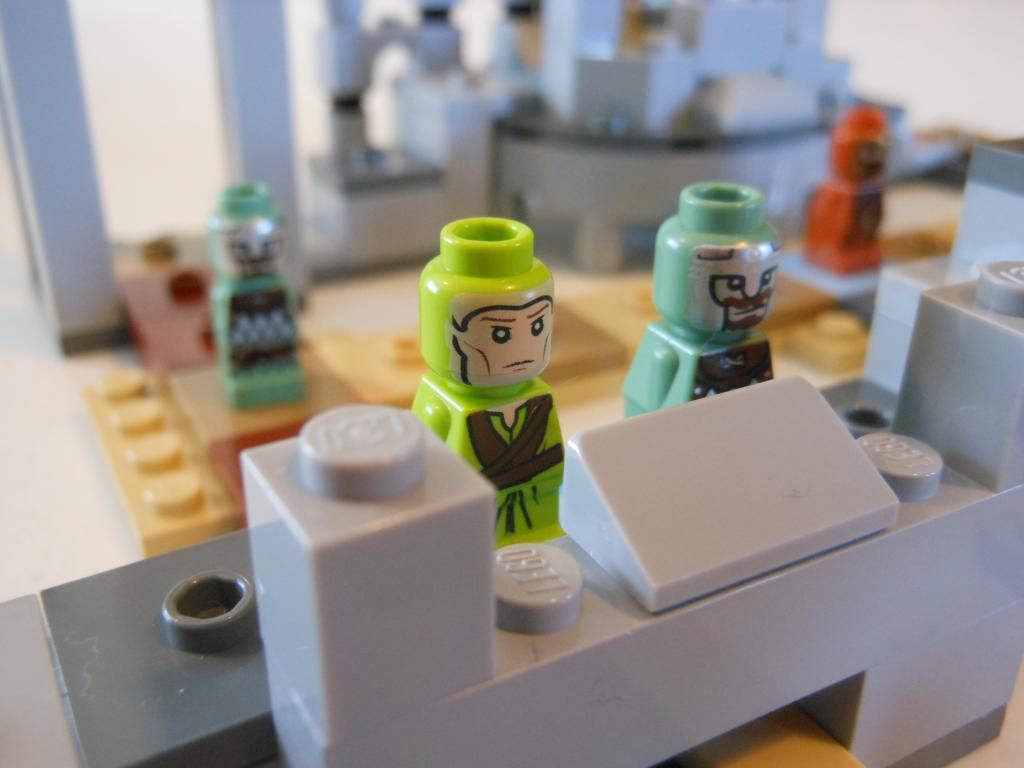
The Battle of Helm's Deep Legolas microfigure
Look! It's LEGOlas... See? It's so funny, I used it twice.


The Uruk-hai have weight of numbers on their side, and eventually they will surge over the walls of Helm's Deep (using siege ladders), or they will break open the main gates. Desperate fighting in the narrow streets ensues, and some games can get pretty tense. However, the ability of King Théoden to heal allies from range is incredibly powerful, and this does weight the game slightly in the favour of the forces of good.


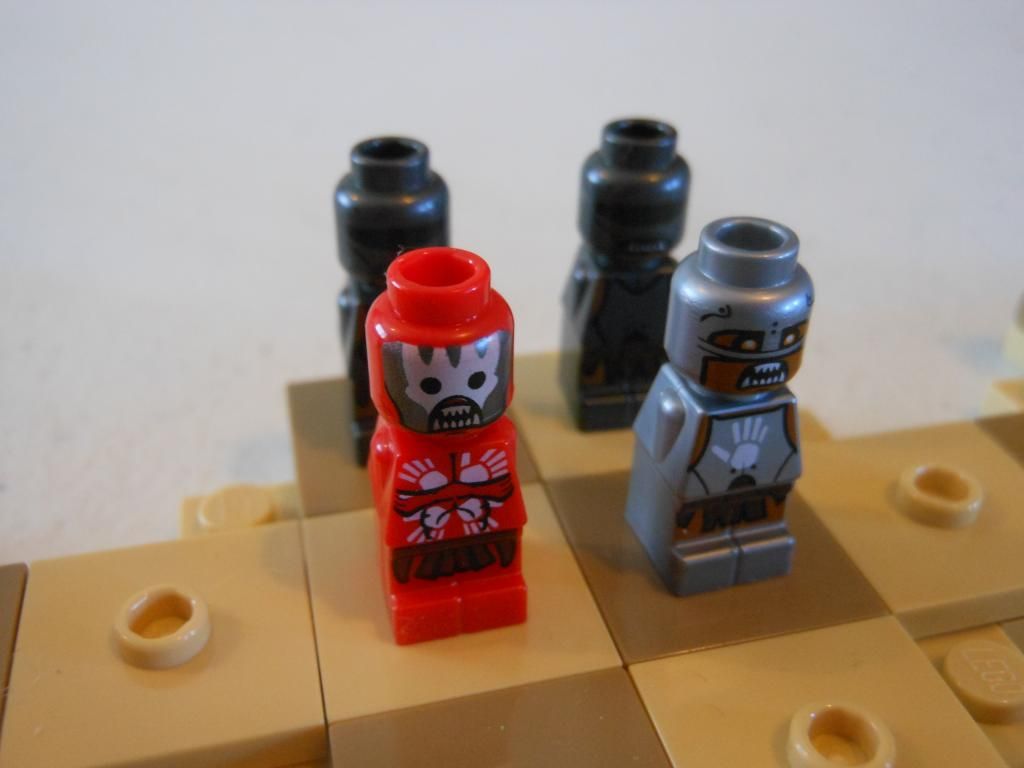
The Battle of Helm's Deep Uruk-hai
Uruk-hai warriors, a berserker, and the archer.


Of course, there is a lot of randomness involved. For a start, you can only move the number of spaces you roll on the dice, which is normally an awful rule but adds a bit of tactics and tension here. Furthermore, you only get to use a special power if you roll a ring symbol on the dice. However, the worst bit of the game is the rule for making a standard attack. To do this, you roll the same dice again, but this time, if you roll the ring you cause two wounds, if you roll a sword, you cause one wound, and if you roll a skull, you take one wound. In one game, I saw a player wipe out most of his own troops by rolling poorly on every attack, and that is frustrating.

That being said, players roll the dice often enough that luck tends to balance out; and the game only takes about 15 minutes to play, so it isn't like an epic two-hour slugfest gets determined by the single roll of the dice.

So yes, there is randomness. And yes, it is technically a "roll and move" game. But there are choices to make every turn too, and some interesting tactics. For example, when you move a piece and it finishes its move on top of another piece, it is allowed to hop forwards onto the next available empty space. This is a powerful manoeuvre for the Uruk-hai, who can move soldiers from the back of the army many spaces at a time by hopping along the heads of soldiers in front.

The game is light enough that I was able to teach it to my daughter (who likes to play the "goodies," obviously), and she is able to play with only limited guidance from me; yet I have also played against adult gamers.

I think the biggest disappointment is that there is no mechanism for simulating the arrival of Gandalf to save the day. It would have been nice to have some kind of countdown mechanism so the Uruk-hai had a certain number of turns to win before Gandalf arrived. Perhaps King Théoden's healing power could have been replaced with the ability to advance a game clock, and once the game clock reached ten, Gandalf arrived. Hmm... Maybe that's something I could think about.

But I digress.


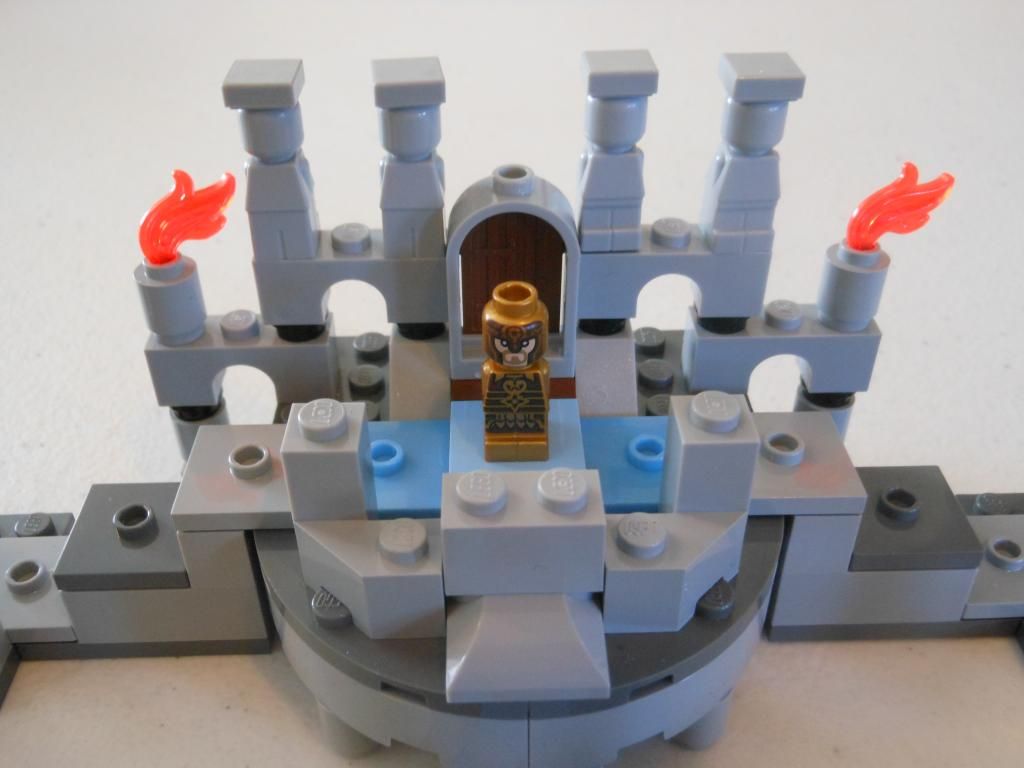
The Battle of Helm's Deep Theoden
King Théoden surveys his troops.


Now, you may or may not know this, but LEGO has decided to scrap the board game line. In fact, The Battle of Helm's Deep, along with a Chima game and a pretty cool Batman game, never made it into mass-distribution as far as I can tell. As a result, these games are pretty hard to get outside of the UK. And that's a real shame, because it really feels like LEGO was just hitting its stride. These latest games are huge improvements over their early efforts, but it was clearly too late in the day.

So, I intend to keep The Battle of Helm's Deep. It is a light game I can play with my daughter, but which still offers a few interesting choices. And it is an example of what LEGO could have achieved if they had hit the ground running with the board game line.

And yes, my mum still says, "Aren't you too old to be playing with LEGO?"

The difference is now I know the answer.

No.

No, I'm not. And neither is anybody else.