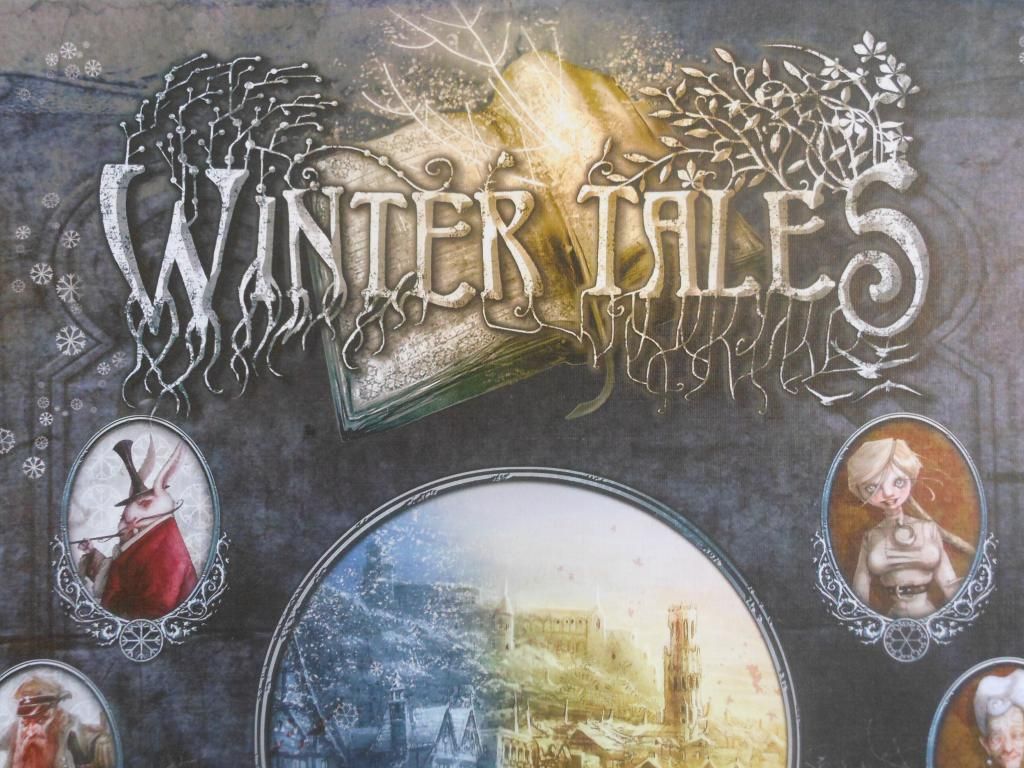
Winter Tales
Published by Albe Pavo
Designed by Jocularis and Matteo Santus
For 3 - 7 players, aged 10 to adult
Gather around Children. It is time for a story.
But this is no ordinary story. This is a story of your own creation, powered by the gears of your imagination.
Unfold the board, choose whether to be part of the valiant Spring rebels or the oppressive Winter regime, and select your characters. Your story starts here.
But in which direction will the story go?
And that's
Winter Tales.
 |
| I want to frame this box and hang it on the wall. |
Still with me?
Okay, this may not be the normal way to start a review, but this is not a normal game
. Because this is not a game about rules, although there are rules. This is a game about imagination and creativity. This is a storytelling game.
It is also one of the finest ways to spend a few hours with your friends.
Assuming you have the right friends.
Now, before I go any further, here is the full disclosure: I have only played
Winter Tales once. I wouldn't normally write a review after one play, but in this case I am making an exception, because one play is all you need to fully understand the mechanisms of the game and to appreciate whether this is the sort of game you will like. And trust me, there will be many people who do not like this game.
The basic premise is simple: Following the war of Autumn, the soldiers of Winter (characters such as the Big Bad Wolf and Snow White) rule the realm through fear, while a small band of Spring rebels (including Pinocchio and Dorothy) strive to fight back. It is a beautiful and bleak storytelling world, with some of the most stunning artwork you will see in a board game. It conjures images of Tim Burton's
Nightmare Before Christmas and
The Melancholy Death of Oyster Boy. It instantly fires the imagination from the moment you unfold the board.
Gameplay is exceptionally easy, hinging on a very simple concept: The story is key.
This is not a game about winning and losing, although there are winners and losers. This is not a game about destroying your opponent, although opponents will be destroyed. This is a game about taking characters on adventures, and seeing where they all end up. If, at the end of the game, you have told a fun story, figuring out who has actually won is almost irrelevant.
But here I am talking about the end of the story, when I haven't even told you how the story begins.
 |
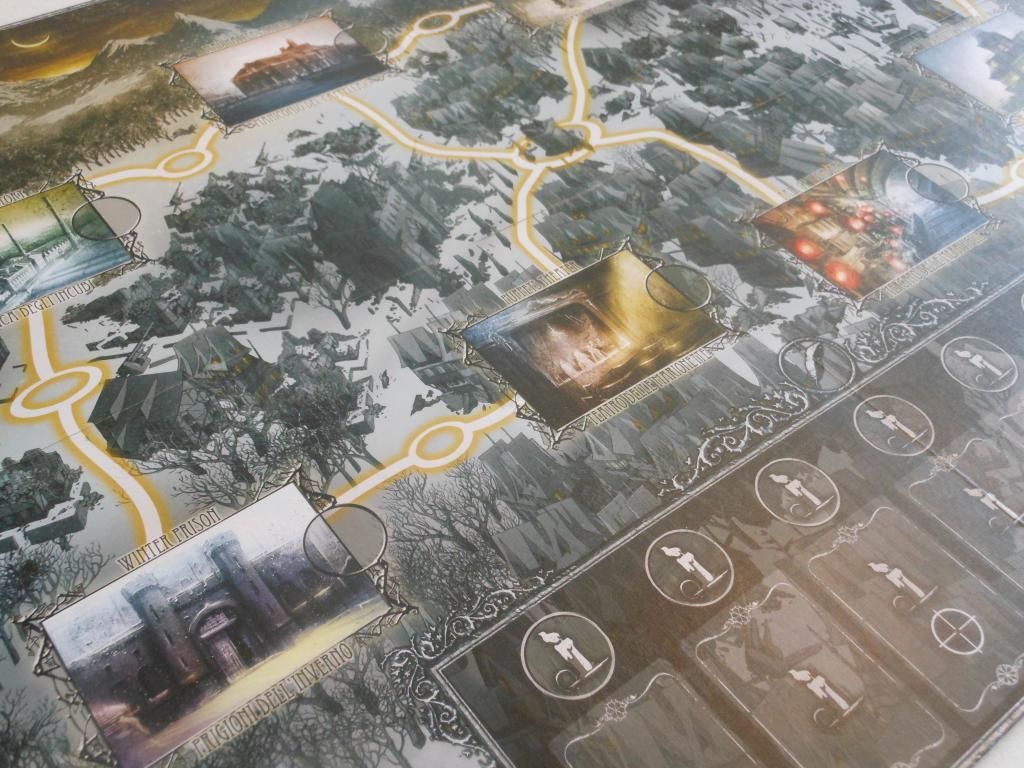
| I want to frame this board and hang it on the wall. |
The main aim of the warring factions is to complete quests, and those quests are completed through telling stories.
And those stories are told through playing cards.
Simply put, if you want to do something, you need to play a card; and if you want to play a card, you have to give a valid, logical reason why that card is part of the story you are telling.
Want to move to a location? Then play a card, and explain how the abstract image on that card represents your journey.
What to complete a quest? Play a series of cards, developing a story that involves the concepts depicted on those cards.
Want to fight another character? You guessed it. Cards.
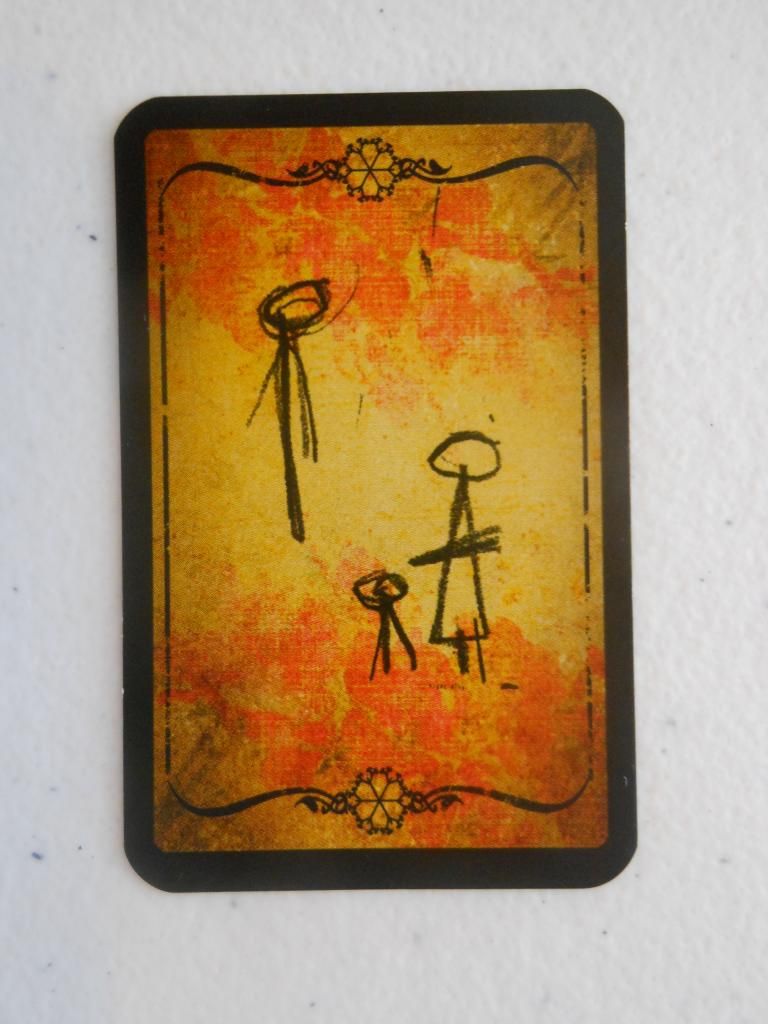
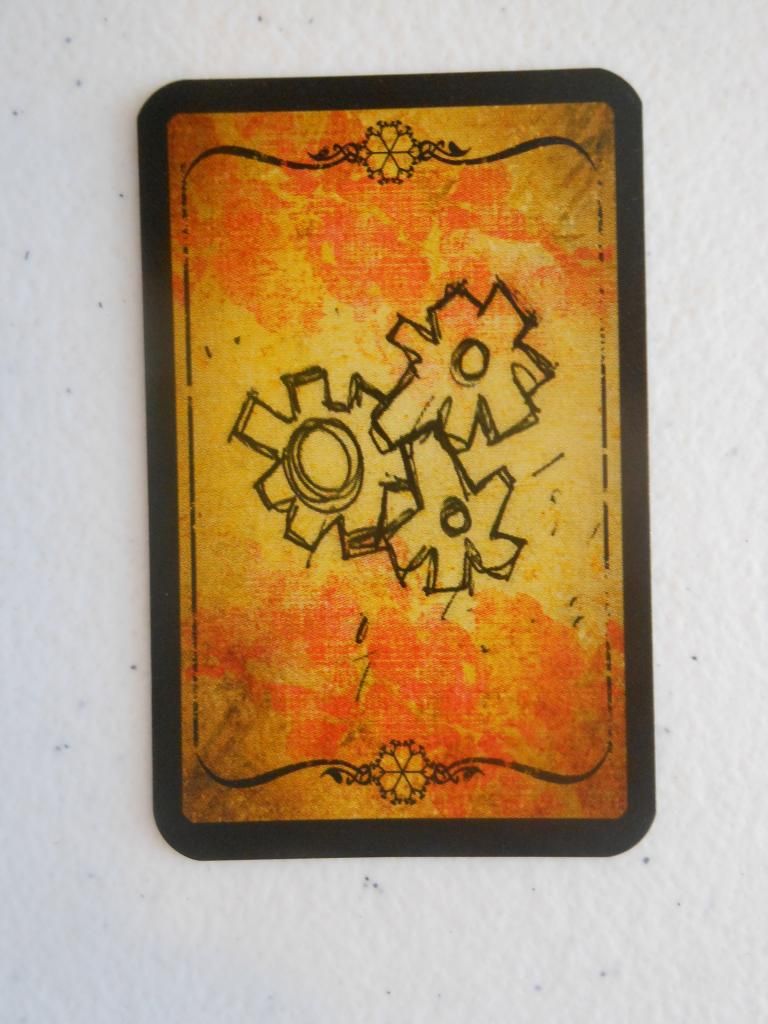
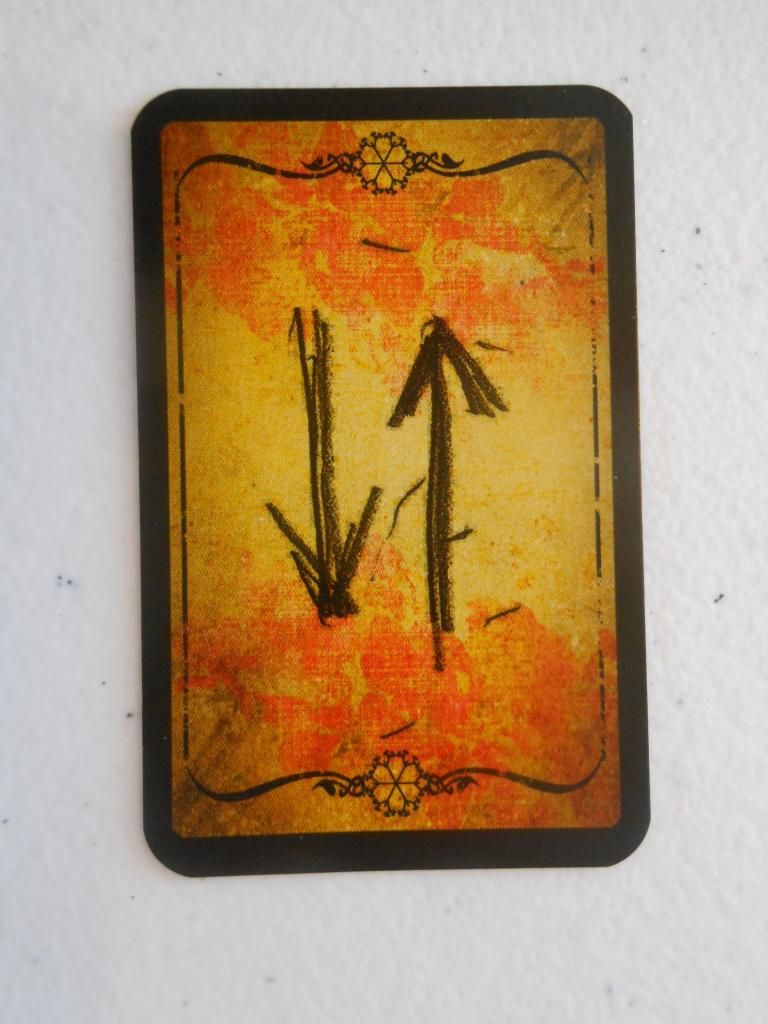
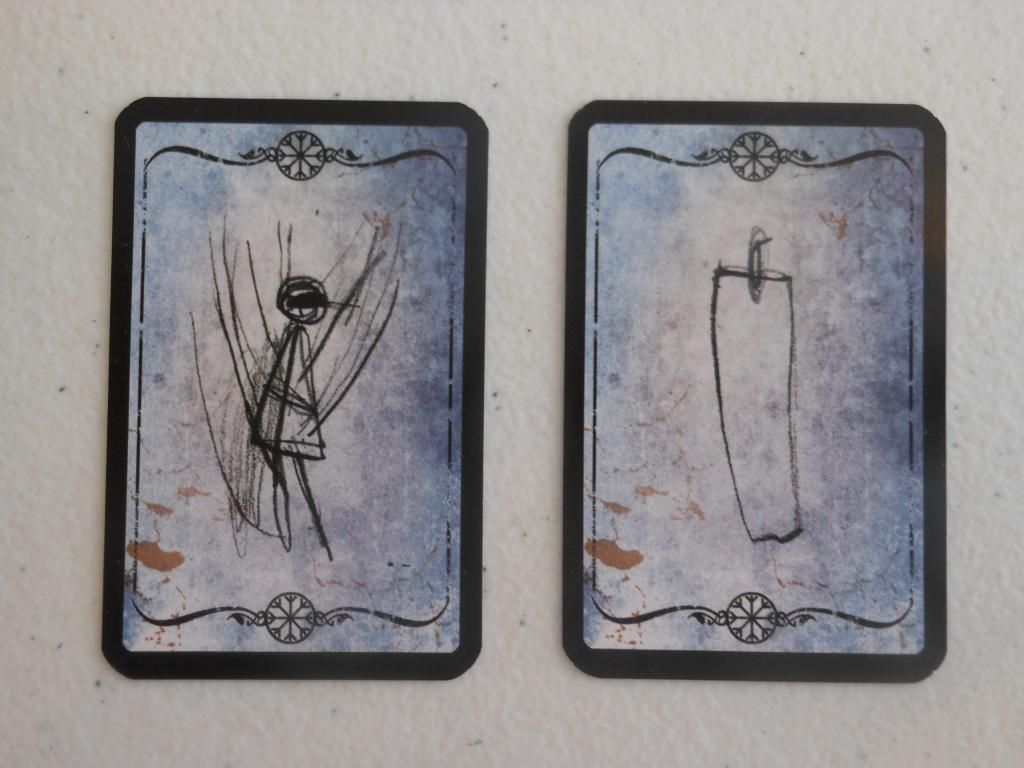
It is a beautiful concept, made more beautiful by the cards in question: Childish scrawls that players are going to interpret in different ways.
For example, I had a card with a picture on it that looked a bit like a tooth. So, when I activated Pinocchio, I said, "Pinocchio ventured out into the dark night. He moved silently, but felt sure he would be spotted. Waiting in the shadows at each street corner for a cry from the Winter Soldiers was as agonising as having
teeth pulled, but eventually he reached his destination."
Where it gets really interesting is when characters attempt quests, because then other characters have the chance to get involved in an attempt to swerve the outcome of the story in their favour. Dorothy may attempt a quest, only to find the White Rabbit is waiting to foil her plans. Snow White may take a leaf out of her wicked stepmother's book, only to be confronted by a Tin Man, who has more of a heart than she does.
In these situations, players take turns to play one or more of their cards, and then at the end, cards are added up. The faction that played the most cards wins the quest.
Additionally, there are battles and traps to contend with.
Battles take place when a Spring character tries to pass through a space with a Winter soldier: The Winter player may initiate a fight, in which case the players involved alternate playing a card and spinning the story of the conflict, until one player runs out of cards or gives up.
Traps take place when a Winter soldier tries to pass through a space with a Spring character: The Spring player hides a certain number of cards representing the trap, and the Winter player has to play cards to avoid the trap. When the trap is revealed, it is successful if the number of cards the Spring player hid exceeds the number of cards the Winter player used. (Note: it is slightly more complex than that, but that is the basic essence of how the traps work.)
 |
| I want to frame these characters and hang them on the wall. |
All these situations are geared towards getting groups of players to create a tug-of-war over the plot strands, bouncing ideas off each other, and expanding and enriching the story with each new card introduced. And that is joyous.
Except when it isn't.
Because the entire concept of the game hinges on everyone getting behind the idea of playing to make a story, rather than playing to win.
My one game with my regular gaming group was a success, and everyone had a really good time; but there were moments that fly in the face of what the game is trying to achieve, and there were the vaguest hints of the shadows that might engulf gaming groups that are a bit more inflexible than mine.
I'll give examples. This game is really only explainable with examples...
We played a four player game, and that meant two players for each faction. As the owner of the game, and the only person who knew the background of the characters and the rules, I chose to be the Arbiter, a role that involves guiding the story, and stopping players from doing things that are not in the spirit of the game.
Now, one of the players in my group is pretty competitive. We recently played
Pandemic, and after winning by curing all the diseases, he insisted we play on to eradicate the diseases completely. He wants to win totally. He's probably reading this... I hope he doesn't take offence, because there is none intended.
Anyway, this player immediately objected to me being the Arbiter, claiming I would swing everything in the favour of my team.
Of course, the Arbiter is an impartial role, and I had no intentions of using the Arbiter role to fudge a win for my team. But that situation is there: One person, who is actively playing to win, is also going to have to be an impartial judge.
We got over that situation pretty easily. I even said that if I had to use the Arbiter role, I would seek the agreement of at least one other person at the table. I think it quickly became obvious that I wasn't going to use the role unless absolutely necessary anyway. Although, having said that, I did use it in the very first turn when the same competitive player tried to introduce the Gonk droid from
Star Wars.
Overruled!
 |
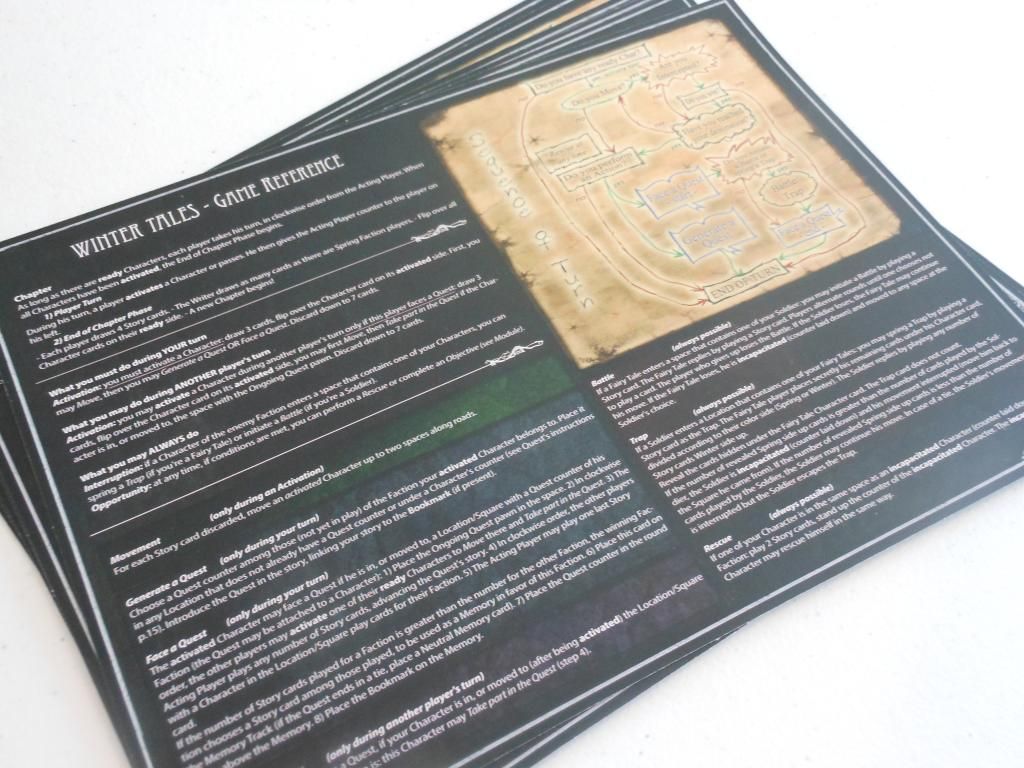
| I really don't want to hang these reference sheets on the wall. |
Competitiveness did seep into other areas of the game once we started playing, and there were a few times when we had to discuss an alternative to the direction players were trying to take, and where it seemed obvious to me that other gaming groups might have come unstuck.
One of the biggest problems is that, behind the story, the mechanisms of the game boil down to playing more cards that your opponent. That meant everybody kept card-counting, and then playing just enough cards to ensure a win, sometimes at the expense of the story.
The other issue is that competitive players tend to be destructive, attempting to tear down the story that other players are creating. Rather than expanding on a plot that another character has made, such players attempt to eradicate the plot completely. For example, after Alice found a secret room to use as a safe house for her rebel friends, I had to explain that it wasn't really in the spirit of the story for another player to say the room was an hallucination brought on by Alice's madness. There was an even worse example of this towards the end of the game, but I'll get to that in a minute. First, I want to tell you a story.
Our story: The one my gaming group created.
It started with Alice trying to create a safe house in the asylum where she was incarcerated. She found a secret room, which she was guarding, but the Mad Hatter broke in with his guards and captured her. Fortunately, the Tin Man, who had broken out of the Nightmare Factory where the White Rabbit was experimenting on him to create an army of robots based on the same technology, was heading to the asylum to free Alice. He rescued her, but his huge weight sent them crashing through the floor into a network of underground tunnels where they were able to establish a safe house for the rebels.
Meanwhile, there was a rumour that the cold, dead remains of Dorothy were buried in the grounds of her deserted mansion (Dorothy was not selected as a player character in our game). The White Rabbit went to investigate this news, intending to exhume the body to parade through the town square as a warning to the other rebels. The White Rabbit also had an elixir he had brewed at his Nightmare Factory, and he used this to reanimate Dorothy's body so she would shamble around the town as a living corpse.
Grumpy the dwarf had fought in the war of Autumn, but he had been captured and now resided in the prison. But the sneaky dwarf had actually allowed himself to be captured, so he could listen in on the guards talking, allowing him to use his network of allies to spread messages. He had heard of a great artefact somewhere in the park that might aid his cause, and had sent word to the Little Match Girl. Unfortunately, Mangiafuoco patrolled the prison grounds regularly, and had got wind of Grumpy's tricks. He rushed to the park to intercept the Little Match Girl, but on the way he had to enter the deserted Puppet Theatre.
As Mangiafuoco entered the Theatre, he noticed a net hanging from the ceiling: A trap laid by Pinocchio. Fortunately, Mangiafuoco was prepared, and had a Molotov cocktail, which he hurled into the rafters. Pinocchio leapt down, demanding to know why Mangiafuoco had burned down his hammock (I had been bluffing, there was no trap), but Mangiafuoco was already gone, leaving the Theatre to burn, and positioning himself to stop the Little Match Girl completing her quest.
Sensing the final battle was upon them, the forces of Winter sent the Big Bad Wolf to the nightmare factory, where he seized the key that would animate the army of robots that the White Rabbit had made based on the Tin Man's designs.
Fortunately for the Spring rebels, the Little Match Girl had her own designs, and sought to bring a new hope to her people. Using her mysterious powers, she took the flames that were gutting the Puppet Theatre, and drew them into a single flickering flame on the head of one of her matches. This match was taken by the Scarecrow, who blew on it, sending magic out into the world. For the first time in years, flowers started to bloom.
And that was the situation as we went into the epilogue. Both sides had two stories, and the winner would be determined by the faction that played the most cards in the epilogue...
Things went a bit nuts.
Spring started the epilogue. Magic was floating through the world, and in Oakes Park, the great artefact the Little Match Girl had heard of was discovered: A beautiful white horse locked in a cage. The magic shattered the cage, and the horse ran free, lifting the spirits of everyone who saw it. Pinocchio and the Scarecrow saw it as a sign that things were changing, and together they started to rebuild the Puppet Theatre.
And then the competitive player took his turn...
God was angry at the introduction of magic into the world. He sent down the archangel Gabriel, who blew up the Puppet Theatre with a stick of dynamite.
Now... That right there shows you everything that can go wrong with this game. It is out of character to the story, and it totally destroys everything that the previous player has created.
Okay, it was really, really funny.
But it was not in the spirit of the game.
Although it was really, really funny.
We all laughed about it, and then I suggested (as Arbiter) that we should go a different route. However, everyone else at the table said we should run with it, so I had to concede. Luckily, it was my turn next, and I had these cards:
So, as the angel Gabriel blew up the Theatre, Pinocchio and the Scarecrow were blown clear of any harm thanks to some incredible good
luck. Pinocchio knew the wrath of God was on them, so he dropped to his knees and
prayed. He explained that all he wanted was
justice for his people. And God heard his pleas, and decided to help. Using his Godly power, he animated the White Rabbit's army of
tin men, and used them to crush the remaining Winter forces.
It was a win for the Spring rebels.
And it was a win for the game.
Everyone said they had fun. Everyone said they wanted to play again. And that's all I want from any game. If people are having fun, and people want to keep on playing, then I'm happy. Even if the ending wasn't quite what I would have liked.
And that's the thing: The mechanisms for this game are a bit clunky, and sometimes the stories don't go the way you want them to; but being involved in that creative experience is a beautiful thing. This is, quite simply, one of the best games I own. There is nothing else even remotely like it.
I have the original edition, but I understand Fantasy Flight Games has just released a new edition. I have no idea what the difference is (maybe there isn't any), but hopefully this game gets even more recognition, and maybe even gets some expansions.
Now, here's the downside: I am a writer of children's
fantasy novels. This game was pretty much made for me. I was guaranteed to love it, so absolutely everything I say has to be viewed through that lens. Not everyone is going to feel the way I do about storytelling, and if you play this game with the wrong group, you are probably going to have a horrible time. Furthermore, finding the right group might not be easy.
And you might need to find multiple right groups. There are only a few cards in the box, 14 characters, and a handful of locations: If you keep playing with the same people, they are probably going to start recycling old ideas. Of course, expansions would help with this, and I would love to see some more characters and quests.
 |
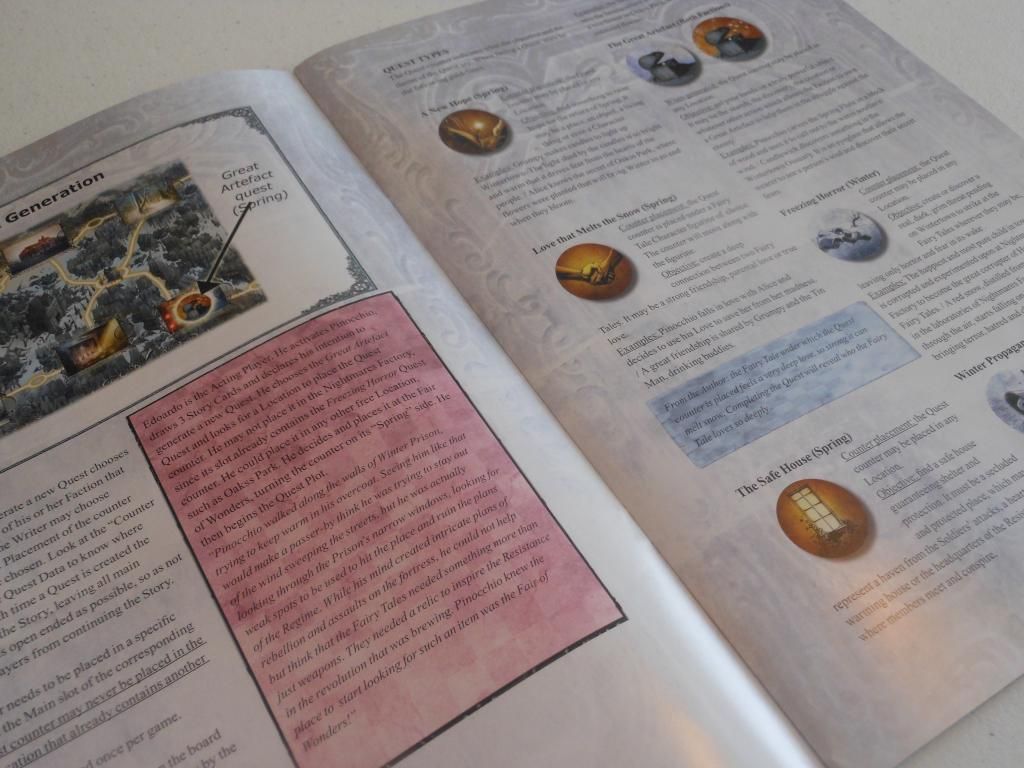
| The rule book is lavishly illustrated but poorly translated. |
As for what I learned from my first game:
First of all, play with the Quests Rewards and Character Powers modules. These are optional rules that you can use if you want to. And you must use them. Quest Rewards give characters special powers when those quests are completed, and Character Powers give each character a unique ability. These are necessary to combat the negative impact that card counting has on the game. Basically, if you play without special powers, it is very easy to keep track of how many cards people have. Once you introduce powers, people start getting free movements, extra cards, bonus attacks, and more, which makes it harder to card count.
Additionally, cards (for all factions) should be played onto a single pile. We played our cards lined out, making card counting quick and easy. It is much better to play the cards into a single stack, as it makes it harder to card count and people will start to focus more on the story instead.
And that's it really.
That's the end of my story.
Now it's your turn...