Tuesday, 28 May 2013

Review - Hey! That's My Fish! Deluxe!

Hey! That's My Fish! Deluxe!

Hey! That's My Fish! Deluxe!
Published by Phalanx
Designed by Gunter Cornett and Alvydas Jakeliunas
For 2 to 4 players, aged 8 to adult

Hey! That's a lot of exclamation points! Really!

Yeah. I don't think I can start a review of this game without talking about the title. Just look at all those exclamation points. Now, I am looking here specifically at the copy of the game in my possession, which is the Phalanx deluxe edition. The game has since been republished by Fantasy Flight Games, and I believe they have removed all but one of the exclamation points. It's a good call.

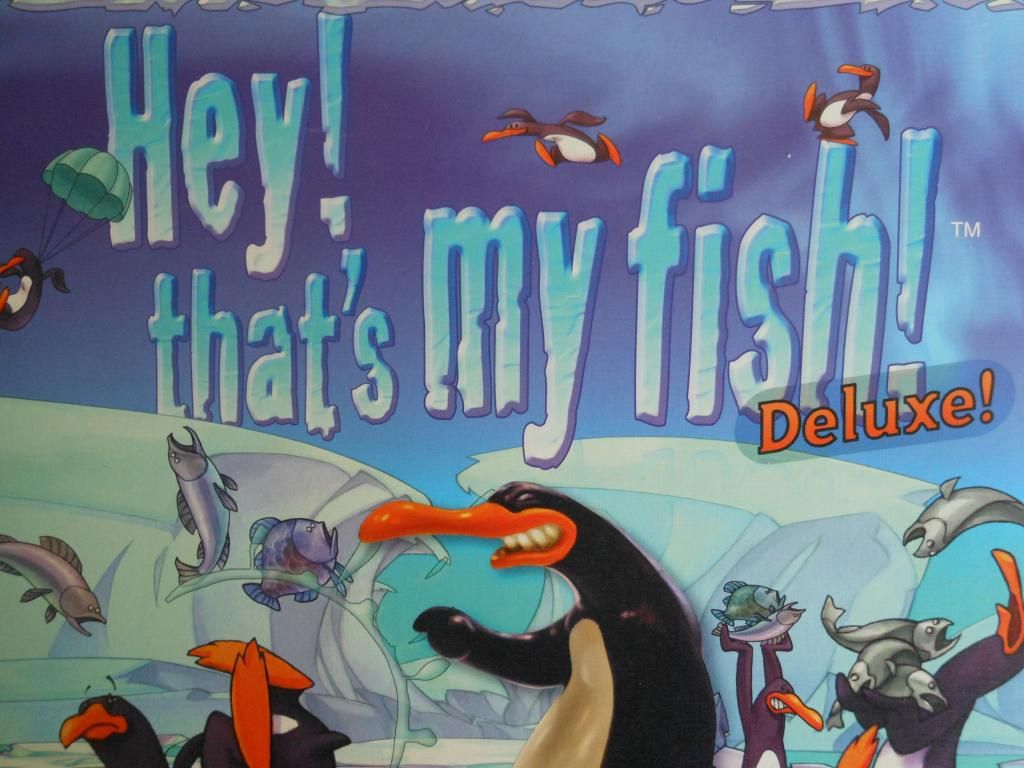
The biggest problem with the title, and indeed the theme in general, is that is gives a false impression of what this game is really like. Looking at all those exclamation points, and those kooky graphics of penguins slipping around on the ice juggling fish, you might be inclined to be believe this is a children's game. It really isn't. The rules are simple enough for children to play, but there is actually a satisfying depth to the strategy and tactics involved that make this a good game for adults who want something simple to learn, but tricky to master.

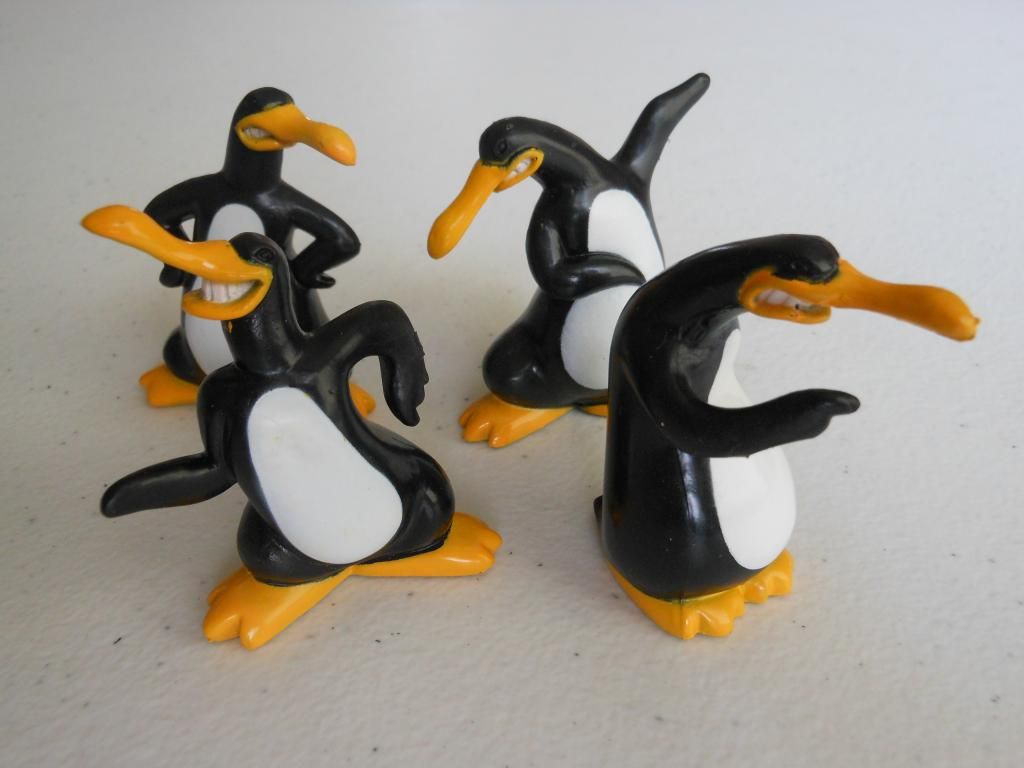
When this game was first released, it came with cardboard tokens to make the board, and little wooden penguins. It was subsequently released as a deluxe package featuring 16 really nice, pre-painted penguins. Of course, I bought the deluxe edition.


Penguin playing pieces
Superman, Silver Surfer, Disco Stu, and Evil Monkey.

The new Fantasy Flight edition falls somewhere between the two extremes. It gives you cute plastic penguins to play with, but they aren't pre-painted.

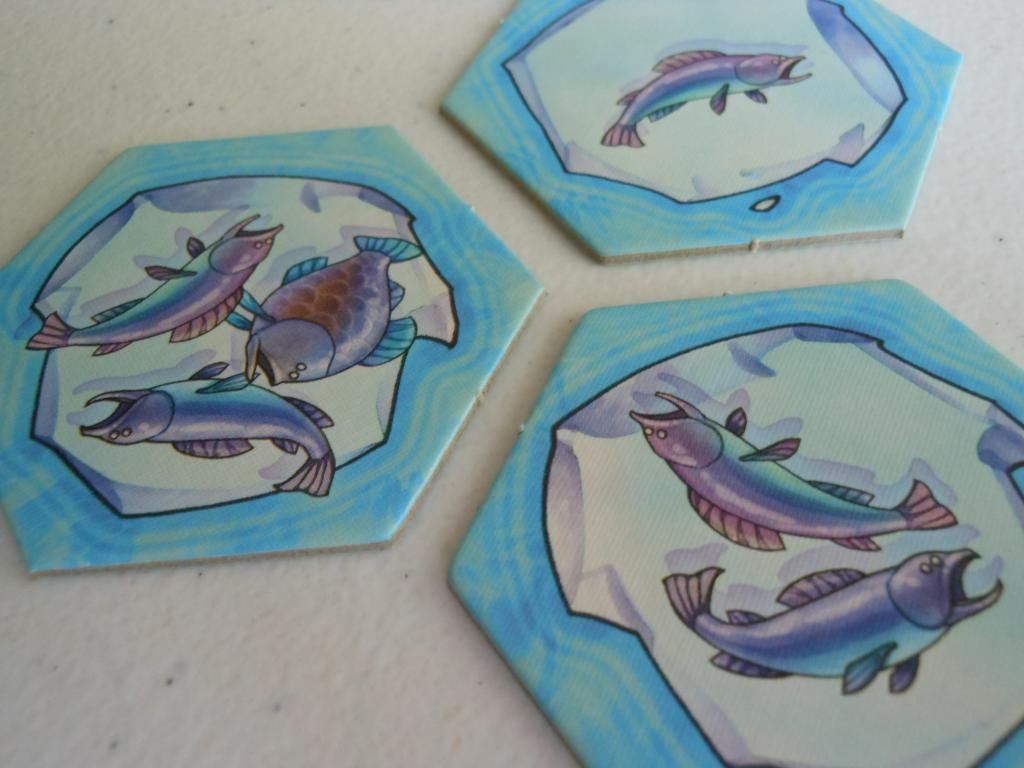
Anyway, the game ships with 16 penguins, in four sets of colours, and a bunch of cardboard hexagons with fish printed on them that represent ice floes.

That's it.

No cards. No dice. No tokens. Just the hexagons that are used to make the board, and the penguins.

It's quite refreshing to have a game with so few components. It's even more refreshing when the rules for that game are printed on a single sheet of paper.


Hey! That's My Fish! Rules!
Hey! That's My Rulebook! Concise!

So, what are the rules?

You start playing by shuffling up the 60 hexagons, and then laying them out in rows to form a square shape (or any other shape you fancy, but square is best). Some of the hexagons have one fish on them, some have two, and some have three.

Each player then takes a number of penguins from two to four (depending on the number of players), and starting with the youngest player, the players take turns adding one penguin to the board.

Once that is done, you are ready to play. The game literally takes less than a minute to set up. In your face Arkham Horror.

Gameplay is just as simple. In turn, each player picks one penguin to move in a straight line in one of the six directions available from the hexagon the penguin is currently on. The penguin can move as far as it wants until it reaches the edge of the board, or its path is blocked by another penguin. A penguin can never jump over another penguin, and must always finish its move on a space with no other penguins.

Once the penguin has finished moving, the hexagon it started its turn on is removed by the player and set aside. That hexagon is worth a number of victory points equal to the number of fish printed on it. The space on the board where the hexagon used to be can no longer be travelled over, and will block movement in the same way as the edge of the board or another penguin would. Hexagons that cannot be reached by any penguin are removed from play.

Play continues in this way, with players scoring points, and gradually causing the board to disintegrate, until there are no moves left to make. When a player cannot make any more moves, he removes his penguins from the board, along with the hexagons the penguins were standing on. Then scores are added up to see who has won.

Hey! Some of Those are My Fish! Probably!

As you can see, the rules are incredibly light; and yet the game offers a surprising amount of brain-burning enjoyment. On your turn you can only move one penguin, and this can create some agonising choices. Do you block your opponent, or do you go for another three-fish hexagon? Do you go for a high-scoring hexagon this turn with one of your penguins, or do you move a different penguin to make sure it doesn't get blocked in by your opponents?

Figuring out how to maximise your moves, preventing your opponents from scoring while grabbing all the fish yourself is quite a challenge. As the game progresses, and there are more gaps that will block movement, and a greater chance of finding yourself being blocked in, you can really be faced with some tough decisions.

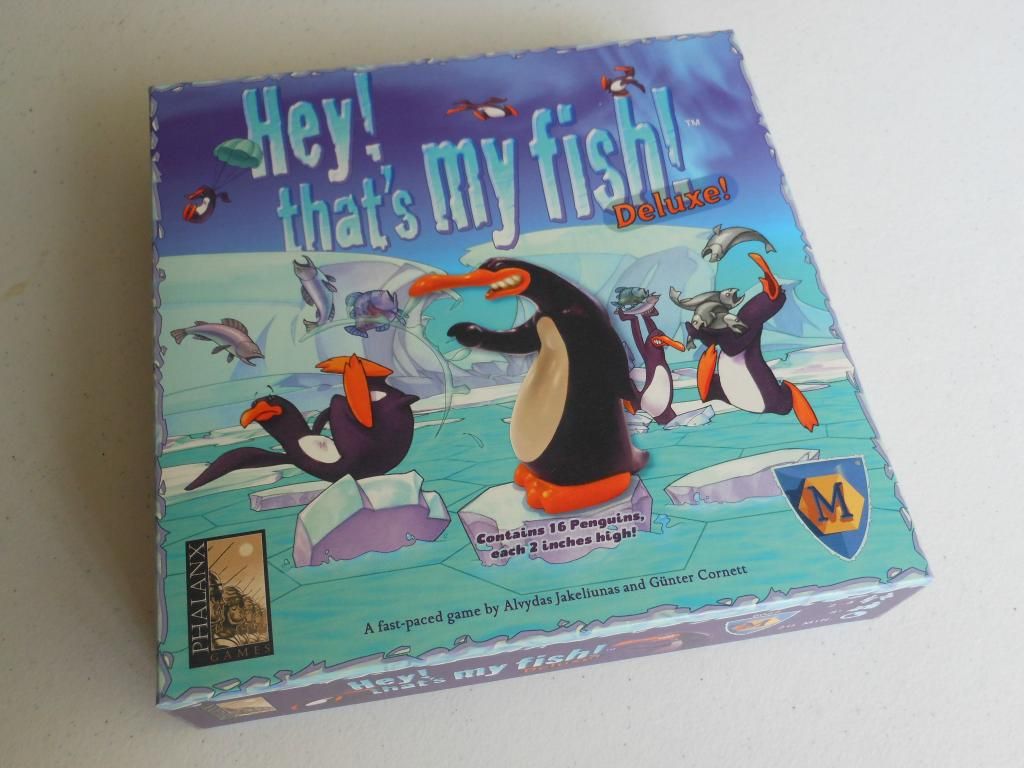
Hey! That's My Fish! Box!

Now, I'm not suggesting this is the new chess; but I am suggesting it is a lot deeper and more tactical that the silly theme and even sillier name suggests. It is also a game that younger children can play, as the rules are so easy to learn.

I have had this game in my collection for quite a long time now, and I have no intentions of parting with it. It isn't a game you are going to play all the time, but it is a great filler that gives your brain a bit of a workout without being too strenuous.

Still not convinced? Well, how about this for a good reason to buy: It can be picked up for less than £10 on Amazon.

And, you know, it has cute penguins.

(Special note: Although this game is still being made by Fantasy Flight Games, I am putting the deluxe edition in my Vault of out of production games, as it is no longer available, and is going for silly prices on eBay.)

Tuesday, 14 May 2013

Sheep Impact (A Charity Shop Adventure)

No, the title of this blog entry is not the long-awaited sequel to that awful disaster movie with a meteor colliding with Earth... What was that called...? Oh yeah, Armageddon.

Sheep impact just sort of sums up today's exciting charity shop purchases.

It's been quite a while since I wrote about charity shop finds here on Always Board, Never Boring. That's mainly because I haven't found anything good. I always look in charity shops for old out of production board games, but it really is getting harder to find anything worthwhile at a reasonable price. There are several reasons, of course. Most importantly, charity shops have got wise to the true value of things. When a load of games turn up in store, one of the staff hops on the internet and figures out which bits are worth anything, and then jacks the price up accordingly. I don't really mind that. It means a charity is making a bit more money, which is no bad thing.

The other major reason that charity shops don't tend to have a lot of good stuff is because of bloody eBay. Nowadays, when parents clear out their children's toys, they don't give them to charity; the toys end up being sold on eBay. Only broken crap, or stuff that parents don't realise is valuable, will end up in a charity store.

So, most of the time, charity stores are a complete bust. I really don't need a copy of Carol Vorderman's Sudoku in my games collection. However, occasionally (and these times are precious to me), I will find one of those things that has value, but didn't get pushed onto eBay (either because the person who gave it away didn't realise is was worth anything, or because that person simply couldn't be bothered to go through the process of selling it).

While I can't say my finds today were Earth-shattering, they were definitely the best things I have found for a while. Definitely worthy of a blog entry, anyway.

First up, the sheep...

A Shepherd and His Dog
I herd this was pretty good... (Man, I kill myself sometimes.)
Saw this copy of A Shepherd and His Dog and had to grab it. Tape monkeys had been at work, but the tape on one edge of the box had peeled off, so I was able to look inside. The game was complete - five fences, five plastic sheep, one dog, and Freddy Krueger.

A Shepherd and His Dog - playing piece
Seriously? This guy will give me nightmares. I feel sorry for the lamb...
Okay, probably not the greatest game in the world, but the pieces are cute (with the exception of that bloody-faced shepherd), and it's classic Spears. I couldn't leave it on the shelf.

Next up, the impact...

Impact - The Battle for Wolf Ridge
Dinosaurs with guns. Barney's gone bad.
Anyone who has spent any time on my blog will know I'm a bit of a theme junkie. I love a good theme, so there was no way on God's green Earth I was going to leave behind a game about dinosaurs with guns fighting oil rig workers in the desert. Why that isn't already a movie I will never know.

Impact, The Battle for Wolf Ridge, is pure plastic goodness. Four three-dimensional plastic boards, 16 excellent pre-painted figures, and spring-loaded guns that really fire missiles at each other. Colour me excited.

Dinosaurs with guns
Dinosaurs. Guns. How can this be a bad game?
So there we have it: A successful trip round the charity shops. Expect reviews when, you know, I actually play the games.

Oh, and one final thing: Impact was published by Drumond Park. That would be the same company that published Carol Vorderman's Sudoku. I guess I'm getting a little closer to buying that game after all.

Wednesday, 8 May 2013

Review - Talisman: Prologue

Today, I'm doing something a little bit different. Previously, I have reviewed physical board games that I own. Some of them have been out of production, and some of them have been new; but they have all been good old-fashioned "card and plastic" board games. However, I recently picked up an iPad for work. Of course, I started downloading board game apps for it almost straight away. I should probably see someone about this little addiction I have...


Talisman: Prologue
For iPad and Android Tablets
For 1 player (yes, you read that right)


Sigh.

Is that a good way to start a review? I don't know. It probably gives the game away a bit. I'll start again.

Sigh.

Nope. Sorry. My immense disappointment with this app makes it entirely impossible for me to even attempt to go into this review with a more upbeat opening.

I suppose it's my own fault really. After all, this is a digital version of Talisman. You know, that game where you roll a dice, move left or right a bit, draw a card, roll some more dice, and then maybe die.

That's a pretty damning description of Talisman.

I know, I'll go back in time to when I was just a wee lad, and talk about my prized copy of Talisman: Second Edition. I absolutely adored that game. It had beautiful artwork, and for a young boy, it really was a great adventure that fired the imagination. You picked one of what seemed like dozens of different characters, who all had different strengths and weaknesses, and different special powers (man, I love special powers); then you found your starting place on the board, put down your playing piece (a cardboard standee in those days - none of this fancy plastic stuff), and then you started to roll dice...

So many dice.

The board was divided into an outer ring, a middle ring, and then the centre section. The aim of the game was to move around the outer ring, buff up a bit by killing monsters and finding treasure, and then advance to the middle section. Finally, you would go into the centre of the board (using the eponymous "talisman") to claim the crown of command.

To move, you rolled a dice, and then you got to make one of your only choices in the whole game: Left or right. The decision was rarely that difficult:

"If I go left, I land in the desert, lose one life, and don't get to draw an adventure card? If I go right, I land on the fountain of strength and gain a strength point. Hmm..."

Once you landed on a space, you followed the instructions printed on the board (like The Game of Life or something). The instructions would normally tell you to draw an adventure card. The card would be a monster, a treasure, an event, or a follower. Followers travelled with you, and gave you some kind of benefit, and you could carry a limited amount of treasure which would help in certain situations. Events happened immediately, and usually did something annoying like forcing you to lose a life, all your money, a follower, or an item. Monsters would immediately fight you.

Fighting involved rolling a dice, and then adding any bonuses from items and followers. To this total you would then add your strength (if fighting a physical monster) or craft (if fighting a spirit). The monster did the same. Highest score won, and the loser lost a life.

Once you had killed monsters totalling seven strength you could cash them in for a permanent bonus to your strength. Same for craft monsters, only you got a permanent craft bonus instead.

Eventually you had enough bonuses, items, and followers to brave the inner regions of the board, and someone would win.

Usually.

Other times the game would just go on so long that everyone would get thoroughly annoyed and give up.

The biggest problem with Talisman is that there were no real choices, and not very many ways in which to mitigate the swings of fate. You could be doing really well, and then you could get turned into a toad. You could be doing really badly, and then find a lance that allowed you to cut through dragons like they were goblins. Sometimes you would hit nothing but bad adventure cards, while all your opponents were constantly picking up treasure and followers. It was infuriating, it was random; but it was an experience.

I loved Talisman, but I hated it to. I loved the start of every game. I loved selecting a character, and then watching that character grow. I loved seeing my army of followers getting bigger and bigger. But it usually happened that, by the time I got about halfway through a game, I was beginning to get fed up with it.

Still, when a third edition of the game came out, with groovy plastic characters, or course I bought it. I bought it because the idea of Talisman was so much better than the game of Talisman. I never really felt like I was playing the game: I was just rolling dice and then seeing what happened. It was like an elaborate adventure story that I had no control over, and which usually had an unhappy ending.

Anyway, eventually I went to university, so I got rid of all my board games, including both editions of Talisman (with multiple expansions). It was a bad move, because most of the games I got rid of, I now hunt for on eBay, and end up paying silly amounts of money for.

I have often considered buying the current edition of Talisman, but I always stop myself. I always tell myself, "No, you really won't like it. You have other adventure games now. Good adventure games, that give you choices. Adventure games that give you characters that all feel really different from each other, and grow in interesting ways instead of just building up one of two statistics. You don't need Talisman."

You see, I love picking a hero character. I love watching that hero grow, gaining new skills and weapons. I love adventure, and the story that each game brings. I just don't think I love Talisman any more.

However, recently Talisman: Prologue was released for the iPad. An excellent excuse to pick up the game for £2.99 rather than £40.

Bearing in mind that I have always known that the game is a luck-fest, it is quite surprising just how disappointed I was with this app.

First of all, I have to say it looks beautiful. The artwork is taken from the game, and Talisman has always been a very attractive product. Unfortunately, that is pretty much where my positive comments run out.

You see, this app is for one player only. Yeah. That's right. One player.

Apparently they are rolling out a multi-player option later on. It really needs that option, because I honestly see no reason to play Talisman solo. This game has always been about the banter: Laughing as your friends turn into toads, and groaning when they find a talisman before you do. When you are sat on your own, watching random events knock you all around the (digital) board, it just doesn't seem that entertaining.

I expect the multi-player add-on will incur a fee. Frankly, I think that functionality should have been there from the start. Maybe I am just old fashioned.

The problem with being a solo experience is that the designers had to give you a reason to play. They chose to go along the lines of giving each character in the game a series of quests, which loosely hang together in a campaign that forms a story. For example, the warrior character starts off in his first quest learning how to fight with two weapons (you just pick up two weapons and fight a monster with them), in his next mission he tries to rescue a princess from bandits. Once you kill the bandits, you realise the princess has been taken by ogres, so in mission three you have to kill the ogres. This continues through all six missions.

In theory, it's a good idea. In practice, it's a problem.

It has always been the case that a game of Talisman will be as long or as short as the players want it to be. If everyone is cautious, the game will take an age. If one player really starts to race to level up, it forces everyone else to do the same thing. But if you don't have any opponents at all, you don't have any incentive to rush. You can just creep around the board, slowly building up your strength and craft until you are ready to wipe the floor with anything you meet.

The designers of the app realised this, and attempting to resolve it by making the challenges time trials. If you complete the mission in only a few turns, you get three talismans, if you take longer, you score less and less talismans. You can complete your mission and yet score no talismans at all.

Seems like a good solution, right? Wrong.

Wrong. Wrong. Wrong. Wrongity wrong wrong.

It's wrong, because the mechanics of Talisman do not allow you to win any of your missions through skill, and there is no way to skilfully complete a mission within a time limit. If you get three talismans on a mission it is because you got lucky.

As an example, consider the first mission for the troll character: He has to lose a life, use his special skill to regenerate that life, and then fight a strength nine monster. To get three talismans, you need to do all this within ten turns. Doesn't sound too hard, especially when you realise they have stacked the deck of adventure cards so that the first card you draw is always the pestilence event that forces you to lose one life.

The problem is that the troll's special regenerate ability can only be used if you roll a six for movement. On my first try at this mission, 13 turns had elapsed before I rolled the six I needed to regenerate my lost life point, by which time it was already too late to claim three talismans.

Where you land on the board each turn is determined by dice roll, so any mission that involves landing on a specific space will never be completed through skill; it will only ever be completed because you were lucky enough to roll the exact move you needed to land on that space. After bouncing backwards and forwards over the space where the two ogres were holding the princess captive for more than ten turns, I realised there was literally no fun to be had here.

Now some people will be saying, "What did you expect?" I guess that's a fair point. People have never won games of Talisman because of their tactical acumen. But for an app like this, the lack of any decision-making makes the whole thing seem so totally pointless.

There are other issues as well, but those are related to the way the app is designed. For example, rolling the dice involves touching a small dice on the screen. Using a special ability, or selecting to pick up an item, involves tapping a tiny symbol in the top corner of the screen (which is incredibly close to the button for NOT picking up the item). It's a bit clunky. Not anything that makes the game unplayable; but stuff that could have been better.

All told, I am not a happy bunny. I am sure that when the multi-player option becomes available, I will grab it, so that I can sit with my wife and play a few rounds; but I don't think even that will save this app for me. I certainly don't think it is a game that would be any fun to play remotely with people from all over the world, because you still miss out on the jokes and good humour that were such an integral part of my enjoyment of Talisman all those years ago.

Ultimately, what playing this app has made me realise is that Talisman really isn't an adventure when you don't have some friends to take the journey with you.

Wednesday, 17 April 2013

Review - The aMAZEing Labyrinth

Where does the time go? One minute you're promising to do more regular updates to your blog, and suddenly it's a month later and you haven't done a thing... To at least give the impression that some new content is appearing here, I have reproduced a review of The aMAZEing Labyrinth, which I first published on www.BoardGameGeek.com back in March 2010.

The aMAZEing Labyrinth


The aMAZEing Labyrinth
Published by Ravensburger
Designed by Max J. Kobbert.
For 2-4 players, aged 7 to 99 years (according to the box).

I used to play a lot of board games when I was young. As I didn't know too many people who liked board games, I tended to own most of the games I played; but there were exceptions, one of which was The aMAZEing Labyrinth. I only played this game once when I was young, and I remembered it being an absolute joy - simple to play, with a nice mix of randomness, "gotcha" elements, and planning.

So, now I'm in my 30s, and finally I own my own copy. It was given as a gift from my mother-in-law, who has a knack of finding games I used to love when I was young. Does the game stand the test of time? Let's see...

This is a game for 2-4 players, each of which will be controlling a neat little pawn that looks like a witch or a wizard. Each pawn is a different colour and sculpt. Having a different sculpt for each piece is totally pointless, but it is a nice touch that adds to the overall package.


The aMAZEing Labyrinth playing pieces
I apologise for this bloody awful photograph...


The sturdy board for this game has certain tiles fixed to it (which don't move), and certain other tiles that are placed on it but which can move freely. This is the genius of the game: Every turn someone will add a tile to the board, which in turn will push one of the other tiles off of the board. On the following turn, the tile that was pushed off gets returned to the board, thereby removing a different piece. In this way, the board is constantly changing. Each tile has a picture of a tunnel on it (either a right angle turn, t-junction, or straight road), and as the pieces move around, paths will link up or break apart. When paths are linked, you can move along the tiles, but when the paths are broken, you have to try and move pieces around until a route opens up again and allows you to continue on your way.


The aMAZEing Labyrinth board
The board before being covered in movable tiles.
  
The aMAZEing Labyrinth board
The board during a game.

But what's the point?

At the start of the game, you will be dealt a hand of (very flimsy, badly illustrated) cards. Each card has a symbol on it which matches a symbol on one of the tiles on the board. The aim of the game is to move around the board, stopping your pawn on the tile that has the symbol matching your first card. Once this is done, you reveal the card to your opponents and then look at your next card. You repeat the process until you have revealed all of your cards, and then you return to your starting space to win.

A turn consists of taking the single tile that is not on the board, and pushing it onto the board at one edge (thereby removing a tile from the other side of the board). You can then move your pawn, moving along as many tiles as you want until reaching a dead end OR the tile that has the symbol on it you require. Sometimes the paths on loads of tiles will link up, and you will be able to travel several tiles in a single turn, but sometimes you will not be able to move at all.

The game is very simple, and can be taught in just a few minutes, but it is absolutely loads of fun. It is not possible to plan too far ahead, especially in a 4-player game, because the board will change so much before you get to move each time, so people looking for a deep, thoughtful game will be disappointed. However, for a very light filler, this is absolutely perfect, and it plays fast. It plays really well with children who enjoy seeing the paths linking up, and get very excited when they can match a tile; but surprisingly, the game is also a hoot with adults.

For such a simple game, there is also quite a bit of variety. The board is generated randomly at the start of the game by simply drawing the tiles and placing them one after another, and there are enough different combinations of tiles that you can be sure no two games will ever be the same. You are also dealt random cards, so you will rarely, if ever, be looking for the same set of symbols from one game to the next. Even the number of symbols you are looking for varies depending on the number of players.


The aMAZEing Labyrinth cards
My cards - wrapped in Hugo's Amazing tape, of course.


It is also worth noting that you can play different variants to tailor the game to the crowd you are with. In the standard game, you are secretly hunting the top symbol in your deck of cards, so you do not know what other symbols you will need, and no-one knows exactly what you are looking for. This can easily be changed so that, for example: you openly reveal the card you are looking for, enabling other players to try to block your path and creating more "gotcha" situations. You could also play so that you can look through your deck of cards and select the symbol to go after, rather than simply going for the top card in the deck - a variant that will make the game easier for children.


The aMAZEing Labyrinth rules booklet
The rules booklet.


I love complicated, theme-heavy games, and I love deep, strategic games, but I still think there is a place in my collection for this little gem. It plays so smoothly and elegantly, so quickly and without fuss, that you cannot help but get involved in the fun. With a few drinks and a crowd of adults (even non-gamers) you can pass an hour or two laughing at the misfortunes of others and trash talking, or you can settle down with your kids for a game that is not too "mean," doesn't involve a lot of direct competition, teaches pattern recognition and decision making, and is just good fun.

I have never played this with a group of people (of any age) who didn't enjoy it. And several people I have introduced it to have gone away intending to buy a copy for children they know.

Highly recommended.

Tuesday, 19 March 2013

Review - Cthulhu Dice

I was going to call this review "I ain't dead," because... well... I'm not. But it's been so long since I updated this blog, anyone who reads my stuff (do you exist? Let me know!) might think I had shuffled off this mortal coil. As it happens, I've just been spending a lot of time promoting my series of fantasy books, The Legend Riders, and time has gotten away from me a bit.

But I'm back now, so here's a little review about a game that isn't really much of a game at all: Cthulhu Dice.

Cthulhu Dice


Cthulhu Dice
Published by Steve Jackson Games
Designed by... Take a guess
For 2-6 players, aged 10 to adult

Okay, before I begin, I'm going to talk about the name Cthulhu Dice. In the UK, the word "dice" is both a singular and a plural. However, in America, "dice" is the plural of "die." That means, it may be surprising to an American audience that Cthulhu Dice contains just one dice (er, die... whatever). Apparently, the reason for this is because Steve Jackson didn't want the game to be called Cthulhu Die, on the grounds that Cthulhu can't die. Don't know who Cthulhu is? Then you haven't read enough of the works of H P Lovecraft.

Right, with that bit of silliness out of the way, let's talk about the game.

Cthulhu Dice does not have much in the way of components. It ships in a blister pack which is discarded after opening, and from then on all the components are stored in a small ziplock bag. At least it doesn't take up much space on the game shelf.

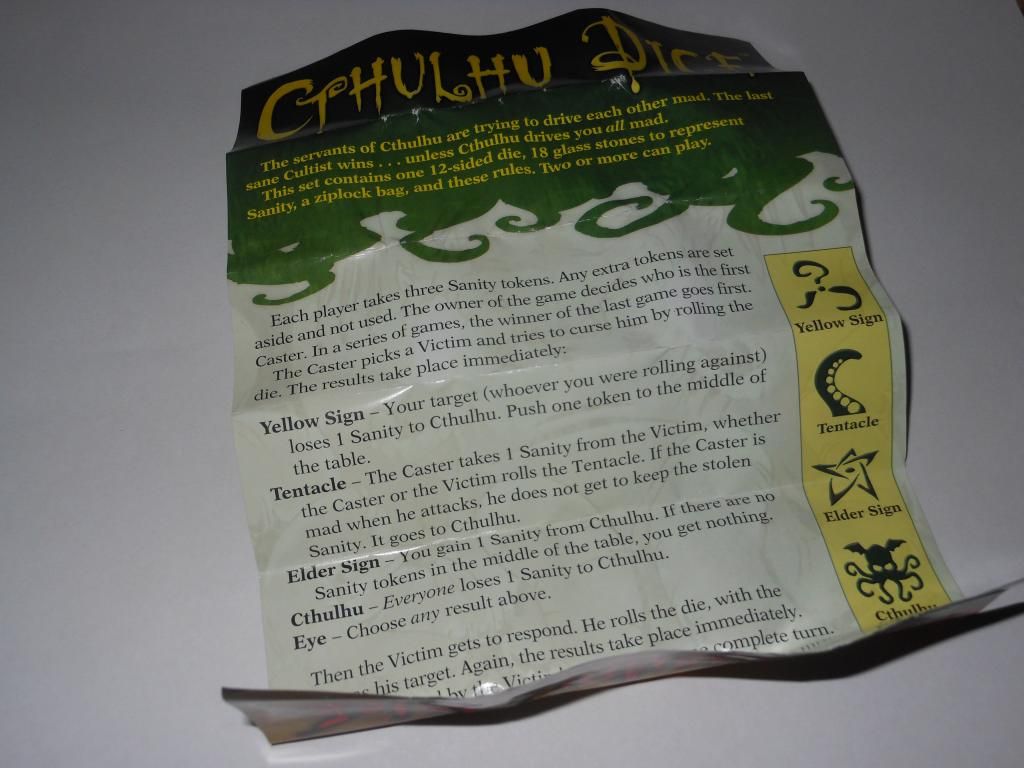
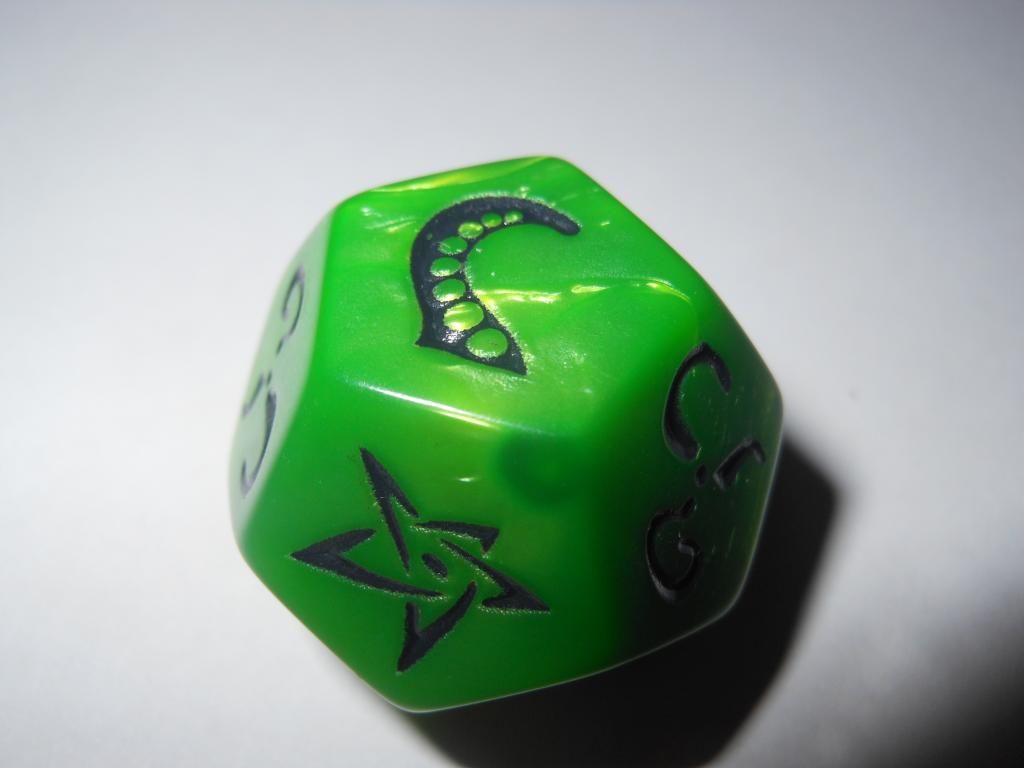
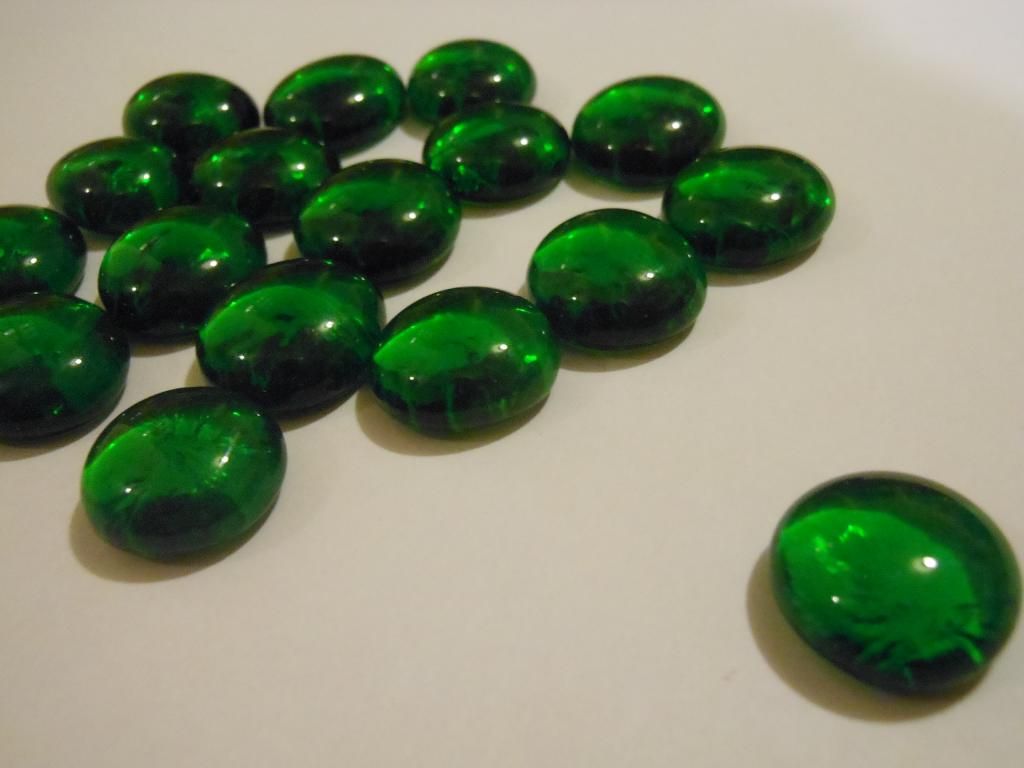
The components are 18 glass beads (the kind you can get pretty much anywhere, but which are quite nice to handle anyway), a crumpled rules sheet (honestly, it is folded up so small to fit in the blister pack, it looks like it has been mauled by a Hound of Tindalos), and a 12-sided dice (die... whatever). The dice, it has to be said, is really nice. You can get different colours, and it is really chunky with nicely embossed symbols. My wife bought this game for me because I am a fan of Lovecraft's writing, and she thought the dice was cool. She wasn't wrong.

Cthulhu Dice Instructions
The rules... No, I didn't screw them up in frustration.


The storyline behind the game is that the servants of Cthulhu (one of the characters from H P Lovecraft's pantheon of eldritch horrors) are trying to dive each other mad. Why? Don't know. Doesn't really matter.

Each player takes three green beads, which represent sanity. Going insane is such an important part of the works of Lovecraft that sanity, and keeping it, are pretty much staples of any game based on his writing. The owner of the game decides who will be the "Caster" first (and why wouldn't you pick yourself?), and then the Caster picks a "Victim" and rolls the dice. The dice has different symbols on it rather than numbers, and the symbol you roll determines what happens.

Roll the Yellow Sign: The Caster's Victim loses one sanity to Cthulhu (a pool of sanity in the middle of the table that starts empty).

Roll the Tentacle: The Caster TAKES one sanity from the Victim. This happens even if it was the Victim who rolled the dice.


Cthulhu Dice
The tentacle


Roll the Elder Sign: The Caster gains one sanity from Cthulhu (the pool in the middle of the table), if possible.


Cthulhu Dice
The elder sign


Roll the Cthulhu symbol. Everyone loses one sanity to Cthulhu.

Roll the Eye: The Caster chooses any result.

After applying the result of the roll, the Victim will roll in retaliation, and the result of the roll is applied. The player to the Caster's left then becomes the new Caster, and play continues. You can't choose to pass, and the only choices you will have to make are who will be your Victim, and what result to choose if you roll the Eye. These are really not choices at all.

If you loss all your sanity points, you are insane. You can still attack, but you cannot be attacked, and the only way to become sane again is by winning sanity from Cthulhu with the Elder sign (or by rolling an Eye, and then choosing the Elder Sign result).

The winner is the last person to remain sane. If everyone goes mad, then Cthulhu wins. Either way, no-one will care.


Cthulhu Dice sanity tokens
Globules of sanity


Yes, the game really is that simple; and yes, it really is that bland. There is no strategy, and there are no interesting choices to make. Of course, the game is clearly not trying to be the new Chess, but even as a silly filler game it is severely lacking.

Over on BoardGameGeek I gave this game two stars out of ten. That was reviewing the product as a game. However, the product does have merit as a way of choosing the first player for a real game. There are many games on the market that don't offer a real way to select the first player: They just say "choose at random" or they pick some silly method such as "the person who most recently went to an island is the first player." If you are about to play such a game, you can whip of the Cthulhu Dice and play a quick round. Cthulhu Dice is over in two or three minutes, and the winner gets to be the first player in the proper game you are about to play.

I suppose Cthulhu Dice could also be used as a drinking game, with shots replacing sanity tokens; but I'm a married man with a child, and my days of drinking games are far behind me. Besides, drinking games aren't good for you.

So, all told, I don't really think much of Cthulhu Dice. However, I am going to keep it. It is so small it hardly takes up any space, I like anything with a Cthulhu flavour, and the dice is really nicely made. If those sound like good enough reasons to own something, then you may want to pick up a copy; just don't expect much of a game.