Showing posts with label games for children. Show all posts

Wednesday, 8 October 2014

Review - Take the Cake

Take the Cake


Take the Cake
Designed by Anja Wrede
Published by Gamewright
For 2-4 players, aged 4 to adult

Take the Cake game
To quote a friend, "Everyone's cake is favourite chocolate cake."


Recently, I was watching a children's television show called Bing with my daughter. Bing is a cute black bunny, and in the episode we were watching, Bing had found a balloon. He was playing with Balloon, and having lots of fun, when suddenly Balloon popped. Bing desperately asked for someone to "make Balloon big again," but he had to face the fact that Balloon was never coming back.

To ease Bing's sadness, his friend Flop suggested putting Balloon in the "bye bye" box, where it would always be safe. And it was around about this time that I figured out what this cartoon was really all about.

After Bing had put his balloon in the "bye bye" box, he drew a picture of Balloon on the top so he would always remember it and the happy times they shared. When Flop asked Bing what Balloon was doing, Bing said he was happy, and "floating up and up into the sky."

I do not think I have ever seen a television show that treated children with such respect. It took concepts of death, loss, burial, denial, and even certain religious beliefs, and condensed them into a ten minute show that made such big, impossible subjects something that children could relate to in their own way.

The creators of Bing have a talent: An ability to talk to children, not to talk down to them. It is an ability that I hugely admire, and which I often find lacking in the world of board games.

All too often, you see companies churning out horrible roll and move board games that show an incredible lack of respect for their young target market. They just stick a much-loved cartoon character or book hero on the cover, and pass it off as a "must have" family game. But children are not stupid, and they should not be underestimated. They want to be entertained just as much as adults, and they deserve games that have been created with the kind of love and dedication that we demand ourselves.

Which brings me to Take the Cake, a cute little filler game for children aged four and up.

My daughter's godfather, who is one of my best friends and part of my regular gaming group, purchased Take the Cake for my daughter for Christmas in 2013. She was only three at the time, but she had absolutely no problem with the rules, and we have played countless times since she excitedly unwrapped it.

It is a good game.

Not a good game for adults. But a good game for children.

It is a game that is colourful, tactile, engaging, fun, and educational. It combines everything you would hope to see in a children's game. And yet the game is about as simple as games get.

Players are aiming to decorate a series of cupcakes, each represented by a card. The cards show cupcakes with a variety of different coloured "sprinkle" shapes on the top. For example, a cake may have a single purple circle, or it may have a white cube, a green triangle, and a pink circle. There are 16 cupcakes in total, with four in play at any one time.

On his or her turn, a player rolls a dice. This results in a number between one and three, representing the number of times the player gets to shake a plastic cupcake filled with wooden shapes of different colours.

Take the Cake cupcake
The cute plastic cupcake and "sprinkles."


Shaking the cupcake causes some shapes to fall out, and the player then matches those shapes with shapes depicted on the cards. If a player manages to complete one or more cards, the player takes those cards, and replaces them with new cards from the deck.

Once all the cupcakes have been decorated, players add up how many cakes they have to determine the winner. In the case of a tie, players add up the "sprinkles" on their cakes to determine who is the winner.

Like I said, it is a very simple game.

But for young children, it is absolutely perfect. Shaking the shape dispenser is pleasantly tactile, and the children have to count the number of shakes to ensure fair play. Additionally, the pattern and colour recognition element is ideal for children much younger than the four and above age suggested on the box.

And then there are the choices.

Not many choices, admittedly. But choices.

For example, is it better to score two cakes with one shape on each, or one cake with three shapes on it? The higher value cakes are better for the tie breaker, but if you get enough low value cakes, then there won't be any need for a tie breaker.

There are also plenty of situations where children have to figure out how to place shapes to make it as difficult as possible for other players to finish the cakes, an element of the game that is even more enjoyable when you consider that certain shapes (cubes) are easier to get out of the plastic cupcake than more complex shapes (stars).

Take the Cake cards
The cupcake cards.


There is nothing incredibly deep here, but there is just enough of everything to make it a fun and engaging experience for young gamers. The designer has taken something as big and impossible as modern games, and created something that children can relate to.

And adults too, I guess.

Of course, adult gamers are never going to play this without children; but I have played Take the Cake for hours with my daughter. One day, she will be too grown up to play it anymore, and we will relegate it to the "bye bye" box.

But we will always have those  happy times to remember.

Tuesday, 22 July 2014

Review - Dragonology: The Game

Dragonology


Dragonology
Published by Paul Lamond Games
Designed by Anne Nonimous
For 2-6 players, aged 8 to adult

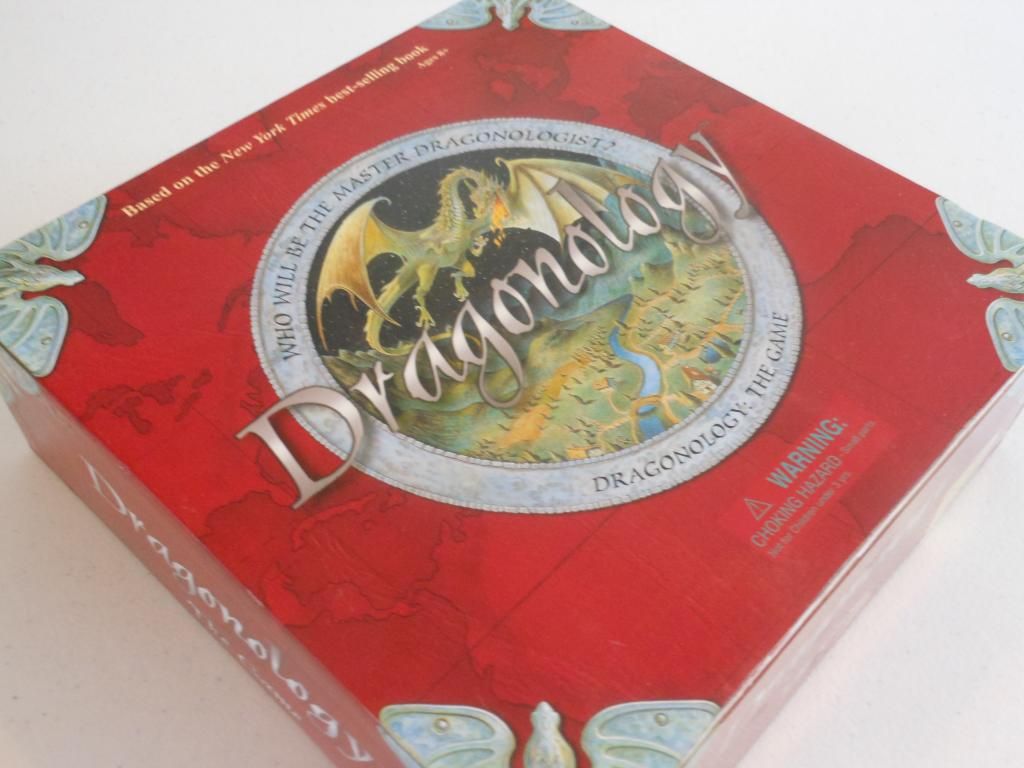
Dragonology game box
Pretty, pretty box.


Anyone who knows me, and knows what I do for a living, is aware that I am a huge fan of mythology. I love Greek mythology, and anything involving werewolves and vampires (not the sparkly kind) is going to catch my interest; but if I had to pick one type of mythological creature that I love more than any other, it would be dragons.

Why am I telling you all this? Because it should help to explain why I went out of my way to pick up a copy of Dragonology: The Game.

Way back in the mists of time, when my wife was still my girlfriend, I purchased her a copy of the Dragonology book. It is a very special book, full of humour and magic. My wife loves it, I love it, and my daughter (who is rapidly approaching her fourth birthday) loves it too. It was only natural that I wanted to see what a game based on that book was all about.

Of course (rather depressingly), it is about rolling dice.

And moving.

Okay, to be fair, I knew it was a roll and move game before I purchased it; but it has an enjoyable theme, and the box is packed with cool plastic dragon pieces, so I thought it was worth a look. Unfortunately, those lovely pieces are the epitome of what is wrong with this game: It is all style, at the expense of function and fun.


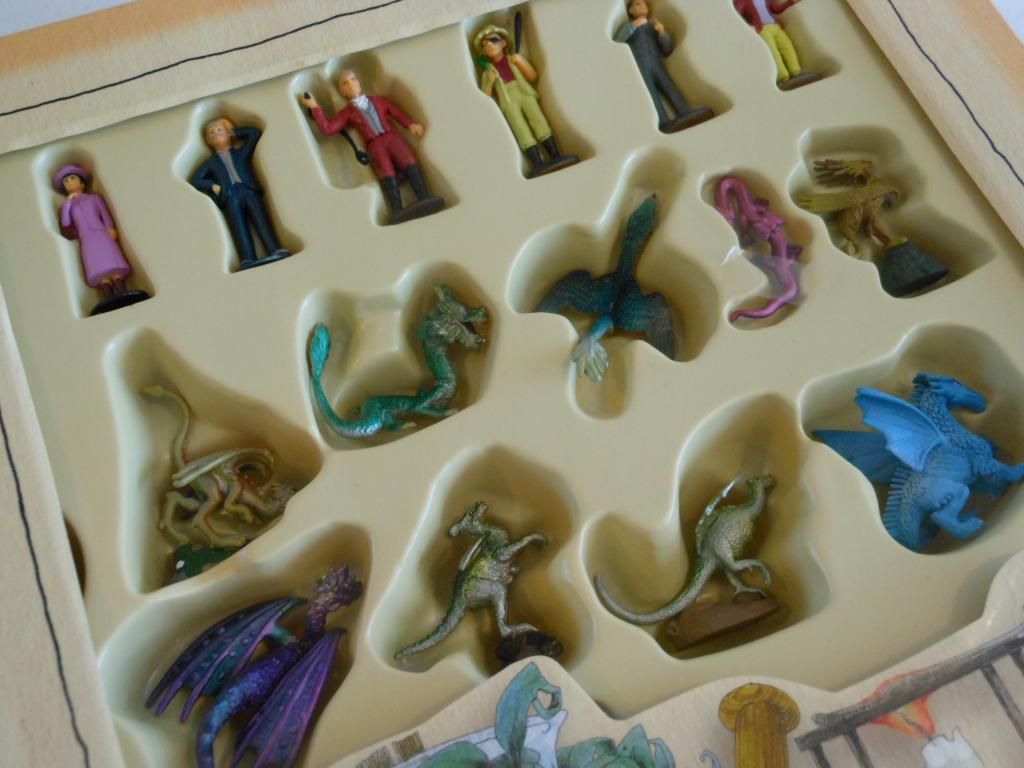
Dragonology playing pieces
The playing pieces.


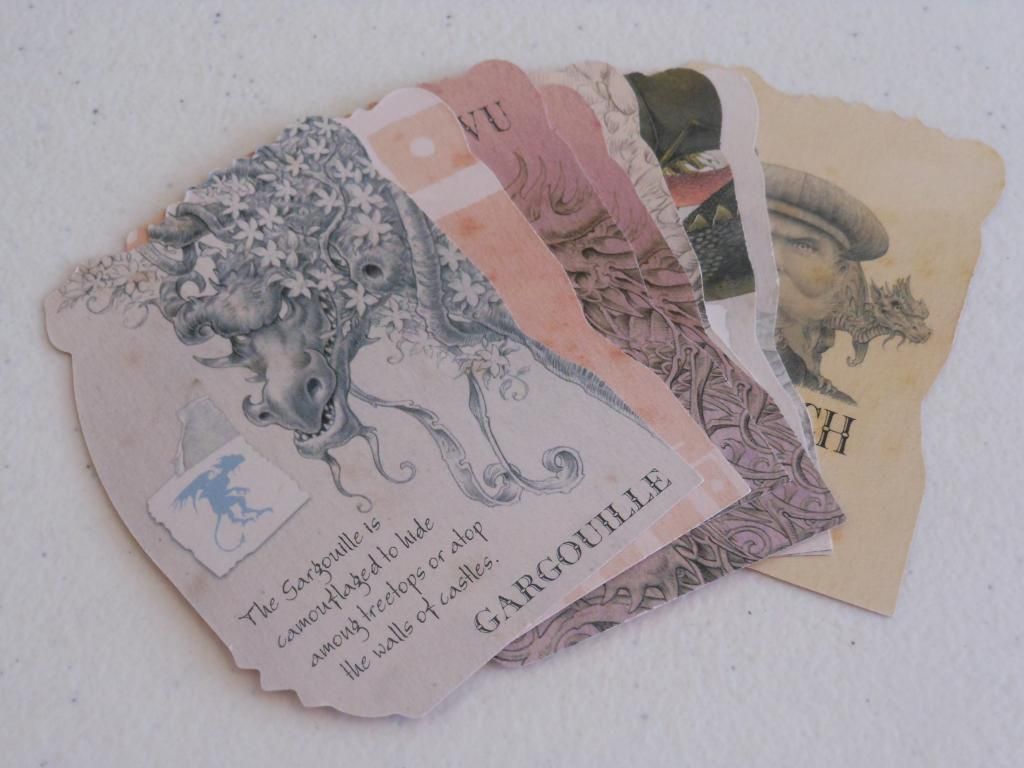
The problem is immediately apparent as soon as you open the box. For a start, the cards are shaped like dragons. Seriously. Have you ever tried to shuffle a dragon? It isn't easy. And they really don't like it.

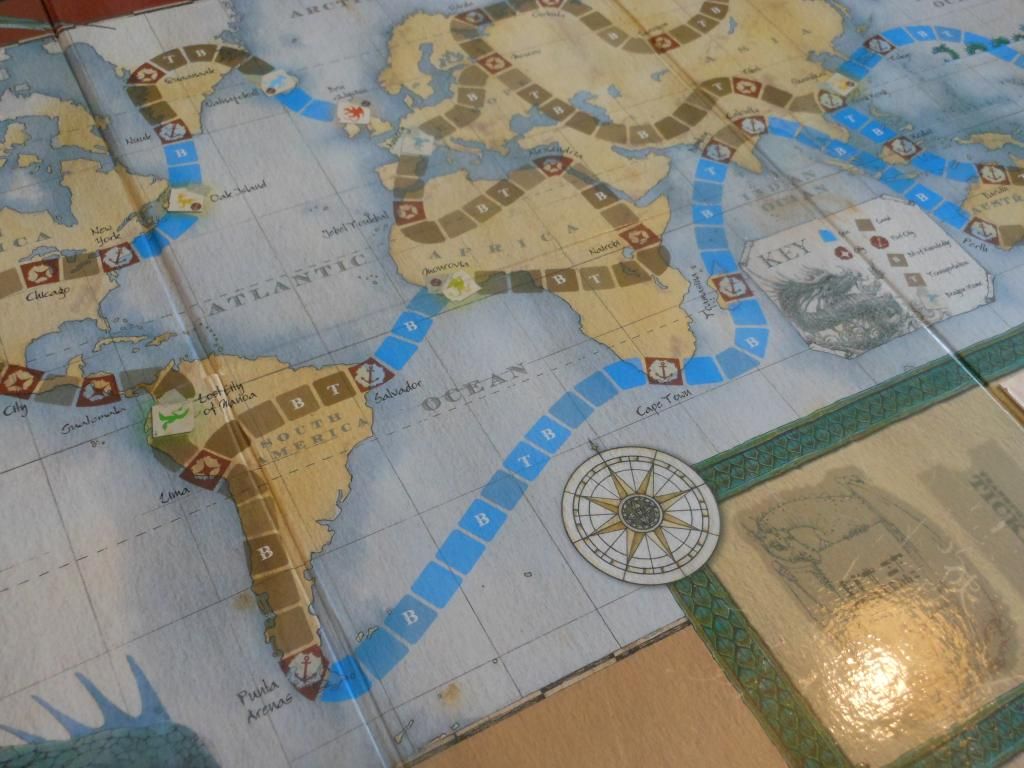
And then there are those playing pieces, representing the characters that are jet-setting around the world looking for dragons, and the dragons themselves. They look fantastic, but most of them don't stand up due to the stupidly small bases. Of course, the bases have to be stupidly small because of the stupidly small spaces on the (rather beautifully illustrated) board.

But at the end of the day, it is the game that is important, right? As long as the game is good, you can overlook the frustration of constantly picking up the pieces, or the annoyance of trying to shuffle cards that seem to be designed specifically to prevent you from doing so.

Of course, the game isn't good.

The aim is simple. You move around the map (usually by rolling a dice), trying to land on spaces that give you the option to draw one of those stupid dragon cards. These cards are called, rather unimaginatively, "Bit of Knowledge" cards. They are called this because they contain bits of... Yeah, okay, I think you can figure it out.

Some cards have your standard "take that" spells that allow you to screw other players by stealing their cards, or even stealing their dragons, while other cards allow you to take extra turns, or defend yourself. However, most of the cards contain a bit of a description about a specific kind of dragon. If you ever have three cards from a set, and you land on the "home" space for the related dragon, you can claim that dragon as your own. If you successfully collect three dragons, and then land on the "dragon's eye" space on the board, you win the game.


Dragonology cards
Stupid-shaped cards


In theory, it doesn't sound so bad. It's just set collection, with a bit of "take that" and dice rolling.

In practice, it is an agonisingly long exercise in tedium.

The biggest problem is that movement is primarily by dice rolling, and you always have to move exactly the number of spaces rolled. This results in that classic, laugh-inducing situation where a player is desperately trying to land on a dragon space in order to claim a dragon, but keeps rolling the wrong number. Now, everyone knows how annoying that is when you are rolling a six-sided dice. Well... Now imagine that with a 12-sided dice.

That sounds fun, right?

Okay, to be fair, the game tries to do several things to mitigate the dice-rolling. First of all, one face on the dice is a dragon's eye logo, which allows you to teleport to any dragon space you want. Additionally, certain spaces on the board allow players to take a transportation ticket card. Players use these to move by air, sea, or road, without using the dice.

Even so, most of the time, movement is going to come down to dice rolling; and the possibility of having to move up to 12 spaces out of your way means that landing on anything you specifically want to land on is a real chore.

Things are made even worse thanks to the layout of the board. In most cases, a player will end up with a choice of three or four routes, so every turn comprises  rolling the dice, and then painstakingly counting the number of spaces along multiple routes to determine the best space to land on.


Dragonology board
Choices. So many choices...


And then there is my favourite thing in any game ever: Blank spaces. There is nothing better than rolling the dice, checking all your possible routes, and then realising you are going to end up on a space that allows you to do... absolutely nothing.

And finally, as if it wasn't already tedious enough trying to win the game, there are the "take that" cards. There are 81 cards in the deck, and 36 of them are special cards. Of those special cards, there are 10 cards that allow you to take cards from other players, and two "master claw" cards that allow you to take one of their dragons. The real kicker? The "master claw" cards cannot be blocked by any of the "shield" cards in the deck, so that hard-won dragon you have in your possession is getting taken away, and there is absolutely nothing you can do about it.

That sounds fun, right?

The sum total of rolling the dice, counting all the spaces, gradually accumulating the cards you need, claiming dragons, then losing dragons, and then trying to get to the "dragon's eye" space to win, takes almost forever. The nightmares will last even longer.

Really, this game just wasn't well thought-out. The board needs a complete redesign, with less spaces, for a start. I would also go for rolling two six-sided dice and then having the choice of using one value, or adding the two values together. But honestly, the game isn't worth tinkering with. I bought my copy for a couple of quid in a charity shop, and I think that might have been just about worth it for the dragon pieces. Other than that, there is nothing to see here.


Dragonology dragon piece
So pretty.


Anyone reading this is probably thinking, "What did you expect from a children's game that was churned out to the mass-market to take advantage of a related book's status as a New York Times Bestseller?"

The answer is simple: I wasn't expecting much at all.

But it's always nice to be surprised sometimes, isn't it?

Unless, of course, that surprise is someone playing an unblockable "master claw" card when you are one space away from winning the game.

Tuesday, 31 December 2013

Review - Race Around Britain!

Race Around Britain!


Race Around Britain!
Designed by Bertram Kaes
Published by Ravensburger
For 2-6 players, aged 8 to adult


Race Around Britain! game box
Those kids are totally faking it...


So, as you might know, I have this... condition. I like to collect old board games. It's actually quite a fun way to spend the time. I enjoy hunting down the games, and then cataloguing the components, trying to find space for them on the shelf.

Sometimes, when I'm lucky, I even get to play the games I own.

Surprisingly, my wife seems to condone this kind of silly behaviour; and when she goes off shopping without me, she will always check out the charity shops to see if there is anything I might like. She once asked me what she should look out for, and I gave her one simple rule: "Never leave a Ravensburger on the shelf."

This simple rule has yielded some pretty positive results. She scored a complete Enchanted Forest (1982 edition), which is in lovely condition, and one of my Christmas presents this year was an unpunched, unplayed copy of Scotland Yard, which I was so excited about I nearly did a little wee.

However, there are exceptions that break any rule, and I was unable to disguise my horror the day my wife brought home Race Around Britain!

I mean, seriously; you know this game is going to be awful. It has an exclamation mark in the title, and it's about travelling around Britain. If I want to travel around Britain I'll buy a train ticket, not a board game.

And that front cover? Showing two smiling kids, with their dad, playing the game... Yeah. That ain't fooling anyone. They look like they've just buried Mum under the patio and are trying to act natural for when the cops show up.

Now, you may be wondering why I think this game is so bad. I'm glad you asked...

Race Around Britain! basically combines a whole bunch of game mechanisms I hate.


Race Around Britain game board
They really took the time to make Britain look as dull as possible.


The concept is simple: A starting city is chosen, and then 12 other cities are selected at random (four cards each from three stacks of location cards). The top card is turned over, and the "race" begins. On each turn, a player rolls the dice (roll and move, hurrah!) and then moves the number of spaces indicated, heading for the currently revealed location. If a player lands on the location (and of course, this requires an exact roll of the dice), he or she wins two points. Furthermore, that player then gets to answer a trivia question about that location (hurrah!), for the chance to win an additional point.


Lovely Plymouth
I went to university in Plymouth... The more you know...


After all that excitement, the next location is revealed. This continues until all 12 locations have been visited.

And then all the players have to race back to the starting city. The player who reaches the starting location (by exact roll of the dice, of course), wins a bonus three points, and then everyone adds up their points to determine a winner. Not that anyone will care by then.


Race Around Britain tokens
Plastic tokens for keeping score.


So there you have it; a game that combines everything wrong with board games: roll and move, requiring an exact roll to land on spaces, and trivia.

The trivia element is actually the least egregious aspect of the game. It almost makes sense. Most of the points are allocated to people who are lucky enough to roll the numbers needed to land on certain spaces, and the trivia element allows people who are not so lucky a chance to catch up. Of course, you only get asked a question if you land on the right location in the first place, so normally the questions just help the luckier people get even further ahead.


Race Around Britain rules
The rules sheet - great job by the graphic designer, there.


I can't even recommend this game as an educational tool. A game can last for a painfully long time, as each location needs to be reached by exact roll of the dice; and yet only 12 trivia questions will be asked. This is just as well, as there are only four questions for each city. If you played with any kind of regularity (which you wouldn't), you would quickly get through all the questions available.

You could say that the game will help children learn geography, but the terminally dull gameplay, and the terminally dull artwork on the board, is hardly going to keep anyone interested long enough for any kind of learning to take place.


Race Around Britain game components
Capture the flag... Or... You know... Don't bother... Whatever.


So, no; I'm not keeping Race Around Britain! in my collection. And maybe it's time I gave my wife a more definitive set of board game-hunting rules to follow...

Monday, 23 December 2013

Review - Dr Seuss's How the Grinch Stole Christmas! Game

How the Grinch Stole Christmas


Dr Seuss's How the Grinch Stole Christmas! Game
Published by University Games
Designed by someone who chose (or was forced) to remain uncredited.
For 2 - 4 players, aged 4 to adult


How the Grinch Stole Christmas board game
It looks like a present! Cute!


My daughter turned three this December. She has been quite interested in board games for a little while, and we have been playing Parcheesi and the like over the last few months. It is truly wonderful to watch how her ability to play games is developing, and how much fun she has spending time with me, my wife (and sometimes our friends) playing board games. And yes, I admit, I was proud when I found out her most wanted birthday present was a board game she had seen on the television called Go Piggy Go (a game I will be reviewing another time, and which is surprisingly tactical and fun).

Anyway, as a result of my daughter's increased interest in games, I have started looking for more games I can play with her. And so, I picked up How the Grinch Stole Christmas in a little charity shop ready for the festive season. I didn't expect it to be very good, but I will play anything when my little girl is at the table: Snakes and Ladders, Junior Monopoly, Candyland, it really doesn't matter. The important thing is spending time with her, and...

What? Why are you looking at me like that?

Okay, okay, I'll confess: I love the Dr Seuss books. I think they are wonderfully inventive, and excellent for teaching children to read; and one of my favourite Christmas stories is How the Grinch Stole Christmas, so if I am being honest, I would have purchased this game no matter what. Besides, it gives me something interesting to write about.

Now, where was I?

Oh yeah. How the Grinch Stole Christmas is published by University Games as part of their Beginner Games series. Games in this series are exceptionally easy to learn, quick to play, and feature elements that help children to read and learn social skills. The focus here is on learning, and encouraging children to play well, and that means you can't really expect much from the game itself. Hardcore gamers need not apply.

Inside the box, you get a nicely illustrated mounted board, four cardboard player pieces in plastic stands, a spinner, and some lovely three-dimensional cardboard "Christmas presents." The quality is okay, but not in the same league as many modern games from companies such as Queen Games and Days of Wonder.


How the Grinch Stole Christmas game board
Forks in the path encourage decision-making for young children.


The game itself is simple. On your turn, you spin the spinner, and then move your playing piece that number of spaces.

Yeah. It's roll and move. What did you expect?


How the Grinch Stole Christmas player pieces
Roll and move? Hurrah!


Anyway, after moving, you look at the space you have landed on. If you land on a space with a letter on it, you get to pick up one of the presents and look at the bottom. If the bottom of the present shows a picture of a toy that contains the same letter as the letter your playing piece is on, you get to keep the present. If you don't get a match, you show everyone what you got, and then you return the present to the pile.


How the Grinch Stole Christmas presents
Merry Christmas!


As you can see, this is teaching a number of core skills. Counting (moving the piece), reading (matching an item to the letter you are on), and memory (remembering which presents have already been looked at, and what they contain). Forks in the path on the board also encourage simple decision-making and strategies.

This is basically the whole game. There are a few other special spaces, like Grinch spaces that make you return a present to the pile, and Cindy-Lou Who spaces that allow you to take and keep any present you want, but generally, you just try to match letters, and remember where the presents you need are. At the end of the game (one circuit of the board, which only takes a few minutes), the player with the most presents wins, but everyone gets to hold hands and sing "Welcome Christmas, Ba-hoo Bo-ray."

Yeah. Really. That's actually in the rules.


How the Grinch Stole Christmas rules
Who decided to print green ink on white paper?


The description in this review should tell you everything you need to know about the game, and whether you would actually enjoy it.

It's quick, it's simple, it's about the Grinch, and it's designed to be educational. For me, that makes it a perfect game to play with my daughter on Christmas Eve. And I guess that makes it one of the best games in the world. For now, at least.

Friday, 15 November 2013

Review - Harry Potter: Diagon Alley Board Game

Harry Potter: Diagon Alley Board Game


Harry Potter: Diagon Alley Board Game
Published by Mattel
Designed by committee, to ensure all fun was removed
For 3-6 muggles, or something...


I'm going to let you in on a little secret: I don't really like Harry Potter. I don't mean the fictional character (although I don't like him either). I mean the books.

I know what you're thinking. You're thinking I'm jealous, because the books are massively successful, and JK Rowling is a billion times more successful as an author than I could ever hope to be. But that's not it.

I mean, don't get me wrong. I think JK Rowling is a fantastic author. She got children (and a lot of adults) to pick up books again, and that makes her an amazing person. I think she created a detailed world, filled with interesting characters (real, three-dimensional characters, with story arcs and everything). I just don't think the story she had to tell was all that interesting, and I think it could have been told using fewer words. The books are a little bloated, and there is a lot of "stuff" that I don't feel adds to the story in a meaningful enough way to be included.

And I'm totally jealous.

No, I'm kidding.

Sort of.

But anyway. Long story short: I can appreciate her achievements and her talent, and I am in awe of what she has done for children's books in general. I just don't actually like the books, and that's entirely down to personal taste.

But while I'm not a big fan of the books, what I really can't stand is the franchise. The insufferable movies, with their wooden acting and lifeless special effects, and the toys... Oh, the toys.

And it's not because I'm jeal... You're not buying this, are you?

So, considering my feelings for the Harry Potter franchise, you can imagine my delight when Mrs Never Boring returned from a day at the shops with a copy of Diagon Alley, which she had found in a charity store.

People have divorced for less.

Diagon Alley wizard hat pawns
Nice hat!


But actually, the game didn't look too bad. It had a nicely illustrated board, groovy plastic coins, and cute little wizard hats for pawns. I was intrigued, and as I have made a habit of reviewing out of production board games, of course I had to give it a whirl.

Let me tell you, my entirely adult gaming group was delighted when I dropped this little box of delights on the table.

My leg casts come off next week...

Anyway, apart from a rather nice-looking set of components, and a name that sounds like something HP Lovecraft wrote about, what do you get with Diagon Alley? Basically, you get Monopoly. And I guess that's the point where most people are going to stop reading.


Diagon alley board
The alley... Not a homeless person in sight.


It is Monopoly with bells and whistles, no trading, and extra screwage, but Monopoly immediately sprang to mind when I started playing, and I was never able to shake that feeling of sinking despair.

The aim of the game is to move around the titular alley, popping into different shops as you go, in order to buy all the wizardy things that a wizard needs for wizarding. The alley is circular, and every time you pass the bank, you collect some extra money for your shopping trip.

Diagon Alley money
If I were a rich man... I'd buy better games.


There aren't enough items for everyone, so you have to race to be the first person to buy them.

That sounds exciting, right? Like going to M&S during a sale. But with wizards.

The screwage comes in the form of cards, which you get for landing on certain spaces, or by rolling a special symbol on the custom dice (the custom dice are made with stickers, folks; don't get too excited). The cards are spells that allow you to steal items from other players, close shops to stop them getting items, or otherwise be a bloody nuisance.


Diagon Alley cards
Pick a card, any card. That's magic.


There is also some nonsense about being banished to a different alleyway, which runs around the outside of the board; but it doesn't happen very often, and it isn't very exciting when it does.

So, on your turn, you roll the dice, maybe pick up a card, maybe play a card, move a few spaces, maybe buy an item or get some extra money, and then gently weep as the next person takes his or her turn.

Eventually, someone will gather a full set of six items, and return to the starting space with them. And there will be much rejoicing.

The game lasts almost forever, and is utterly dreadful.

There.

I've reviewed it.


Diagon Alley rules
Photocopy of the rules. That's the danger of shopping in charity stores.


What? You want to know more?

I'm not sure there's really much more to say. It is a very basic roll-and-move type game. It might be good for teaching young children to count, but that's about it. There is no tactical way to play, and who wins will be entirely determined by luck of the dice, and luck of the cards. It isn't even bad in a "so bad it's good" kind of way.

It's just bad. Really boring. And the amount of screwage from the card play might result in younger children getting upset.

Avoid this game.

If you want a game for younger children, there are many better options. This one is for the die-hard Harry Potter fans only.

And did I mention, I'm not one of them?

And I'm not jealous.

Wednesday, 17 April 2013

Review - The aMAZEing Labyrinth

Where does the time go? One minute you're promising to do more regular updates to your blog, and suddenly it's a month later and you haven't done a thing... To at least give the impression that some new content is appearing here, I have reproduced a review of The aMAZEing Labyrinth, which I first published on www.BoardGameGeek.com back in March 2010.

The aMAZEing Labyrinth


The aMAZEing Labyrinth
Published by Ravensburger
Designed by Max J. Kobbert.
For 2-4 players, aged 7 to 99 years (according to the box).

I used to play a lot of board games when I was young. As I didn't know too many people who liked board games, I tended to own most of the games I played; but there were exceptions, one of which was The aMAZEing Labyrinth. I only played this game once when I was young, and I remembered it being an absolute joy - simple to play, with a nice mix of randomness, "gotcha" elements, and planning.

So, now I'm in my 30s, and finally I own my own copy. It was given as a gift from my mother-in-law, who has a knack of finding games I used to love when I was young. Does the game stand the test of time? Let's see...

This is a game for 2-4 players, each of which will be controlling a neat little pawn that looks like a witch or a wizard. Each pawn is a different colour and sculpt. Having a different sculpt for each piece is totally pointless, but it is a nice touch that adds to the overall package.


The aMAZEing Labyrinth playing pieces
I apologise for this bloody awful photograph...


The sturdy board for this game has certain tiles fixed to it (which don't move), and certain other tiles that are placed on it but which can move freely. This is the genius of the game: Every turn someone will add a tile to the board, which in turn will push one of the other tiles off of the board. On the following turn, the tile that was pushed off gets returned to the board, thereby removing a different piece. In this way, the board is constantly changing. Each tile has a picture of a tunnel on it (either a right angle turn, t-junction, or straight road), and as the pieces move around, paths will link up or break apart. When paths are linked, you can move along the tiles, but when the paths are broken, you have to try and move pieces around until a route opens up again and allows you to continue on your way.


The aMAZEing Labyrinth board
The board before being covered in movable tiles.
  
The aMAZEing Labyrinth board
The board during a game.

But what's the point?

At the start of the game, you will be dealt a hand of (very flimsy, badly illustrated) cards. Each card has a symbol on it which matches a symbol on one of the tiles on the board. The aim of the game is to move around the board, stopping your pawn on the tile that has the symbol matching your first card. Once this is done, you reveal the card to your opponents and then look at your next card. You repeat the process until you have revealed all of your cards, and then you return to your starting space to win.

A turn consists of taking the single tile that is not on the board, and pushing it onto the board at one edge (thereby removing a tile from the other side of the board). You can then move your pawn, moving along as many tiles as you want until reaching a dead end OR the tile that has the symbol on it you require. Sometimes the paths on loads of tiles will link up, and you will be able to travel several tiles in a single turn, but sometimes you will not be able to move at all.

The game is very simple, and can be taught in just a few minutes, but it is absolutely loads of fun. It is not possible to plan too far ahead, especially in a 4-player game, because the board will change so much before you get to move each time, so people looking for a deep, thoughtful game will be disappointed. However, for a very light filler, this is absolutely perfect, and it plays fast. It plays really well with children who enjoy seeing the paths linking up, and get very excited when they can match a tile; but surprisingly, the game is also a hoot with adults.

For such a simple game, there is also quite a bit of variety. The board is generated randomly at the start of the game by simply drawing the tiles and placing them one after another, and there are enough different combinations of tiles that you can be sure no two games will ever be the same. You are also dealt random cards, so you will rarely, if ever, be looking for the same set of symbols from one game to the next. Even the number of symbols you are looking for varies depending on the number of players.


The aMAZEing Labyrinth cards
My cards - wrapped in Hugo's Amazing tape, of course.


It is also worth noting that you can play different variants to tailor the game to the crowd you are with. In the standard game, you are secretly hunting the top symbol in your deck of cards, so you do not know what other symbols you will need, and no-one knows exactly what you are looking for. This can easily be changed so that, for example: you openly reveal the card you are looking for, enabling other players to try to block your path and creating more "gotcha" situations. You could also play so that you can look through your deck of cards and select the symbol to go after, rather than simply going for the top card in the deck - a variant that will make the game easier for children.


The aMAZEing Labyrinth rules booklet
The rules booklet.


I love complicated, theme-heavy games, and I love deep, strategic games, but I still think there is a place in my collection for this little gem. It plays so smoothly and elegantly, so quickly and without fuss, that you cannot help but get involved in the fun. With a few drinks and a crowd of adults (even non-gamers) you can pass an hour or two laughing at the misfortunes of others and trash talking, or you can settle down with your kids for a game that is not too "mean," doesn't involve a lot of direct competition, teaches pattern recognition and decision making, and is just good fun.

I have never played this with a group of people (of any age) who didn't enjoy it. And several people I have introduced it to have gone away intending to buy a copy for children they know.

Highly recommended.

Tuesday, 22 January 2013

Review - Frog Rush

Frog Rush


Frog Rush
Published by Lego
Designed by Nicolas Assenbrunner
For 2-4 players, aged 7 to adult


I've mentioned it before, but I'll mention it again: I love Lego. I'm a big fan of it, but I can't really justify buying it. Lego board games are a great way for me to buy some Lego while passing it off as part of my board game hobby. Unfortunately, Lego board games don't tend to be very good.

I saw Frog Rush in a large supermarket, with a sale sticker that put it at £4. That's a good deal for any board game, but for a board game made out of Lego the purchase was a no-brainer.

As with all Lego games, Frog Rush requires construction, and comes with a little instruction book to tell you how to put everything together. Building the set is often more fun than the actual game, and I am sure there must be some people who would be interested in Frog Rush just to get the extra Lego pieces for custom builds. For example, this game ships with 20 frog pieces in four different colours. Recently I have seen these pieces turning up as hood ornaments for cars in the Lego Monster Hunter series, and they have even been used upside down as gargoyle heads on the new Arkham Asylum Lego set. Getting 20 frogs (plus another 60 Lego pieces, including a decent-sized green base plate) would surely be a big incentive for a Lego fan to drop £4 on this game.


Lego Frog Rush
Lego frogs - worth the price of admission alone.


Even the dice is buildable, and you can use the faces from dice in other Lego games to create your own custom dice for your own custom games. This is one of the ideas Lego really pushes - the ability to combine game sets, and other Lego blocks you might have, to create new games, or new ways to play existing games. The thing is, I'm not really interested in that; I just want to play the games as they come out of the box.


Lego Frog Rush - buildable dice
The buildable dice, showing the "hopping" icon.


So, what is this game like, out of the box?

To be honest, I was pleasantly surprised. This game isn't particularly original, or particularly clever; but it is a nice little filler. It is also quite a good game for younger players, as there is some strategic play, but this is largely offset by the randomness of dice-rolling which makes it a little more chaotic and less of a brain-burning exercise than a purely strategic game would be.

The aim of the game is simple: Score points by getting your family of frogs from one side of the pond to the other side. You do this by rolling a dice, and then performing actions based on your roll.

Three sides on the dice show pips (as on a normal dice), and this result allows you to move one frog up to that number of spaces.

Two sides on the dice show a "hopping" icon, which allows you to hop one of your frogs over an adjacent frog into an empty space beyond. If such a move is not possible, then you can move any frog a single space instead.

Finally, one side on the dice is orange. When you roll this, you can move the stork piece to any space occupied by a frog. The frog is eaten, and the stork blocks passage through that space until it moves again. The only frogs safe from the stork are ones that have already crossed the pond and made it "home."

As you can see from this description, there is a certain amount of strategic play based on how you move your frogs, but there is also a ridiculous dollop of luck on the top. It is infuriating when you need to move a frog two spaces to get it to safety but only roll a one, and even worse when all your frogs are surrounded but you can't roll a "hopping" icon for love nor money. However, most annoying of all is that stork. If your opponent keeps getting control of the stork, you can see your army of frogs being whittled down rapidly; and there is absolutely nothing you can do about it. It is even possible for your frogs to be wiped out completely. If there was some way you could prevent the stork from attacking your frogs this might be acceptable, but when your fate is entirely determined by the luck of what your opponent rolls, then this is a real problem.


Lego Frog Rush - the stork
That damned stork... I hate that guy.


As I said before, Lego encourage you to mix up the rules and play the game your own way, and they even provide a page of variant rules to get you started. Luckily, one of the variant rules is a "stork escape" that allows you to give up your turn to bring a frog back to life. You absolutely must play with this rule, or you will find the stork ruining every single game.

It is also worth mentioning that the game really plays best as a two- or four-player game, because of the way the board is laid out; but Lego have thought of this too, and provide instructions for changing the configuration of the board for three players. This is a great little touch, and shows how Lego and board games really can work together sometimes to produce good results.


Lego Frog Rush
Standard board layout (my apologies for the poor lighting on this photo).


So overall, no, this isn't the best game ever; and no, I wouldn't have even considered buying this game if it wasn't made of Lego; but never-the-less, I think I have had my share of fun with it considering I only spent £4. My eleven-year-old brother-in-law always asks to play this game, and considering his short attention span, this is a glowing recommendation.