Friday, 26 July 2013

Review - Anima Tactics

It's been quite a while since I updated the blog. I've had a lot going on, and every time I thought I would be able to sit down to write something... Well... You know how it goes.

Anyway, I'm back now, and this time I thought I'd do something a bit different. Not an out of production board game... Not even a board game... It is (to paraphrase Monty Python) time for something completely different.
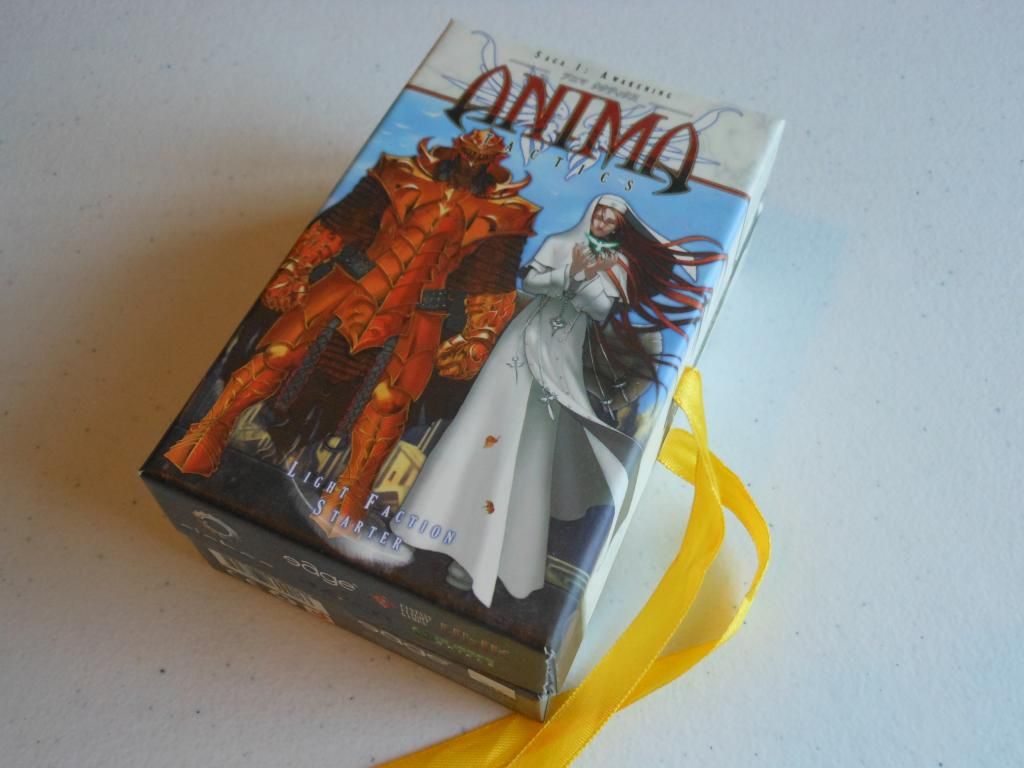


Anima Tactics
Published by Cipher Studios
Deisgned by Carlos B. Garcia Aparicio
For 2 players, aged... Hell, I don't know

My involvement with the game Anima Tactics  has been rather unusual, and I'm going to say right from the start that I haven't played the game enough to give a proper review.

You see, I first heard about Anima Tactics shortly after it was released. I saw some photographs of some truly beautiful hand-painted miniatures, and I was immediately interested. Oh yeah, that's a point. I should mention that this is a miniatures game. You know? One of those games where you buy lumps of pewter that you have to stick together and paint yourself. Doesn't sound like your idea of fun? Best move on. Nothing to see here...

Anyway, back to the story.

I saw the miniatures, which had a sort of anime vibe mixed with Western influences, and my interest was piqued. Then I saw some of the artwork, which I really liked as well. It wasn't long before I had bought the two starter boxes that were available for the game at the time.

I was very excited to receive those starters, but by the time they had turned up, my interest had already started to wane (I'm fickle like that). I assembled the models, and tinkered with the game a bit; but I quickly realised that there wasn't enough "game" in the starter sets, and it would involve buying a lot more figures before I could get a real feel for whether I liked it. It started to seem like too much effort and money, so the starter sets got chucked in the back of the cupboard. Eventually, I forgot about them.

Recently, I was going through some stuff, and I found the two starter boxes. They looked so good, and I was reminded of what initially drew my interest to this game. I was compelled to do what I had never got around to the first time: paint the models.

Since then, I have bought another box of miniatures, and a few extras, and I am gradually painting them up. The starter boxes only come with a stripped down version of the rules, and that is what I have been playing with at the moment. The full rules are available as a gorgeous hardback book, but this game doesn't seem to have done too well in the UK and those rules are not easy to find. Luckily, my wife managed to source a copy of the rules for me; but she's doing that annoying thing where she says I'm not allowed it until Christmas. I mean, seriously? It's July! Don't you just hate it when they do stuff like that?
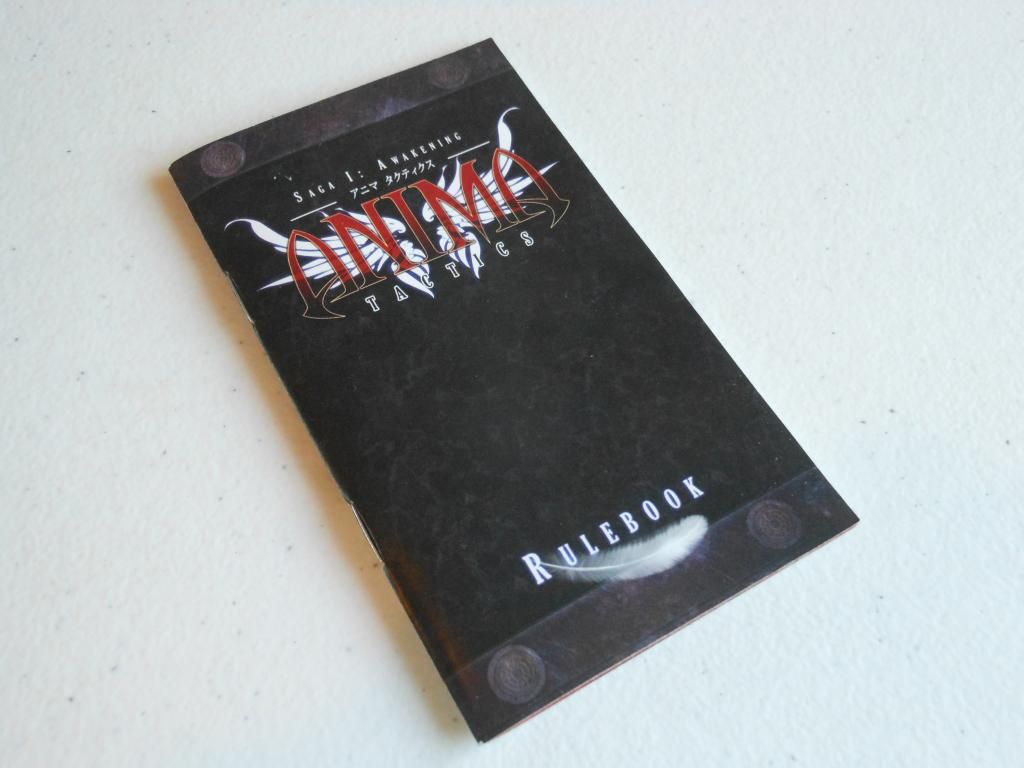

Anima Tactics rules
The starter rules - short, but functional


So, with that preamble out of the way, what is this review actually about?

As it stands at the moment, I have only played with the starter sets. That means I have only had battles with two characters on each side, using the basic starter rule set. That's what I'm going to be reviewing here.

It may seem odd to write a review based on such limited exposure to the game, but as far as I am concerned, if a company releases starters for a game, then the game should be playable (and reviewable) based only on the contents of those starters. However, I do intend this to be an ongoing project. As I paint and add characters to my games, I will post reviews of those new characters, and hopefully, over time, a bigger picture of what this game has to offer will be built.

Now, about that review...

First things first. You should know that Anima Tactics is a skirmish-based game. This was one of the things that appealed to me. I don't have time to paint massive armies, so a game in which most battles are fought between teams of just six to eight characters seemed ideal. Unfortunately, the starter sets don't give you six to eight characters. They give you two.

But let's start with the positives: The boxes that each starter set comes in are little works of art. Now, I love attractively designed boxes. I like to pick them up, look at them, stack them, put them on shelves based on their size. That probably makes me sound like some kind of window-licking weirdo, but there you go. I like boxes, and these are really nice ones. They have great cover art, and little ribbons on the side for tying them shut.
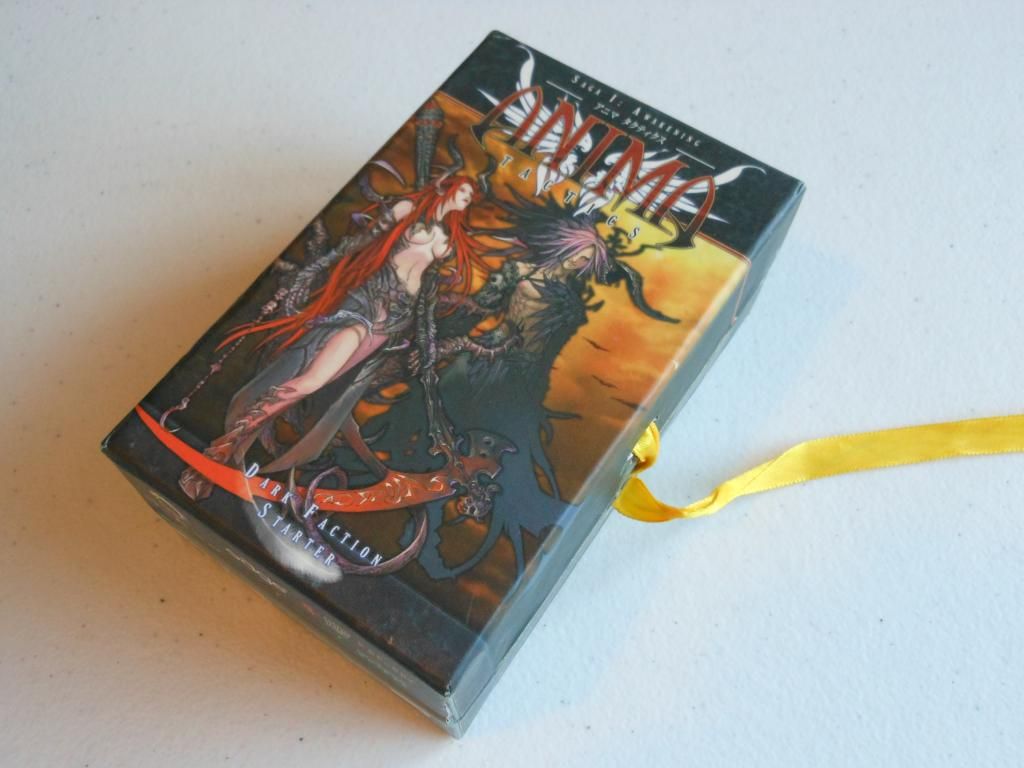

Anima Tactics dark starter set
The dark starter box... So pretty


Each of the two sets has the same contents: A condensed rulebook, some plastic counters, one dice, two pewter miniatures, one character card for each miniature, and two advantage cards (which represent equipment and tactics you can use during a fight). One set features "light" characters, and one set features "dark" characters.

The components are generally a mixed back. The miniatures are lovely, but of course, you have to paint them yourself. It should also be noted that I got the original dark starter set which included the characters Dark Chesire and Shinigami Ayl. Ayl was quickly switched out by the manufacturers, and the dark starter now features a different character called Bael. I believe the switch was made because Ayl was an absolute pain in the proverbial to put together. In fact, she was such a pain that I ended up modding her, so mine doesn't look like the one you will get if you buy her.


Dark Chesire and Shinigami Ayl


The character and advantage cards are also nice. They are a good thickness, and are well illustrated. They do have black borders and square corners, but as you don't ever shuffle the cards, this shouldn't be a problem.
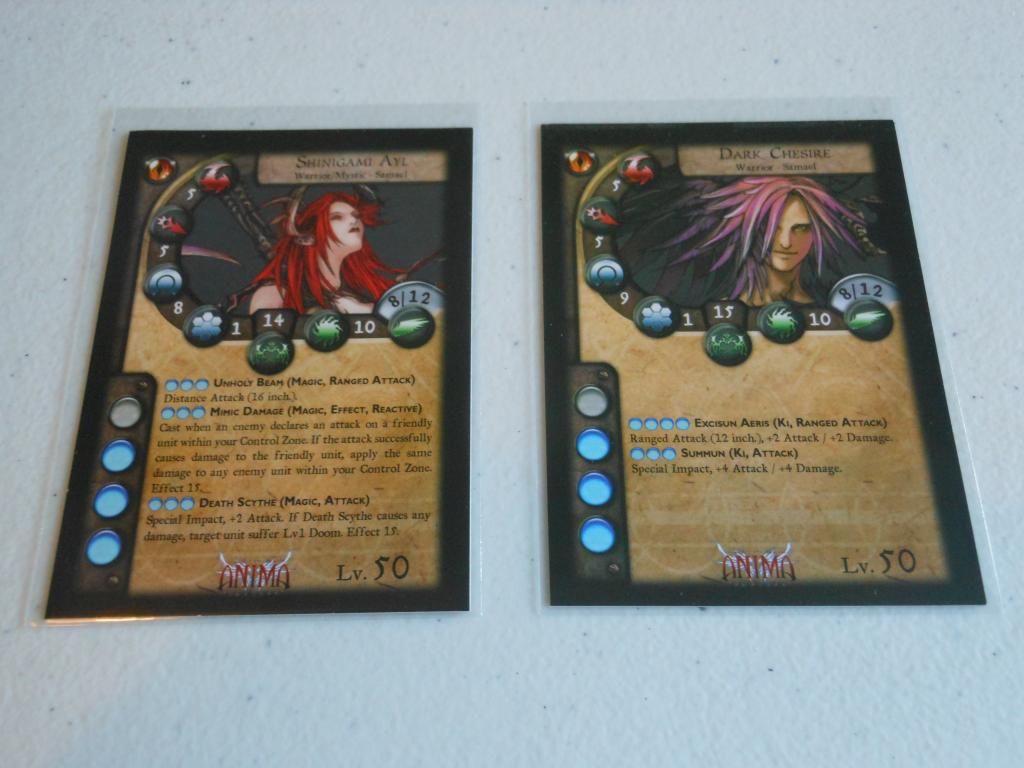

Character cards for Anima Tactics dark starter
Dark starter character cards


The plastic tokens that you will use throughout the game are very thin, and a bit like tiddlywinks. They are functional, but cheap.

The worst component in each box is the sheet of tokens. These tokens monitor states during the game, such as poison and wounds. The token sheet is the size of a standard playing card, and you are supposed to cut them out. This obviously means they are very small, thin, and fiddly. I didn't even bother cutting them. I had a nice set of Games Workshop tokens made out of plastic, so I use those instead.


Anima Tactics tokens
The token sheet... My advice: Don't bother


Overall, the contents of the starters are fine, but it is their limited nature that causes the problem (and led to me shelving this game for so long). There just isn't enough stuff in each box. For a start, you only get two characters. That isn't even enough for a single warband, let alone enough to have a fight. I realised two characters wouldn't be enough, so I bought both starters at the same time, and then realised even that isn't good enough. Having only two characters limits your options each turn, and reduces what could be a tactical fight into a basic dice-rolling exercise.

This problem is compounded by terrible balancing between the two sets. In the dark set, Chesire and Ayl are strong fighters with ranged combat abilities. In the light starter, you get a meat shield called Kronen, who can soak up damage but couldn't hit the broad side of a barn, and Evangeline, who is your standard mystic-type who provides buffs for other people on the team, but who can be killed with one hit. The dark team have a serious edge right out of the box, and you will definitely want to buy some extra characters straight away.

The other major problem, is the streamlined rules book. It is written well enough, but it is missing a lot of the rules that add tactical depth. Furthermore, you don't get any fluff about the world or the characters, which makes it difficult to feel invested in what you are doing. Getting that hardback rule book really seems like a must.

It's actually a real shame that the starters give such a poor first impression of the game, because the rules seem pretty good. I don't want to go into a lot of detail about them, but you basically put together a warband of certain size based on character levels. Most characters have a level between 40 and 60, so a  game with warbands totalling 200 levels will usually have about four characters per side.

When you build your warband, you can either build a dark force, a light force, or a force based on a specific faction. This is quite an interesting concept. Basically, each character has an affiliation and a faction. If you build a team based on affiliation, then you can pick characters from any faction, but they must all share the same affiliation (there are also characters with neutral affiliation, who can team with anyone). If you build a team based on faction, you ignore affiliation completely, but every character must be from the same faction.

The starters demonstrate this in action. In the light starter, you get two light characters, but one is from the Empire faction and one is from the Church faction. This means you can field the light starter as a light team, but not as a faction-specific team. Meanwhile, the dark starter contains two dark characters who are both from the Samael faction, meaning these two characters can work together regardless of how you decide to build your team.
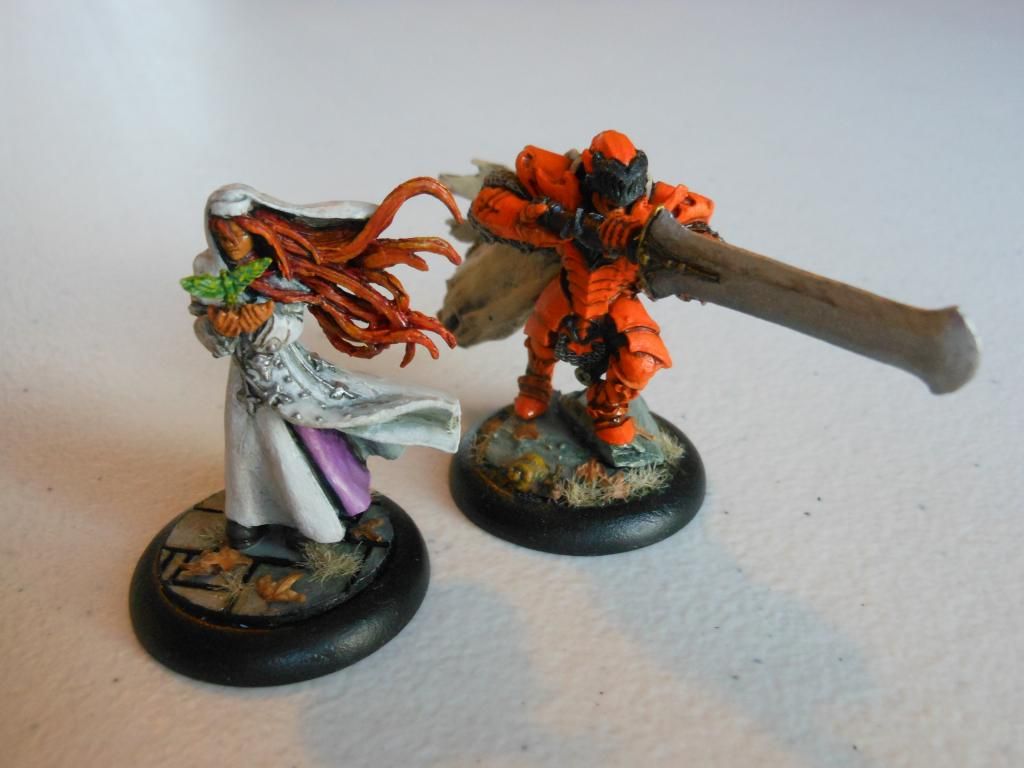

Evangeline and Kronen


When building a team, you can add advantage cards, which you must also buy with levels.

Once you are in the thick of the fight, the most interesting mechanic is the energy system. Each character has an energy bar, which is usually four or five space long. Every turn, each character recovers a certain amount of that energy. The energy is used to power all of your actions and special attacks, so there is a kind of resource management going on. If you use all your energy to attack, you won't have any left to defend yourself or do anything else for the rest of the turn. It might then also take you a couple of turns to recover enough energy to be able to do anything else useful. It's a very cool system, and I really like it.

The combat is also pretty neat, as it allows your opponent to dodge, counterattack, and do special reactive actions. It is quite "mathy" though. The general concept is you declare an attack. Your opponent decides if he will dodge or counter. If he does, he expels some energy and gets to add the roll of a D10 to his defence (and, if he selected counter, he can attack you if you miss). You then roll a D10, and add your attack value plus any other modifiers. If your total is greater than the target's defence, you have hit. The difference between your attack roll and the target's defence is added to your damage value. You then deduct the target's armour value. The final result is the amount of wounds sustained. It sounds a bit complicated, but it is actually very straight forward, and combines "to hit" rolls with opposed dice rolls in an interesting way. You can also use characters to intercept charges from enemies in order to protect weaker characters.

It's all very fluid, and very exciting.

So, after all that, am I glad I dusted off those starter sets? The short answer is yes.

I am trying to paint up my other models as quickly as possible, and I am also putting together some terrain to play on (yeah, it's one of those sorts of games). However, the rules also provide instructions for playing on boards, for those people who don't like using tape measures, and I have tried this as well. I have also used hex-based grids from The Lord of the Rings: The Tradeable Miniatures Game and that works really well too.

I have 11 characters in total, and I am excited to get all of them to the table. If only I could find a bit more time to paint them...

Now, I suppose I should do some kind of summary. It's tricky, because this is really a review of the two starter sets, but it is also a review of the game system.

I really like the game system. I don't think it is doing anything dramatically new or exciting, but it is a really solid system for having short skirmish games between eight or ten characters. Every character feels unique, and brings exciting new tactical options. In this game, you are not just fielding a bunch of generic soldiers. Every character has a history, an affiliation, and a team. Every character has unique special powers. It's almost like what would happen if a miniatures game and a roleplaying game had a baby.

I love a lot of the miniatures in the product line, and I think all four characters from the starter sets look very good indeed. There are definitely some ugly miniatures in the range, but the great thing is, I can just ignore them and build my unique fighting force with the dozens of other cool-looking characters I want to rush out and buy.

I also like the fact that each character comes with its own character card, so you don't need to keep buying army faction books or anything like that. If you see a character you like, you can buy it, knowing that you will be able to build it, paint it, and use it straight away. In fact, every miniature also comes with plastic tokens for marking energy depletion, and most also come with a new advantage card to give you even more army-building options.
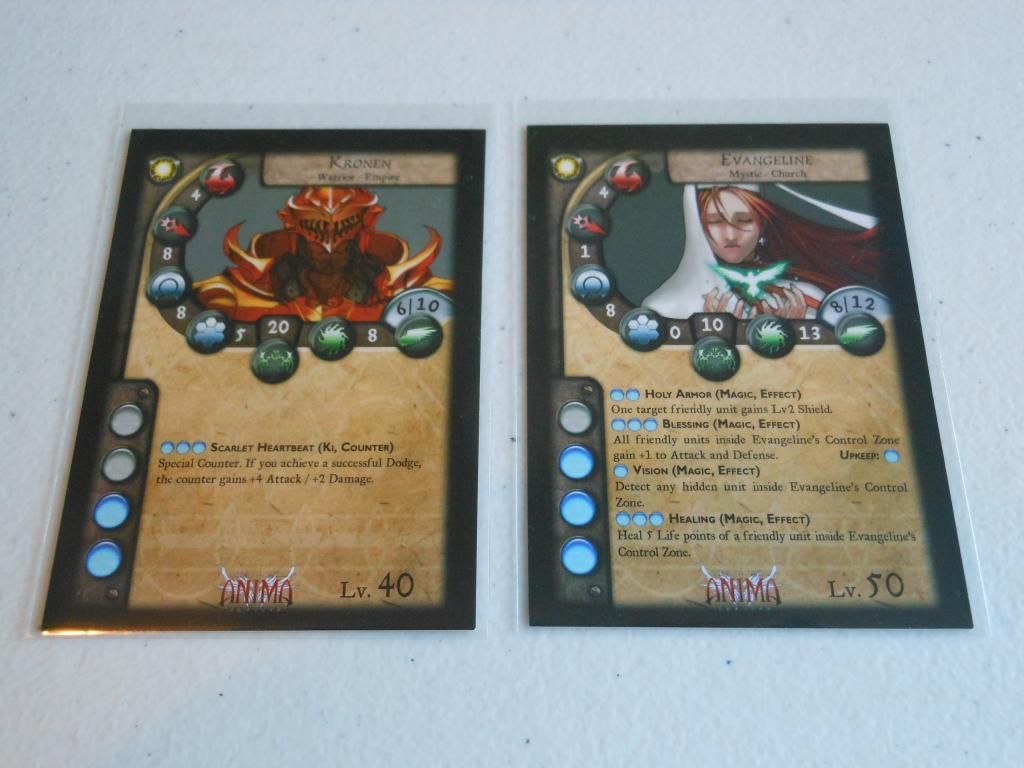

Kronen and Evangeline character cards


But there you go, I'm talking about other characters and the game in general again. It's hard not to, when the system offers so much potential. It's just such a shame that the starters are a poor introduction. If you want to get into this game (and there are plenty of reasons to do so), the best plan is to get both starter sets, for the cool characters and the basic rules, and then also cherry-pick a few other characters you like the look of. If you enjoy the game, you can then buy a few more characters. Maybe you could invest in that hardback rulebook too...

Is it Christmas yet?

Monday, 10 June 2013

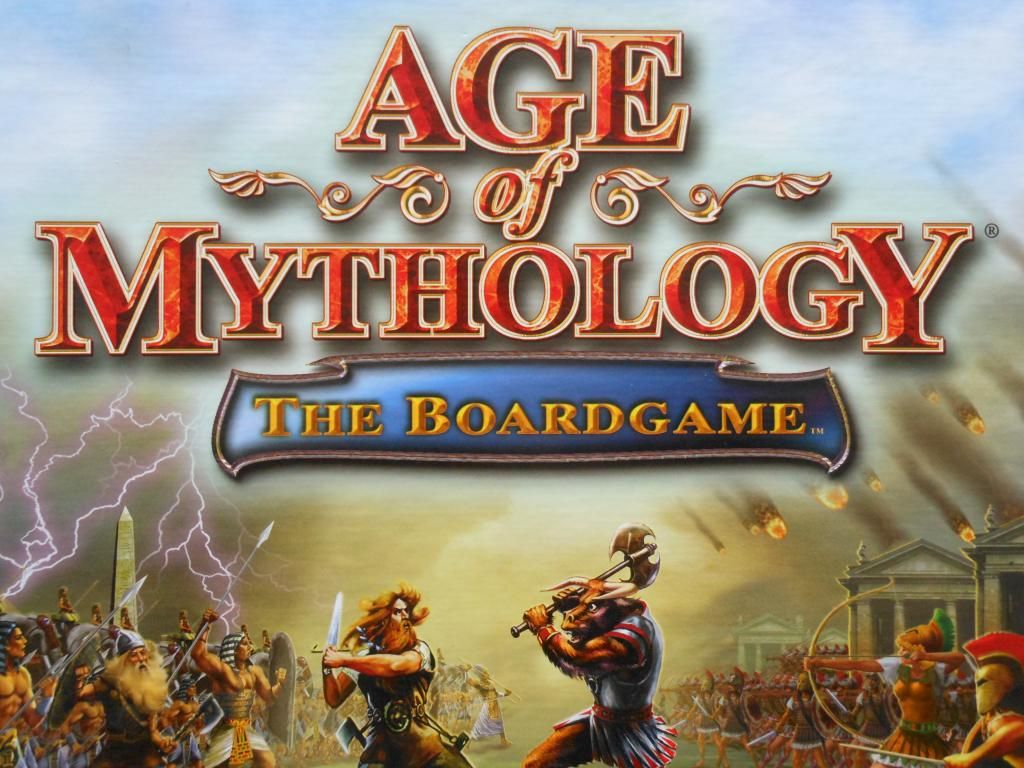
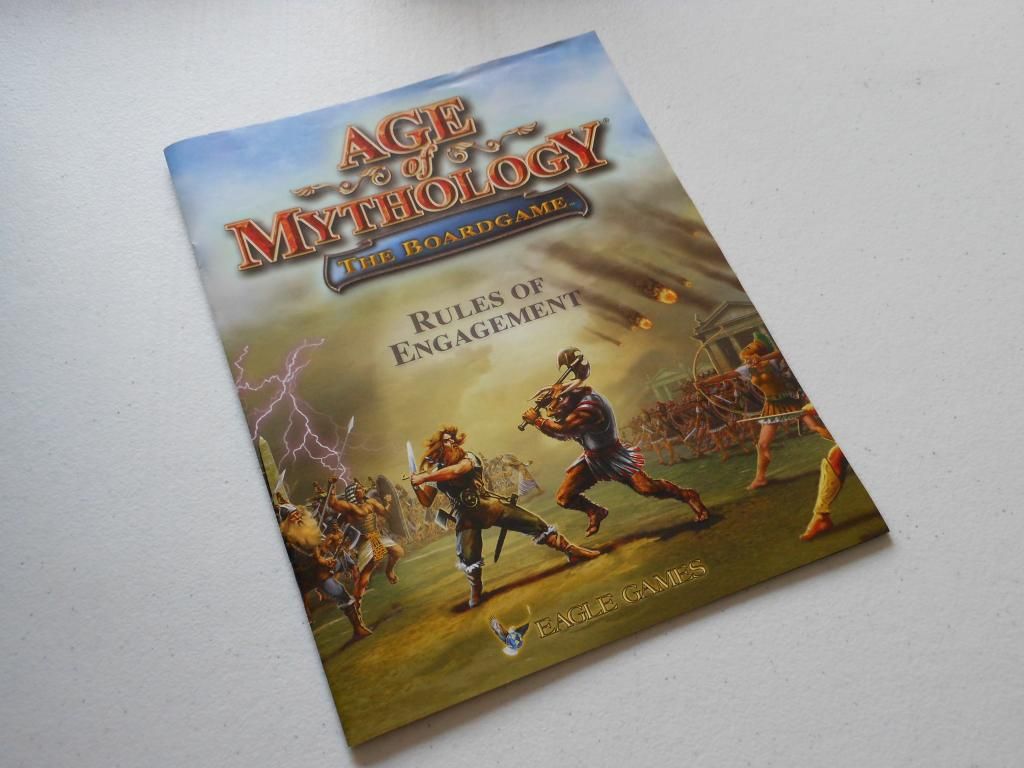
Review - Age of Mythology: The Board Game

Age of Mythology


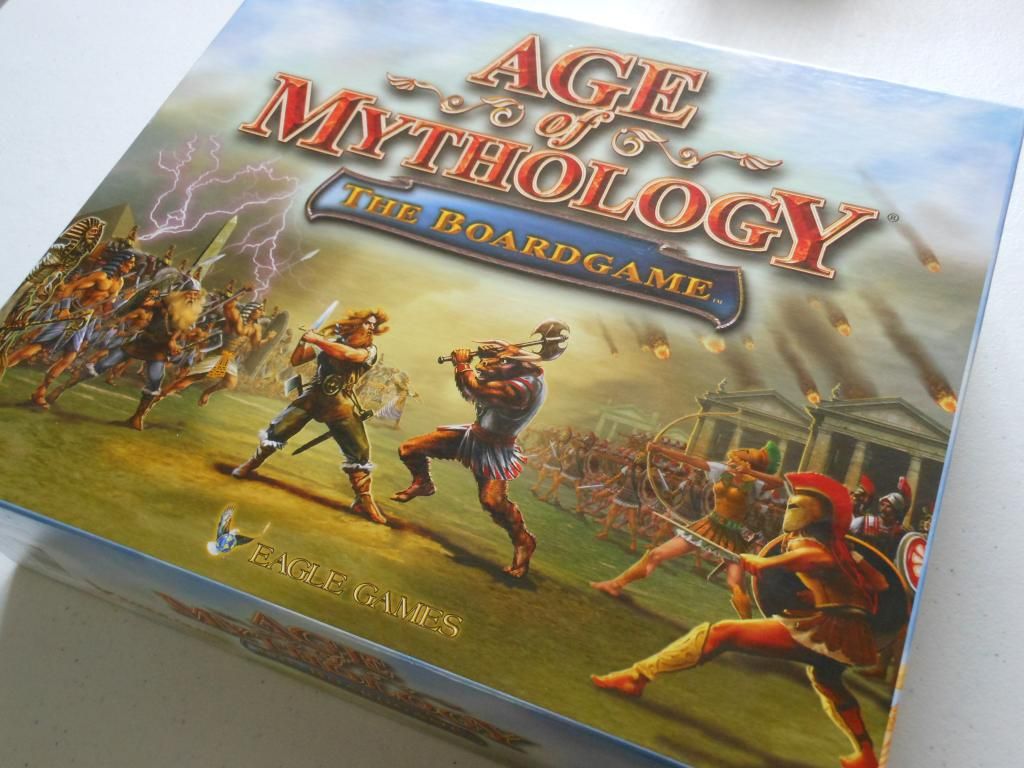
Age of Mythology: The Board Game
Published by Eagle Games
Designed by Glenn Drover (who clearly believes all disputes should be resolved with Queensberry Rules)
For 2-3 players (or 2-6 players if you buy extra bits)

Age of Mythology: It's a board game, you know?


Hmm. Games that tell you they are board games. It's not usually a good sign. There are exceptions, of course, like Dungeons and Dragons: The Fantasy Adventure Board Game, but as a general rule, if a game tells you it's a board game you should be concerned (I'm looking at you, Dragonology The Game, The Logo Board Game, and Small Soldiers Big Battle Game). I think it is a silly thing to put on a game box, but maybe that's just me.

However, in the case of Age of Mythology: The Board Game, I'm going to let it slide. Why? Because someone might see that big box on the shelf and think it is the computer game of the same name (on which the board game is loosely based).

Ah, who am I trying to kid? It's stupid.

Anyway, regardless of how I feel about silly names, I bought this game because it looked like something I would really enjoy. I'm very much into mythology (I've written a series of novels about mythological creatures, don'tcha know?) and, well... Well, that's it. I really like mythology. The fact the game box is stuffed to overflowing with little plastic miniatures of all my favourite mythological beasties was the icing on the cake.

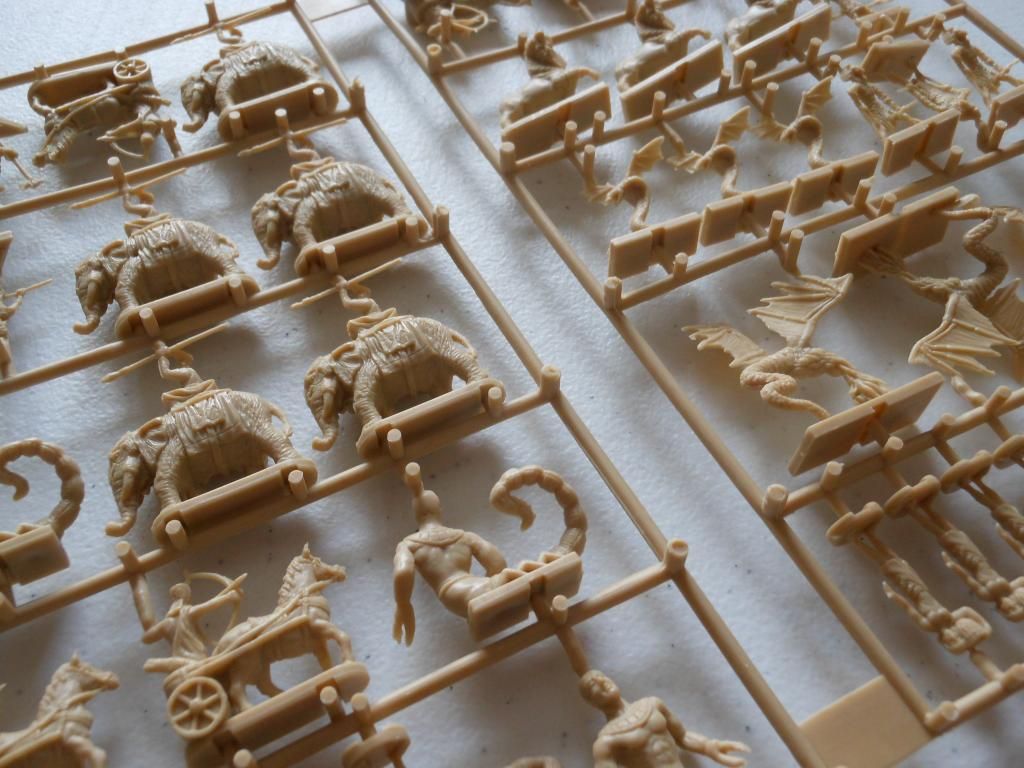
Age of Mythology Greeks
The Greeks
Age of Mythology Egyptians
The Egyptians
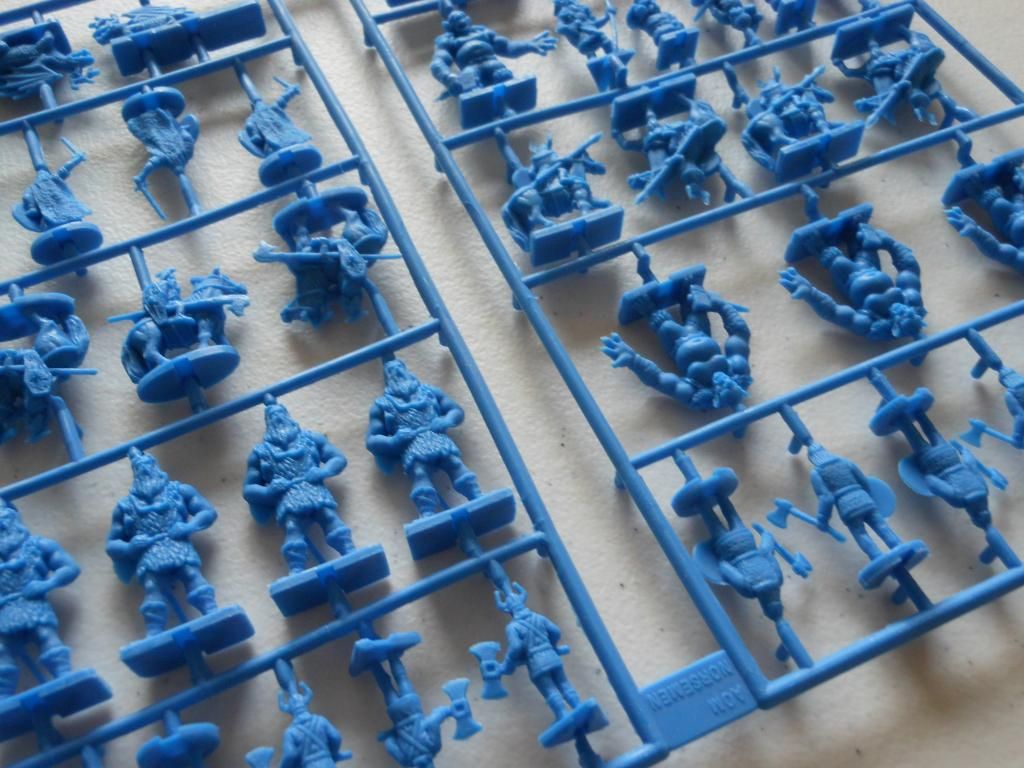
Age of Mythology Norse
The Norse


Unfortunately, I didn't end up liking the game very much. The game rules are generally sound, with the exception of combat, but there was nothing there that really got me excited. I've only played a few times, and the game has sat on my shelf for a long time feeling lonely and unloved.

This game gives me a real sense of disappointment, because I don't really get any sense of the theme of ancient civilisations developing and battling each other with gigantic mythological creatures. All I get is the sense of pushing cubes around.

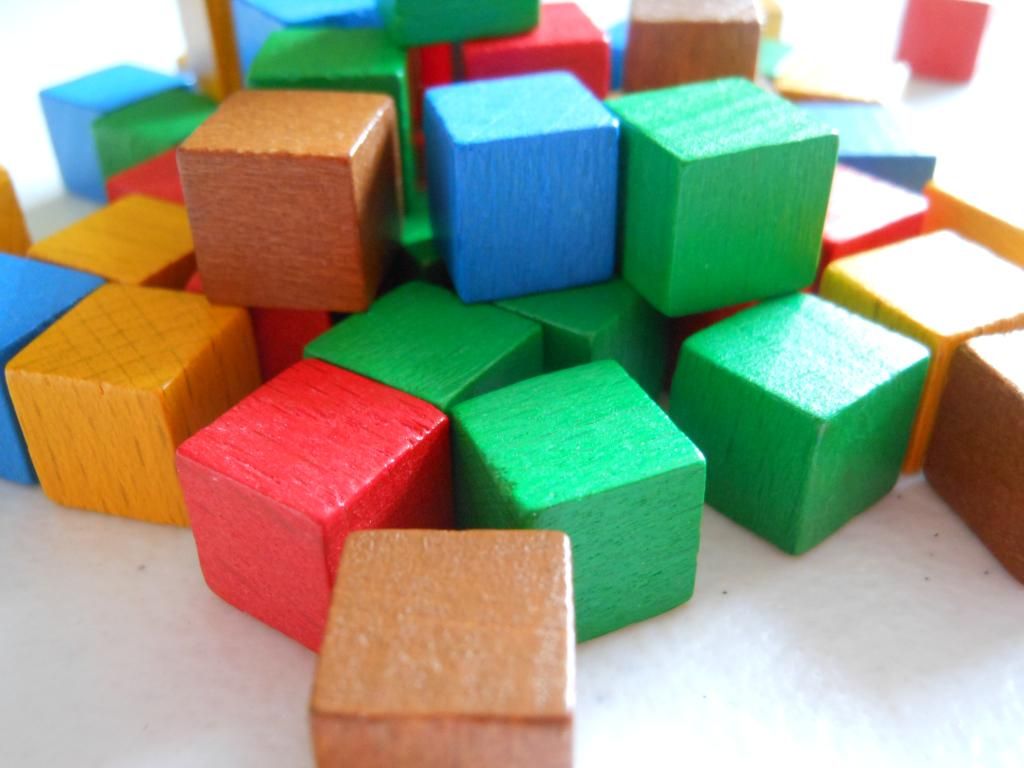
Oh yes. Wooden cubes.


Age of Mythology wooden resource cubes
Look, gold, wood, favour... and... oh, who am I trying to kid? Just cubes, folks.


I'm a theme man. Anybody who spends any time on my blog knows that. I don't tend to play many games that involve bidding for, or trading in, little wooden cubes. The awesome Lords of Waterdeep is the main exception to this rule. However, I am willing to give any game a go, and the inclusion of wooden cubes in a game isn't going to immediately put me off. When it feels like all I am doing is manipulating wood cubes... that's when we've got problems.

Wooden cubes can also be forgiven if they ship in a box that also contains six sprues of nicely detailed plastic figures. I'll be honest, those figures were a big draw for me. They are very small, and very rubbery, but the detailing is decent on the bigger models, and it is always cool to build an army of hydras, minotaurs, and gorgons. The biggest shame with this game is that you don't really get to do anything with those cool pieces.

You can play the game as the Greeks, the Egyptians, or the Norse. The aim is to develop your civilisation and win the most victory points. This is achieved through some rather interesting game mechanics.

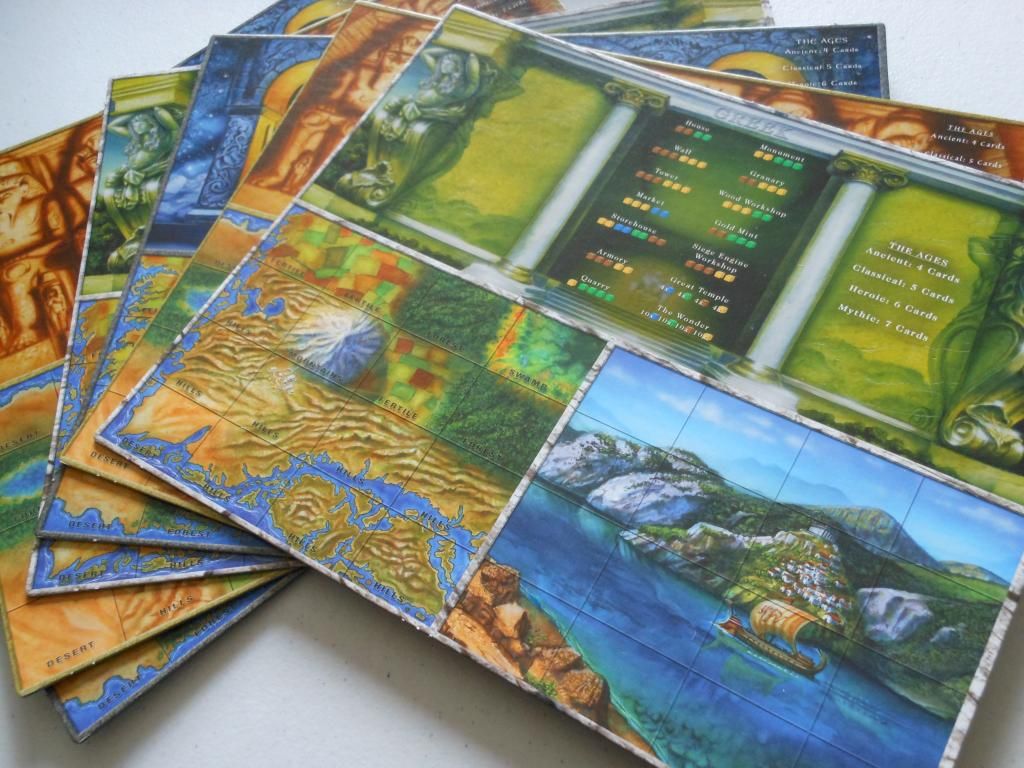
Each player gets a civilisation board, which contains a production area and a city area. The production area contains different squares for different types of terrain (such as mountains, fertile land, and lakes). Over the course of the game you will be able to claim resource producing tiles which match certain types of terrain, and you can place those tiles in your production area. From then on, that tile will generate resources for you. For example, you might claim a mountain tile that produces two gold (good old yellow cubes). You can place this tile on any square in your production area that is designated as a mountain. Don't have a mountain square free? Then tough.


Age of Mythology player boards
The civilisation boards. Very pretty.


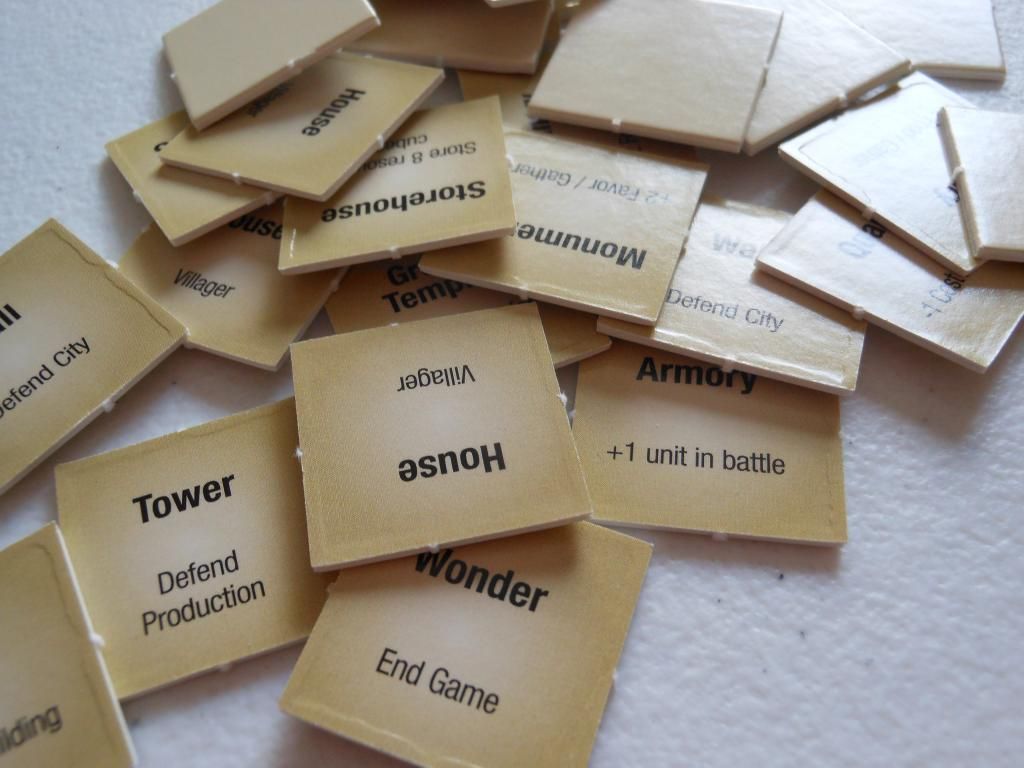
In your city area, you will be able to build house and other structures that give you various bonuses, such as villagers that will increase production in your production area, or towers that defend you from attack. Building houses will cost resources that you have farmed from your production area, and you will find you never really have all the resources you would like, especially as you will also want to create some troops for your army (which, of course, also cost resources).


Age of Mythology building tiles
Building tiles... Good job on the artwork, lads.


So far, that all sounds pretty interesting, right? Well wait. It's even more interesting than you think. You see, the way you gain production tiles, or do anything else in the game, is through action cards. There are seven basic action cards, and in every turn you get to pick a limited number. The amount you pick starts at four, and increases as your civilisation advances. The actions are explore (which gives everyone at the table the chance to claim new production tiles), gather (harvest your resources), trade (swap resources you have for resources you want), build (er... build something), recruit (develop your army), attack (pick a scrap with someone), or next age (pay a bucket load of resource cubes to advance your civilisation to the next "age").

As well as being able to pick from your seven basic actions, you can also gamble by drawing actions from a random deck. The random cards are generally more powerful, but you don't know what you will get until you draw. So, you could play it safe and pick from your low-powered basic actions, risk it all by drawing all random cards, or take a few basic actions and a few random ones. It is a really interesting mechanic, and creates quite a lot of tension.

In fact, as I write this, I have to think to myself that there are some really interesting things happening, and it is surprising I don't like the game more. There are plenty of strategic and tactical choices to make on every turn, and you never feel like you are able to do exactly what you want to do (which is exactly what games like this should be like). For example, when picking production tiles, the person who played the gather card reveals a certain number of tiles and picks one. Then every other player gets to pick one. There's an interesting decision right there: Do you take the best production tile you can, or do you pick a tile that you know your opponent really wants, even though it is less useful to you? With careful play, you can actually create situations where your opponents are unable to take any production tiles at all, simply because they do not have a matching terrain square on their production boards.

Even the way victory points are handled is quite clever. Each round, each player on the table gets to allocate one victory point to one of four different objectives: Largest Army, Most Buildings, Won the Last Battle, and Built the Wonder. Over the course of the game, victory points will build up on each objective, and then at the end of the game the person who met the objective scoops the victory points. The only exception to this is the Won the Last Battle objective, which dishes out the victory points to the winner after every battle.

The victory point mechanic is interesting because it allows people to focus on certain targets. Think you might have the most buildings at the end of the game? Then keep putting victory points on the Most Buildings objective.

So, if I like how victory points are allocated, I like how you select your actions each turn, and I like how you gather and spend resources, why don't I like this game all that much?

One word: Combat.


Age of Mythology reference sheet
The reference sheet (note the singular, 'cause you only get one)


The combat mechanic is utterly awful, and makes a mockery of having all those cool plastic army miniatures.

When it comes to attacking someone, you don't move around on a map like in Risk. You simply play your attack card and then select an opponent. You also select if you are attacking the opponent's production area, city area, or the area where resources are stored. You and your opponent then secretly select units to fight in the battle (the attack card you played lets you know the maximum number of units you are allowed to use).

Once units are selected, you and your opponent do a grand unveiling. The fight is then resolved via some kind of bizarre gentleman's agreement in which both players select ONE of the units in the fight. Only those units will actually fight.

You select the unit that will fight by using a deck of combat cards, that have pictures of the different units in your army. You find the card that depicts the unit you want to use (and which also lists combat dice and modifiers to attack), and then put it face down in front of you. Your opponent does the same. You then flip your cards.

You roll dice, apply modifiers that some troops get against certain opponents, and then figure out who has won. The losing unit is destroyed, and then you proceed to a new round of combat. This process is repeated until one side is wiped out, or one side retreats.

Now, re-read that description of the combat phase, and shout out when you spot the point where the little miniatures have a purpose.

...

...

I don't hear any shouting.

It's awful. I honestly can't describe how disappointing this element of the game is. It makes no sense that two armies march out to face each other, and then line up one behind the other to take it in turns to fight. Not only that, but it makes battles take forever.

I suppose I shouldn't have been surprised by this one-on-one style of combat though, it is exactly what is depicted on the cover of the box!

The only reason the miniatures exist (other than to sucker in people like me who go "Ooh, miniatures of cool monsters"), is so you can see how many of each type of unit you have. The whole thing could have been done with tokens to represent the units. This would actually have been better, because you could have just flipped the tokens over to see who fights who, and modifiers could have been printed directly on the token as well. This would have removed a lot of plastic from the game, plus all the combat cards, making for a more compact and cheaper game. I guess cardboard tokens just don't cut it in today's gaming community...


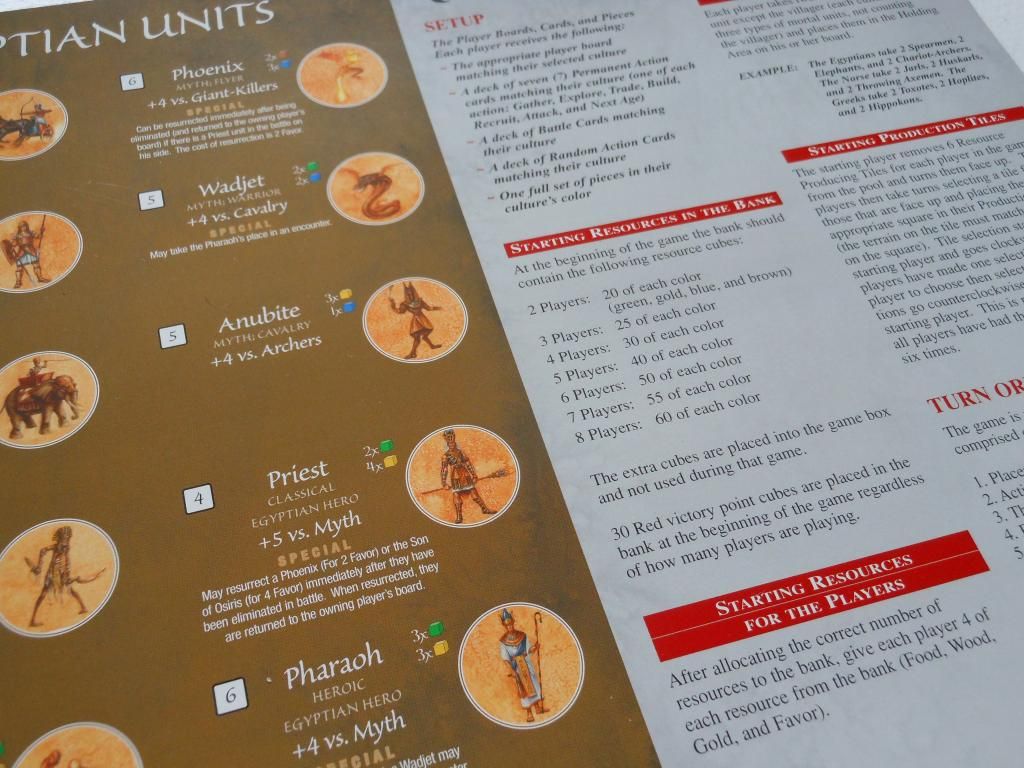
Age of Mythology rules
The rules: Concise, and well-written.


Unfortunately, the combat mechanism is a big killjoy for me. I could come up with alternative rules, but frankly, I don't have the time or the inclination. I don't buy games to redesign them. I have about 50 unfinished prototypes of games of my own if I want to do that. When I pay money for a game, I want to play it the way the designer intended.

However, even if the combat system was different, I'm still not sure I would love this game. You see, all the other elements seem very clever, and I really do think there are some very good ideas in there; but at the end of the day, I still just feel like I am pushing cubes around.

Selecting where to put my victory points each turn? Just placing a cube.

Gathering my resources? Just picking up cubes.

Trading? Swapping cubes.

Entreating the Gods for their favour? Collecting more cubes.

Building an army? Pushing cubes back onto the "bank" pile.

I know, I know. You could say the same thing about any game that involves resources and trading. But here, I just really didn't feel like I was developing a civilisation, and I certainly didn't feel like I was waging wars between mythical creatures. For all the cleverness of the rules, it just felt a bit stale and lifeless. If anything, some of the mechanics are a bit too clever; and that causes the theme to be undermined.

It's not a bad game by any means. I think if you could do something about the combat mechanic it could actually be a very good game. The component quality is good, the rules are clear and easily picked up. There really is a lot to like. But this is not a game that I enjoy, and it is not a game I intend to keep in my Vault.

Such a shame, because I do really like those miniatures.

Tuesday, 28 May 2013

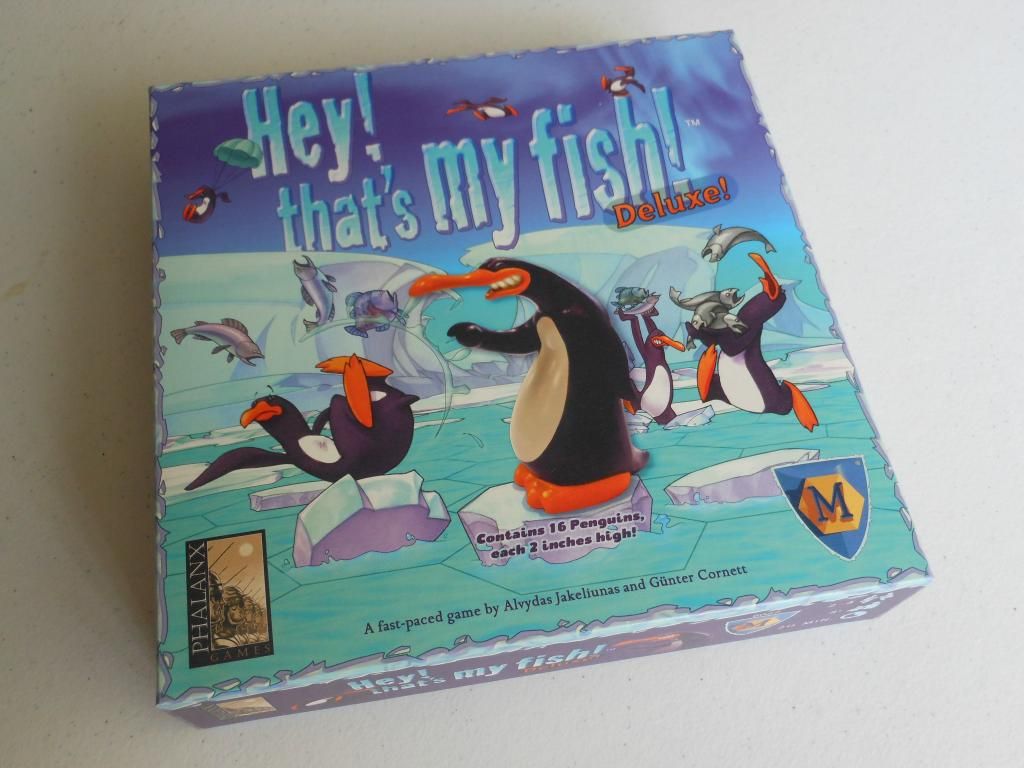
Review - Hey! That's My Fish! Deluxe!

Hey! That's My Fish! Deluxe!

Hey! That's My Fish! Deluxe!
Published by Phalanx
Designed by Gunter Cornett and Alvydas Jakeliunas
For 2 to 4 players, aged 8 to adult

Hey! That's a lot of exclamation points! Really!

Yeah. I don't think I can start a review of this game without talking about the title. Just look at all those exclamation points. Now, I am looking here specifically at the copy of the game in my possession, which is the Phalanx deluxe edition. The game has since been republished by Fantasy Flight Games, and I believe they have removed all but one of the exclamation points. It's a good call.

The biggest problem with the title, and indeed the theme in general, is that is gives a false impression of what this game is really like. Looking at all those exclamation points, and those kooky graphics of penguins slipping around on the ice juggling fish, you might be inclined to be believe this is a children's game. It really isn't. The rules are simple enough for children to play, but there is actually a satisfying depth to the strategy and tactics involved that make this a good game for adults who want something simple to learn, but tricky to master.

When this game was first released, it came with cardboard tokens to make the board, and little wooden penguins. It was subsequently released as a deluxe package featuring 16 really nice, pre-painted penguins. Of course, I bought the deluxe edition.


Penguin playing pieces
Superman, Silver Surfer, Disco Stu, and Evil Monkey.

The new Fantasy Flight edition falls somewhere between the two extremes. It gives you cute plastic penguins to play with, but they aren't pre-painted.

Anyway, the game ships with 16 penguins, in four sets of colours, and a bunch of cardboard hexagons with fish printed on them that represent ice floes.

That's it.

No cards. No dice. No tokens. Just the hexagons that are used to make the board, and the penguins.

It's quite refreshing to have a game with so few components. It's even more refreshing when the rules for that game are printed on a single sheet of paper.


Hey! That's My Fish! Rules!
Hey! That's My Rulebook! Concise!

So, what are the rules?

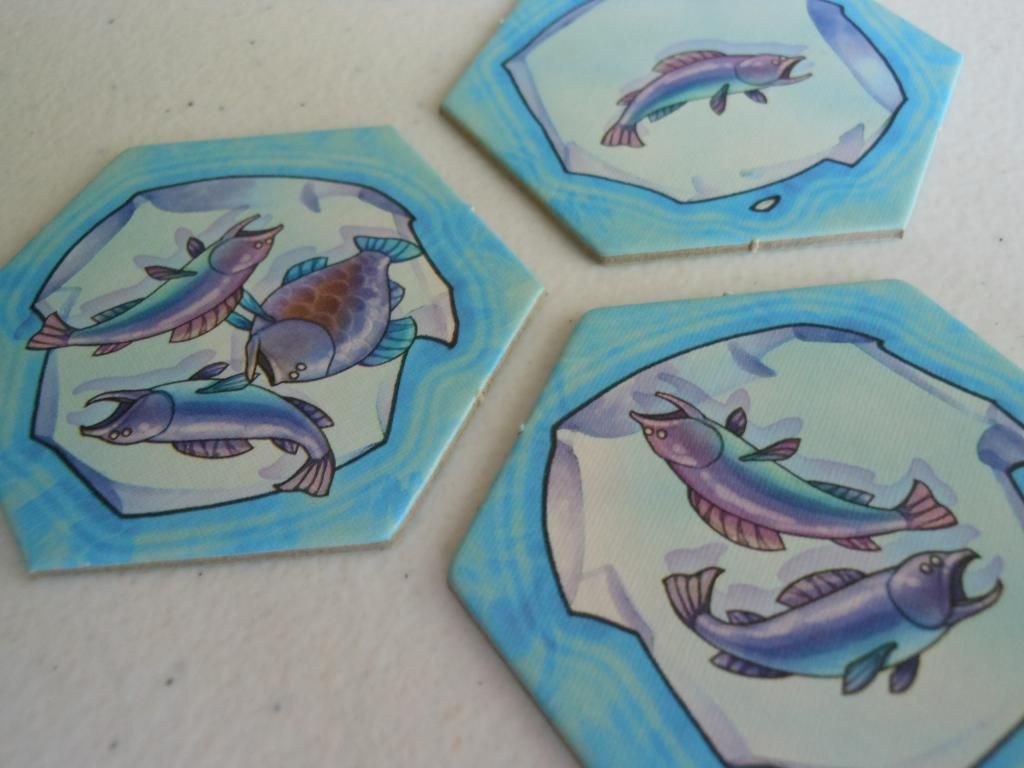
You start playing by shuffling up the 60 hexagons, and then laying them out in rows to form a square shape (or any other shape you fancy, but square is best). Some of the hexagons have one fish on them, some have two, and some have three.

Each player then takes a number of penguins from two to four (depending on the number of players), and starting with the youngest player, the players take turns adding one penguin to the board.

Once that is done, you are ready to play. The game literally takes less than a minute to set up. In your face Arkham Horror.

Gameplay is just as simple. In turn, each player picks one penguin to move in a straight line in one of the six directions available from the hexagon the penguin is currently on. The penguin can move as far as it wants until it reaches the edge of the board, or its path is blocked by another penguin. A penguin can never jump over another penguin, and must always finish its move on a space with no other penguins.

Once the penguin has finished moving, the hexagon it started its turn on is removed by the player and set aside. That hexagon is worth a number of victory points equal to the number of fish printed on it. The space on the board where the hexagon used to be can no longer be travelled over, and will block movement in the same way as the edge of the board or another penguin would. Hexagons that cannot be reached by any penguin are removed from play.

Play continues in this way, with players scoring points, and gradually causing the board to disintegrate, until there are no moves left to make. When a player cannot make any more moves, he removes his penguins from the board, along with the hexagons the penguins were standing on. Then scores are added up to see who has won.

Hey! Some of Those are My Fish! Probably!

As you can see, the rules are incredibly light; and yet the game offers a surprising amount of brain-burning enjoyment. On your turn you can only move one penguin, and this can create some agonising choices. Do you block your opponent, or do you go for another three-fish hexagon? Do you go for a high-scoring hexagon this turn with one of your penguins, or do you move a different penguin to make sure it doesn't get blocked in by your opponents?

Figuring out how to maximise your moves, preventing your opponents from scoring while grabbing all the fish yourself is quite a challenge. As the game progresses, and there are more gaps that will block movement, and a greater chance of finding yourself being blocked in, you can really be faced with some tough decisions.

Hey! That's My Fish! Box!

Now, I'm not suggesting this is the new chess; but I am suggesting it is a lot deeper and more tactical that the silly theme and even sillier name suggests. It is also a game that younger children can play, as the rules are so easy to learn.

I have had this game in my collection for quite a long time now, and I have no intentions of parting with it. It isn't a game you are going to play all the time, but it is a great filler that gives your brain a bit of a workout without being too strenuous.

Still not convinced? Well, how about this for a good reason to buy: It can be picked up for less than £10 on Amazon.

And, you know, it has cute penguins.

(Special note: Although this game is still being made by Fantasy Flight Games, I am putting the deluxe edition in my Vault of out of production games, as it is no longer available, and is going for silly prices on eBay.)

Tuesday, 14 May 2013

Sheep Impact (A Charity Shop Adventure)

No, the title of this blog entry is not the long-awaited sequel to that awful disaster movie with a meteor colliding with Earth... What was that called...? Oh yeah, Armageddon.

Sheep impact just sort of sums up today's exciting charity shop purchases.

It's been quite a while since I wrote about charity shop finds here on Always Board, Never Boring. That's mainly because I haven't found anything good. I always look in charity shops for old out of production board games, but it really is getting harder to find anything worthwhile at a reasonable price. There are several reasons, of course. Most importantly, charity shops have got wise to the true value of things. When a load of games turn up in store, one of the staff hops on the internet and figures out which bits are worth anything, and then jacks the price up accordingly. I don't really mind that. It means a charity is making a bit more money, which is no bad thing.

The other major reason that charity shops don't tend to have a lot of good stuff is because of bloody eBay. Nowadays, when parents clear out their children's toys, they don't give them to charity; the toys end up being sold on eBay. Only broken crap, or stuff that parents don't realise is valuable, will end up in a charity store.

So, most of the time, charity stores are a complete bust. I really don't need a copy of Carol Vorderman's Sudoku in my games collection. However, occasionally (and these times are precious to me), I will find one of those things that has value, but didn't get pushed onto eBay (either because the person who gave it away didn't realise is was worth anything, or because that person simply couldn't be bothered to go through the process of selling it).

While I can't say my finds today were Earth-shattering, they were definitely the best things I have found for a while. Definitely worthy of a blog entry, anyway.

First up, the sheep...

A Shepherd and His Dog
I herd this was pretty good... (Man, I kill myself sometimes.)
Saw this copy of A Shepherd and His Dog and had to grab it. Tape monkeys had been at work, but the tape on one edge of the box had peeled off, so I was able to look inside. The game was complete - five fences, five plastic sheep, one dog, and Freddy Krueger.

A Shepherd and His Dog - playing piece
Seriously? This guy will give me nightmares. I feel sorry for the lamb...
Okay, probably not the greatest game in the world, but the pieces are cute (with the exception of that bloody-faced shepherd), and it's classic Spears. I couldn't leave it on the shelf.

Next up, the impact...

Impact - The Battle for Wolf Ridge
Dinosaurs with guns. Barney's gone bad.
Anyone who has spent any time on my blog will know I'm a bit of a theme junkie. I love a good theme, so there was no way on God's green Earth I was going to leave behind a game about dinosaurs with guns fighting oil rig workers in the desert. Why that isn't already a movie I will never know.

Impact, The Battle for Wolf Ridge, is pure plastic goodness. Four three-dimensional plastic boards, 16 excellent pre-painted figures, and spring-loaded guns that really fire missiles at each other. Colour me excited.

Dinosaurs with guns
Dinosaurs. Guns. How can this be a bad game?
So there we have it: A successful trip round the charity shops. Expect reviews when, you know, I actually play the games.

Oh, and one final thing: Impact was published by Drumond Park. That would be the same company that published Carol Vorderman's Sudoku. I guess I'm getting a little closer to buying that game after all.

Wednesday, 8 May 2013

Review - Talisman: Prologue

Today, I'm doing something a little bit different. Previously, I have reviewed physical board games that I own. Some of them have been out of production, and some of them have been new; but they have all been good old-fashioned "card and plastic" board games. However, I recently picked up an iPad for work. Of course, I started downloading board game apps for it almost straight away. I should probably see someone about this little addiction I have...


Talisman: Prologue
For iPad and Android Tablets
For 1 player (yes, you read that right)


Sigh.

Is that a good way to start a review? I don't know. It probably gives the game away a bit. I'll start again.

Sigh.

Nope. Sorry. My immense disappointment with this app makes it entirely impossible for me to even attempt to go into this review with a more upbeat opening.

I suppose it's my own fault really. After all, this is a digital version of Talisman. You know, that game where you roll a dice, move left or right a bit, draw a card, roll some more dice, and then maybe die.

That's a pretty damning description of Talisman.

I know, I'll go back in time to when I was just a wee lad, and talk about my prized copy of Talisman: Second Edition. I absolutely adored that game. It had beautiful artwork, and for a young boy, it really was a great adventure that fired the imagination. You picked one of what seemed like dozens of different characters, who all had different strengths and weaknesses, and different special powers (man, I love special powers); then you found your starting place on the board, put down your playing piece (a cardboard standee in those days - none of this fancy plastic stuff), and then you started to roll dice...

So many dice.

The board was divided into an outer ring, a middle ring, and then the centre section. The aim of the game was to move around the outer ring, buff up a bit by killing monsters and finding treasure, and then advance to the middle section. Finally, you would go into the centre of the board (using the eponymous "talisman") to claim the crown of command.

To move, you rolled a dice, and then you got to make one of your only choices in the whole game: Left or right. The decision was rarely that difficult:

"If I go left, I land in the desert, lose one life, and don't get to draw an adventure card? If I go right, I land on the fountain of strength and gain a strength point. Hmm..."

Once you landed on a space, you followed the instructions printed on the board (like The Game of Life or something). The instructions would normally tell you to draw an adventure card. The card would be a monster, a treasure, an event, or a follower. Followers travelled with you, and gave you some kind of benefit, and you could carry a limited amount of treasure which would help in certain situations. Events happened immediately, and usually did something annoying like forcing you to lose a life, all your money, a follower, or an item. Monsters would immediately fight you.

Fighting involved rolling a dice, and then adding any bonuses from items and followers. To this total you would then add your strength (if fighting a physical monster) or craft (if fighting a spirit). The monster did the same. Highest score won, and the loser lost a life.

Once you had killed monsters totalling seven strength you could cash them in for a permanent bonus to your strength. Same for craft monsters, only you got a permanent craft bonus instead.

Eventually you had enough bonuses, items, and followers to brave the inner regions of the board, and someone would win.

Usually.

Other times the game would just go on so long that everyone would get thoroughly annoyed and give up.

The biggest problem with Talisman is that there were no real choices, and not very many ways in which to mitigate the swings of fate. You could be doing really well, and then you could get turned into a toad. You could be doing really badly, and then find a lance that allowed you to cut through dragons like they were goblins. Sometimes you would hit nothing but bad adventure cards, while all your opponents were constantly picking up treasure and followers. It was infuriating, it was random; but it was an experience.

I loved Talisman, but I hated it to. I loved the start of every game. I loved selecting a character, and then watching that character grow. I loved seeing my army of followers getting bigger and bigger. But it usually happened that, by the time I got about halfway through a game, I was beginning to get fed up with it.

Still, when a third edition of the game came out, with groovy plastic characters, or course I bought it. I bought it because the idea of Talisman was so much better than the game of Talisman. I never really felt like I was playing the game: I was just rolling dice and then seeing what happened. It was like an elaborate adventure story that I had no control over, and which usually had an unhappy ending.

Anyway, eventually I went to university, so I got rid of all my board games, including both editions of Talisman (with multiple expansions). It was a bad move, because most of the games I got rid of, I now hunt for on eBay, and end up paying silly amounts of money for.

I have often considered buying the current edition of Talisman, but I always stop myself. I always tell myself, "No, you really won't like it. You have other adventure games now. Good adventure games, that give you choices. Adventure games that give you characters that all feel really different from each other, and grow in interesting ways instead of just building up one of two statistics. You don't need Talisman."

You see, I love picking a hero character. I love watching that hero grow, gaining new skills and weapons. I love adventure, and the story that each game brings. I just don't think I love Talisman any more.

However, recently Talisman: Prologue was released for the iPad. An excellent excuse to pick up the game for £2.99 rather than £40.

Bearing in mind that I have always known that the game is a luck-fest, it is quite surprising just how disappointed I was with this app.

First of all, I have to say it looks beautiful. The artwork is taken from the game, and Talisman has always been a very attractive product. Unfortunately, that is pretty much where my positive comments run out.

You see, this app is for one player only. Yeah. That's right. One player.

Apparently they are rolling out a multi-player option later on. It really needs that option, because I honestly see no reason to play Talisman solo. This game has always been about the banter: Laughing as your friends turn into toads, and groaning when they find a talisman before you do. When you are sat on your own, watching random events knock you all around the (digital) board, it just doesn't seem that entertaining.

I expect the multi-player add-on will incur a fee. Frankly, I think that functionality should have been there from the start. Maybe I am just old fashioned.

The problem with being a solo experience is that the designers had to give you a reason to play. They chose to go along the lines of giving each character in the game a series of quests, which loosely hang together in a campaign that forms a story. For example, the warrior character starts off in his first quest learning how to fight with two weapons (you just pick up two weapons and fight a monster with them), in his next mission he tries to rescue a princess from bandits. Once you kill the bandits, you realise the princess has been taken by ogres, so in mission three you have to kill the ogres. This continues through all six missions.

In theory, it's a good idea. In practice, it's a problem.

It has always been the case that a game of Talisman will be as long or as short as the players want it to be. If everyone is cautious, the game will take an age. If one player really starts to race to level up, it forces everyone else to do the same thing. But if you don't have any opponents at all, you don't have any incentive to rush. You can just creep around the board, slowly building up your strength and craft until you are ready to wipe the floor with anything you meet.

The designers of the app realised this, and attempting to resolve it by making the challenges time trials. If you complete the mission in only a few turns, you get three talismans, if you take longer, you score less and less talismans. You can complete your mission and yet score no talismans at all.

Seems like a good solution, right? Wrong.

Wrong. Wrong. Wrong. Wrongity wrong wrong.

It's wrong, because the mechanics of Talisman do not allow you to win any of your missions through skill, and there is no way to skilfully complete a mission within a time limit. If you get three talismans on a mission it is because you got lucky.

As an example, consider the first mission for the troll character: He has to lose a life, use his special skill to regenerate that life, and then fight a strength nine monster. To get three talismans, you need to do all this within ten turns. Doesn't sound too hard, especially when you realise they have stacked the deck of adventure cards so that the first card you draw is always the pestilence event that forces you to lose one life.

The problem is that the troll's special regenerate ability can only be used if you roll a six for movement. On my first try at this mission, 13 turns had elapsed before I rolled the six I needed to regenerate my lost life point, by which time it was already too late to claim three talismans.

Where you land on the board each turn is determined by dice roll, so any mission that involves landing on a specific space will never be completed through skill; it will only ever be completed because you were lucky enough to roll the exact move you needed to land on that space. After bouncing backwards and forwards over the space where the two ogres were holding the princess captive for more than ten turns, I realised there was literally no fun to be had here.

Now some people will be saying, "What did you expect?" I guess that's a fair point. People have never won games of Talisman because of their tactical acumen. But for an app like this, the lack of any decision-making makes the whole thing seem so totally pointless.

There are other issues as well, but those are related to the way the app is designed. For example, rolling the dice involves touching a small dice on the screen. Using a special ability, or selecting to pick up an item, involves tapping a tiny symbol in the top corner of the screen (which is incredibly close to the button for NOT picking up the item). It's a bit clunky. Not anything that makes the game unplayable; but stuff that could have been better.

All told, I am not a happy bunny. I am sure that when the multi-player option becomes available, I will grab it, so that I can sit with my wife and play a few rounds; but I don't think even that will save this app for me. I certainly don't think it is a game that would be any fun to play remotely with people from all over the world, because you still miss out on the jokes and good humour that were such an integral part of my enjoyment of Talisman all those years ago.

Ultimately, what playing this app has made me realise is that Talisman really isn't an adventure when you don't have some friends to take the journey with you.