Wednesday, 11 March 2015

Review - Claustrophobia: De Profundis

Claustrophobia


Claustrophobia: De Profundis
Published by Asmodee
Designed by Croc
For 2 players, aged 14 to adult


Tobias staggered through the darkness, his ragged breathing reverberating in the damp confines of the hellish place he knew now would be his tomb. He found a wall, felt its pitted surface with his bleeding fingers, and allowed it to guide him deeper into the winding catacombs. Behind him, the cacophony of wailing troglodytes grew louder.

They had finished feasting.

They were coming for him.

He redoubled his efforts, forcing himself to greater exertion despite the screaming protests of his lungs and the burning muscles in his legs.

There were lights ahead: flickering torches in the blackness.

Tobias let out a strangled laugh, almost breaking down in tears. The only light here was the light they had brought with them.

'Wait,' he screamed, almost choking on the word. 'Wait. I'm here.'

He could see twisted, jittering shadows in the flare of the torches. Shapes that were human, and yet somehow...

Not.

He paused.

A hand gripped his shoulder, pulling him into an alcove. He tried to scream, but someone clamped a hand across his mouth.

'Quiet,' a harsh voice commanded.

Tobias relaxed, identifying the voice even as lantern light swelled in the gloom, etching out the hard lines of the Redeemer's grim features.

Slowly, the Redeemer took his hand from Tobias's mouth.

'It's not them, is it?' Tobias muttered.

The Redeemer shook his head solemnly. 'We can't get past them. All we can do now is pray. Here, take my hand. We will pray together.'

'What shall we pray for?'

'We shall pray that we die well. We shall pray we live long enough to avenge our fallen brothers. And we shall pray for angels of mercy to carry us to a better world than this one.'

There was a noise behind them, and both men turned to see a tall, red-haired woman leaning against the wall. She was smeared in blood, marked from countless battles, and with a trio of trog heads hanging from her belt. Her expression was unreadable as she wiped black stains from her sword.

'You could do that,' she said. 'Or you could follow me.'

Tobias's heart began to race. 'Are you an angel?'

The woman hefted her sword, smiling grimly. 'Not even close,' she said.

---------
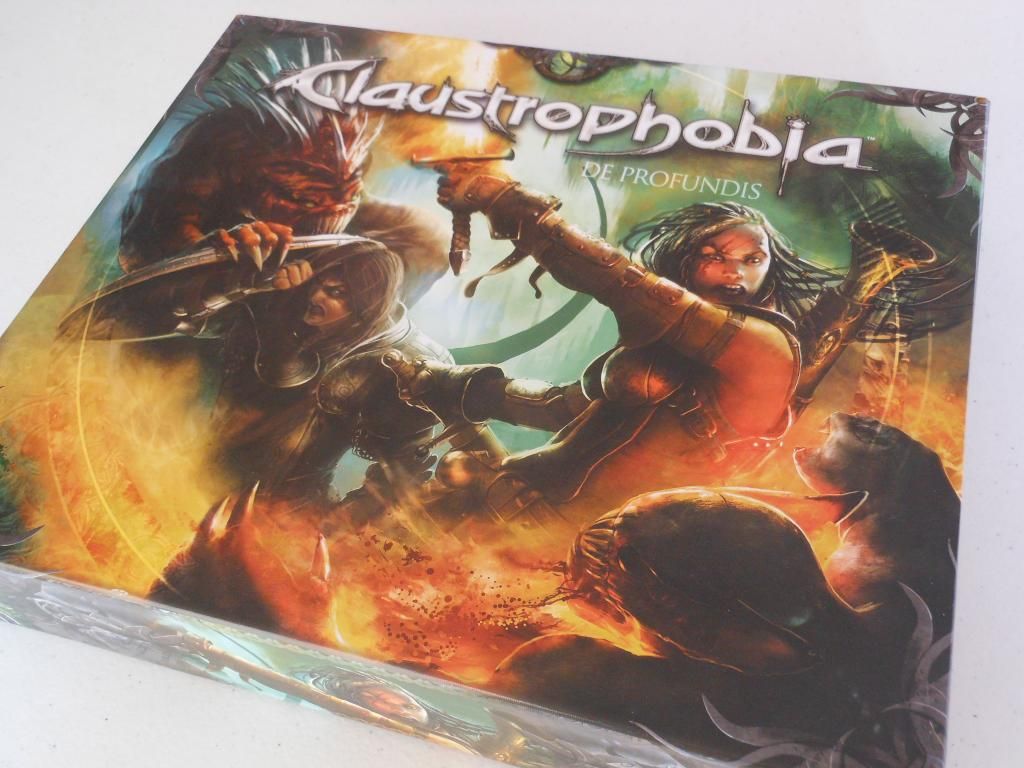
Claustrophobia game
This is the artwork for next year's International Women's Day, I think.


So, here's the thing... Claustrophobia is one of my all-time favourite games. It's up there in the top three, along with Mage Knight and Tash-Kalar. It really is just a superb product.

When I first bought the game, I mistakenly believed the base game lacked content, and that it needed an expansion. I wrote a review saying as much.

Turns out my review was wrong.

So, years later, I wrote another review, re-evaluating my view of the base game, which actually has more replayability packed into it than many other games of a similar nature. It is far more replayable than Space Hulk, for example.

Claustrophobia may only have six scenarios, and very limited ways to customize your team, but every game is a tense duel between two players. The cards you draw, the dice you roll, the map tiles in play (even the orientation of the map tiles), the tactics you try, the equipment you carry, the demons you face... There are so many variables, and so many ways in which the game can surprise you with its ingenuity.

But of course, just because I realised there was no need for an expansion didn't mean I wouldn't get expansions when they became available.

This is one of my favourite games, after all.

Claustrophobia: De Profundis (which translates into "I don't speak Latin"), is the first of two expansions for Claustrophobia, and it is a very special little box of tricks indeed.

It is also incredibly difficult to review.

You see, De Profundis, doesn't really bring anything new to the table, so all the good things I have to say about it, I have pretty much already said when I reviewed the base game. In fact, the new rules from this expansion fit on a single side of A4 paper.

I guess, if you have a winning formula, you don't want to break it.
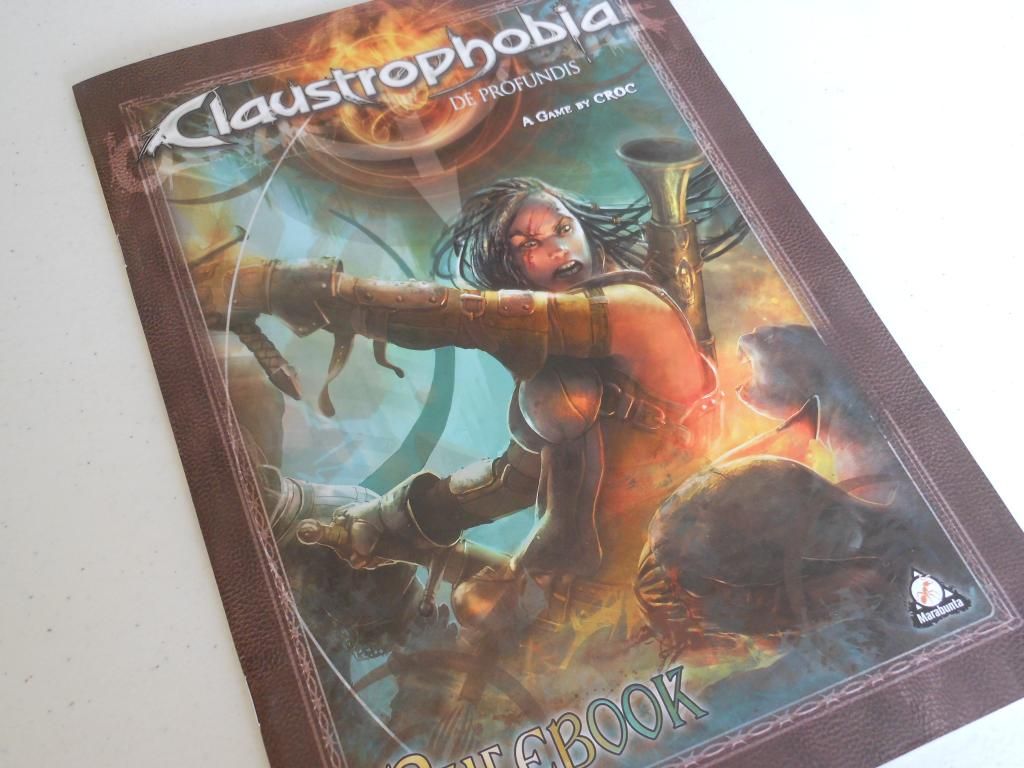
Claustrophobia rules
One page of new rules, for 12 new scenarios. It's a good ratio.


What the expansion does bring to the table is a bit more of everything you already like. More equipment, more demons, more map tiles, more event cards, and most importantly of all, 12 new scenarios.

Oh man, the scenarios... They are so good. They follow a storyline, so they are great fun played in sequence; but they also work as solo encounters, so you can dip into the scenario book wherever you fancy, and just see what happens.

And so much good stuff will happen...

But I don't want to tell you about it.

There is a certain joy in reading the scenario setup, and figuring out your tactics, and I don't want to spoil that for you by telling you about that mission where the demon constantly reincarnates but there are troglodytes that... Oh no. Wait.

I wasn't going to tell you that.
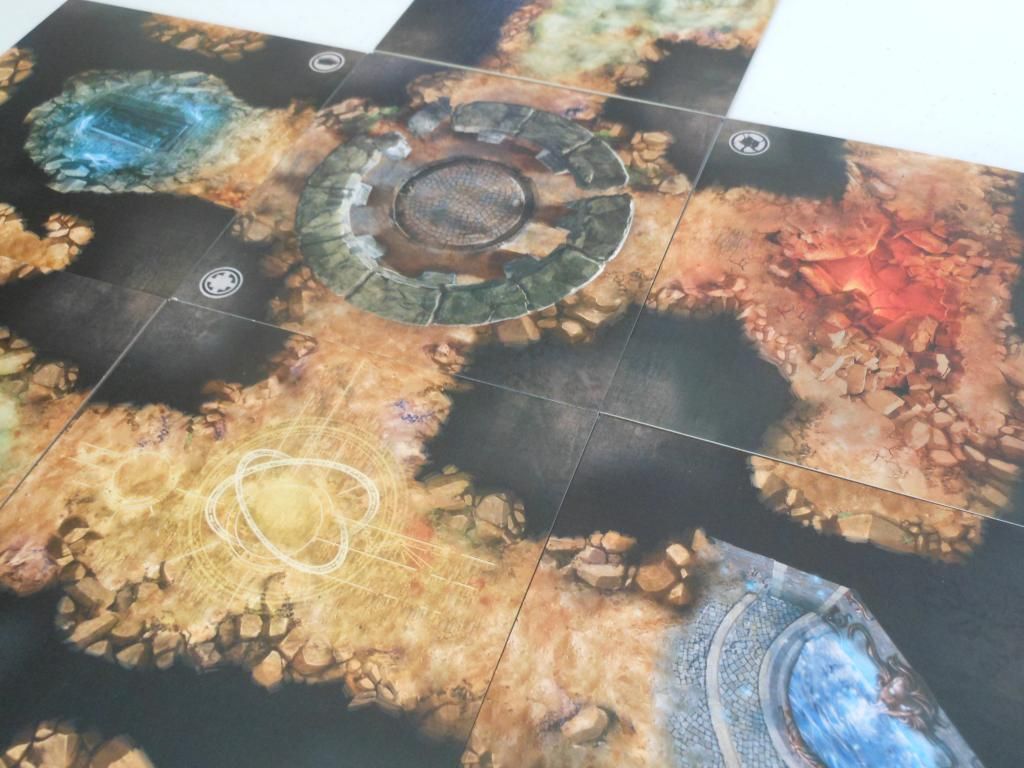
Claustrophobia map tiles
I think we're lost...


You see? This is a tricky expansion to review, because part of the fun is encountering all this stuff for yourself.

I can't even tell you about how evil the new event cards are, because I don't want to deny you the absolute joy of drawing one of the new cards from the deck, and realising for the first time how cruel you can be to your opponent.

So you just have to trust me.

You do trust me? Right?

Okay, here's something I can tell you... The expansion includes four new characters. Two Sicaria, which are Valkyrie-style warrior women for the human player, and two hell hounds. Four miniatures may not sound like a lot, but they really do add a lot to the game.

The Sicaria are bad-ass warriors that get customised with special skills at the start of each mission, in the same way a Redeemer gets customised with Redeemer powers. This means that even though you only get two new characters, they play very differently depending on the equipment and skill loadout. They are fascinating additions, and they genuinely give the demon something to worry about, as they can go toe-to-toe with a demon and leave the encounter carrying a brand new hood ornament.

The hell hounds are even more interesting, and not just because they remind me of that cenobite that runs along the walls of narrow corridors in Hellraiser.

Claustrophobia hell hounds
Smile for the camera.


They swell the ranks of the demon horde, and add some interesting new dynamics. Basically, in any scenario from the expansion, the demon player has the option of bringing in up to two hell hounds; however, every turn thereafter, the demon player must allocate one of his dice to each hell hound. The number on the dice indicates the hell hound's stats for the turn (in much the same way as with the human characters). If the demon player doesn't allocate a dice, the hell hound just chases its own tail, or rolls on its back, or starts humping the postman's leg or something.

This is a really interesting wrinkle in the rules for the demon player. The hounds are powerful, and bringing them into play is easy. But having to allocate each one a dice every turn in order for them to be even remotely useful really starts to drain resources, making it difficult to activate special powers, or gather reinforcements.

It's just bloody clever, and introduces exciting new decision points without changing the basic rules of the game at all.

Oh, and by the way, as with the base set, the miniatures are painted. However, I would say the painting is not up to the same standard. My Sicaria are particularly bad, with rogue paint smears on the face and clothing.
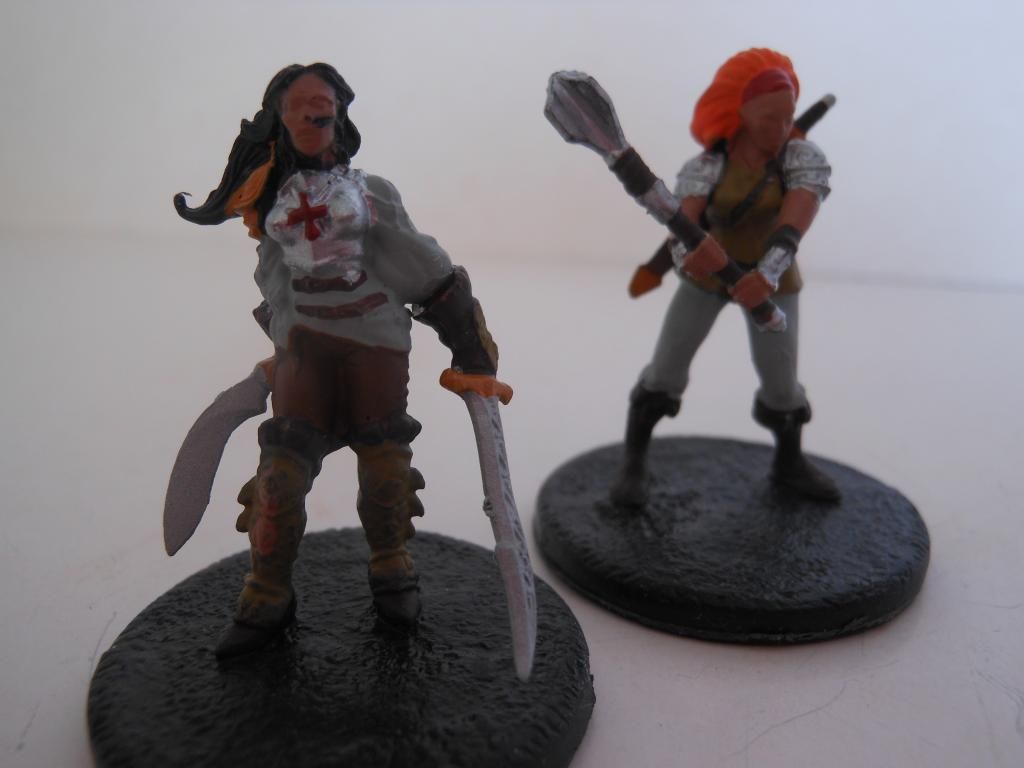
Claustrophobia Sicaria
"You are a strong, confident woman."


Unfortunately, the paint is not the only issue I have with this expansion. My other issue is that the integration of new components with old is not quite as seamless as I would like. For example, the new event cards are only supposed to be used in the new scenarios, and should be removed when playing a scenario from the base game. That is pretty annoying, and is made worse as there are no icons on the cards to indicate which ones are from the expansion.

Similarly, new map tiles and equipment cards are supposed to be kept separate when playing the base game.

Finally, Claustrophobia included a points system that allowed players to bid for control of the humans, and then build a force around the bid amount. This concept seems to have been abandoned for the expansion.

But that's all I have to complain about really, which isn't actually a lot.

If you loved Claustrophobia, I think it is safe to say you will love this expansion. It genuinely does what you expect an expansion to do: it gives you more of everything.

You may look at the components and think four miniatures, 10 map tiles, and 52 new cards isn't really a lot for the money. But if you did that, you would be falling into the same trap I fell into with the base game. With just a handful of new components, Croc has dramatically increased the options available to each player, and added plenty of variety.

And no, you don't need this expansion. Claustrophobia isn't less of a game through the absence of the hell hounds or the Sicaria.

But trust me, you do want this expansion.

You really do.

Tuesday, 10 March 2015

Nova Aetas: Inane Ramblings About Kickstarter

Nova Aetas


I grew up with Zelda.

I don't mean literally. That would be weird.

But I grew up playing Zelda. However, all that running around and bouncing into people with swords didn't really interest me all that much.

What I really loved was the tactical thrill of crushing enemies on the battlefield in turn-based roleplaying games. I think it's because I was a boardgamer before I was a video gamer, and playing too much Heroquest had ingrained it in my mind that all good games require a little grid of squares for working out movement.

The Shining Force series on the Mega Drive was my favourite. Interesting characters, cool powers and levelling up options, groovy in-fight animations, a challenging campaign, and dynamic music that changes whenever someone attacks. Man, I used to really panic when that music played and one of my healers was in the line of fire.

Best of all, when you look at the battle map where you move your units around, everyone does this little jigging on the spot thing that makes them look like they want to go to the toilet.

It's adorable.

Beyond Shining Force, there was Final Fantasy Tactics, Fire Emblem, Valkyrie Profile... You get the idea.

Those games, along with other roleplaying games such as Secret of Mana, Landstalker, and (yes), The Legend of Zelda, sculpted my formative years. It's no wonder that, as an adult, I write children's fantasy adventure stories. You can see the influence of those games in a lot of my work.

So, you can imagine my excitement when I stumbled across the Kickstarter campaign for Nova Aetas.

If you don't know what Kickstarter is, it is basically a crowdfunding system. You give developers some money to make something, and then you usually get a copy of the thing they make.

I pretty much swore off Kickstarter after the unimaginable depths of my disappointment with the game Myth, but then Nova Aetas came along.

It's a pretty tempting proposition. Set in an alternative "Dark Renaissance" populated with famous historical figures and monsters such as fawns and centaurs, it promises tactical combat in a linked campaign.

Leonardo
Leonardo... Not the turtle.


Players select a small group of heroes, and advance through a series of battles, levelling up and progressing through a skill tree that is clearly inspired by many video game roleplaying titles. Part of the evolution of the characters involves hunting for creatures, harvesting the corpses, and then crafting your own fabulous weapons. You also get the chance to meet NPCs, and then hire them, or piss them off and fight them instead.

Choices made by players dictate how the story unfolds, and the available missions, and there are three different endings for one campaign.


Apprentice skill tree
The apprentice mage skill tree.


It all sounds pretty interesting, but a campaign means nothing without good mechanisms to back it up, and here I think Nova Aetas offers something special.

Each mission involves opposing forces on a grid, and every character has a certain number of action points. A special device called a horologium marks the passage of time (and the length of the battle). When the minute hand moves around to a space containing character tokens, the associated characters get to activate in speed order. They use action points to move, fight, and use special powers, and for each action point their token moves one space on the horologium. The character is then unable to act again until the minute hand catches up with them.

Now, players of The World of Warcraft: Miniature Game may recognise this as being similar to the u-base system. And it is, but with one massive improvement... No bloody u-bases. Man, those things were crap.


Horologium
The horologium


Furthermore, the villains in the game run on an AI, so everybody gets to be a hero. I have come to realise that, when it comes to this sort of game, I really prefer a co-operative setup where everyone plays against the game, rather than one person having to command the bad guys. Of course, a good AI system isn't easy to create, but from what we know about Nova Aetas, this one seems pretty solid. Each hero represents a threat level, which gets higher as they do bothersome stuff like bashing in the skulls of the bad guys. While the threat level is low, the heroes get ignored, but as the threat level increases, they suddenly become much more interesting.

So, there is is... Nova Aetas. A "Dark Renaissance" tactical roleplaying skirmish thingy, with some very nice looking plastic miniatures, and what appears to be a good set of game mechanisms. The game has already funded, and the combat rules are available to read. That has to be worth a look right?

I'll stick a link...

HERE

So you can see for yourself.


Nova Aetas mage
Look. The link's up there.


Now, before I sign off, I have to throw out the usual warnings and caveats. I am not affiliated with this Kickstarter campaign in any way, it is just a game that I thought looked cool. I do not have any insider information. I do not even know if the final game is going to be any good. If you want to back the game, that's cool. Tell them Kevin sent you.

Just don't blame me if the final product doesn't live up to everything I hope it will be.

Happy gaming, folks.

ADDENDUM (30/03/2015):

Sadly, as the campaign for Nova Aetas progressed, it became apparent that the company had not prepared well. They were translating the rulebook on the fly, and had no adequate gameplay videos to show off all the interesting nuances the game promised. Eventually, backers started to pull out, and even though the game was fully funded, eventually enough people fled the sinking ship to defund the project completely.

It's a shame it happened, and I very much hope Nova Aetas returns in the future. Better videos, the beta rules, and more images of completed miniatures could make all the difference. For now, this is just an example of why it is so important to prepare well before launching on Kickstarter. Sometimes, the promise of awesomeness simply isn't enough to get those backer dollars rolling in (and staying in).


* All photographs are the property of Ludus Magnus Studio LLC. Reproduced here with kind permission.


Wednesday, 25 February 2015

Review - Thunderbirds: The Board Game

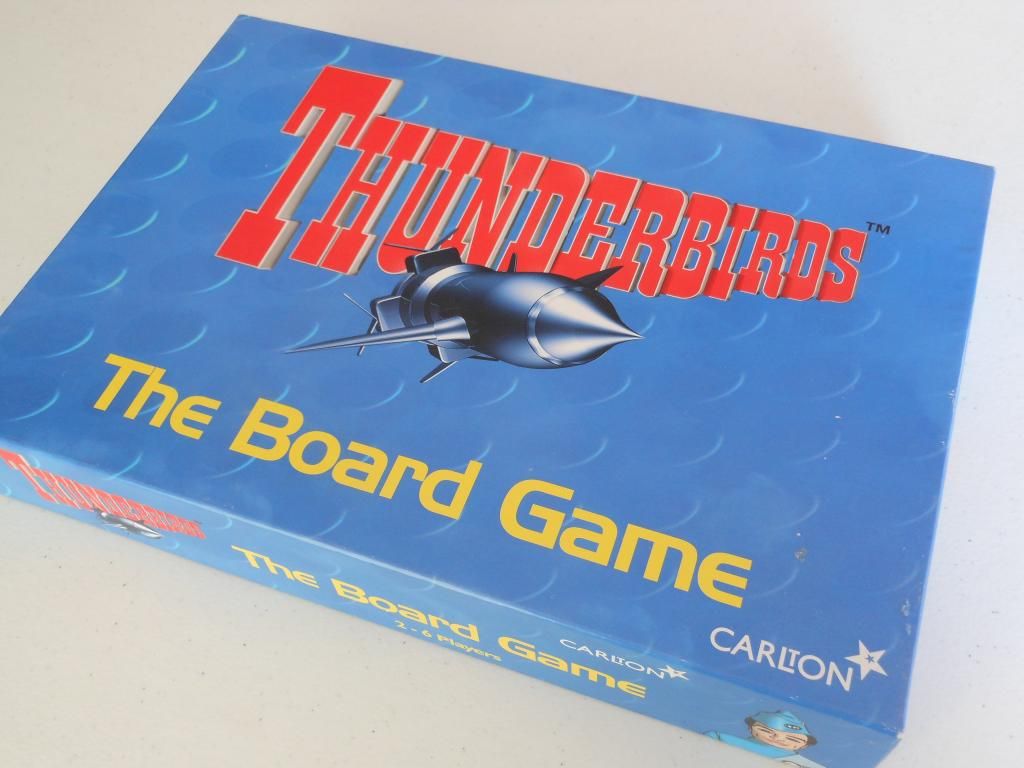
Thunderbirds: The Board Game


Thunderbirds: The Board Game
Designed by Susan Prescott
Published by Susan Prescott Games
For 2 - 6 players, aged 8 to adult

Thunderbirds: The Board Game
Looks exciting!


You've all heard the news, right?

Thunderbirds Are Go!

Really. That's the name of the new show. With the exclamation mark and everything, if Wikipedia is to be believed.

(Which it isn't.)

Yes, after years of waiting, Thunderbirds is finally coming back on the air, and it intends to arrive in style. It's a blend of live-action and CGI, with music by Ben and Nick Foster (Doctor Who), miniatures by WETA Workshop (never heard of 'em), and a cast including Rosamund Pike, Angel Coulby, and Thomas Sangster.

That's pretty exciting, right?

Well, unless of course you're reading this article after the 2015 launch of the show, in which case you're probably over it by now.

But right now, as I'm typing this, it's pretty exciting.

A little bit less exciting is Thunderbirds: The Board Game, a game with a title that explicitly states it is game lest people mistake it for some kind of demonic entity and kill it with fire.

Sigh.

Where to start with this one?

Well, let's get the obvious thing out of the way: It looks like shite.

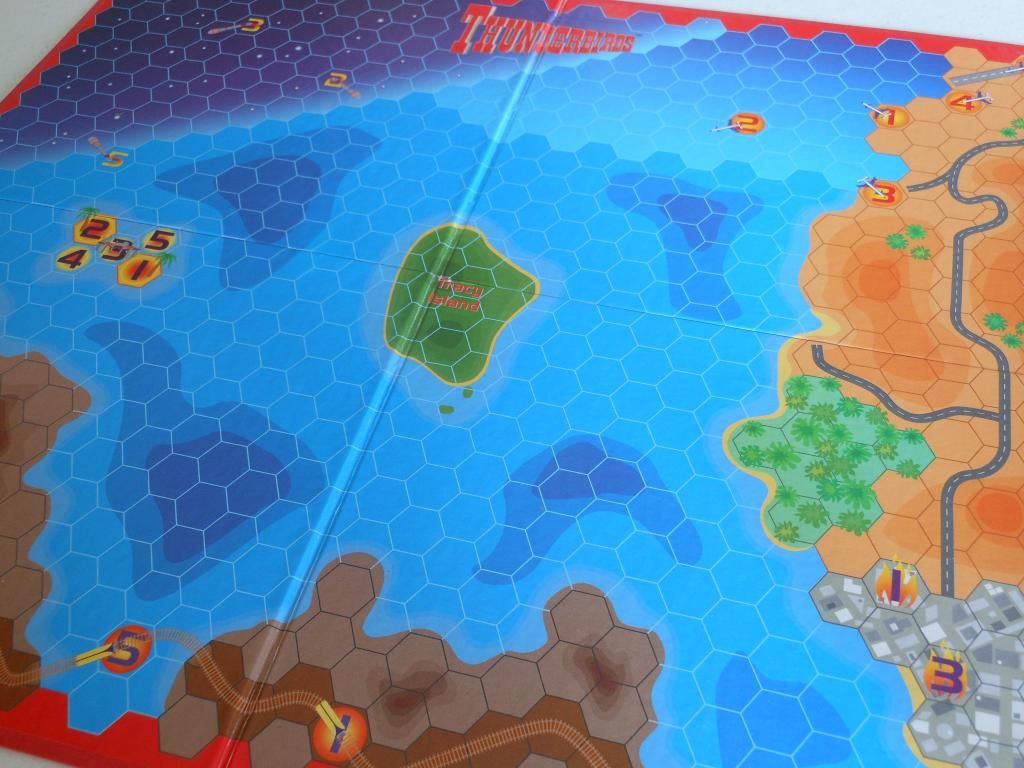
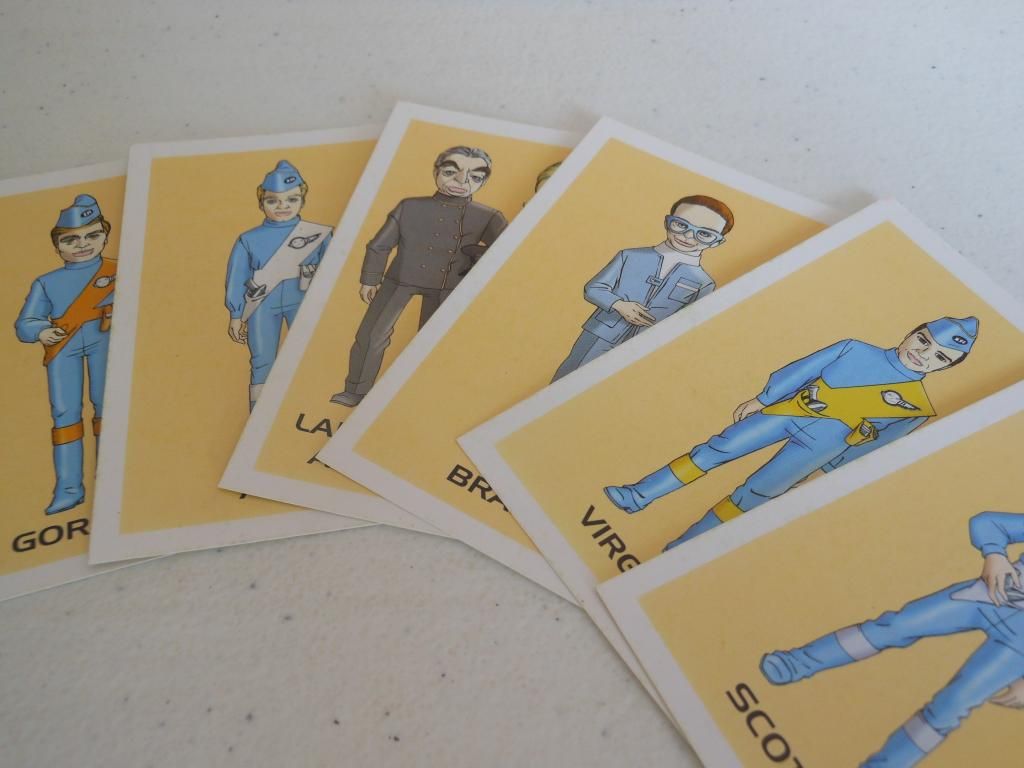
It looks like a game from the '70s, but it actually came out in 1999. It has bland box art, bland card art (or no card art at all in most cases), and a hex-based board that looks more like something you would use for a war game rather than the uninspiring roll and move piece of pap this game actually is.

Thunderbirds: The Board Game board
Everything is so far away.


So now, having set the bar suitably low, let's take a quick limbo through the rules.

Brace yourself.

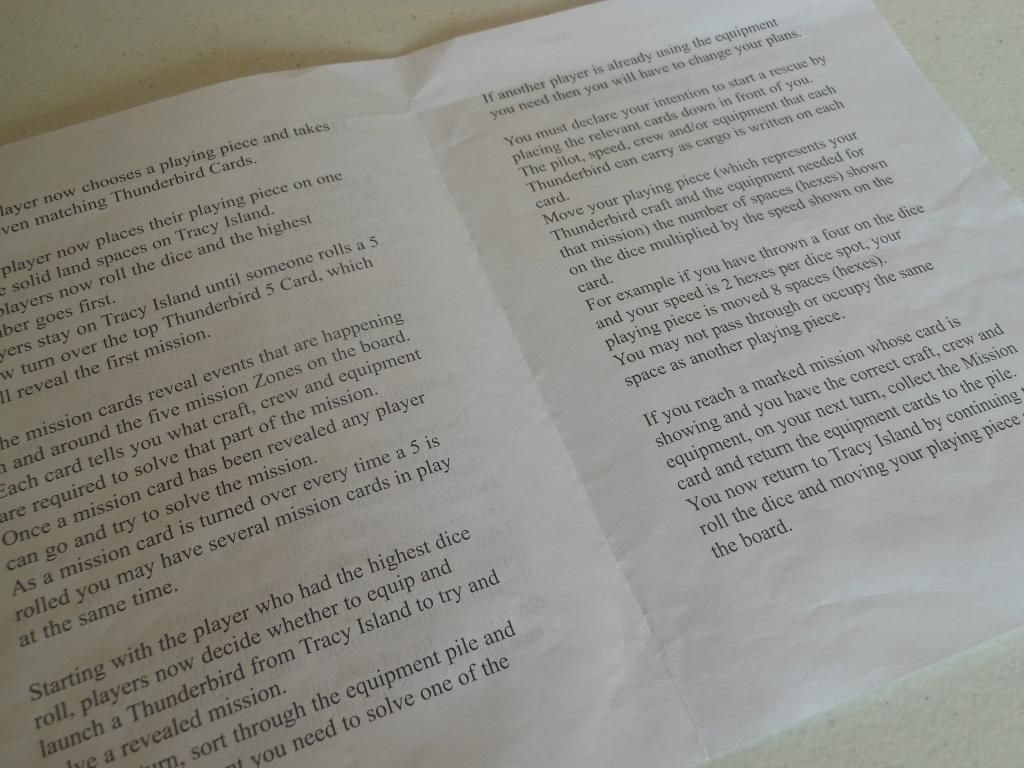
The rules are printed in large font on four sides of A5 paper, and look like something you would knock up for a prototype. They are badly worded, inconsistent, incomplete, and contradictory. I have read them a dozen times or more, and I still don't think I know exactly how the game is supposed to work. But if I concentrate really hard, and furrow my eyebrows in my very best "thinky" expression, a rough outline of the game seems to emerge, like an image from one of those Magic Eye paintings that I could never get to work.

Players start on Tracy Island, which is in the middle of a board comprising a series of hexagons, some of which are numbered. The aim of the game is to fly out to the numbered locations to avert disasters. Unfortunately, players are not allowed to leave Tracy Island until someone rolls a 5, because... Thunderbirds!

(Note: This does not mean that each player must roll a 5 to leave the island. It just means nobody is allowed to leave until someone rolls a 5, after which time everyone is allowed to leave freely, making the whole process entirely pointless.)

So, all the playing pieces are crammed together on Tracy Island, and players start to roll the D6, waiting for the number 5 to show up, accurately recreating the exciting world of Thunderbirds we all love so much.

When a 5 does turn up, it is time to reveal a mission from Thunderbird 5. This mission designates an area on the board where a disaster has occurred (maybe space, maybe underwater, maybe on a train, maybe at the office of Susan Prescott Games).

Each area of the board has its own deck of mission cards, and these cards give you a list of equipment and crew you need, plus a specific Thunderbird craft. To set off on the mission, you need to assemble a set of cards matching the list.

If you are thinking that collecting the cards is going to be an exciting element of gameplay, think again.

Starting with the player who rolled the highest number... Wait, what?

[Re-reads rules...]

Oh right, at the start of the game everyone rolled the dice. This is before the pointless bit where everyone was rolling the dice to get a 5. That first roll determines the order in which players choose whether or not to go on a mission. But wait... Hold on... That means the person who rolled the highest value at the start of the game always gets first option when a new mission card is revealed. That's a permanent, game-long advantage, based on a single dumb-luck dice roll. That can't be... But... You just... Ah, whatever.

So, a player who chooses to go on a mission takes the relevant equipment cards from a communal stack of equipment, thus preventing anyone else from going on the mission. This is one of my favourite bits of the rules as written, because it says, "If another player is already using the equipment you need then you will have to change your plans."

What plans would those be? Rolling the dice until you get another 5 to start another mission that the bastard who rolled a 6 at the start of the game is just going to nick off you before you get a chance to go on it?

Anyway, you grab the equipment.

Thunderbirds: The Board Game equipment
The cards really capture the essence of the show.


Each player also has an identical set of cards containing crew and ships, and you sift through those to find the other cards you need for your mission. Why these aren't communal like the equipment cards is beyond me, especially as there is nothing in the rules to suggest two players are forbidden from using the same ship or crew member at the same time, resulting in the situation where there are multiple Thunderbird 2s zipping around the board.

Anyway, you have your crew, your ship, and your equipment.

Thunderbirds: The Board Game crew
The gang's all here... trying to roll a 5.


What next?

Well, on your turn, you roll the dice and you... move. And you keep doing this until you reach the numbered space on the board where the mission is happening.

And then you instantly solve the mission.

And then you head all the way back to Tracy Island.

And this continues until all 25 missions on the board have been resolved.

25!

The winner, of course, is the player who doesn't put his head in the gas oven.

This is just an agonising slog of a game. A tedious, mind and butt-numbing horror show from beginning to end.

The rules are a mess, only vaguely describing the way the game should play, and the mechanisms are fundamentally flawed. There is no card play or set collection aspect. You just roll the dice, rummage through the available cards, and then move toward a mission if you can.

Thunderbirds: The Board Game rules
These are the rules. Seriously.


I think it would actually be pretty easy to rewrite the rules to make the game halfway decent, but that is just a testament to how shoddy the game is out of the box.

Frankly, someone needs to call International Rescue, because this game is a disaster. Let's hope the inevitable games released in conjunction with the new Thunderbirds Are Go! series offer something a little more entertaining.

I won't hold my breath.

Wednesday, 18 February 2015

Review - Drakon (Third Edition)

Drakon


Drakon (Third Edition)
Published by Fantasy Flight Games
Designed by Tom Jolly
For 2-6 players, aged 10 to adult

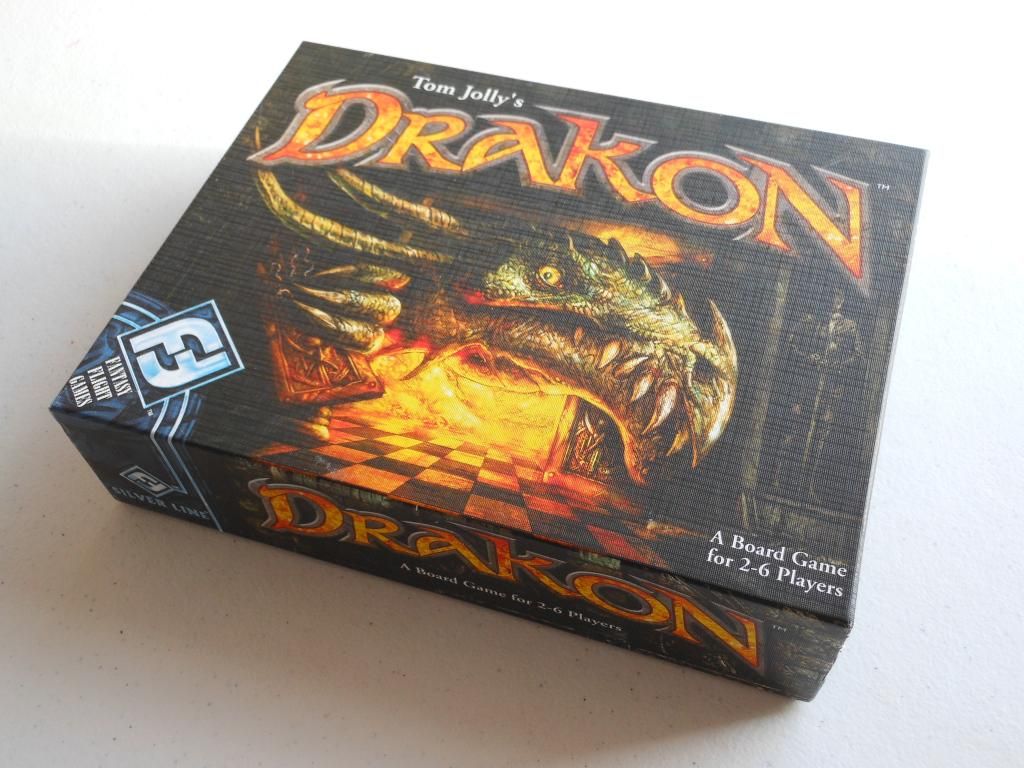
Drakon box
HEEEERRRREEE'S DRAKON!


I don't understand part-baked bread. You know, the bread you buy in a sealed bag that you have to sling in the oven to finish off before you can eat it.

It doesn't make any sense.

If you want store-bought bread, why buy stuff that you have to faff about baking?

If you want to bake your own bread, then... you know... bake your own damned bread.

Part-baked bread is this weird sort of halfway house food. Home-baked bread for people who can't be arsed.

It's a shortcut. A bite-sized step into the world of baking for people who aren't really sure if they like bread enough to buy a breadmaker. An easily digestible chunk of urban living.

It's the Tweet of the food industry.

And it's bloody nice.

And that's true for many things that straddle the boundary between two worlds.

Take Drakon (the third edition) for example.

Drakon looks like a dungeon crawler, but it isn't. It looks like the players get to take on the role of might warriors, but they don't. And it looks like it has artwork from the 1980s, but it doesn't.

It's all terribly confusing.

What at first may look like a stereotypical adventure game where you dash into the dungeon, kill the monsters, grab the money, and then head to the tavern, is actually something more streamlined. More refined.

And darker.

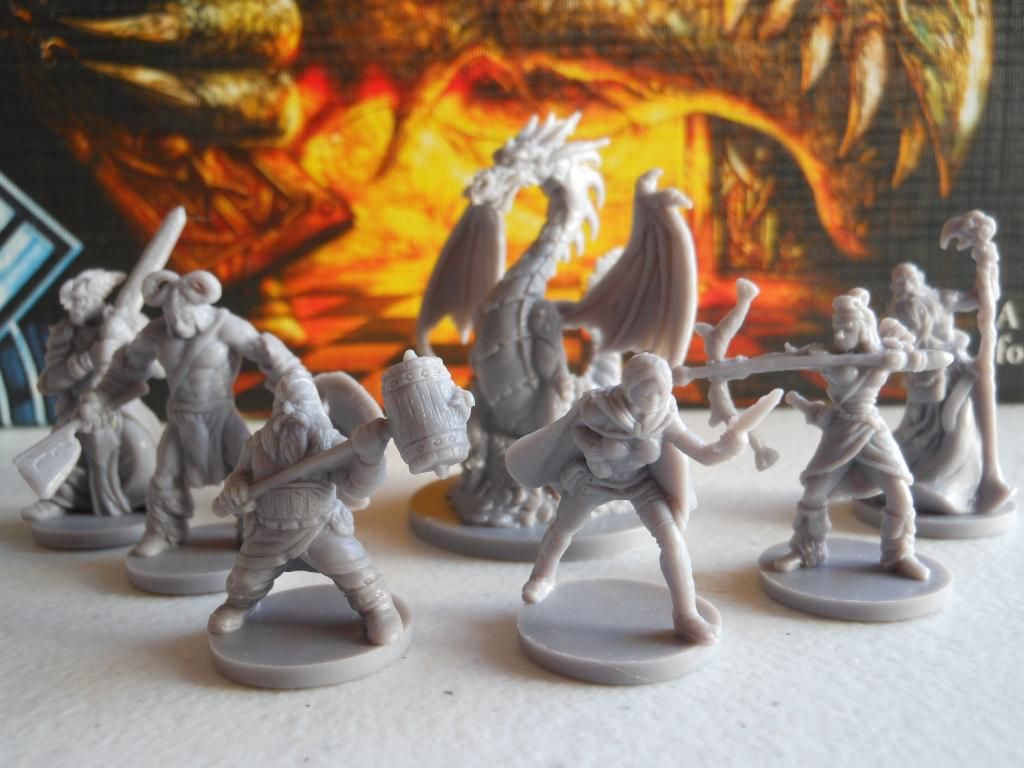
Drakon Heroes
The "heroes."


One to six players start the game by selecting a character. These characters look like your stereotypical heroes: Butch barbarians, surly dwarves, mystic wizards, and... er... stabby knights. But these aren't heroes, they're just luckless adventurers who have been caught with their fingers in the cash register.

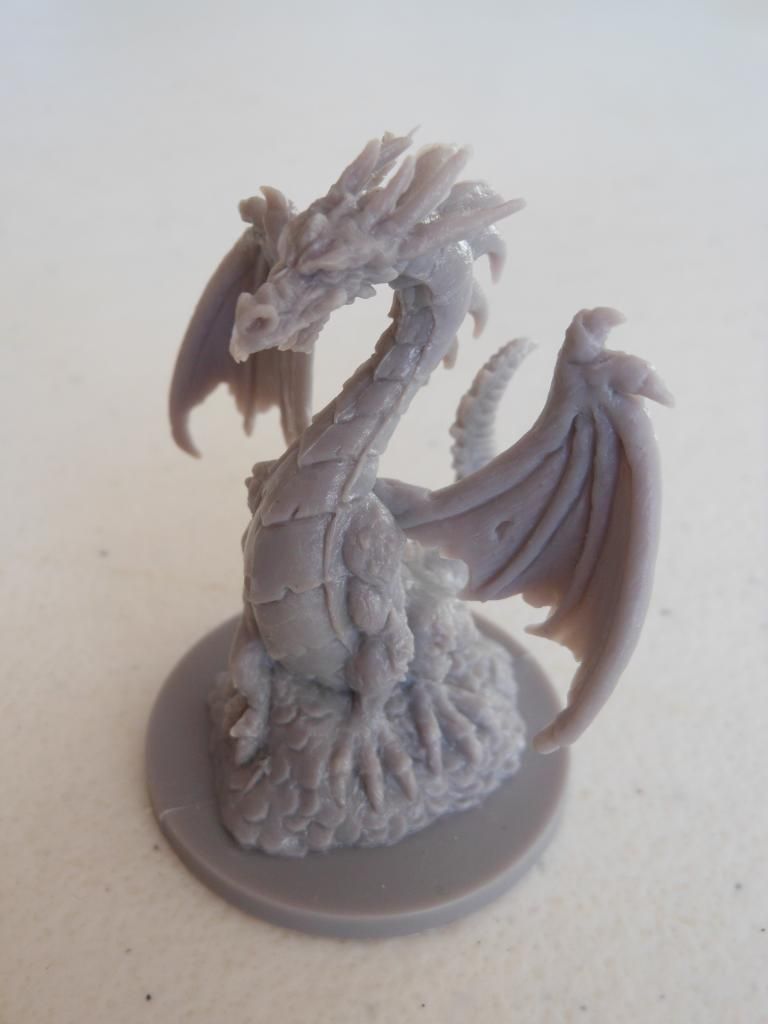
Unfortunately, that cash register is owned by a dragon: the Drakon of the title.

Drakon, is one of those fun-loving dragons who likes to play with her food, so rather than straight up eating everyone, she has decided to let them scurry like rats through her magical maze. The first character to beg, steal, or borrow, but mainly steal, 10 gold coins gets to go home. Everyone else gets invited to dinner at Drakon's pad.

I'm sure you can figure out what's on the menu.

Clue: it isn't part-baked bread.

Drakon coins
The root of all evil.


So, our "heroes" do not spend their time in the dungeon fighting orcs, rescuing damsels, and looting treasure chests. Instead, they spend the time screwing each other over. And they achieve this through one of the most elegant rule sets I have ever seen for a game.

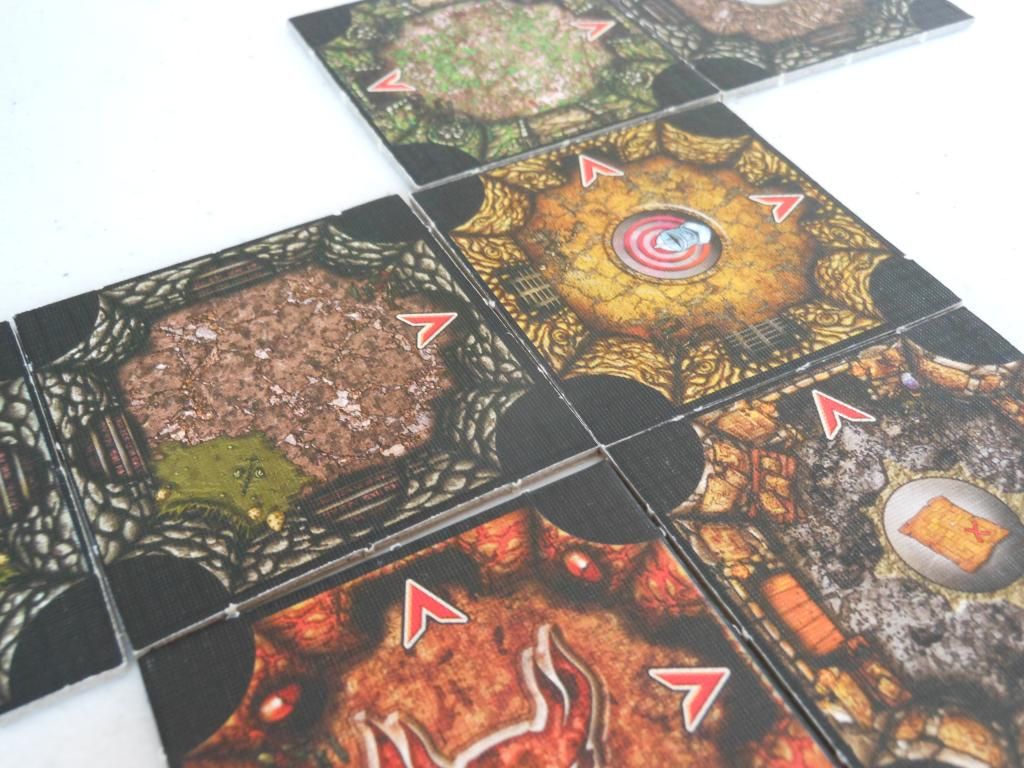
On a turn, a player can do one of two things: add a tile to the existing maze (following certain limitations based on the direction of the arrows on tiles already in play), or move his or her character onto an adjacent tile (following the direction of the aforementioned arrows).

That's it.

The rules for the game fit on two sides of A5 paper, and you can explain them to anyone in less time than it takes to prepare some part-baked bread.

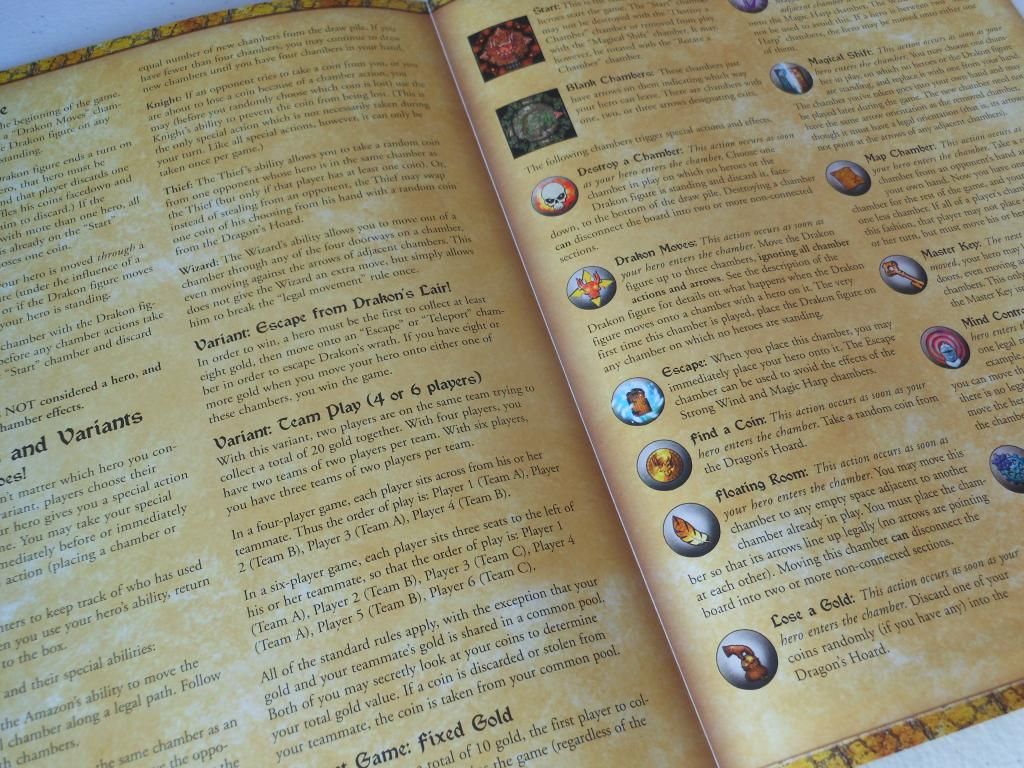
Of course, what really makes the game a blast is the special rules that work within that simple framework to create hilarious (and frustrating) situations. For a start, most of the rooms in the maze have special symbols. These range from a coin symbol that means a character gets to take a coin from the bank upon entering, to the deeply annoying magic harp, which forces characters in adjacent rooms to move towards it.

There are tiles that allow players to steal coins from other players, tiles that allow players to destroy other rooms, and tiles that allow players to activate the Drakon figure so that it stomps around the dungeon beating up everyone.

Drakon Maze
Characters can only move in directions marked by arrows.


The real joy comes from watching players create dungeons that benefit them while messing up the plans of everyone else at the table.

For example, as characters always have to follow the direction of one of the arrows on each map tile, it is possible for a player to create a closed loop of four or more coin-generating tiles. What follows is every other player at the table rapidly trying to break open that loop by blowing up tiles, sending in the dragon, floating tiles into new locations, or (ingeniously) making their own loops full of coin-stealing tiles.

Through clever positioning of tiles, players can rush around the dungeon, bypassing dangerous tiles to hit the coins they need to win. Nothing is more satisfying than a good shortcut that teleports you past a sequence of magic harps to land in the middle of a coin-rich area of the map. Nothing, except part-baked bread, I mean.

Finally, as an optional rule, it is possible for characters to get a one-shot special power. Each character has a different power, and if employed at exactly the right moment, it can make the difference between success and failure.

Drakon instructions
The rules couldn't be simpler.


It really is an incredibly simple game that offers a wealth of enjoyment from its streamlined rule set. It is hilarious to see players desperately clawing coins from each other, bickering and fighting as they do everything within their power to avoid becoming Drakon's dinner.

For that, I recommend Drakon highly; but there are two important provisos, which are actually the same.

1. This is not a dungeon-crawler.

You will not feel heroic playing it. You will feel like a complete sod. You will screw over your friends, again, and again, and again.

And then you'll do it again, just to make sure.

Every turn, every move, is fifty percent to aid you, and fifty percent to ruin the lives of every other player.

If you don't like that idea, then you won't like this game.

In other words, if you want to save the day, look elsewhere; because this is all about saving your own neck.

2. This is not a dungeon-crawler.

There are no dice, no magical weapons, no chests to loot, no monsters to fight. Nobody dies (until the end). You can't fight the dragon, you can't upgrade your skills, you can't gather experience points.

You can play a tile. Or you can move one space.

This is a tile-laying puzzle game, and it is surprisingly thinky.

But it's not a Euro game either.

There is lots of luck in the tiles you draw, and the coins you pull (which have secret values ranging from one to four). Good play will get you a long way, but it doesn't guarantee a win. There is too much interaction between players to perfectly map out your solution.

It's a little from column A, and a little from column B.

It is the part-baked bread of the gaming world.

And it is delicious.

Drakon
She looks hungry.


So, what have we learned today?

Mainly, we have learned that I probably shouldn't write reviews when I'm hungry.

Oh yeah, and Fantasy Flight Games have recently announced the fourth edition print of Drakon with new artwork and miniatures. It's well worth checking out.

Wednesday, 11 February 2015

And Now For Something Completely Different...

As a novelist and freelance writer, I am one of those lucky dads who gets to work from home. Being around the house, and working to my own schedule, means I get the great privilege of spending a lot more time with my four-year-old daughter than some other parents do.

It also means I get to spend a lot more time wearing princess hats and having tea parties with stuffed toys than some other parents do.

Fortunately, despite my daughter's love of My Little Pony and Sofia the First, she also happens to be a keen boardgamer, and a huge Marvel superheroes fan. She actually knows more of the superheroes than my wife does, and seems to have aspirations of becoming Black Widow, Hulk, Captain America, or Loki, depending on the day of the week.

So, when we were shopping in our local superstore the other day, and she noticed that Kinder Surprise have released a new range of Avengers Assemble surprise eggs, she naturally asked if I would buy her some.

Kinder Surprise Captain America
He looks annoyed about that hole in his head.


Who am I to refuse?

To be honest, there was no real way of telling what was inside those eggs, and I was expecting some cheap little model or something. And yes, what we got are cheap little models. But they are also something more...


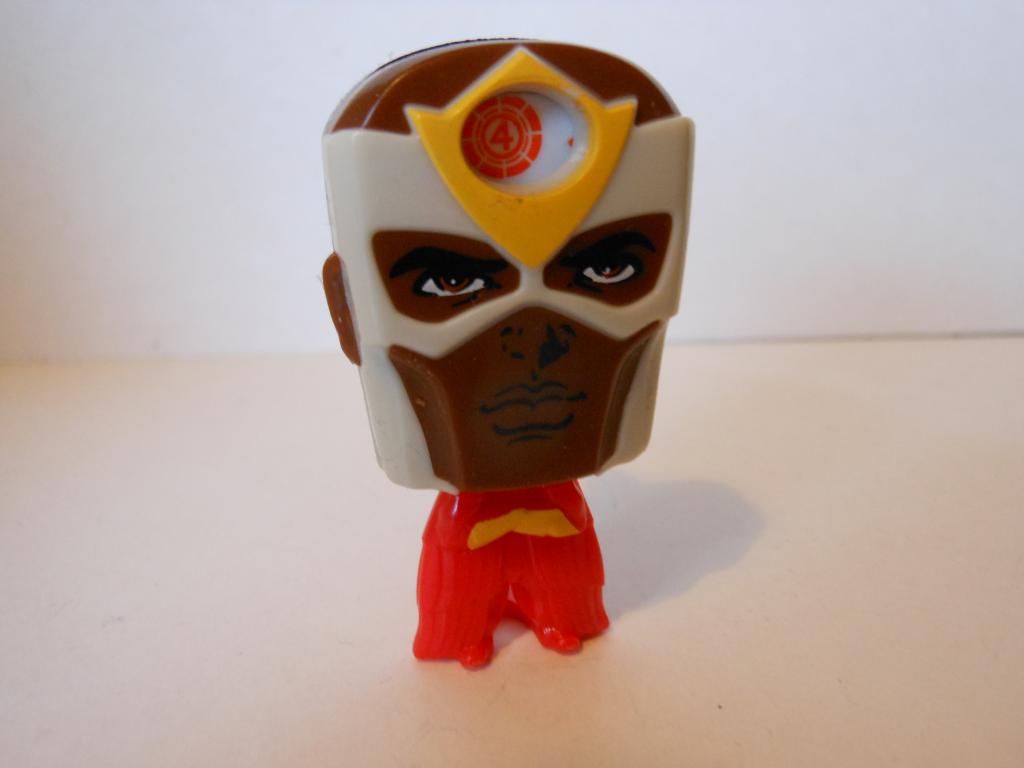
Kinder Surprise Falcon
Bird brain.


Inside each egg there is small Marvel character.

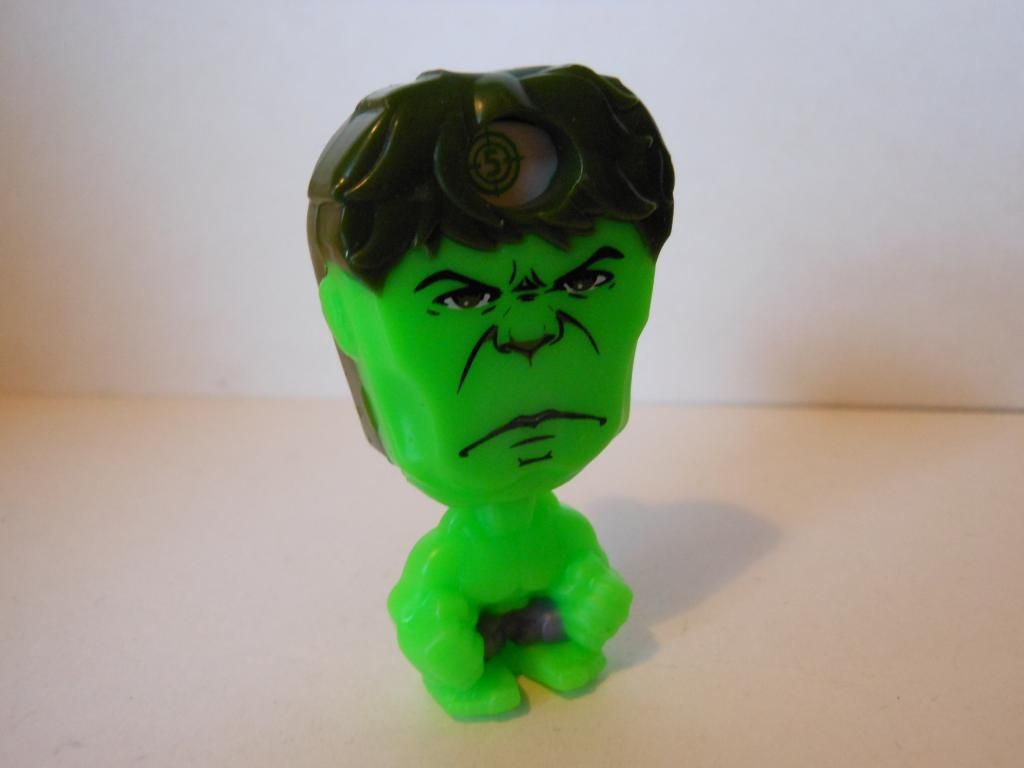
Each character has an oversized head.

Each head has a hole in the front of it, and a disc inside with a series of numbers printed on it.

When you press down the head, the disc spins, and a different number shows through the hole.

The numbers range from 1 to 6.

So, these things are random number generators...

Dice!

They are the most unusual dice I have ever seen, and for superhero themed games that require a D6 they are the perfect accessory, although it is probably much easier to fudge the results than if you were using a regular dice.

Yes, it might be a little bit creepy to see Captain America with a hole like a lobotomy wound in his swollen forehead, staring vacantly as you crush his spine to project numbers on his brain, but...

Okay, no buts. It's just creepy.

But kinda cool.


Kinder Surprise Hulk
HULK HAS A HEADACHE!


I intend to wrestle them away from my daughter to use on games nights for determining player order. It has to be better than playing a round of Cthulhu Dice. Right?