Showing posts with label Claustrophobia. Show all posts

Wednesday, 11 March 2015

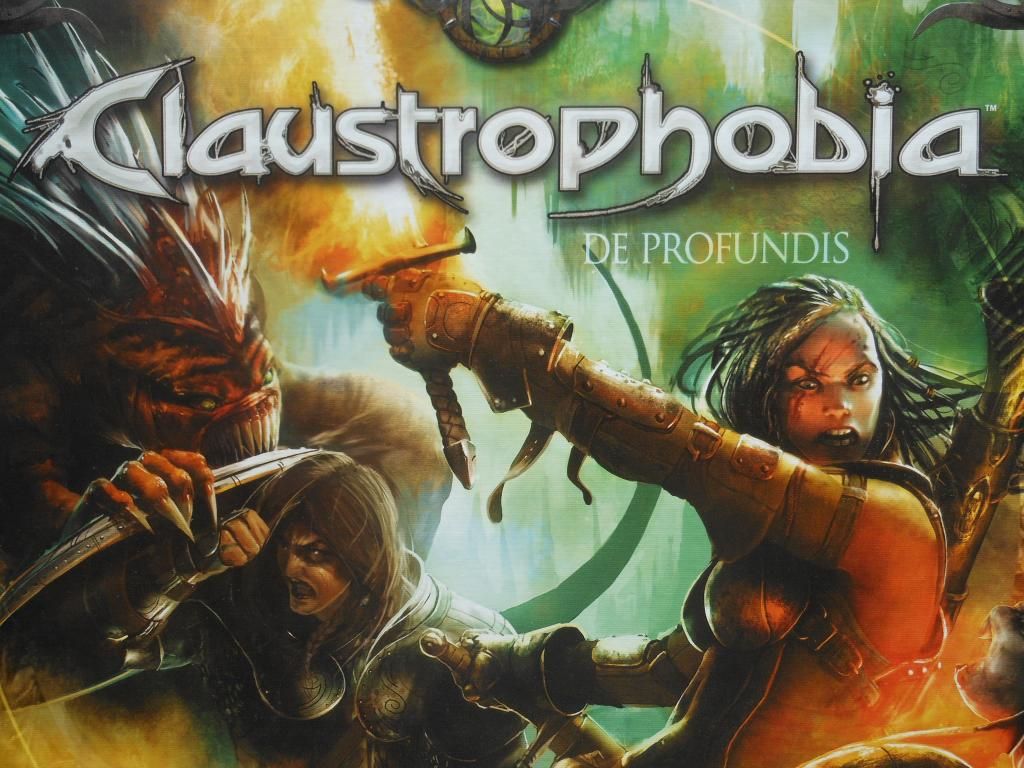
Review - Claustrophobia: De Profundis

Claustrophobia


Claustrophobia: De Profundis
Published by Asmodee
Designed by Croc
For 2 players, aged 14 to adult


Tobias staggered through the darkness, his ragged breathing reverberating in the damp confines of the hellish place he knew now would be his tomb. He found a wall, felt its pitted surface with his bleeding fingers, and allowed it to guide him deeper into the winding catacombs. Behind him, the cacophony of wailing troglodytes grew louder.

They had finished feasting.

They were coming for him.

He redoubled his efforts, forcing himself to greater exertion despite the screaming protests of his lungs and the burning muscles in his legs.

There were lights ahead: flickering torches in the blackness.

Tobias let out a strangled laugh, almost breaking down in tears. The only light here was the light they had brought with them.

'Wait,' he screamed, almost choking on the word. 'Wait. I'm here.'

He could see twisted, jittering shadows in the flare of the torches. Shapes that were human, and yet somehow...

Not.

He paused.

A hand gripped his shoulder, pulling him into an alcove. He tried to scream, but someone clamped a hand across his mouth.

'Quiet,' a harsh voice commanded.

Tobias relaxed, identifying the voice even as lantern light swelled in the gloom, etching out the hard lines of the Redeemer's grim features.

Slowly, the Redeemer took his hand from Tobias's mouth.

'It's not them, is it?' Tobias muttered.

The Redeemer shook his head solemnly. 'We can't get past them. All we can do now is pray. Here, take my hand. We will pray together.'

'What shall we pray for?'

'We shall pray that we die well. We shall pray we live long enough to avenge our fallen brothers. And we shall pray for angels of mercy to carry us to a better world than this one.'

There was a noise behind them, and both men turned to see a tall, red-haired woman leaning against the wall. She was smeared in blood, marked from countless battles, and with a trio of trog heads hanging from her belt. Her expression was unreadable as she wiped black stains from her sword.

'You could do that,' she said. 'Or you could follow me.'

Tobias's heart began to race. 'Are you an angel?'

The woman hefted her sword, smiling grimly. 'Not even close,' she said.

---------
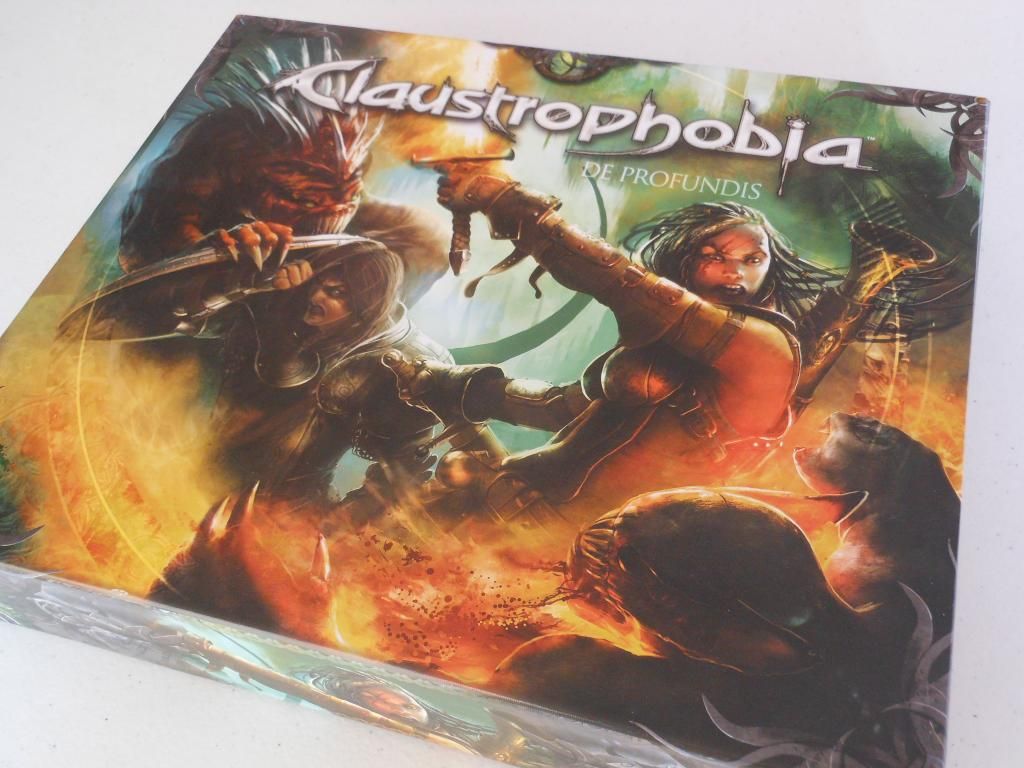
Claustrophobia game
This is the artwork for next year's International Women's Day, I think.


So, here's the thing... Claustrophobia is one of my all-time favourite games. It's up there in the top three, along with Mage Knight and Tash-Kalar. It really is just a superb product.

When I first bought the game, I mistakenly believed the base game lacked content, and that it needed an expansion. I wrote a review saying as much.

Turns out my review was wrong.

So, years later, I wrote another review, re-evaluating my view of the base game, which actually has more replayability packed into it than many other games of a similar nature. It is far more replayable than Space Hulk, for example.

Claustrophobia may only have six scenarios, and very limited ways to customize your team, but every game is a tense duel between two players. The cards you draw, the dice you roll, the map tiles in play (even the orientation of the map tiles), the tactics you try, the equipment you carry, the demons you face... There are so many variables, and so many ways in which the game can surprise you with its ingenuity.

But of course, just because I realised there was no need for an expansion didn't mean I wouldn't get expansions when they became available.

This is one of my favourite games, after all.

Claustrophobia: De Profundis (which translates into "I don't speak Latin"), is the first of two expansions for Claustrophobia, and it is a very special little box of tricks indeed.

It is also incredibly difficult to review.

You see, De Profundis, doesn't really bring anything new to the table, so all the good things I have to say about it, I have pretty much already said when I reviewed the base game. In fact, the new rules from this expansion fit on a single side of A4 paper.

I guess, if you have a winning formula, you don't want to break it.
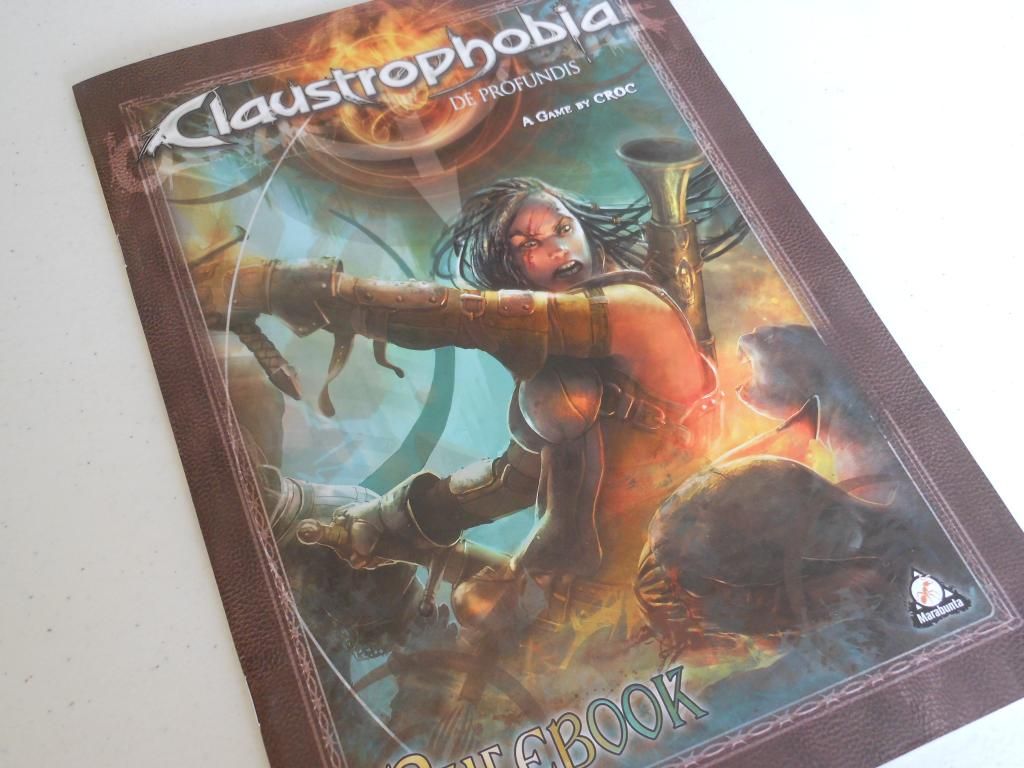
Claustrophobia rules
One page of new rules, for 12 new scenarios. It's a good ratio.


What the expansion does bring to the table is a bit more of everything you already like. More equipment, more demons, more map tiles, more event cards, and most importantly of all, 12 new scenarios.

Oh man, the scenarios... They are so good. They follow a storyline, so they are great fun played in sequence; but they also work as solo encounters, so you can dip into the scenario book wherever you fancy, and just see what happens.

And so much good stuff will happen...

But I don't want to tell you about it.

There is a certain joy in reading the scenario setup, and figuring out your tactics, and I don't want to spoil that for you by telling you about that mission where the demon constantly reincarnates but there are troglodytes that... Oh no. Wait.

I wasn't going to tell you that.
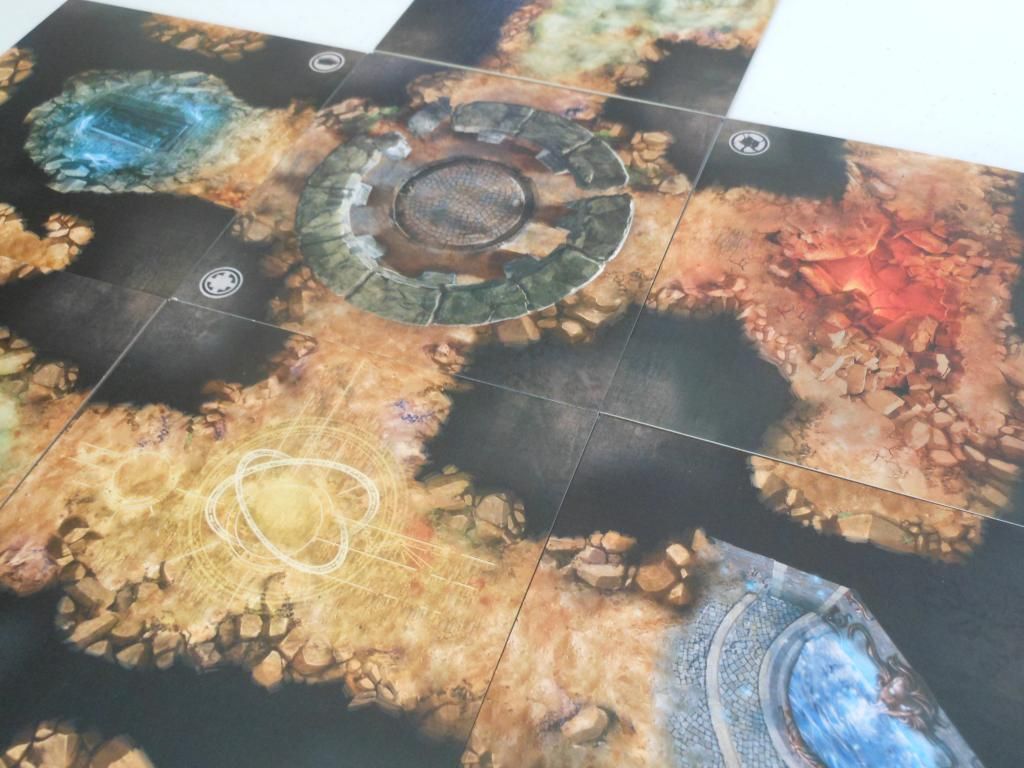
Claustrophobia map tiles
I think we're lost...


You see? This is a tricky expansion to review, because part of the fun is encountering all this stuff for yourself.

I can't even tell you about how evil the new event cards are, because I don't want to deny you the absolute joy of drawing one of the new cards from the deck, and realising for the first time how cruel you can be to your opponent.

So you just have to trust me.

You do trust me? Right?

Okay, here's something I can tell you... The expansion includes four new characters. Two Sicaria, which are Valkyrie-style warrior women for the human player, and two hell hounds. Four miniatures may not sound like a lot, but they really do add a lot to the game.

The Sicaria are bad-ass warriors that get customised with special skills at the start of each mission, in the same way a Redeemer gets customised with Redeemer powers. This means that even though you only get two new characters, they play very differently depending on the equipment and skill loadout. They are fascinating additions, and they genuinely give the demon something to worry about, as they can go toe-to-toe with a demon and leave the encounter carrying a brand new hood ornament.

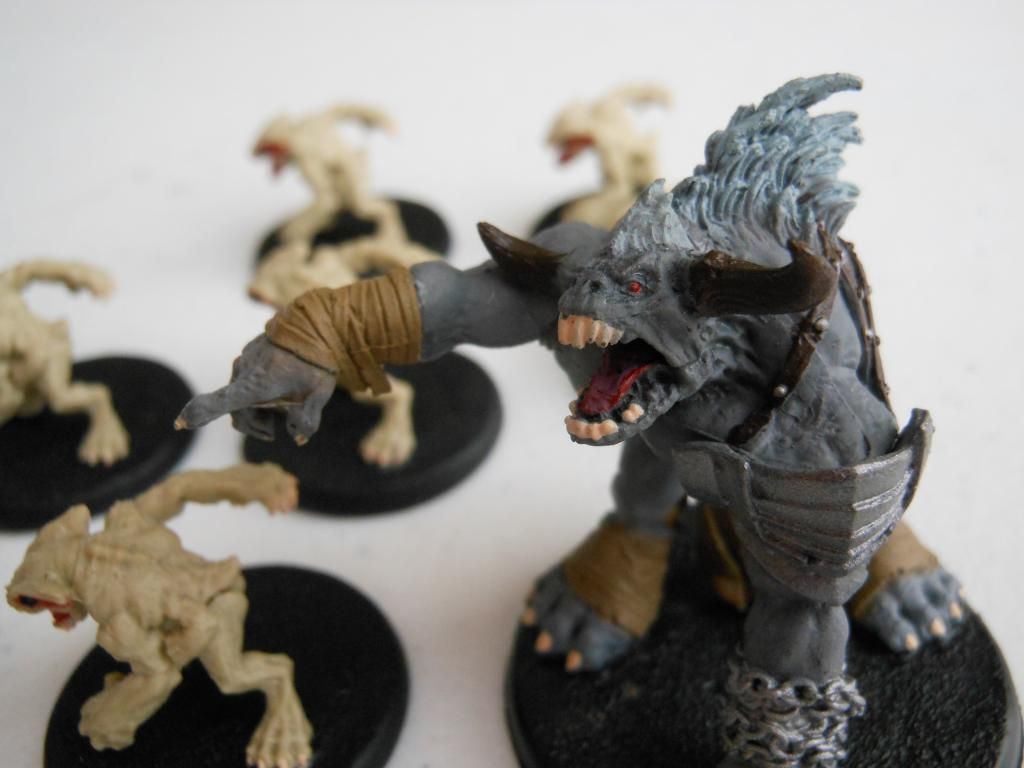
The hell hounds are even more interesting, and not just because they remind me of that cenobite that runs along the walls of narrow corridors in Hellraiser.

Claustrophobia hell hounds
Smile for the camera.


They swell the ranks of the demon horde, and add some interesting new dynamics. Basically, in any scenario from the expansion, the demon player has the option of bringing in up to two hell hounds; however, every turn thereafter, the demon player must allocate one of his dice to each hell hound. The number on the dice indicates the hell hound's stats for the turn (in much the same way as with the human characters). If the demon player doesn't allocate a dice, the hell hound just chases its own tail, or rolls on its back, or starts humping the postman's leg or something.

This is a really interesting wrinkle in the rules for the demon player. The hounds are powerful, and bringing them into play is easy. But having to allocate each one a dice every turn in order for them to be even remotely useful really starts to drain resources, making it difficult to activate special powers, or gather reinforcements.

It's just bloody clever, and introduces exciting new decision points without changing the basic rules of the game at all.

Oh, and by the way, as with the base set, the miniatures are painted. However, I would say the painting is not up to the same standard. My Sicaria are particularly bad, with rogue paint smears on the face and clothing.
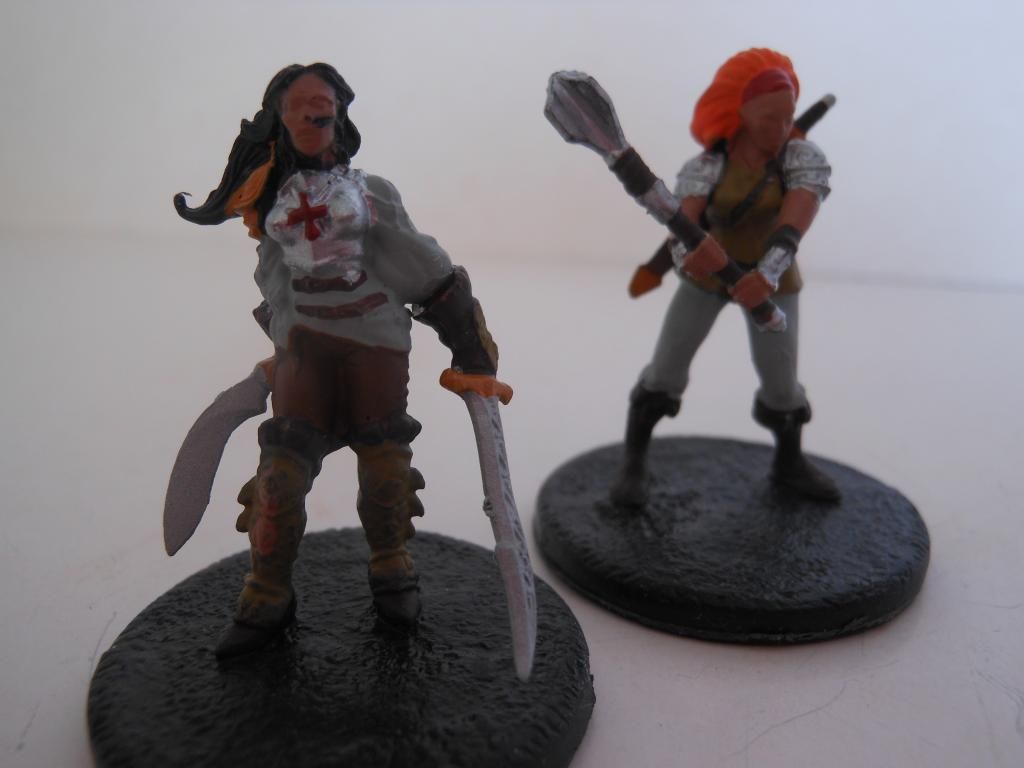
Claustrophobia Sicaria
"You are a strong, confident woman."


Unfortunately, the paint is not the only issue I have with this expansion. My other issue is that the integration of new components with old is not quite as seamless as I would like. For example, the new event cards are only supposed to be used in the new scenarios, and should be removed when playing a scenario from the base game. That is pretty annoying, and is made worse as there are no icons on the cards to indicate which ones are from the expansion.

Similarly, new map tiles and equipment cards are supposed to be kept separate when playing the base game.

Finally, Claustrophobia included a points system that allowed players to bid for control of the humans, and then build a force around the bid amount. This concept seems to have been abandoned for the expansion.

But that's all I have to complain about really, which isn't actually a lot.

If you loved Claustrophobia, I think it is safe to say you will love this expansion. It genuinely does what you expect an expansion to do: it gives you more of everything.

You may look at the components and think four miniatures, 10 map tiles, and 52 new cards isn't really a lot for the money. But if you did that, you would be falling into the same trap I fell into with the base game. With just a handful of new components, Croc has dramatically increased the options available to each player, and added plenty of variety.

And no, you don't need this expansion. Claustrophobia isn't less of a game through the absence of the hell hounds or the Sicaria.

But trust me, you do want this expansion.

You really do.

Thursday, 25 September 2014

Review - Claustrophobia

Way back in 2010, I wrote a review for Claustrophobia. Looking back at that review, I don't think I am particularly happy with it (although my opinion is largely unchanged). So, rather than repost that original review here, I thought I would revisit Hell. Please stand clear of the elevator doors. Going down...

Claustrophobia


Claustrophobia
Designed by Croc
Published by Asmodee
For 2 players, aged 14 to adult

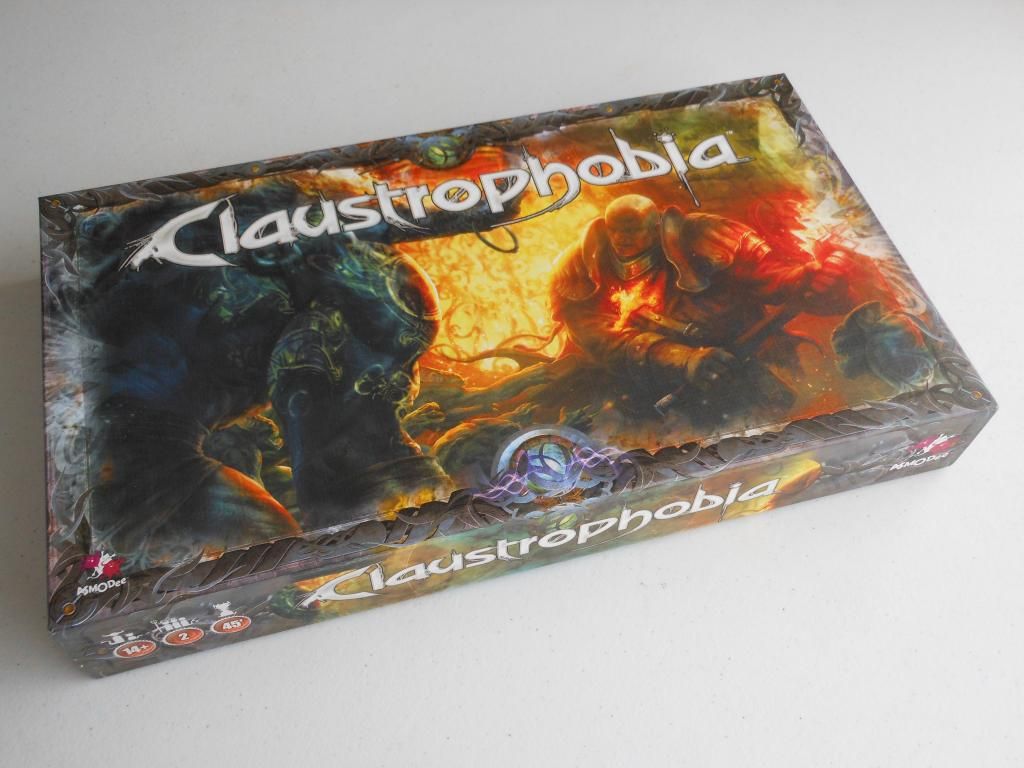
Claustrophobia box
Pretty...


Have you ever been told to go to Hell?

I have.

It was one of the best boardgaming recommendations ever. Although, now I come to think of it, I am not sure that shouty, red-faced guy waving his fist on the pedestrian crossing as I drove by was really talking about Claustrophobia...

Either way, I am glad I booked my one way ticket to hell (and back), because Claustrophobia quickly became a jewel in my gaming collection, more than capable of holding its own against the likes of Space Hulk and Gears of War. And the reason for its success is a set of mechanisms that are so slick they probably taught the Jets how to dance.

In fact, this game is more than slick. There's no clutter, no fiddly rules, no exceptions. There is just game. Stacks and stacks of bloody brilliant game, crammed into a rule set so streamlined you get faster when you walk behind the box.

Here, pull up a chair, and I'll tell you about it... No, not that chair. That's my dark throne.

Only I get to sit there.

You can sit here. Just push the bits of bodies onto the floor. One of the trogs will "clean them up" later.

Right, Claustrophobia is an asymmetric two-player miniatures skirmish adventure game thingy. One player gets to control a small group of humans, and the other player gets to control an endless stream of troglodyte warriors and demonic beasties. All of these characters are represented with rather lovely pre-painted (fully assembled) miniatures, which are incredibly well done and look great on the board.

For the good guys (and I use that term loosely, because the humans have actually invaded Hell and are technically the wrongdoers here), there is a Redeemer who leads the team, two Blades, and two Brutes.

Claustrophobia characters
Blade, Redeemer, and Brute. They mean business.


The Redeemer is an interesting choice, as rather than being a great warrior, he is a priest who leads his allies with the force of his religious convictions. He is a competent fighter, but his main strengths are raising morale, healing, and guiding everyone through the darkness. And he has a big hammer, because for some folk, the way you deliver your message is just as important as the message itself.

The Redeemer is the lynchpin in a team that otherwise comprises condemned criminals, who literally have to go through Hell to win a second chance at life. There are fast-moving Blades, who nimbly duck and weave through the tunnels, and there are the lumbering Brutes, who can soak up damage and keep their allies alive.

This is far from your traditional team of goody-goody heroes. This is a group of doomed men who just want to slip through the cracks in the system, and a zealot who wanted to bring order to chaos, but somehow got lost along the way.

I don't think I have ever seen a game that creates such a strong metaphor to represent the journey its protagonists take.

And I am a sucker for a kick-ass theme.

Of course any heroes (or anti-heroes) are only as good as the villains they face, and Claustrophobia gives you plenty: A clutch of demons with a range of monstrous abilities, and a teeming (infinite) horde of subterranean beasts called trogs.

You get 11 troglodytes in total, and while I really like the miniatures, and I love the concept of a wave of monsters crashing against that small force of humans, I do find the trogs a little disappointing. These doomed men are supposed to be trekking through Hell, so I would expect the monsters to reflect that. But instead of monstrous, tentacled fiends, and damned souls, there are these generic goblin creatures.

Rounding out the evil forces is a single demon miniature. There is only ever one demon in play at any time, and this miniature is used as a proxy to represent any of seven different demon types (with the current scenario dictating which demon is available). It is disappointing to see one miniature standing in for seven distinct and imaginative villains, but it is an acceptable compromise to keep the costs down. On the plus side, the demons are varied and really change up how each game plays. Some demons hunt their prey, becoming stronger each time they draw blood, while others are gargantuan fiends that block the corridor, preventing the heroes from slipping through into the tunnels beyond.

Claustrophobia demons
Demonic beasties.


And while we're talking about variety, let's mention the game tiles: 32 of them. 32 tiles that fit together in almost limitless combinations to create unique underground mazes. For some scenarios, the board is predefined; but in many of the scenarios, the board grows as the heroes explore. They start at an entrance tile, and cautiously delve into darkness, randomly drawing new tiles that may be flooded chambers, narrow corridors where blood-hungry tentacles lash out from the walls, or breeding chambers where the trogs hatch.

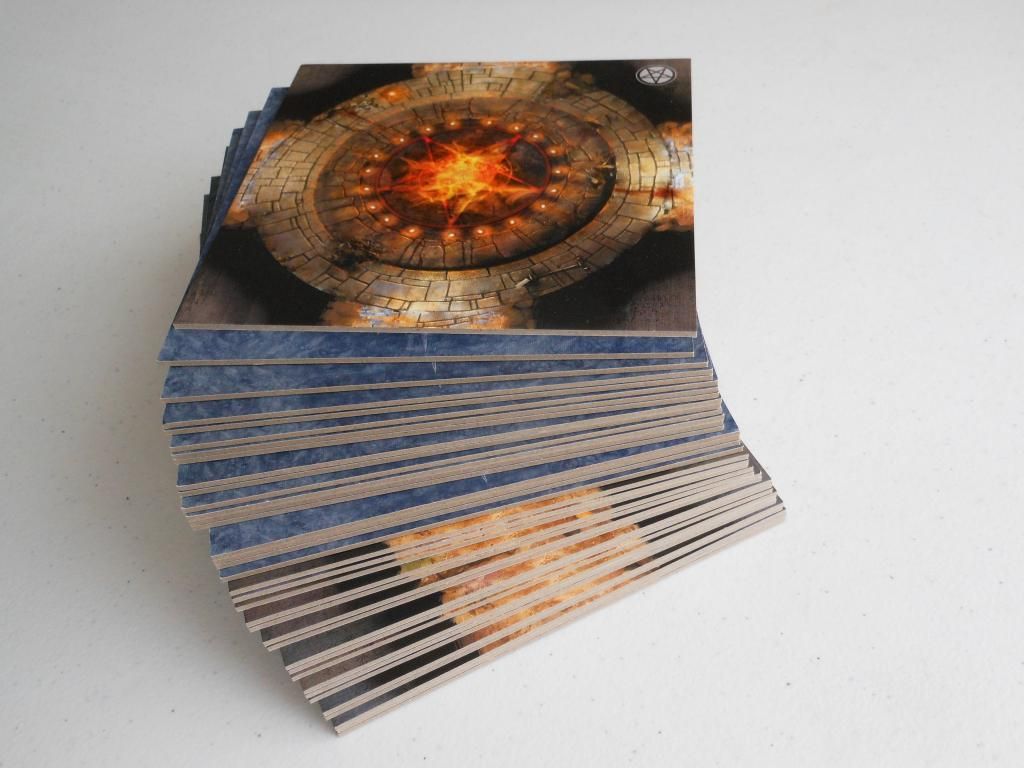
Claustrophobia tiles
You could tile your bathroom with these things.


When I first purchased the game, I was slightly underwhelmed by the lack of variety in the enemy characters, and the very limited range of weapons and armour for kitting out the team of heroes (there are only six equipment cards, and two of them are duplicates). I believed there was a requirement for an expansion. However, I admit I was wrong. There is an expansion out now, and another on the way, but you really don't need them.

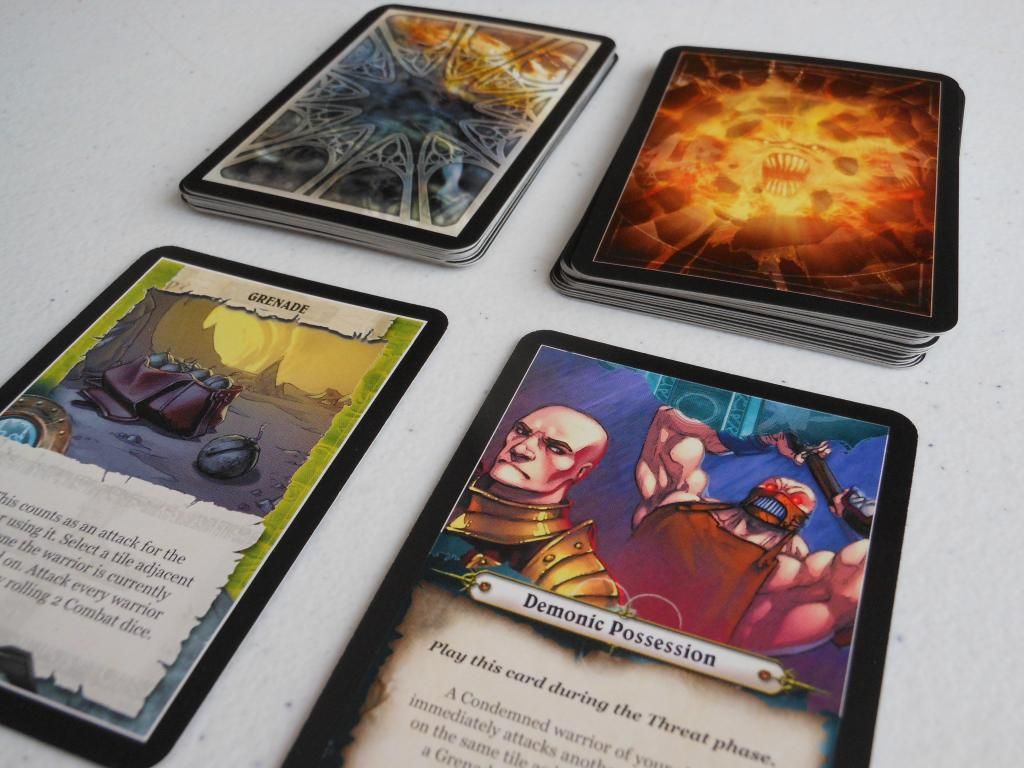
Claustrophobia cards
Don't look behind you.


This is a complete game.

With six scenarios out of the box (and more online), advanced rules for team creation through a reverse auction, and a massive variety of tiles, it is going to be a long time before you start to feel like you have "seen it all before."

And as for a limited variety of villains... Well... There may be a limited number of miniatures, but over the course of several games you will face trogs, tough trogs, fast trogs, burrowing trogs, frantic trogs, suicidal trogs, seven flavours of demon, possessed humans...

There really is a lot going on here.

And I haven't even talked about the mechanisms yet.

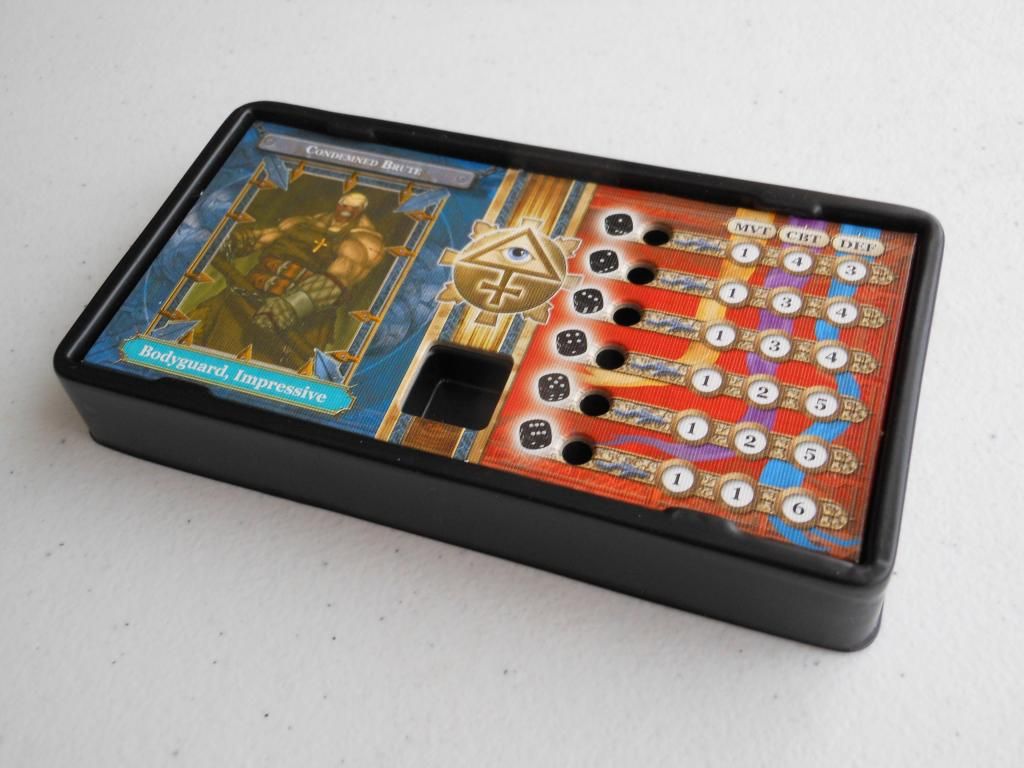
Here's how it goes: Each turn, the good player rolls a number of dice equal to the number of characters in the team, allocating one dice to each character. The number on the allocated dice dictates which of six unique stat lines the character uses for that turn.

Claustrophobia character board
Brute character board for tracking damage and dice allocation.


Things get more complicated when characters start to get wounded. Every wound a character takes blocks one of the stat lines. If you allocate a character a dice with a number corresponding to a wounded stat line, then that character is exhausted. He can't move or attack, and he gets a very low defence score for the turn. Furthermore, every time a human character dies, you roll one less dice for generating stats. Your options dwindle, the pressure mounts.

Thematically, it's perfect: Over time, your characters become weaker, less capable of fighting, slower... They stumble more frequently, they get lost in the winding tunnels, they panic. They are bleeding. God... there's blood everywhere. And the shadows... There are so many trogs. Too many demons. The enemies are remorseless, relentless... And what can men do against such reckless hate?

The answer is obvious.

They can die.

And there will be death. It is close to a miracle for all of the humans to survive the ordeal. Indeed, they are not expected to survive.

There is a reason these men are condemned.

In Space Hulk, the tension derives from the inclusion of a timer to add pressure for the marine player. Things move fast. Too fast. One turn can end it for the marines. But in Claustrophobia, you get to see in agonising detail as your team gets picked apart.

At the start of the game, the heroes are strong and the trogs are weak. Over time, little injuries stack up. The heroes begin to weaken, but the army of trogs grows ever stronger. The scales balance, and then slowly... terrifyingly... inevitably... they tip.

The tables turn.

First your heroes take a few wounds, then they begin to bleed out. Someone becomes exhausted. He collapses, with the sound of approaching trogs ringing in his ears.

He begs the others not to leave him behind.

But they cannot stay. Not here.

Not in Hell.

Every moment wasted brings them closer to failure, and so they press on, leaving their fallen colleague to the clamouring masses of the troglodyte horde.

It is horrible to watch as your small force of humans gets eroded. Horrible, and magnificent. You really start to invest in your characters. It actually hurts when you lose one of them, or when you have to make that tough call to sacrifice someone for the good of the team.

Genuinely hurts.

This is actually one of the cruellest, most vicious games I have ever played.

And I've played Monopoly.

After the dice allocation, any characters that are not exhausted get to move, explore, and fight. But there are no grids for defining your movement here; there are no range rulers for figuring out who is in your line of sight. This game is far too streamlined to worry about things like facing and flank attacks. This game is far too busy being all kinds of crazy fun to let that kind of thing get in the way.

Here, a movement of one space means moving from one board section to an adjacent board section (revealing a board from the stack if necessary). If you are on a board section you can attack any other piece on that board section, and if you have a gun you can attack any piece on an adjacent board section that is not blocked off by a wall.

There are a few simple movement rules (no more than three pieces from each side on a single board, and you can't leave a board if you have less pieces on that board than your opponent does) but there is nothing complicated. The game actually pushes as many rules out of the way as possible, so you have a direct view of your opponent.

After all, this is a battle, and you want to look your opponent straight in the eye when you land the killing blow.

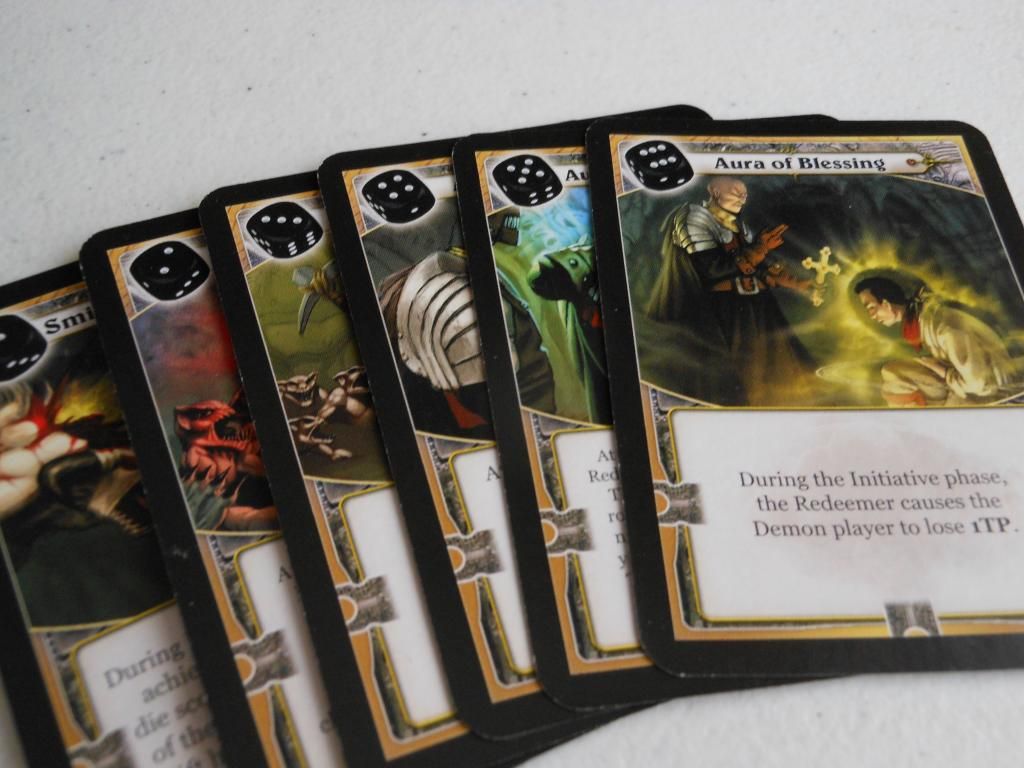
Claustrophobia redeemer cards
The Redeemer has powerful abilities to turn the tide of battle.


However, that doesn't mean this game lacks meaningful decisions. The order in which you move your characters is vital, as some characters never get pinned (the Blades), and some prevent enemies from leaving the tile even when outnumbered (the Brutes). You need to know when to run, when to stand and fight, when to explore a new tile, when to guard a demon entry point to prevent new monsters arriving in play, when to concede ground, when to play one of your valuable and ridiculously rare advantage cards, when to sacrifice a character for the good of the team, when to activate a Redeemer's special ability. The list goes on, and that's just the decisions you face when you are playing the humans.

The demon player has an entirely different set of challenges to face, and an entirely different set of game mechanisms to work with.

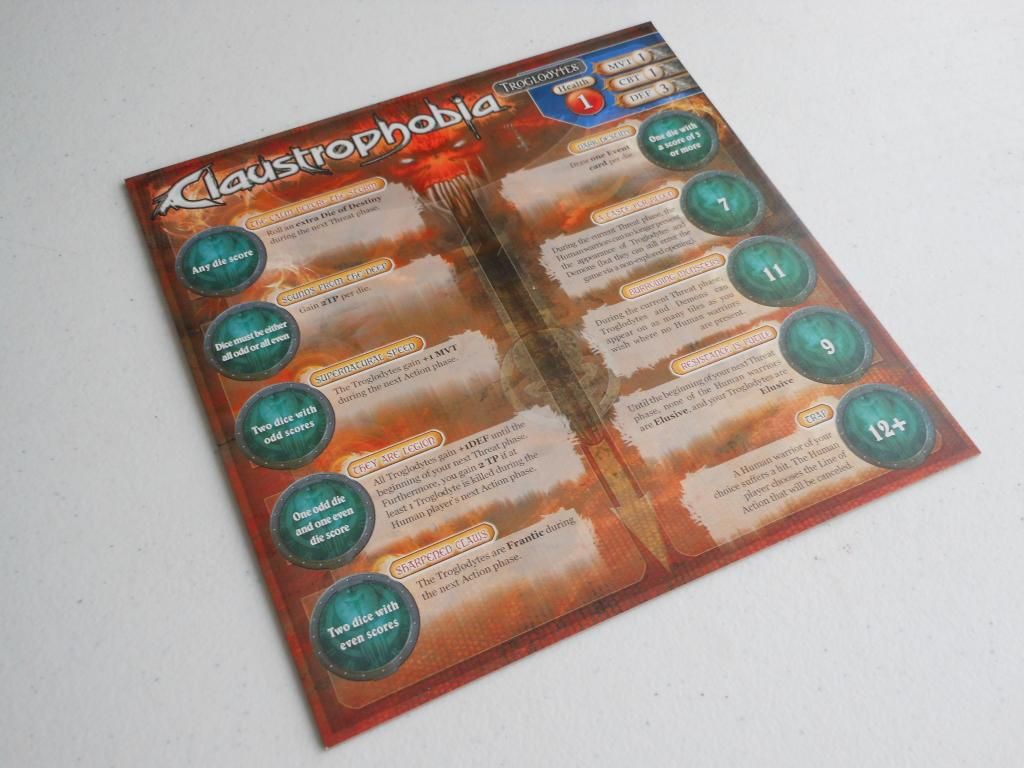
At the start of each demon turn, the demon player rolls a set of dice and uses those dice on the "board of destiny" to generate monsters or other special powers. For example, it is possible to allocate two dice with odd numbers to give all trogs +1 movement for the turn. Similarly, it is possible to allocate any combination of dice with a value of 12 or more to spring a trap and automatically wound a hero character.

Claustrophobia board of destiny
The board of destiny: like a menu at a restaurant that serves up pain.


Playing as the demons isn't easy. It may look like using the humans as chew toys is simple, but the condemned warriors have nothing to lose and everything to gain, and they have no intentions of going down without a fight. These are men who won't think twice about throwing a grenade into a room of trogs, even if one of their allies is already in there. These are men who will do whatever it takes. And a bit more.

And that's what you get with this game.

You get drama.

You get a lean, tightly-packed set of rules that allow you to create stories you are going to talk about long after you have put the toys back into the box.

You get despair, exhilaration, last-gasp victories, crushing defeats. And you get a challenge, regardless of which side you are playing. The demon player really has to work to win. It takes effort to evict the human scum from the tunnels of Hell.

Claustrophobia demon
"GET OUT!"


Of course, not every scenario is evenly balanced. Some missions are harder for one side or the other, so it is always a good idea to play each mission twice, swapping sides at half time. There is also one mission that I personally believe is almost impossible for the demon player to win, even against a sub-par opponent. But that's okay. Every scenario-based game has at least one clunker in the mix, and while it is a little disappointing, it does not detract from what is otherwise a first-rate game, with stunning presentation, and far more replayability than you might think.

Certainly more replayability than I first thought.

If you like asymmetric, theme-heavy, beautiful, tense, squad-level miniatures games, there really isn't much more I can say. So, what are you waiting for?

Go to Hell.