Friday, 3 October 2014

Review - Interplay (a.k.a Puzzler)

Interplay


Interplay / Puzzler
Designed by Philip Shoptaugh
Published by Philip Shoptaugh Games
For 2 players, aged 8 to adult

Interplay game
So sexy...


I don't really get days off. However, sometimes I get days where I do something I want to do, completely ignoring all the vitally important things I need to do. I usually suffer for those days in the long run.

But what do I do on one of these near-mythical not days off?

Well, anyone who has taken more than a casual glance on the Always Board games collection knows the answer: I hit charity shops and discount stores in search of rare, out of production, and obscure board games.

Because I'm weird.

Luckily, my wife is weird too... Just don't let her know I said that. If she is out and about on one of her not days off, she will also visit charity shops and discount stores. And it is thanks to my wife that I have in my possession, a little oddity called Puzzler... er... Interplay.

No, Puzzler.

Interplay.

Definitely Interplay.

I think.

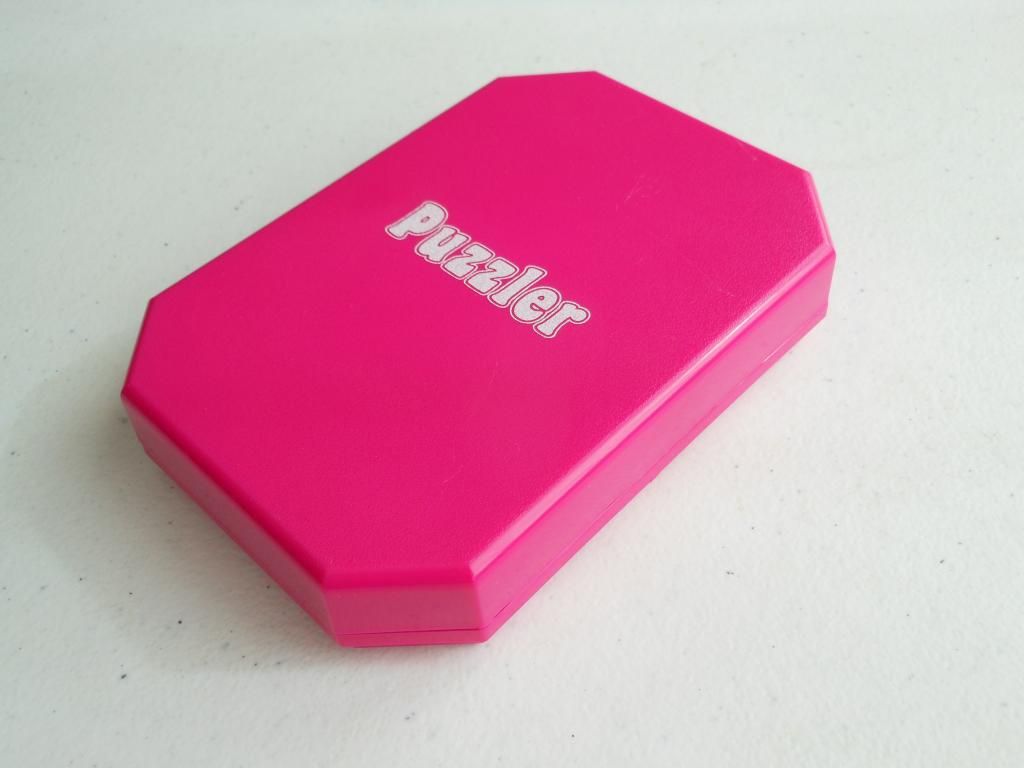
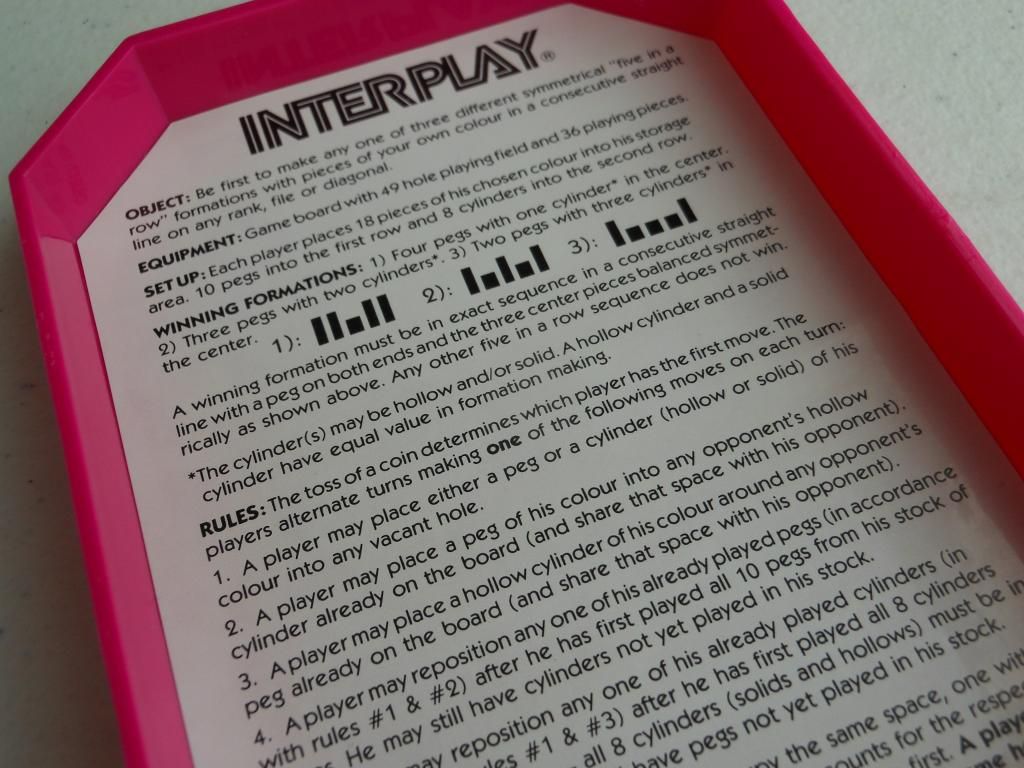
This is actually a very portable little travel game. It comes in a hot pink (sexy) plastic case, with Puzzler printed on the front; but when you open the lid you are presented with rules and plastic components for the game Interplay.

Puzzler is Interplay
Wait... What? Interplay? But I thought...


So, Puzzler or Interplay... Is it any good?

Actually, kind of...

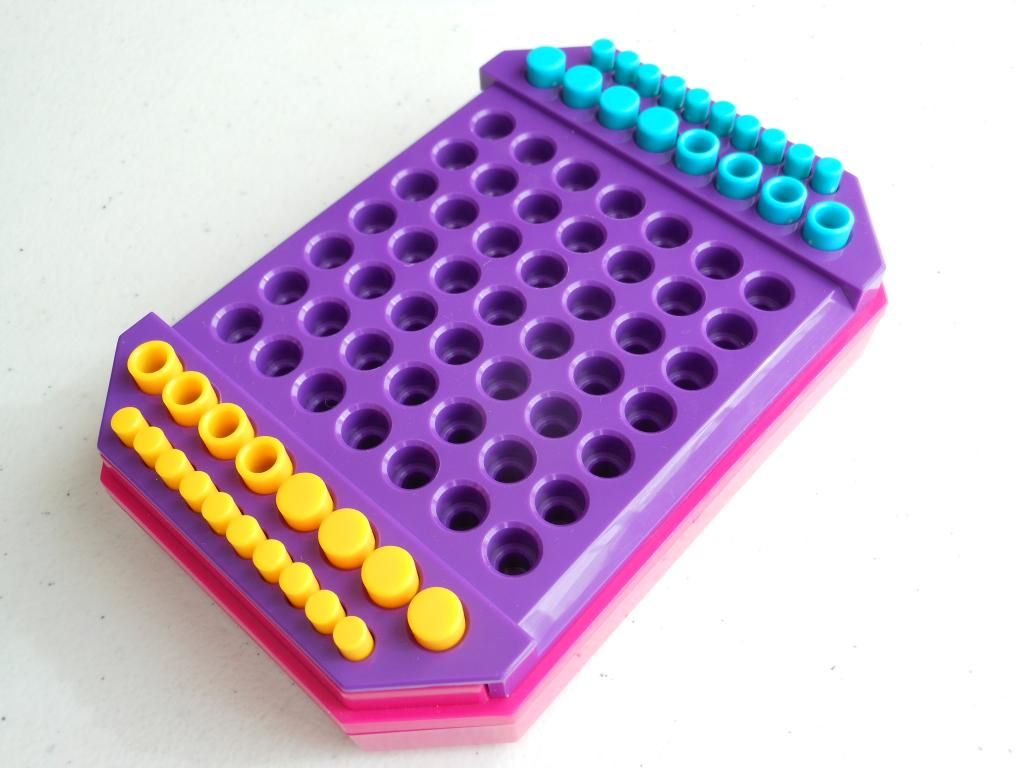
It's a two-player abstract game in which each player has 18 playing pieces with which to make a winning formation. These pieces comprise 10 narrow pegs, four hollow cylinders, and four solid cylinders.

On your turn, you simply place any one piece on the board. You can place a peg in any empty space, or inside one of your opponent's hollow cylinders. Similarly, you can place one of your hollow cylinders in an empty space or around one of your opponent's pegs. Obviously, solid cylinders can only go in empty spaces.

Once all of your pegs are in play, you can move them around on the board; and once all of your cylinders are in play, you can move those around the board too.

Your aim is to create one of three formations, each comprising five of your pieces in a straight line. Formations always have a peg at either end, but have different combinations of cylinders and pegs in the middle.

Interplay travel game
Up, up, and Interplay.


Of course, the most interesting aspect of the game is that it is possible to share a space with your opponent, and when this happens, each piece counts for the respective player. This makes blocking formations more difficult than you might think, and it is not uncommon for games to end quickly if one player (i.e. me) gets caught out doing a stupid move.

And... Yeah... It's okay.

It would be perfect for taking camping (not that I would ever go camping), or for playing in a bar (not that I would ever play games in a bar), as there are no cardboard components to get damp. But a game that isn't soggy is dry by definition, and this game is as dry as it gets, even by the standards of most abstract games.

That being said, I'm not really a pure abstract kind of guy, so I'm not the target audience; but with games like Hive, Chess, Shing Shang, and Pentago on my shelf, Interplay just isn't going to get much of a look in.

I would say it is mildly distracting at best, which for a game in hot pink packaging seems to be the biggest crime of all.

Monday, 29 September 2014

Review - Arctic Scavengers

Arctic Scavengers


Arctic Scavengers
Designed by Robert K. Gabhart

Published by Rio Grande Games
For 2-5 players, aged 13 to adult

Sometimes, things just don't work out.

Sometimes, all the elements are in place for something amazing, but the result is less than the sum of its parts.

Sometimes, like a Rolex purchased on eBay, what you first perceive to be something exceptional, on closer inspection turns out to be a bit of a disappointment.

Take Arctic Scavengers, for example.

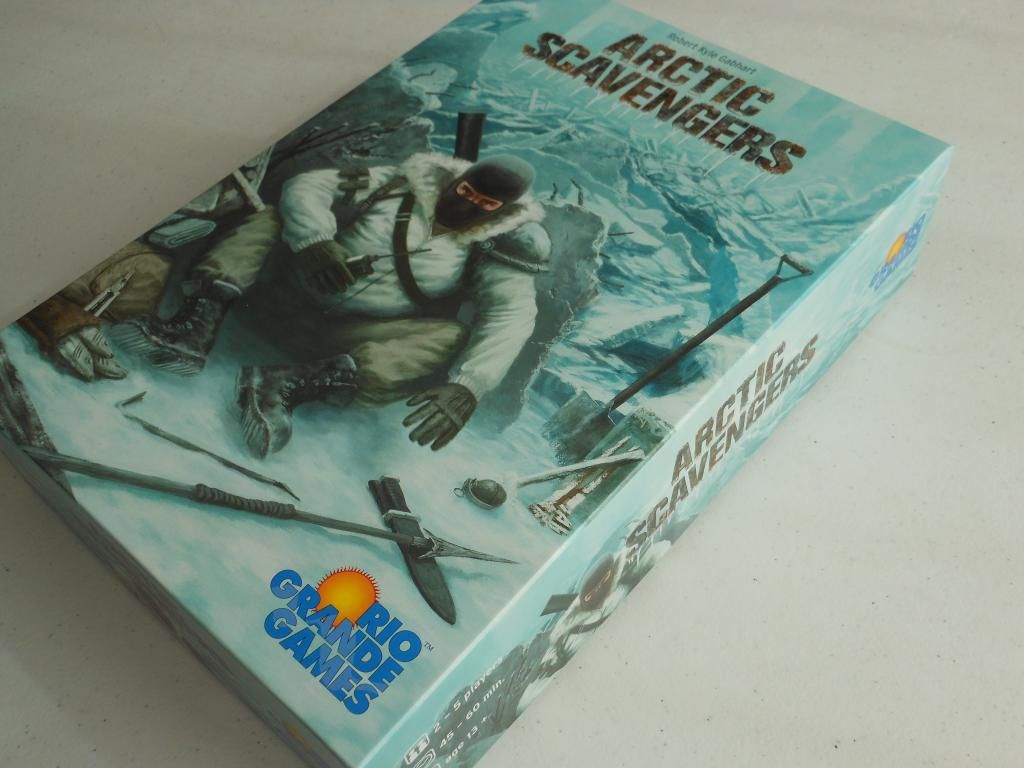
Arctic Scavengers is a game that, at first blush, seems to have it all. It has stunning artwork depicting a desolate, frozen world and the humans who struggle for survival within it. It has a simple set of rules that ensure you can pick up and play the game within ten minutes or so. It has a classic deck-building mechanism, with a healthy dose of bluffing and direct conflict thrown into the mix. It has a core game and several modular expansions squeezed into a box that is so modestly sized it even fits on my overstuffed games shelves.

Seriously, it sounds amazing. Right?

Right?

I'll admit. I was enamoured with this game. When I saw that the UK discount store The Works was selling off copies for just £10, I had to have one. But they sold out online almost instantly. I went to several local stores. They had sold out too.

With growing desperation, I realised that I was not alone in wanting this game. It had become a hotly contested resource, and I was going to need to use all of the tools at my disposal if this was going to be a successful hunt.

I went old school: I started phoning stores.

And eventually, I found a place that still had two copies left. I reserved one, and then drove out the next day to collect it.

Victory!

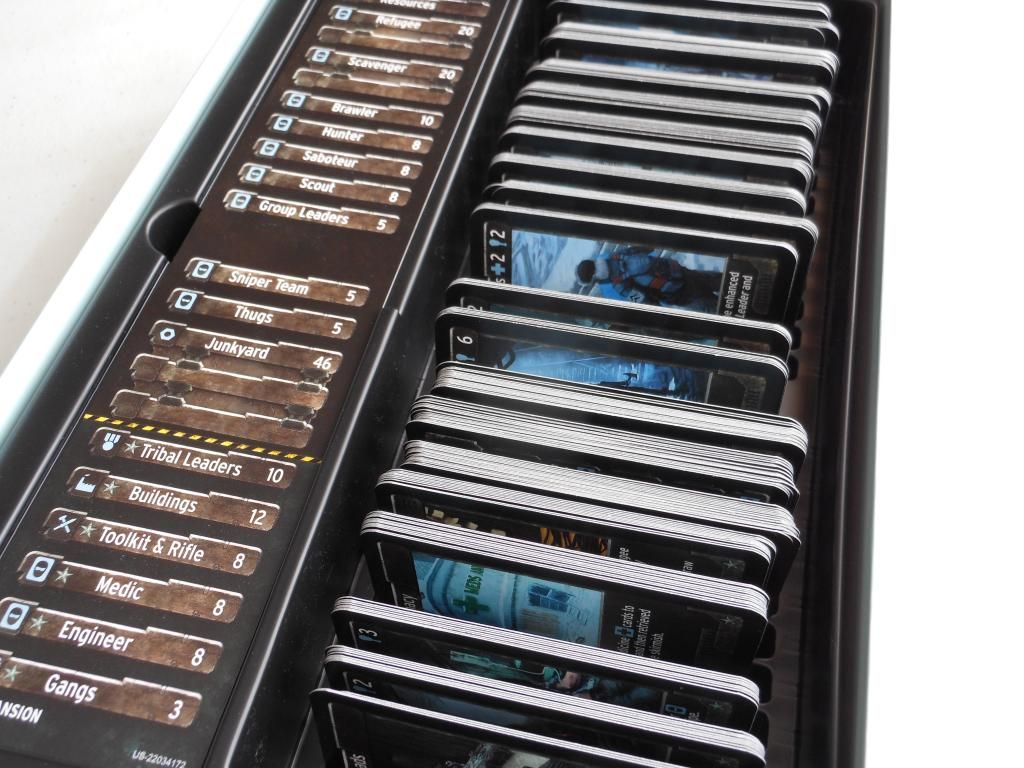
Arctic Scavengers insert
Nice insert... Except it doesn't fit in the box without cutting the bottom off.


I had outwitted my opponents, and acquired this valuable commodity.

I had also, in essence, played a real life version of Arctic Scavengers.

Let me explain...

This game presents a near-future Earth, ravaged by a climate change that has brought on another ice age. 90% of the population is dead, and the few survivors desperately try to eke out a living in the frozen wastelands, building shelters, hunting, and hoarding resources.

There are no zombies. No monsters. No aliens.

Just desperate humans, living in desperate times.

For the theme alone, this game demands attention. It is brutal and unfair. It is shocking. It is like being hit upside the head with a spade. Violence and despair is embedded in the very heart of the game, from your ability to dismiss characters from your tribe (effectively sending them off into the wilderness to die alone and lost) to playing as a cannibal who is not opposed to eating members of the tribe when things get tough.

This game is an unapologetic punch in the gut.

And yes, when I first played the game, that theme drew me in. I suffered from snow blindness. But the game does not (perhaps cannot) live up to the theme.

At the end of the day, Arctic Scavengers is a deckbuilding game, and it plays like many others. I am not a huge deckbuilding fan, but I really like Thunderstone Advance. The problem with Thunderstone is that there is a lot going on. There are dozens of characters (which can all be upgraded to have different powers), there are dozens of monsters with special abilities, dozens of weapons, and limitless combinations in every game. That means every game is unique and exciting, but it also means that the game is a little intimidating at times, and sometimes certain combinations lead to dull or incredibly hard games.

You certainly don't get that trouble with Arctic Scavengers. There is a very limited card set, and almost none of the cards offer any kind of special power. It is an incredibly lean game. Almost emaciated...

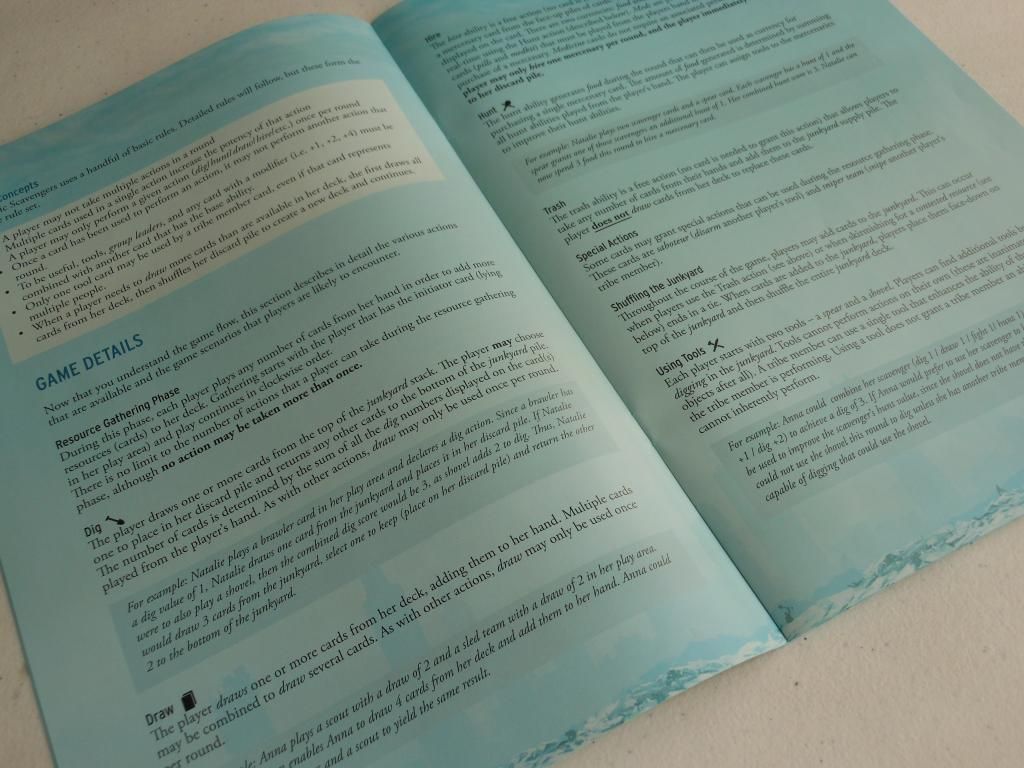
Arctic Scavengers rules
The rules are clear and easy to read.


You start with a deck of almost useless refugees, a few scavengers, and some tools. Each of these cards gives you one or more actions or action modifiers. On your turn, you draw a hand of five cards, and then you use them to collect more cards. You can take as many actions as you want, but you can only take each action once per turn.

Arctic Scavengers Hunter
That polar bear needs to cover his nose. Fast.


One of the most common things you will do is hire a new character to add to your tribe, using the currencies of food and medicine (as money means nothing in a frozen wasteland). So, to hire a character, you simply discard cards that provide enough food and medicine to meet the cost of that character. You don't start with any medicine, so to get the best characters you will need to dig for some first.

Digging allows you to draw one or more cards from a common "junkyard" pile, and then put one in your discard pile. If you are lucky, you might find some tools or medicine. If you are unlucky, you will find some junk, or one of the refugees that another player kicked out of his tribe on a previous turn.

These are your main options for the first three rounds of the game. From the fourth round on, at the start of the turn the player with the first player token gets to peek at the top card in a deck of 14 contested resources. The round then continues as normal, but players have the option to set cards facedown in front of them to use for a skirmish later on.

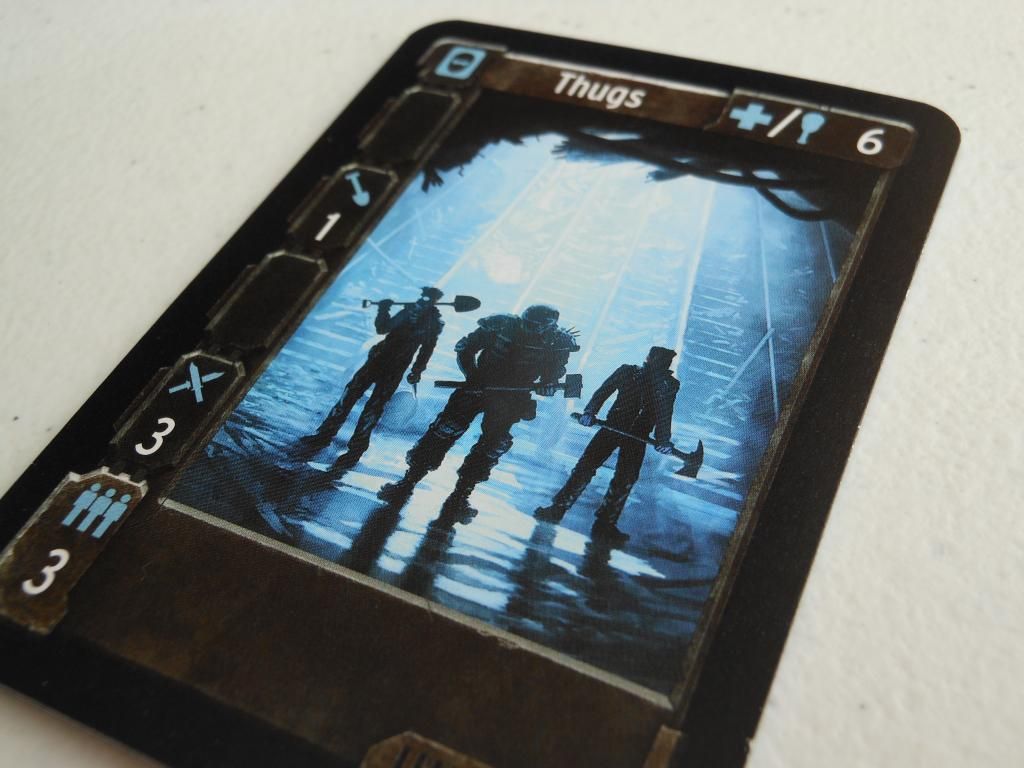
After all players have taken their turn, the skirmish cards are revealed. For a brief moment the quiet frozen wastelands ring with the sound of battle as thugs with shovels charge into action. There is the crack of a sniper rifle. A scream.

Silence again.

And at that point, the person who has the highest fight value claims the top cards from the contested resource deck, secretly placing it in his or her discard pile.

And this was the first sign that this game was not all I hoped it would be.

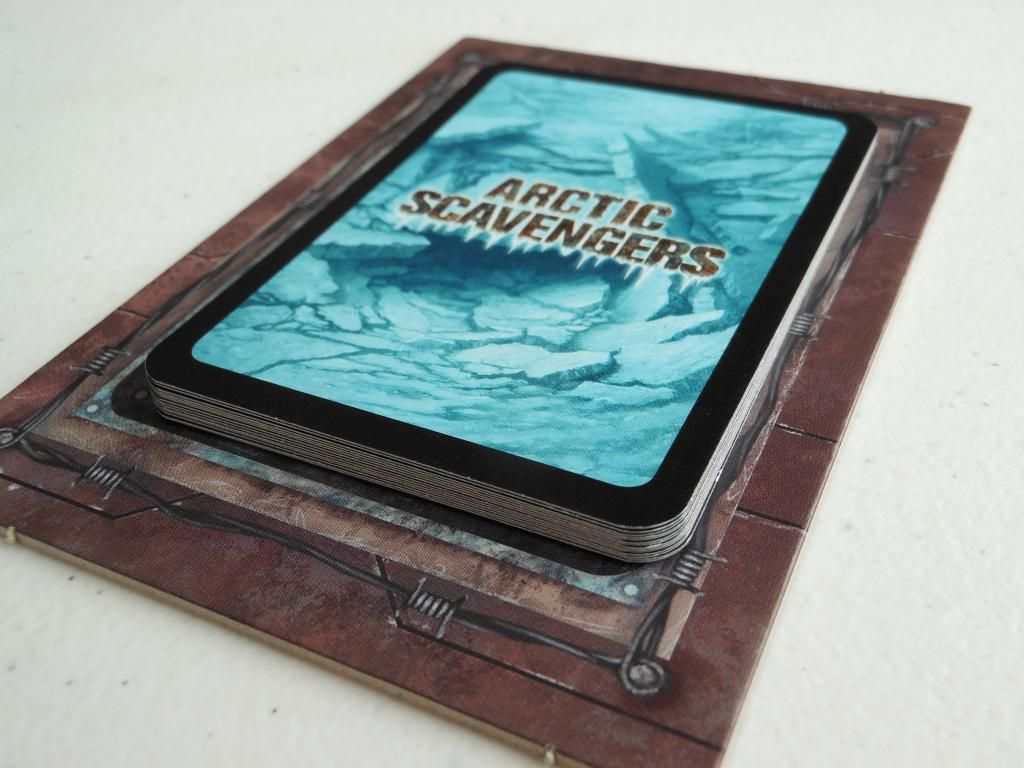
Arctic Scavengers contested resources
The contested resources deck on its cute little play mat.


The contested resource could be anything, and only the first player gets to know what it is. You could turn up a card that instantly grants you five victory points, or you could get  a card that grants you three. You could find the ridiculously overpowered Field Crew, that gives you two digging, two hunting, two fighting, and a massive four victory points, or you could just as easily get the Wolf Pack, which grants you a hunting and fighting modifier (that must be used in conjunction with another card), and gives you no victory points at all.

It is absolutely possible for a player to win this game through dumb luck of the draw, winning all the high-value contested resources simply by having the right cards to win the skirmish at the right time.

Arctic Scavengers resources
Some of those bloody contested resources.


However, the biggest problem is that the game simply moves too fast. There are 14 contested resources, and the game ends when the last card is won. Adding in the three rounds in which there is no skirmish gives you a total of 17 rounds for each game. That just isn't enough time to build an engine for your deck, especially when many of the cards you add to your deck are drawn at random.

In most deckbuilders, you gradually build your deck. You use special abilities to trim the fat, and you carefully collect the cards that build into your game-winning strategy. In contrast, Arctic Scavengers lives up to its name. You are scavenging.

You make mad grabs for whatever you can get, because you don't have time to play the waiting game.

You randomly draw a bunch of cards from the "junkyard" and you just take the best one, which is not necessarily one that keys into your strategy.

You win a contested resource (hurrah!) only to find the card is a Wolf Pack that grants you no victory points, when you are already loaded up with weapons and actually want some victory point cards instead.

It is mad and maddening.

The game even acknowledges the limited time frame by allowing you to trash any number of cards you want each turn in an attempt to give you some way to control how your deck plays. You just ditch cards you don't want and then carry on with the rest of your turn as normal. You can even chuck your whole hand into the "junkyard" (where it gets shuffled in) if you feel like it. Of course, if you do that, you may not ever get enough cards back into your hand to make up the shortfall due to the randomness of digging, the battle for contested resources, and the short playing time.

Arctic Scavengers thugs
Did I mention the artwork is stunning?


Ultimately, the game is a triumph in terms of integrating the theme with the mechanisms. You do feel like a desperate scavenger, struggling to get anything remotely useful into your hand. Digging for random cards truly reflects the struggle for survival in a hostile wasteland. Fighting over resources like dogs over scraps feels real, and dangerous, and feral.

Really, I should love this game.

But I don't.

I just felt there isn't enough control, and there isn't enough time to gain control. Furthermore, the core game seems to lack real depth. There are a very limited number of cards available to purchase, and fewer still that offer any kind of special power. As a result, every card you buy feels a little bit the same: Do you want the card that gives you two hunting and one fighting, or the one that gives you two fighting and one digging? They are different, but... You know... Not that different.

Fortunately, the game ships with a bunch of extra expansion modules. They don't really add complexity to the game; they just add extra options. For example, there are extra victory point cards that get dished out at the end of the game based on what kind of tribe you built, giving you a more defined goal. You get avatars that represent your tribe leader and offer distinct special powers. You even get new building cards, that allow you to build structures to grant you in-game benefits.

Sadly, these expansions all suffer due to how short the game is, giving you loads of new options without giving you the time to take advantage of them.

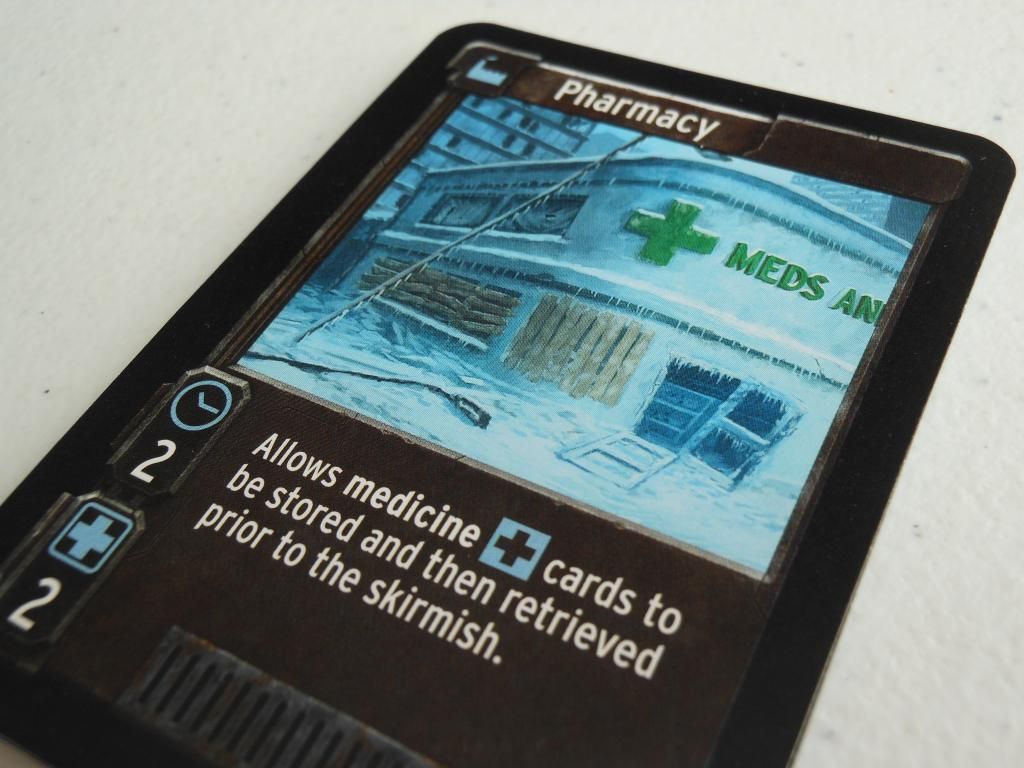
Take buildings, for example: First, you need to dig for some medicine. Then you need to hire an engineer with that medicine and some food. Then you need to dig for a building schematic with the engineer (giving you a random allocation from four different types of building). Then you have to put the building in play with a number of cards from your deck face down on top of it. Then, each turn, you have to remove one card from the building (plus one card for each tribe member discarded to assist in construction). And then, when all the cards are removed, you can use the building for the rest of the game.

Arctic Scavengers buildings
Why build a pharmacy? Just build a medicine cabinet.


Honestly, there seems little incentive to go through the process of making a building, because by the time it is up and running, a good chunk of the game has already been and gone, and you are probably losing.

It is infuriating.

It is infuriating because this is so close to being a game I love. The theme is there, the streamlined rules are there, the relatively quick playing time is there. Gameplay flows effortlessly, the artwork is evocative, there is a sense of dread, there are tense skirmishes, there is a fun bluffing element. There is just so much packed into this little game to enjoy.

And I know there are many people who enjoy this game, or would enjoy this game.

And for a little while I enjoyed Arctic Scavengers too.

But I've spent enough time scrabbling in the snow for buried treasure. Unfortunately, all I've found are broken tools. The game has left me cold.

And now I'm suffering from exposure.

Sunday, 28 September 2014

Review - Battleship

Battleship


Battleship
Designed by Dustin DePenning
Published by Cartamundi in association with Hasbro
For 2 players, aged 7 to adult

Battleship card game
Look at those guns - it's overcompensating for something.


If you're a family man like me (or a family woman, like me on special weekends), once a week you probably have to endure what I call "the big shop." You know, where you head to the nearest large supermarket, and spend an interminably long period of time looking for the cheapest yoghurts that won't make you spew, and the last bread roll that doesn't have a thumb print in it.

I hate "the big shop." It is one of the worst things I have to do on a regular basis, and I even felt that way when I used to have to change my daughter's nappy multiple times a day. Even after that one time I got poo in my hair.

However, recently the supermarket where we do "the big shop" was running a special promotion. If you spent £40 in one transaction, you got a free card game.

Now, that's the kind of promotion I like. Sure, it was done to encourage you to shop in store, and to spend more than you might want to; but as a by-product of that aim, the store was offering a way for families to do something together. Anything that promotes playing games gets two thumbs up from me.

To be honest, we did quite well out of the campaign. Over a month, we acquired Frozen and Mickey Mouse Happy Families games, and a set of Doc McStuffin Dominoes cards, all of which my daughter has really enjoyed.

We also acquired Battleship.

Which nobody has enjoyed.


Battleship cards
The cards.


This is actually a streamlined version of the card game Battleship: Hidden Threat, which is, of course, a simplified card-based version of Battleship. And if the thought of simplified Battleship makes you feel a bit sea sick, you probably don't need to read any more of this review. You already know this is a game that is going to sink without trace.

Here's how the game plays:

Each player has a set of coordinate cards laid out in a grid. Some of these cards depict ships, others say "miss" on them. Players also have a deck of destruction cards, comprising white pegs and red pegs of different strength values.

On a turn, a player uses a white peg card to reveal one of his or her opponent's coordinate cards. If the card is a ship, on subsequent turns, the player can target that ship with red peg cards. When the strength of red pegs matches the defence value of the ship, the ship is sunk. Play continues until one player has no ships left.

And yes, that is as random as it sounds.

There is absolutely no skill involved. You randomly reveal a coordinate card, and then hope you get red peg cards that are strong enough to sink the ship. There is no way to work out which card you should target based on previous "hits", so you literally get Battleship without any of the deduction element.

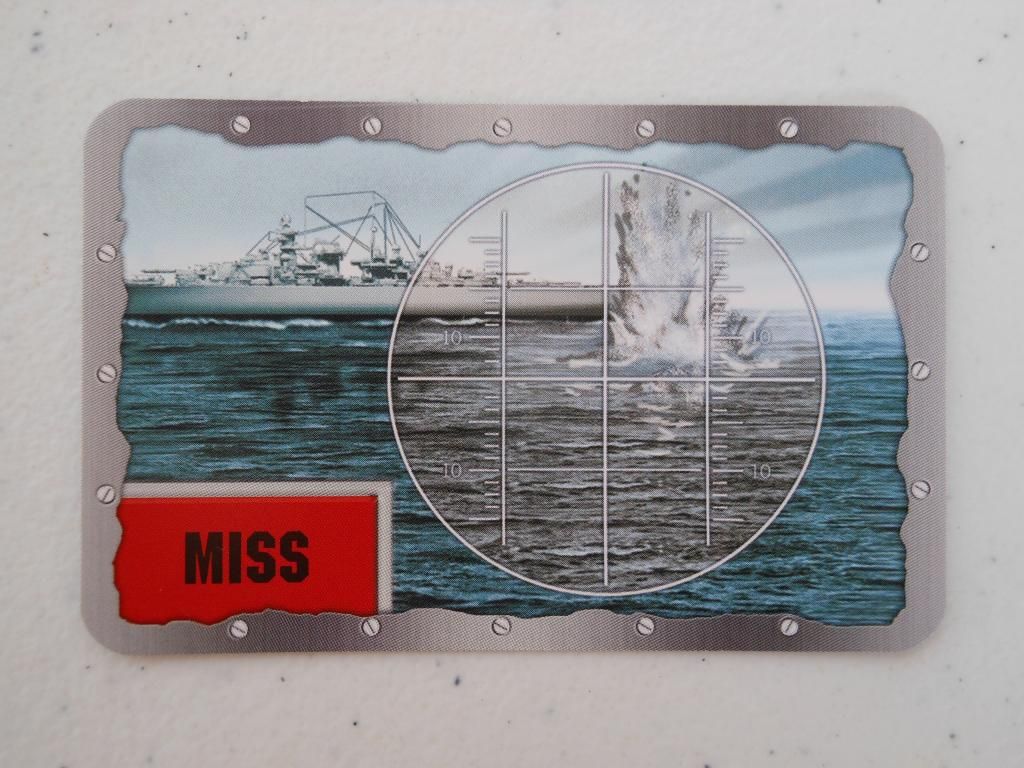
Battleship miss card
Yes, this describes the game perfectly.


What you are left with is a bland, random game. Okay, each ship has a special power that becomes active as soon as a ship is revealed, but these powers don't change the nature of the game, or offer any kind of strategy. If anything, they just increase the randomness even further.

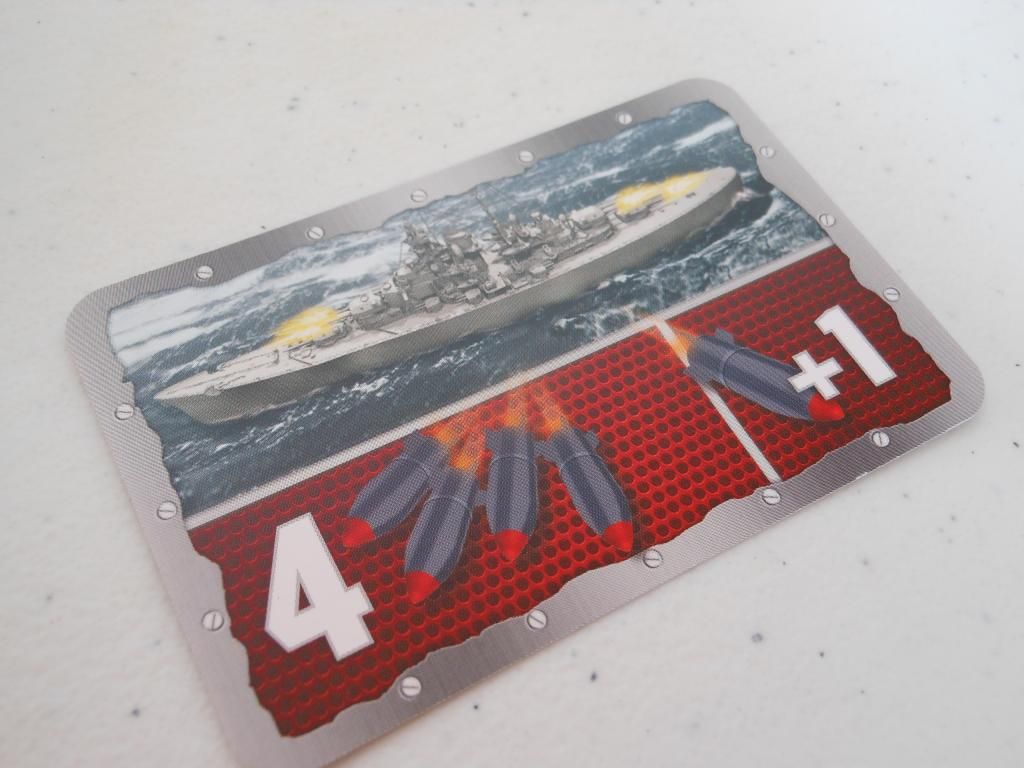
Battleship card
The battleship card.


To be fair, this is supposed to be a light filler game for young children. But here's the thing... young children are not stupid. You can't underestimate them.

Any games designer that does is sunk.

Thursday, 25 September 2014

Review - Claustrophobia

Way back in 2010, I wrote a review for Claustrophobia. Looking back at that review, I don't think I am particularly happy with it (although my opinion is largely unchanged). So, rather than repost that original review here, I thought I would revisit Hell. Please stand clear of the elevator doors. Going down...

Claustrophobia


Claustrophobia
Designed by Croc
Published by Asmodee
For 2 players, aged 14 to adult

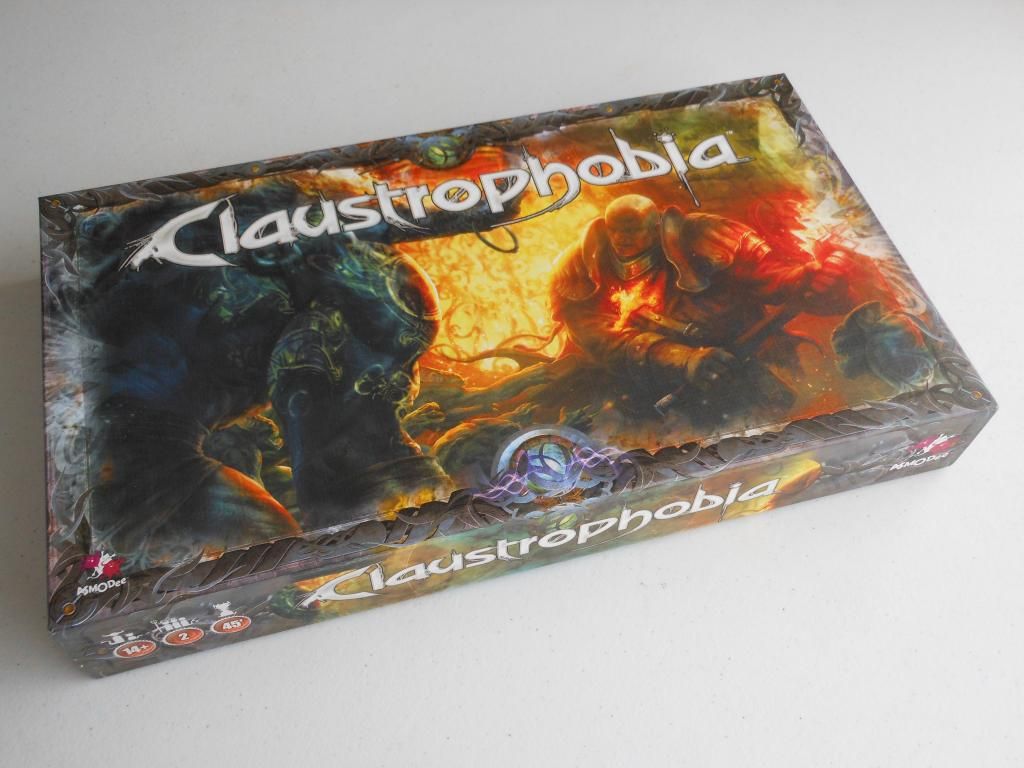
Claustrophobia box
Pretty...


Have you ever been told to go to Hell?

I have.

It was one of the best boardgaming recommendations ever. Although, now I come to think of it, I am not sure that shouty, red-faced guy waving his fist on the pedestrian crossing as I drove by was really talking about Claustrophobia...

Either way, I am glad I booked my one way ticket to hell (and back), because Claustrophobia quickly became a jewel in my gaming collection, more than capable of holding its own against the likes of Space Hulk and Gears of War. And the reason for its success is a set of mechanisms that are so slick they probably taught the Jets how to dance.

In fact, this game is more than slick. There's no clutter, no fiddly rules, no exceptions. There is just game. Stacks and stacks of bloody brilliant game, crammed into a rule set so streamlined you get faster when you walk behind the box.

Here, pull up a chair, and I'll tell you about it... No, not that chair. That's my dark throne.

Only I get to sit there.

You can sit here. Just push the bits of bodies onto the floor. One of the trogs will "clean them up" later.

Right, Claustrophobia is an asymmetric two-player miniatures skirmish adventure game thingy. One player gets to control a small group of humans, and the other player gets to control an endless stream of troglodyte warriors and demonic beasties. All of these characters are represented with rather lovely pre-painted (fully assembled) miniatures, which are incredibly well done and look great on the board.

For the good guys (and I use that term loosely, because the humans have actually invaded Hell and are technically the wrongdoers here), there is a Redeemer who leads the team, two Blades, and two Brutes.

Claustrophobia characters
Blade, Redeemer, and Brute. They mean business.


The Redeemer is an interesting choice, as rather than being a great warrior, he is a priest who leads his allies with the force of his religious convictions. He is a competent fighter, but his main strengths are raising morale, healing, and guiding everyone through the darkness. And he has a big hammer, because for some folk, the way you deliver your message is just as important as the message itself.

The Redeemer is the lynchpin in a team that otherwise comprises condemned criminals, who literally have to go through Hell to win a second chance at life. There are fast-moving Blades, who nimbly duck and weave through the tunnels, and there are the lumbering Brutes, who can soak up damage and keep their allies alive.

This is far from your traditional team of goody-goody heroes. This is a group of doomed men who just want to slip through the cracks in the system, and a zealot who wanted to bring order to chaos, but somehow got lost along the way.

I don't think I have ever seen a game that creates such a strong metaphor to represent the journey its protagonists take.

And I am a sucker for a kick-ass theme.

Of course any heroes (or anti-heroes) are only as good as the villains they face, and Claustrophobia gives you plenty: A clutch of demons with a range of monstrous abilities, and a teeming (infinite) horde of subterranean beasts called trogs.

You get 11 troglodytes in total, and while I really like the miniatures, and I love the concept of a wave of monsters crashing against that small force of humans, I do find the trogs a little disappointing. These doomed men are supposed to be trekking through Hell, so I would expect the monsters to reflect that. But instead of monstrous, tentacled fiends, and damned souls, there are these generic goblin creatures.

Rounding out the evil forces is a single demon miniature. There is only ever one demon in play at any time, and this miniature is used as a proxy to represent any of seven different demon types (with the current scenario dictating which demon is available). It is disappointing to see one miniature standing in for seven distinct and imaginative villains, but it is an acceptable compromise to keep the costs down. On the plus side, the demons are varied and really change up how each game plays. Some demons hunt their prey, becoming stronger each time they draw blood, while others are gargantuan fiends that block the corridor, preventing the heroes from slipping through into the tunnels beyond.

Claustrophobia demons
Demonic beasties.


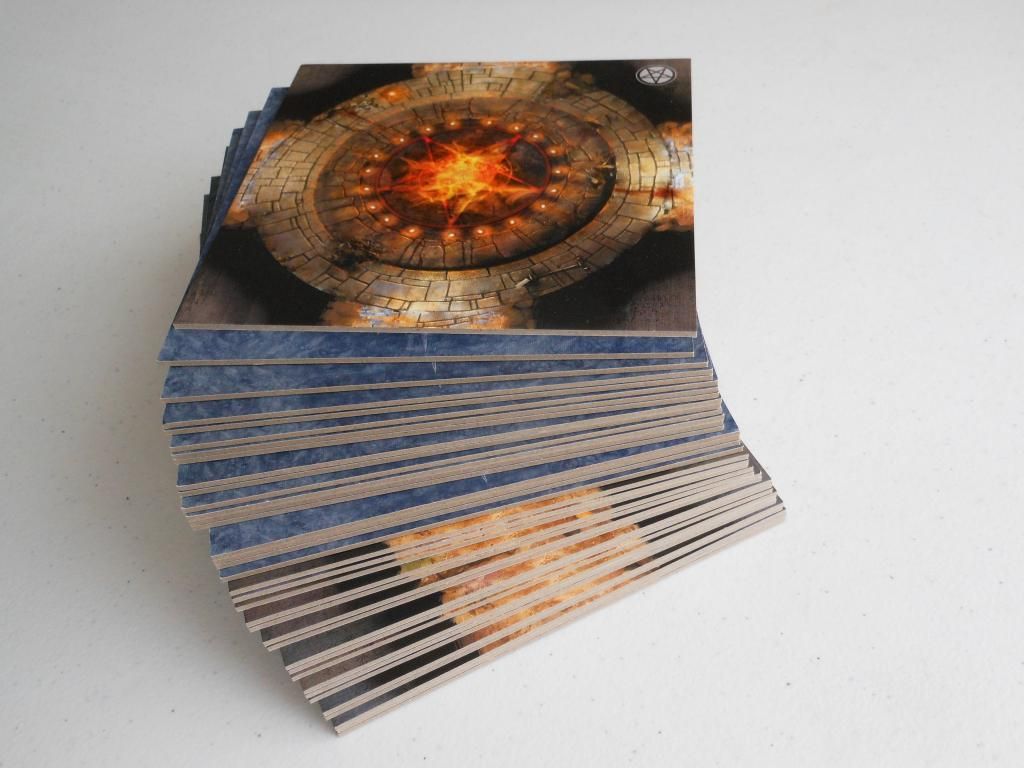
And while we're talking about variety, let's mention the game tiles: 32 of them. 32 tiles that fit together in almost limitless combinations to create unique underground mazes. For some scenarios, the board is predefined; but in many of the scenarios, the board grows as the heroes explore. They start at an entrance tile, and cautiously delve into darkness, randomly drawing new tiles that may be flooded chambers, narrow corridors where blood-hungry tentacles lash out from the walls, or breeding chambers where the trogs hatch.

Claustrophobia tiles
You could tile your bathroom with these things.


When I first purchased the game, I was slightly underwhelmed by the lack of variety in the enemy characters, and the very limited range of weapons and armour for kitting out the team of heroes (there are only six equipment cards, and two of them are duplicates). I believed there was a requirement for an expansion. However, I admit I was wrong. There is an expansion out now, and another on the way, but you really don't need them.

Claustrophobia cards
Don't look behind you.


This is a complete game.

With six scenarios out of the box (and more online), advanced rules for team creation through a reverse auction, and a massive variety of tiles, it is going to be a long time before you start to feel like you have "seen it all before."

And as for a limited variety of villains... Well... There may be a limited number of miniatures, but over the course of several games you will face trogs, tough trogs, fast trogs, burrowing trogs, frantic trogs, suicidal trogs, seven flavours of demon, possessed humans...

There really is a lot going on here.

And I haven't even talked about the mechanisms yet.

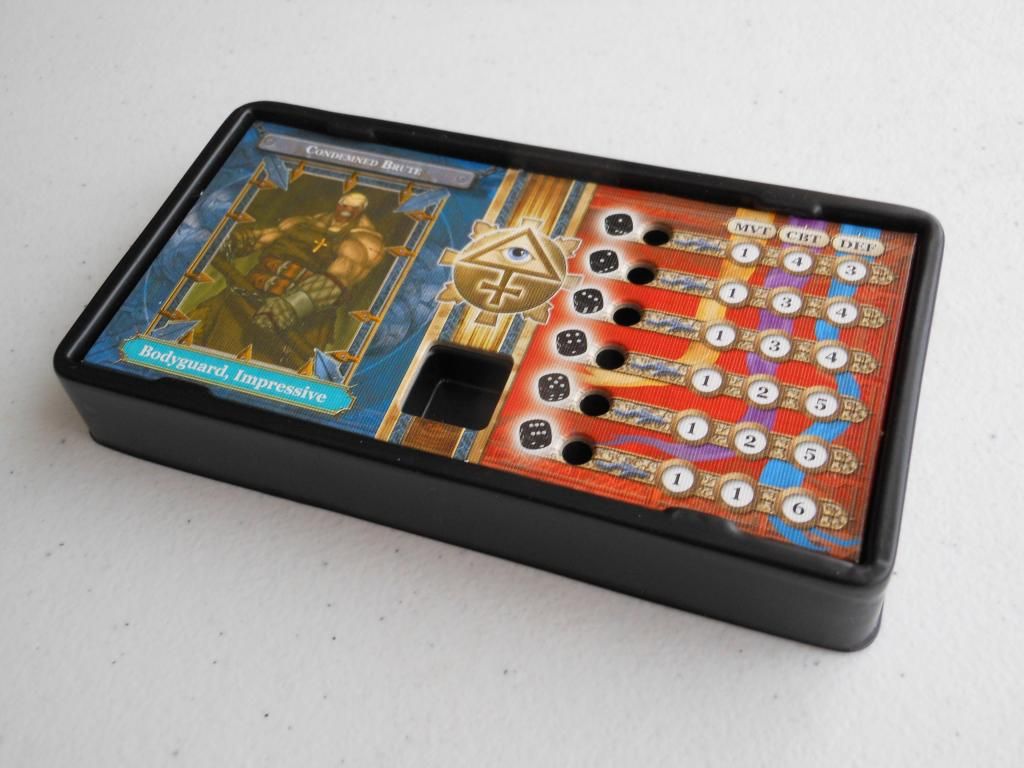
Here's how it goes: Each turn, the good player rolls a number of dice equal to the number of characters in the team, allocating one dice to each character. The number on the allocated dice dictates which of six unique stat lines the character uses for that turn.

Claustrophobia character board
Brute character board for tracking damage and dice allocation.


Things get more complicated when characters start to get wounded. Every wound a character takes blocks one of the stat lines. If you allocate a character a dice with a number corresponding to a wounded stat line, then that character is exhausted. He can't move or attack, and he gets a very low defence score for the turn. Furthermore, every time a human character dies, you roll one less dice for generating stats. Your options dwindle, the pressure mounts.

Thematically, it's perfect: Over time, your characters become weaker, less capable of fighting, slower... They stumble more frequently, they get lost in the winding tunnels, they panic. They are bleeding. God... there's blood everywhere. And the shadows... There are so many trogs. Too many demons. The enemies are remorseless, relentless... And what can men do against such reckless hate?

The answer is obvious.

They can die.

And there will be death. It is close to a miracle for all of the humans to survive the ordeal. Indeed, they are not expected to survive.

There is a reason these men are condemned.

In Space Hulk, the tension derives from the inclusion of a timer to add pressure for the marine player. Things move fast. Too fast. One turn can end it for the marines. But in Claustrophobia, you get to see in agonising detail as your team gets picked apart.

At the start of the game, the heroes are strong and the trogs are weak. Over time, little injuries stack up. The heroes begin to weaken, but the army of trogs grows ever stronger. The scales balance, and then slowly... terrifyingly... inevitably... they tip.

The tables turn.

First your heroes take a few wounds, then they begin to bleed out. Someone becomes exhausted. He collapses, with the sound of approaching trogs ringing in his ears.

He begs the others not to leave him behind.

But they cannot stay. Not here.

Not in Hell.

Every moment wasted brings them closer to failure, and so they press on, leaving their fallen colleague to the clamouring masses of the troglodyte horde.

It is horrible to watch as your small force of humans gets eroded. Horrible, and magnificent. You really start to invest in your characters. It actually hurts when you lose one of them, or when you have to make that tough call to sacrifice someone for the good of the team.

Genuinely hurts.

This is actually one of the cruellest, most vicious games I have ever played.

And I've played Monopoly.

After the dice allocation, any characters that are not exhausted get to move, explore, and fight. But there are no grids for defining your movement here; there are no range rulers for figuring out who is in your line of sight. This game is far too streamlined to worry about things like facing and flank attacks. This game is far too busy being all kinds of crazy fun to let that kind of thing get in the way.

Here, a movement of one space means moving from one board section to an adjacent board section (revealing a board from the stack if necessary). If you are on a board section you can attack any other piece on that board section, and if you have a gun you can attack any piece on an adjacent board section that is not blocked off by a wall.

There are a few simple movement rules (no more than three pieces from each side on a single board, and you can't leave a board if you have less pieces on that board than your opponent does) but there is nothing complicated. The game actually pushes as many rules out of the way as possible, so you have a direct view of your opponent.

After all, this is a battle, and you want to look your opponent straight in the eye when you land the killing blow.

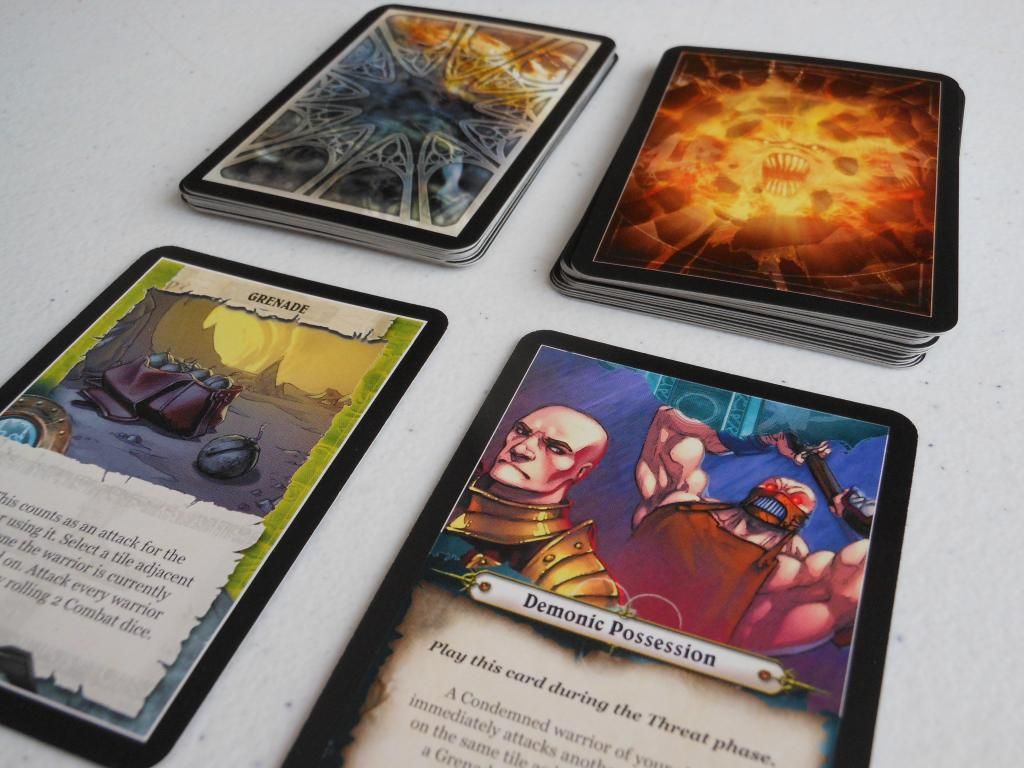
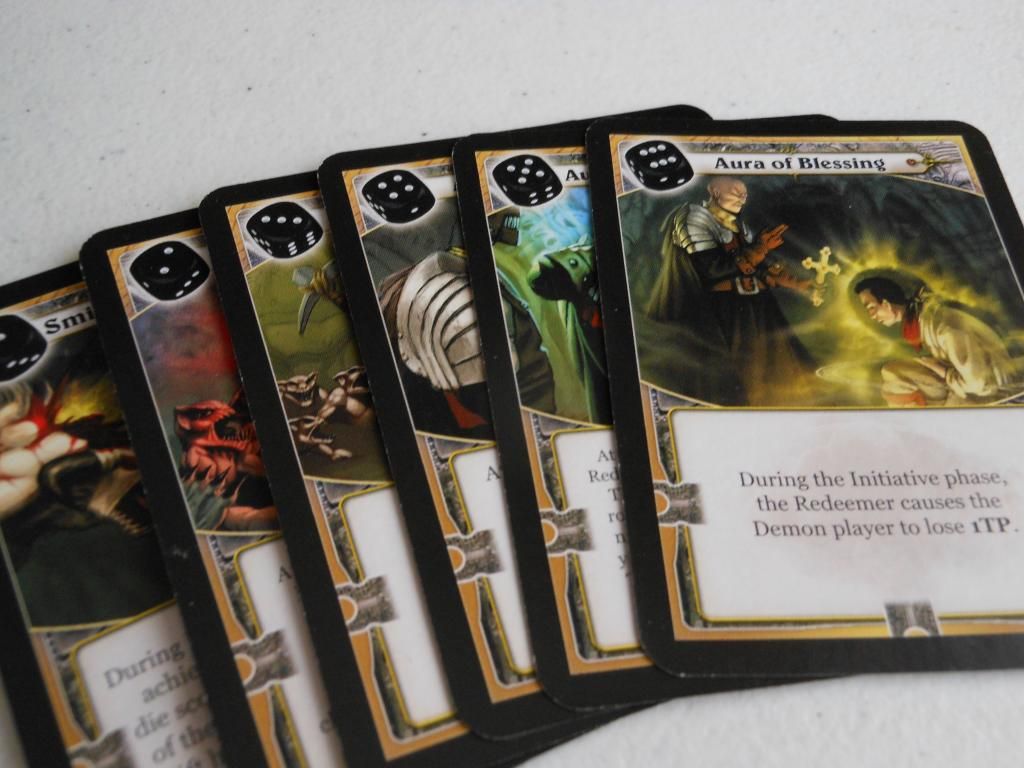
Claustrophobia redeemer cards
The Redeemer has powerful abilities to turn the tide of battle.


However, that doesn't mean this game lacks meaningful decisions. The order in which you move your characters is vital, as some characters never get pinned (the Blades), and some prevent enemies from leaving the tile even when outnumbered (the Brutes). You need to know when to run, when to stand and fight, when to explore a new tile, when to guard a demon entry point to prevent new monsters arriving in play, when to concede ground, when to play one of your valuable and ridiculously rare advantage cards, when to sacrifice a character for the good of the team, when to activate a Redeemer's special ability. The list goes on, and that's just the decisions you face when you are playing the humans.

The demon player has an entirely different set of challenges to face, and an entirely different set of game mechanisms to work with.

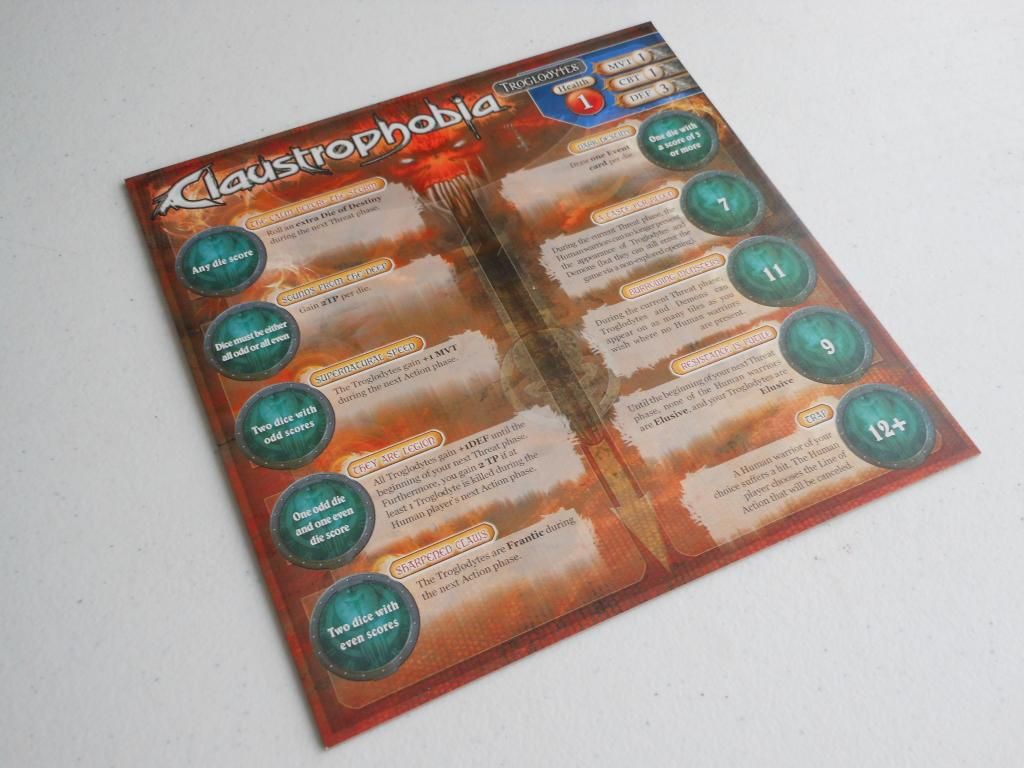
At the start of each demon turn, the demon player rolls a set of dice and uses those dice on the "board of destiny" to generate monsters or other special powers. For example, it is possible to allocate two dice with odd numbers to give all trogs +1 movement for the turn. Similarly, it is possible to allocate any combination of dice with a value of 12 or more to spring a trap and automatically wound a hero character.

Claustrophobia board of destiny
The board of destiny: like a menu at a restaurant that serves up pain.


Playing as the demons isn't easy. It may look like using the humans as chew toys is simple, but the condemned warriors have nothing to lose and everything to gain, and they have no intentions of going down without a fight. These are men who won't think twice about throwing a grenade into a room of trogs, even if one of their allies is already in there. These are men who will do whatever it takes. And a bit more.

And that's what you get with this game.

You get drama.

You get a lean, tightly-packed set of rules that allow you to create stories you are going to talk about long after you have put the toys back into the box.

You get despair, exhilaration, last-gasp victories, crushing defeats. And you get a challenge, regardless of which side you are playing. The demon player really has to work to win. It takes effort to evict the human scum from the tunnels of Hell.

Claustrophobia demon
"GET OUT!"


Of course, not every scenario is evenly balanced. Some missions are harder for one side or the other, so it is always a good idea to play each mission twice, swapping sides at half time. There is also one mission that I personally believe is almost impossible for the demon player to win, even against a sub-par opponent. But that's okay. Every scenario-based game has at least one clunker in the mix, and while it is a little disappointing, it does not detract from what is otherwise a first-rate game, with stunning presentation, and far more replayability than you might think.

Certainly more replayability than I first thought.

If you like asymmetric, theme-heavy, beautiful, tense, squad-level miniatures games, there really isn't much more I can say. So, what are you waiting for?

Go to Hell.

Sunday, 21 September 2014

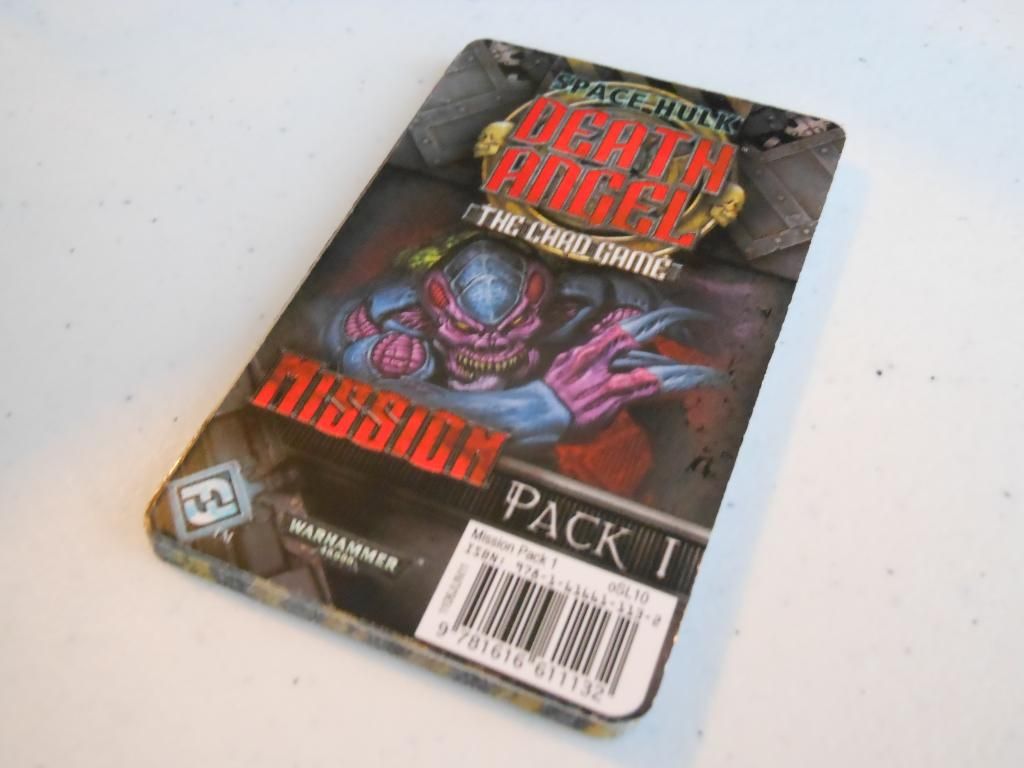
Review - Space Hulk: Death Angel - Mission Pack 1

In the first week of September 2014, Games Workshop announced the reissue of the seminal sci-fi board game, Space Hulk. To celebrate, all this week AlwaysBoardNeverBoring has been running Space Hulk themed reviews in a feature imaginatively called "Space Hulk Week." In the final instalment, we take a look at the Mission Pack 1 expansion for the Death Angel card game.

Space Hulk: Death Angel - Mission Pack 1


Space Hulk: Death Angel - Mission Pack 1
Designed by Corey Konieczka and Andrew Meredith
Published by Fantasy Flight Games
For 1-6 players (in conjunction with the Death Angel base game)

Variety is the spice of life.

And like with many spices, if you add too much, you are going to get burned.

Don't believe me?

Just ask any bigamist who has to go Christmas shopping (Tony Ferrino understands).

Better yet, try adding the Mission Pack 1 expansion to your games of Death Angel.

You thought the game was tough before? Forget it. Add the contents of this expansion and you aren't just turning up the heat. You're blowing up the promethium tank and stripping to your underpants for the ultimate tan.

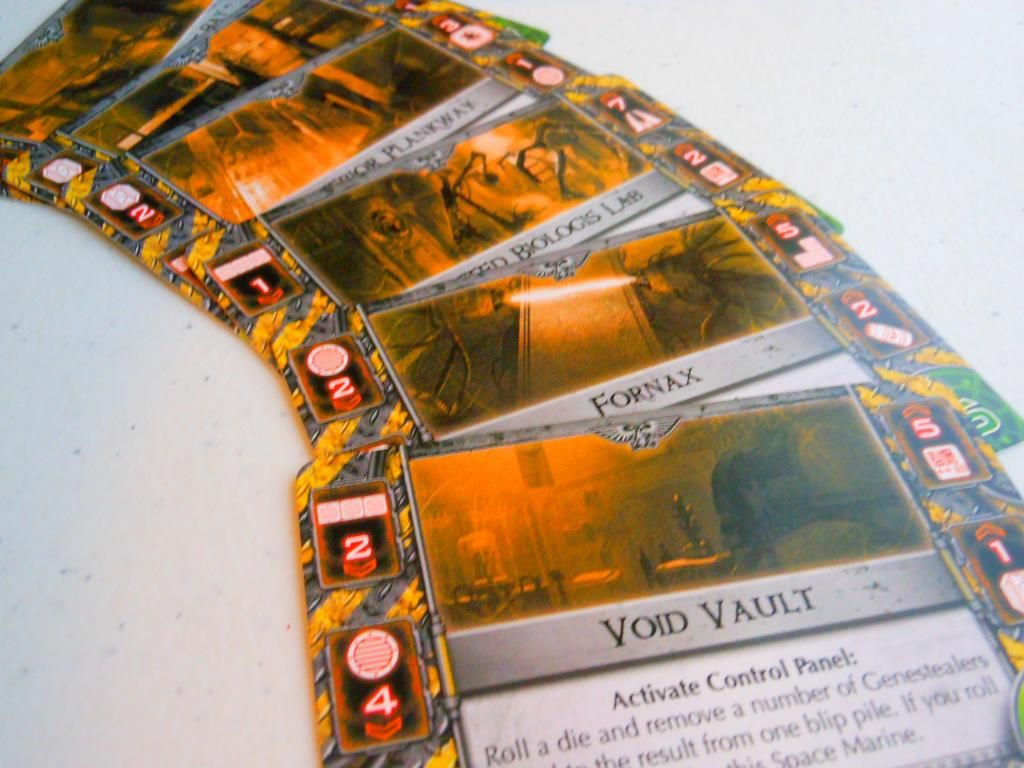
And yet, the truth of the matter is, this expansion adds very little content at all: Just 12 new location cards (including two objective locations for specific end-game scenarios), one new terrain card, and four cards depicting a new type of alien called an adrenal genestealer (basically, an alien who had one too many espressos).

So really, you are getting just 17 new cards to play with. But like all good spices, a little goes a long way.

The Mission Pack 1 expansion is the kind of expansion I like. It doesn't really change the way the game plays at all, it just gives you more variety and options. As the name suggests, it offers a series of new locations that string together in the same way as the original locations from the base game to create variable missions. However, you do not simply mix these locations in with the base game cards. You have to make a choice when you start: are you going to play a base game mission, or an expansion mission?

It is a shame that you cannot mix the old and new cards together for even more mission combinations; but keeping the mission cards separate is an acceptable compromise to get around the fact that the expansion cards are not of the same quality as the cards found in the base game. (The Death Angel expansions use Fantasy Flight Games' print on demand service, so the cards are smooth rather than linen-finished, and the cardstock is thinner. That being said, I still think they are really good quality; and they shuffle like my nan doing the Cha Cha Slide.)

Space Hulk: Death Angel - Mission Pack 1 location cards
Void Vault sounds like a cure for constipation to me...


The new missions work in exactly the same way as always, so there are no additional rules to learn in that respect. However, two new threats are swirled into the mix of an already pretty threat-heavy game. First, you have to face the terrifying prospect of adrenal genestealers. They spawn at specific locations, and basically don't stop hitting you until they draw blood. The other new threat is a terrain feature called a hull breach. I am sure you can imagine what happens when your space marines stand too close to that.

And that's basically it: two new objectives, numerous locations, and a few nasty surprises for space marines who think the base game is just a touch too easy.

So, is this an indispensable purchase?

No. Not really. There isn't anything in this expansion that is technically necessary.

But then, it isn't necessary to cook with spices either...