Wednesday, 23 April 2014

Review - Christopher Robin's Pooh Goes Home to Bed Game

Pooh Goes Home to Bed


Christopher Robin's Pooh Goes Home to Bed Game
Published by the Traditional Games Co. Ltd.
Designed by... dunno... Christopher Robin?
For 2-4 players, aged 5 to adult
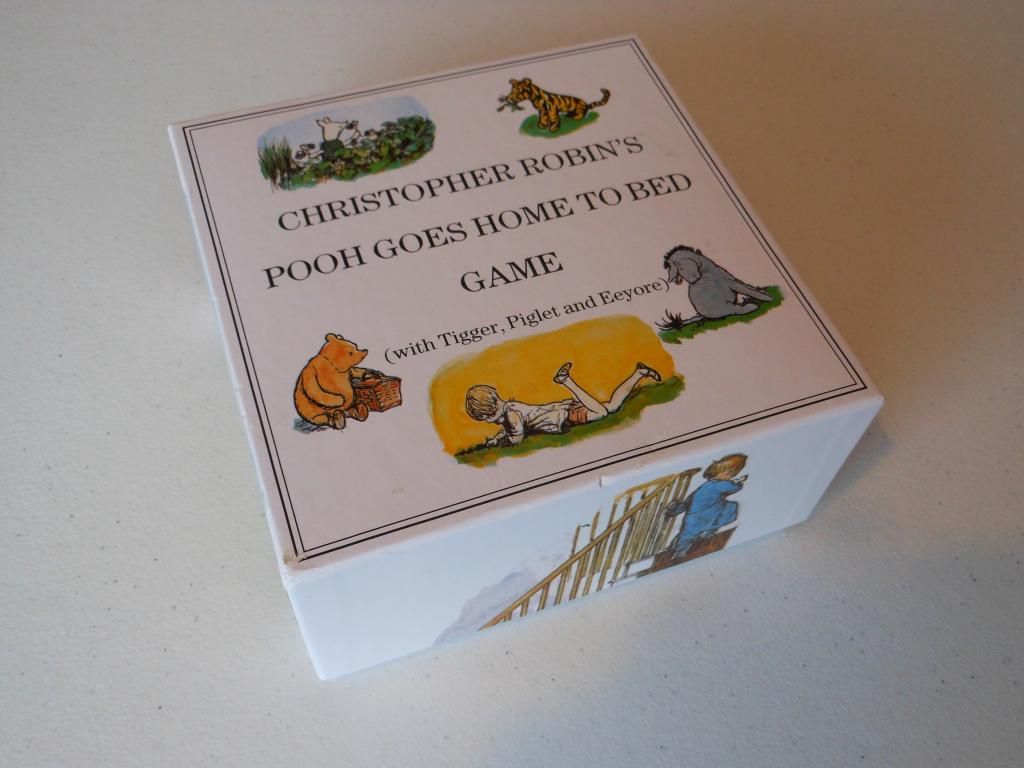
Pooh Goes Home to Bed Game
This is the box


Recently, I have been reviewing a lot of relatively new stuff, so it is time to redress the balance and get back to what this blog is really supposed to be about: bizarre, obscure, out-of-production games that no-one really cares about.

So, what better way is there to get back into the swing of reviewing shit games than reviewing a game about Pooh?

Ha. See what I did there?

Anyway, to be fair, this isn't really my game. I bought it for my daughter for her third birthday, and she absolutely loves it. I guess that is pretty much all this review needs to say; but being as you were so kind as to stop by, I'll ramble a bit. Pull up a chair...

Christopher Robin's Pooh Goes Home to Bed Game, which from now on will be referred to as Home to Bed to prevent the onset of RSI, is not so much a game as it is an activity. It is designed for very young children, and has a very simple goal in mind: It wants children to learn the directions of "up," "down," "left," and "right." It also wants to provide situations where children have to consider several options and pick the best one.

As you can see, this is not a game for adults. This is a game for adults with children.

Very, very patient adults with children.

The age on the box says 5+, but my daughter had absolutely no trouble learning how to play, because really there isn't that much "playing" involved.
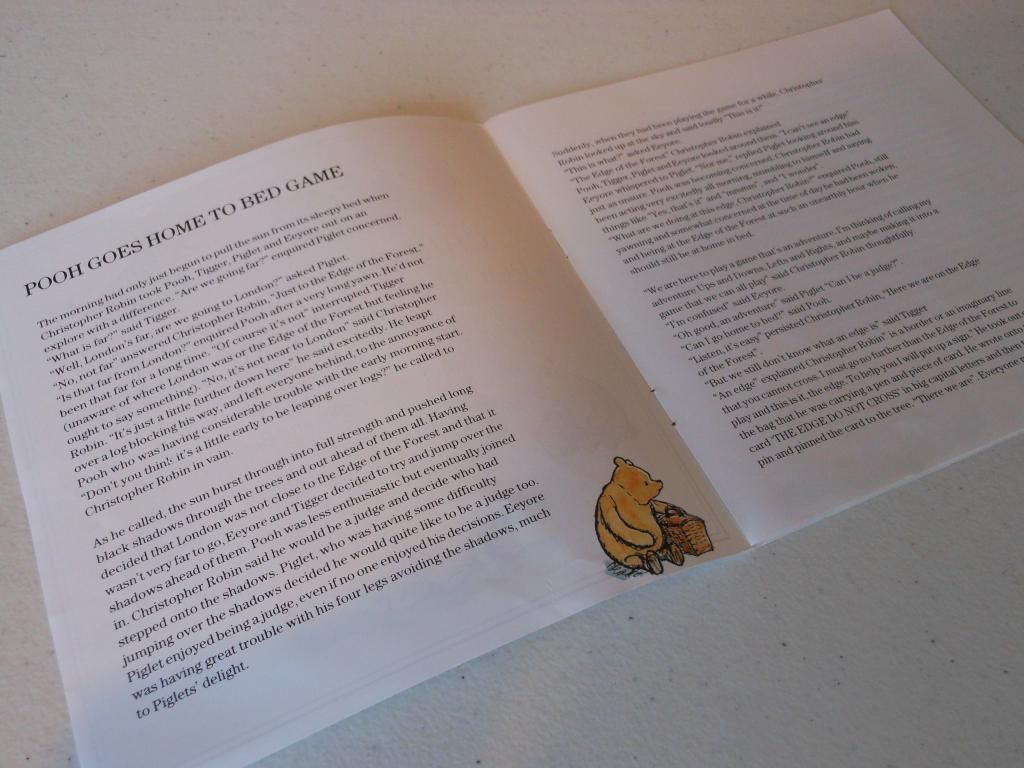

Pooh Goes Home to Bed - rules
Look - the rules have a little story in them!


The game (activity, passtime, thing, whatever) takes place on a beautifully illustrated board depicting all the locations from the Winnie the Pooh stories, linked together by paths. On your turn, you roll a pretty cool custom dice. Four faces on the dice give you a direction to move in, and if you roll one of those directions, you must move in that direction if possible (otherwise you do not move at all). The other two faces on the dice say "decision," and when you roll one of those, you can choose which way to move.

When you move, you move along the path until you reach an obstacle or a crossroads, which immediately ends your turn. Hitting an obstacle slows you down, as it requires you to roll a "decision" or one of two specific directions to get past on your next turn.

After your move, play passes to the left. This continues until one of the players reaches the "home" area on the board.

And that's all there is to it.

Roll the dice. Move in the required direction. Pass control to the next player.
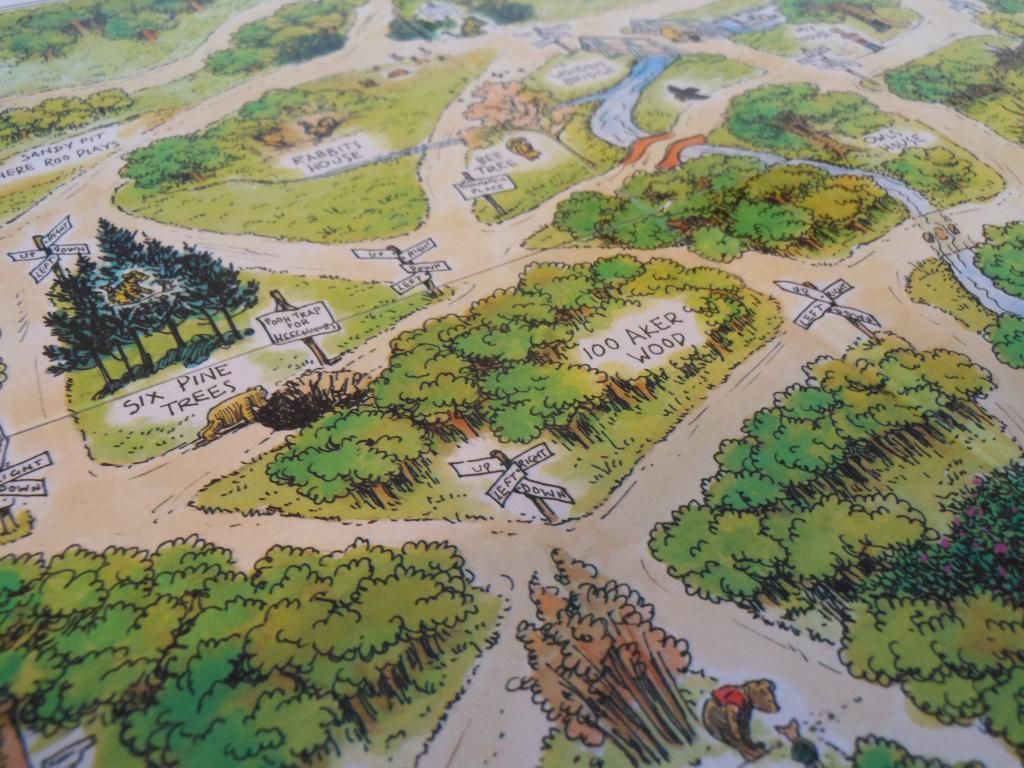

Pooh Goes Home to Bed - board
This is the board. Not kidding!


Now, astute readers will have noticed that there is a deep flaw in this game. Here, let me illustrate:

"Daddy. It's your turn."
[Always Board Rolls "up"]
"I get to go to the next crossroads. Your go."
[Little Never Boring rolls "up"]
"I get to go up too. Your go."
[Always Board Rolls "down"]
"Oh. I have to go back to the last crossroads. Now it's your turn."
[Little Never Boring rolls "up"]
"Yay! I get to go up. Your go, Daddy."
[Always Board Rolls "up"]
"Hurrah! I get to go up again. Your go."
[Little Never Boring rolls "decision"]
"I rolled "decision." I will go up again. Your go."
[Always Board Rolls "down"]
"F*CK."

Yeah. As a way to teach children their left from their right, Home to Bed is incredibly effective, but as games go, it's worse than Snakes and Ladders. You have almost no control over your fate, and what should be a five to ten minute learning exercise can stretch out for an agonisingly long time.

However, where Home to Bed really scores some Brownie points is with the presentation. Seriously, this is a beautiful game. There is such attention to detail in absolutely every aspect of it, and it feels as much like a cherished keepsake as it does anything else.

The board is an immaculate and childlike illustration of the area around Christopher Robin's house, and you can spend quite some time wandering those paths, picking out the famous landmarks from the stories.

The dice is huge (just right for little hands), and each face has the direction the player should move in, and a unique illustration of one of the main Winnie the Pooh characters. But more than that, the illustrations on the dice work as an educational aid. On the "down" face, Pooh Bear is falling out of a tree. On the "left" face, Eeyore is looking to his left. On one "decision" face, Piglet is looking confused, and on the other "decision" face, Pooh Bear is scratching his head. It just works. It's lovely.


Pooh Goes Home to Bed - dice
Look, look - they're looking up!


And you don't have to roll the dice by hand. Oh no. The game includes a massive ceramic "hunny" jar for a dice roller. Pointless. But brilliant.

Honestly. Brilliant.

And the playing pieces... Oh my. Gorgeous, heavy pieces that are good enough to display on a shelf.


Pooh Goes Home to Bed - playing pieces
The gang. Ain't they lovely?


 It's lovely.

The rules book could have been a single piece of paper. Instead, it is a full-colour pamphlet, illustrated throughout, and containing a full Winnie the Pooh story to read with your children after the game is over.

Even the box is amazing. There are pictures on the side panels of the lid that continue on the side panels of the bottom part, creating stunning large-scale pieces of art.
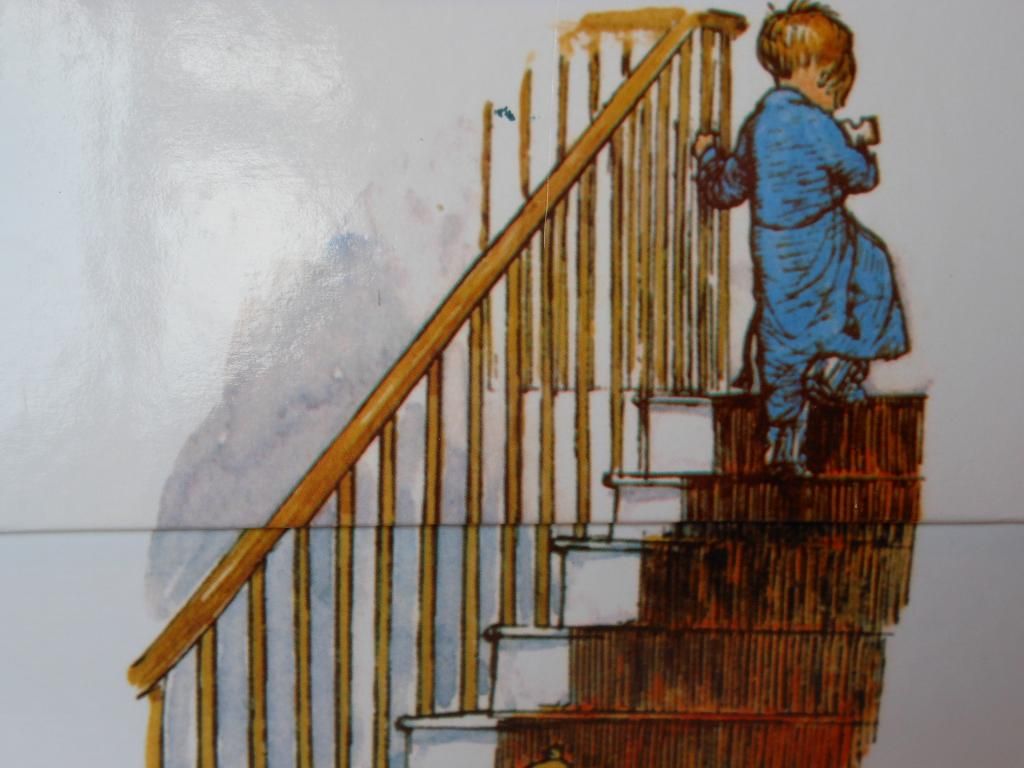

Pooh Goes Home to Bed - box art
The two halves of the box make cool pictures.


And did I mention that this is all based on the artwork from the books, not the Disney stuff?

No?

Well, it is. And it's lovely.


Pooh Goes Home to Bed - hunny
I eat my peas with hunny...


Okay, this isn't really a game. But it is a labour of love. It is a celebration of Winnie the Pooh: The stories and the artwork. It is a throwback to those times when games were simple, and having fun didn't require a lot of rules. It is a masterpiece of craftsmanship. And it is something that my daughter wants to play with me every single day.

Every day.

One day, she is going to think I am an evil tyrant who won't let her get a tattoo, and who scares off all the boys, and she probably won't want to speak to me from one day to the next.

But right now, every day, she will pull at my jumper with her copy of Home to Bed tucked under her arm, and she will ask to spend time with me.

So of course I say, "Yes."

Wednesday, 16 April 2014

Review - Dark Darker Darkest

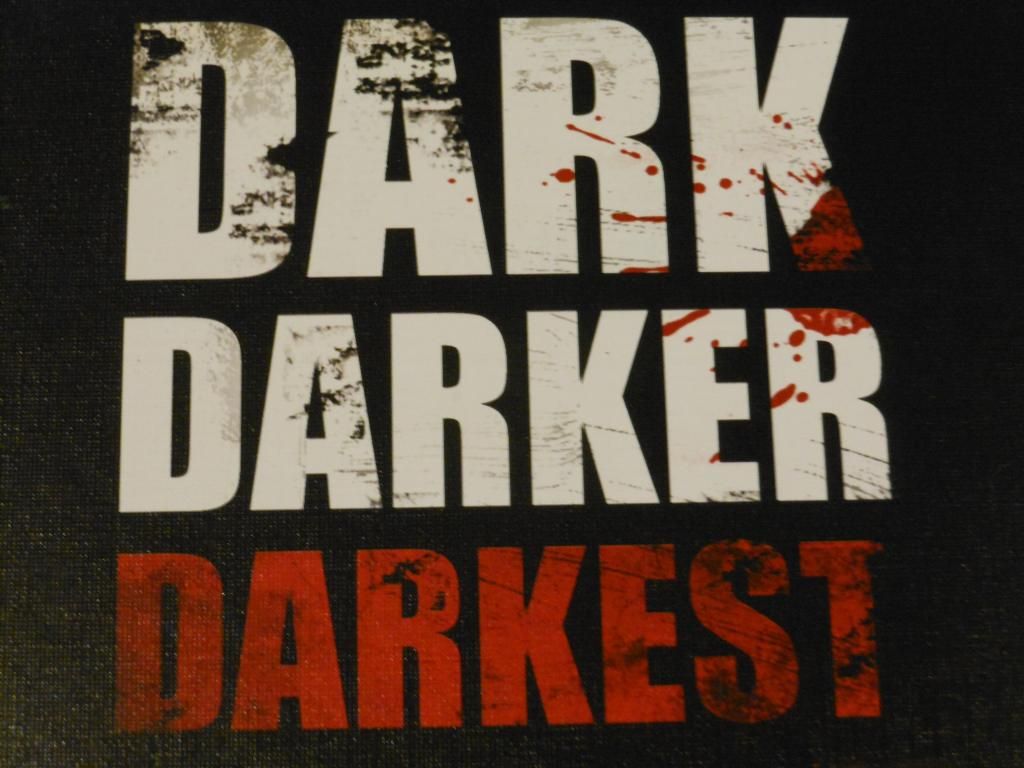
Dark Darker Darkest


Dark Darker Darkest
Published by Queen Games
Designed by David Ausloos
For 2-5 players, aged 12 to adult


Okay, before I start this review, I'm going to lay my cards on the table. I backed Dark Darker Darkest on Kickstarter. It was not the first game I backed, but it was the first (and currently only) game that actually arrived at my house. Additionally, I was one of the people who had some involvement in the second edition of the rules book (on a voluntary basis). So, yeah, this game is a little bit special to me. If you feel that either of those things in any way devalues or negates my opinion, better jog on, because there is a big, fat dollop of opinion heading your way... right... now...

Er...

Now...

Anyone who frequents this blog knows I am a sucker for a game that tells a story (yeah, I'm talking about stories again). There is something joyous about sitting at a table with a group of friends, and creating a unique adventure in another world. What that means is Dark Darker Darkest was a very easy sell for me. You see, Dark Darker...

Wait. You know what? I've got to say this first. Dark Darker Darkest is a bloody awful name for a game. It doesn't really mean anything. And if you say it quickly you sound like that guy from Team America: World Police, flailing his arms around in the jeep.

Right. Got that out of the way. I feel better now.

Where was I?

Right. Dark Darker Darkest turned up on the Kickstarter website at a time when I was beginning to despair. I had recently received Zombicide, and had found it a little dull and a little clunky. I was thinking it had reached the point where there was never going to be a good zombie game, despite the industry churning out new games about necrotic fiends on a bi-weekly basis.


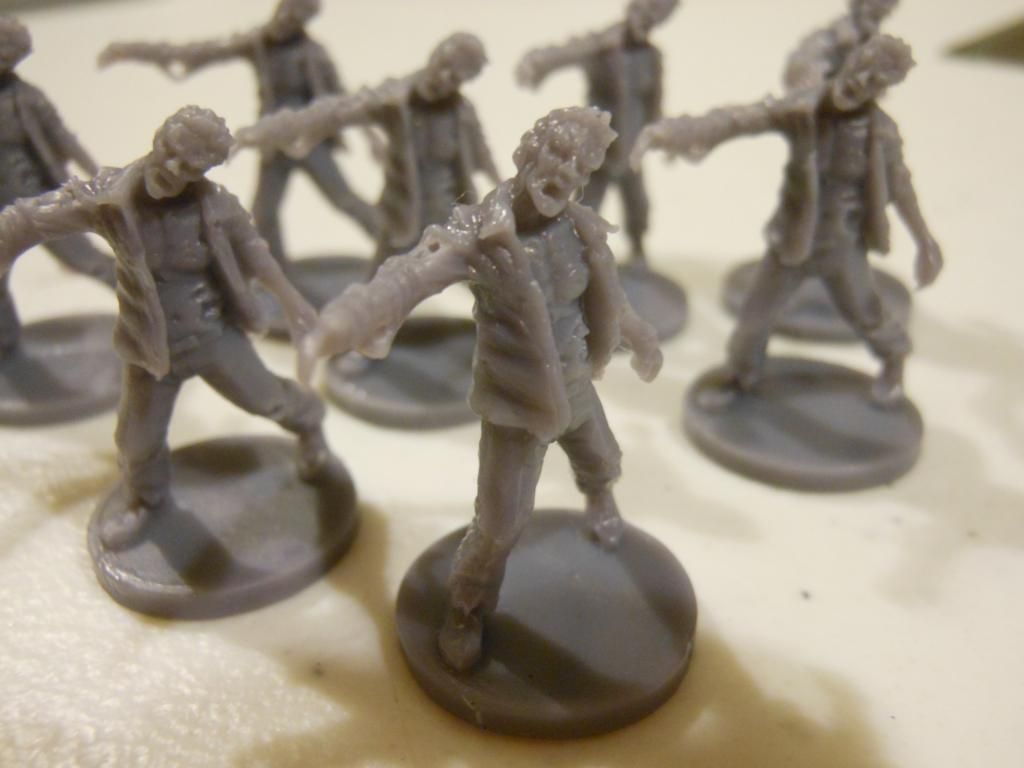
Dark Darker Darkest zombies
"Hey, look! Another game about zombies!"


But then there was Dark Darker Darkest: A game that involved a group of everyday people sneaking into a fortified manor house to hunt down a mad scientist and then steal the antidote for the virus that is ravaging the population.

Yeah. It's Resident Evil, the board game.

Ker-ching!


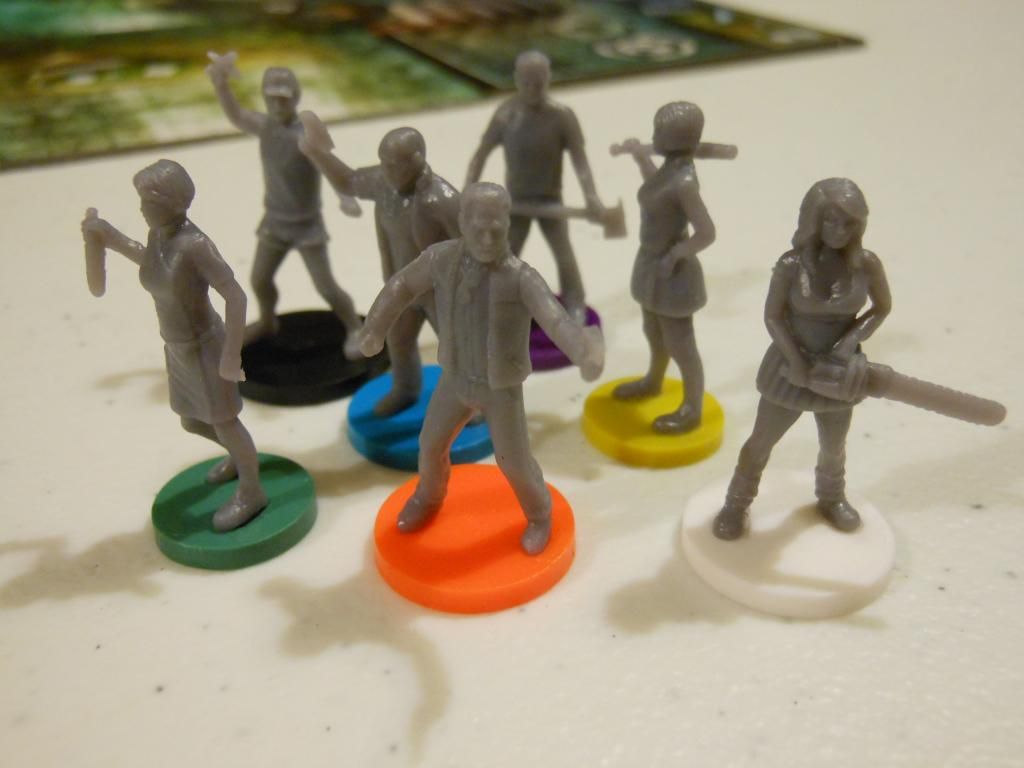
Dark Darker Darkest hero characters
And these are supposed to be the good guys?


More than just a zombie game, this was a game that promised the thrill of being hunted through cramped hallways by reanimated dogs, undead birds, infected gorillas, and giant snakes. It's like the worst day trip to the zoo ever.

(Please note, I do not believe there is a gorilla or snake in the retail game, they were extras that Kickstarter backers got, and which other gamers might get at some point in an expansion. Sorry, folks!)

So I backed the game. I only backed at the basic pledge level which got me the game and the stretch goals, as I didn't feel the need to buy anything else; and I was incredibly excited when two gigantic boxes arrived at my house. I mean BIG boxes. It's a game about zombies, and I thought there might actually be a real corpse in there.

(Please note, my excitement was slightly dampened by the absence of a whole bunch of stuff that Queen still haven't sent to me, and are unlikely to send to me for some while yet. Never mind, the game's the thing...)

If you were to explain Dark Darker Darkest to someone, the first thing you would do is tell them to ignore the stupid name. Then you would tell them that the game involves a small group of people moving around a mansion which you create from a big stack of nicely illustrated tiles. Some tiles have cameras which you need to try to avoid, and some tiles are locked. Avoid or kill the zombies, unlock the doors, find the antidote, and escape. You'll be back home in time for Scooby Snacks.


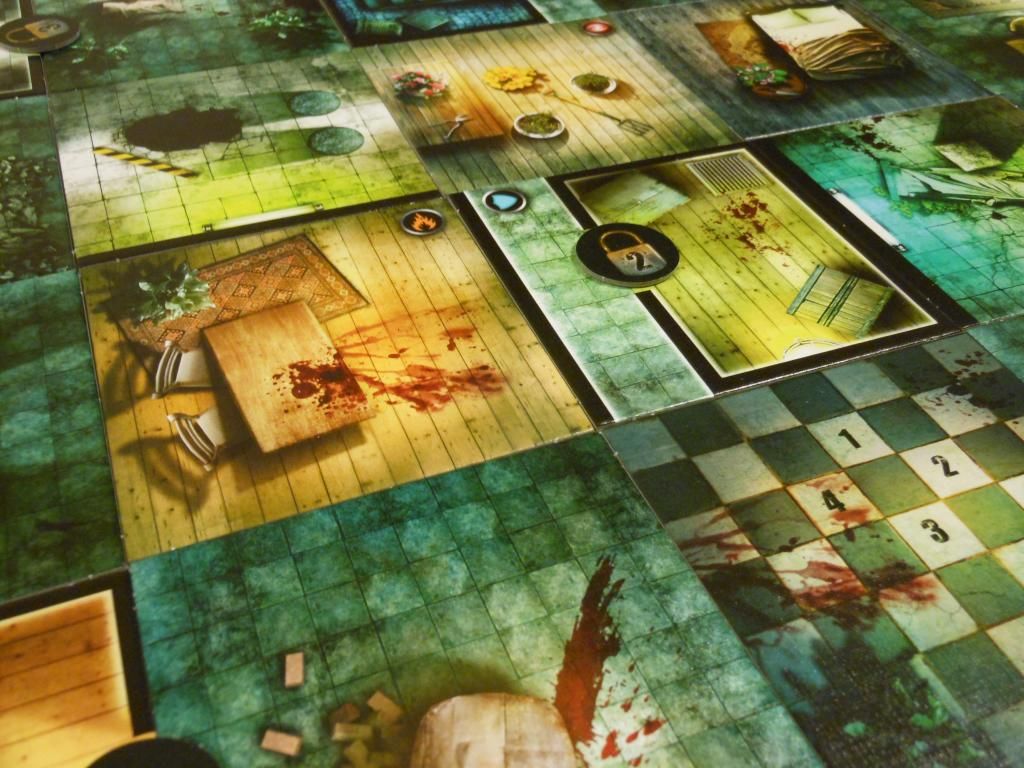
Dark Darker Darkest mansion
Sorry. If I'd known you were coming, I would have cleaned up.


But describing what this game is really doesn't do justice to what this game is.

You see, The Big Ds is a co-operative game. Everyone works together to win against the game system. And it is one of those beautiful co-operative games that genuinely feels co-operative. It achieves this with a fabulous team mechanism. At the start of each turn, you look at where people are in the house. Any people on the same tile form a group. You then create an order in which the groups will activate. Every character within each group gets a set number of actions (moving, searching, attacking), but those characters do not have to take those actions in a strict order. One person could move and shoot, then pass control to someone else in the group who searches, who then passes control back to the first person, and so on. Only once all the characters have exhausted all of their actions does control move to the next group, who then get to take their actions.


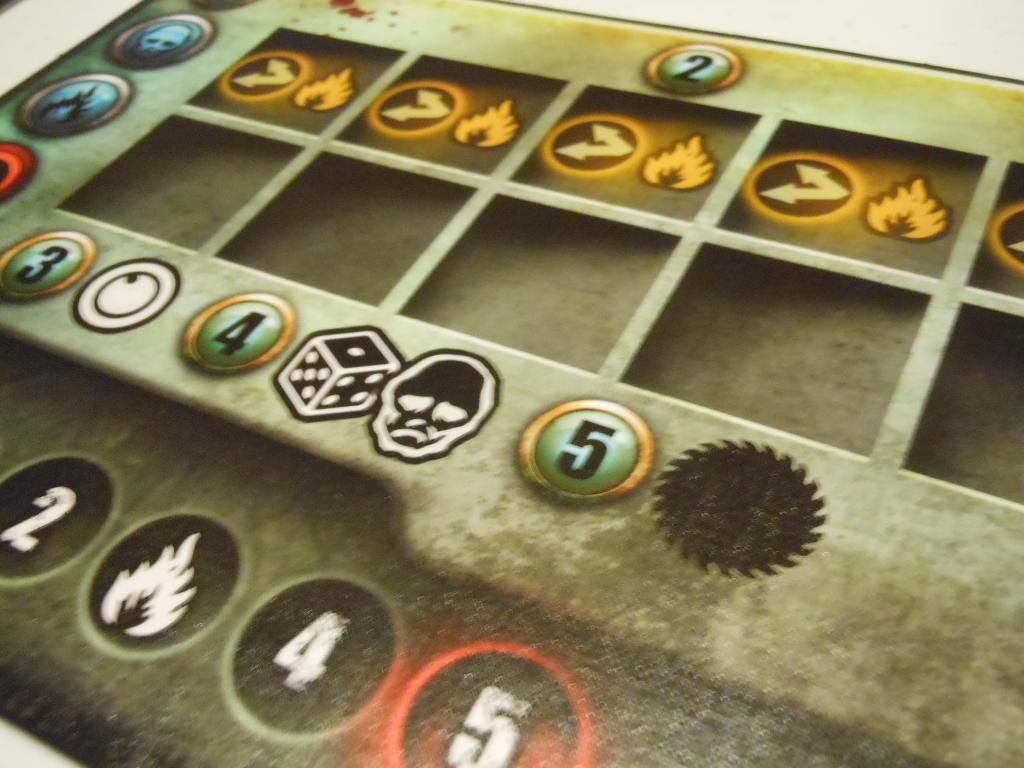
Dark Darker Darkest team tracker
The team tracker.


Do you see what I'm saying?

Do you see?

If all of your characters start the turn together, then you just get one big turn for everyone to act in, and there is no strict order for characters to move in, and you can hop back and forth between characters as much as you want. But if you spread your characters out, then they all act independently.

And did I mention that every time a group finishes activating, zombies and creatures in the house might respond to the sound the group has made, and lurch into abnormal life, hunting down survivors to gnaw on their entrails?

I didn't?

They do. And the fire might spread too.

I didn't mention fire?

Man, I suck at reviews. Which is really worrying considering what this blog is all about.

But anyway, do you see? Do you see why Triple D is so cool?

The game encourages you to forge a unit, to stick together and work as a team. It actively encourages you to act like you would bloody well act in a zombie apocalypse.

If you are one of those people who watches horror movies and says, "Why are they splitting up?" Well, this is the game for you.

Or, maybe it isn't.

Because there is another mechanism in this game that is either going to make or break it for you. You see, for all the plastic zombie miniatures, and the brooding artwork, and the fire - oh God, the fire - this whole game revolves around a mechanism which is its most magnificent triumph and its biggest failure.

Unlocking doors.

The whole game is about unlocking doors.

Throughout the mansion there are locked door tokens. When you get close to them, you flip them over to reveal two or three coloured symbols. Every item you start with, and every item you find in the mansion, has a coloured symbol on it. If a bunch of people have items with icons that match all the icons on the door token, you can unlock the door. You then keep the token, and you can cash it in later on a "security panel" to break the code that is sealing the entrance to the mad scientist's laboratory.


Dark Darker Darkest security panel
The security panel.


(Please note (really? Again?), in the original rules for the game, one person had to have all the items required to unlock a door. This was changed in the revised rules, which you can find over on the BoardGameGeek website.)

This is the game's greatest triumph, because it creates agonising decisions for the players, and gives the game a heavy dose of resource management which is often lacking from other games of this sort. For example, you are out of ammo, and there are zombies closing in; but you really need the icon that appears on your spare ammo clip. If you reload, you lose that icon, and you cannot unlock the door. If you cannot unlock the door, you cannot win. If you don't reload, the zombies eat your brains, and you cannot win.

(Not winning is a really big aspect of this game, by the way.)

But this mechanism for unlocking doors is also the game's biggest failure, because it is so absolutely, totally, unapologetically unthematic.

You know what? I don't care. It is a concession the designer chose to make for the sake of making the game gruelling, tense, and entertaining. And it works. Managing your equipment is like a mini-game. You have to finely balance the useful weapons you want for fighting zombies, with the tat you need for unlocking doors.

And when you do finally unlock the laboratory, the game flips on its head. The group activation mechanism I talked about earlier transforms into this crazy Euro-style worker-placement type thing where the group can "place" six actions at a time, after which the bad guys react. Used actions are then locked out for several turns before being returned to the players, so there is a chance certain characters may have to miss a turn and you never have quite enough actions for what you want to do. And of course, the whole time, the crazy scientist (or one of his relatives) is attempting to set fire to the mansion with you still in it.

It's bat-shit crazy.

And absolutely joyous.

And you might hate it.


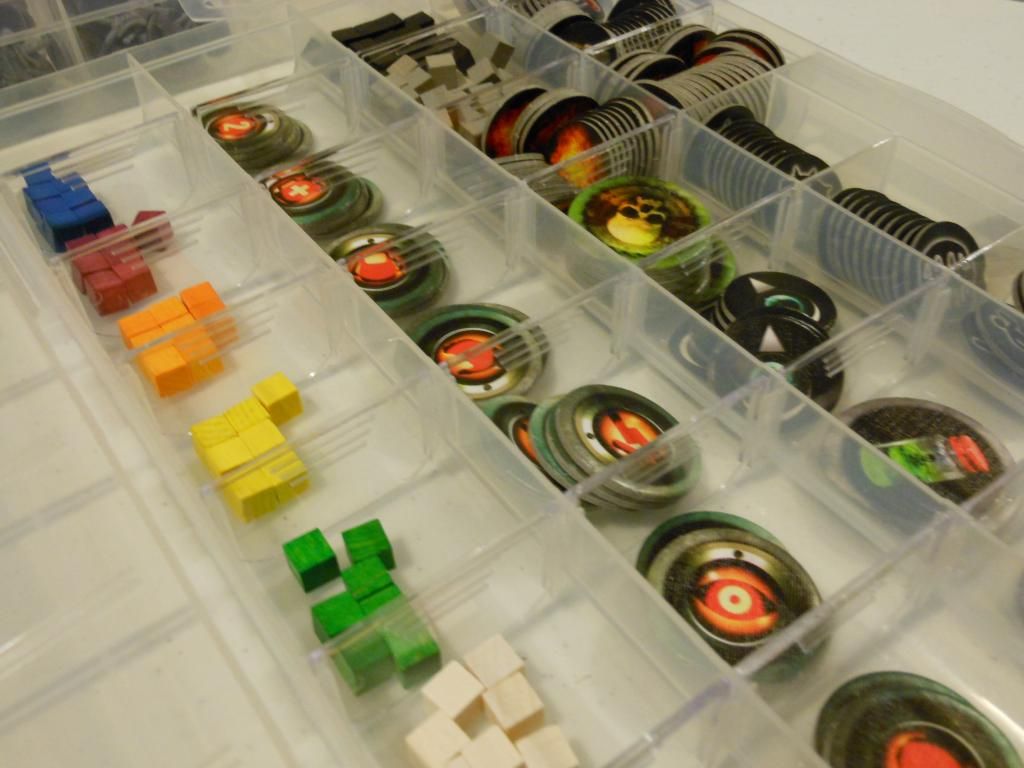
Dark Darker Darkest components
Wooden cubes? In a thematic game? Heresy!


You might hate it because, while I think the artwork is incredible and sets the game apart from anything else in my collection, you might think it looks ugly and drab. You might hate it because the miniatures aren't great (a friend of mine said they were like "cheap army men"). You might hate it because the price in the UK makes you want to be a bit sick in your mouth. You might hate it because the iconography on the cards is often difficult to understand, and you will need to reference player aids during every game unless you are really familiar with everything. You might hate it because it is so bloody difficult to win.

And you might hate it because it chucks about a dozen mechanisms into the pot and stirs them together into a stew that some people are going to think is awesome and some people will think is stew.

I guess that's as fair as I can be about the game. I love it. It is the zombie game I wanted all previous zombie games to be. It does that thing where it takes great game mechanisms and dunks them in a vat of theme, and while some of the theme might drip off on your shirt, there is still lots of tasty theme left to enjoy. No, wait. I'm thinking about fondue, aren't I?

But the theme is strong in this one. Even with those idiosyncratic rules that don't quite gel.

Need an example?

Here's an example of something that happened in one of my games:

Towards the end stages of the game, a fire was running rampant through the house, and it looked like the whole place was going to burn down. While Lucy Chang ran to get into the laboratory, Leo and Bunny accessed the sprinkler system, dousing the flames. It was a losing battle, but Leo was keeping the fire at bay just long enough to stop the game ending through the destruction of too many mansion tiles.


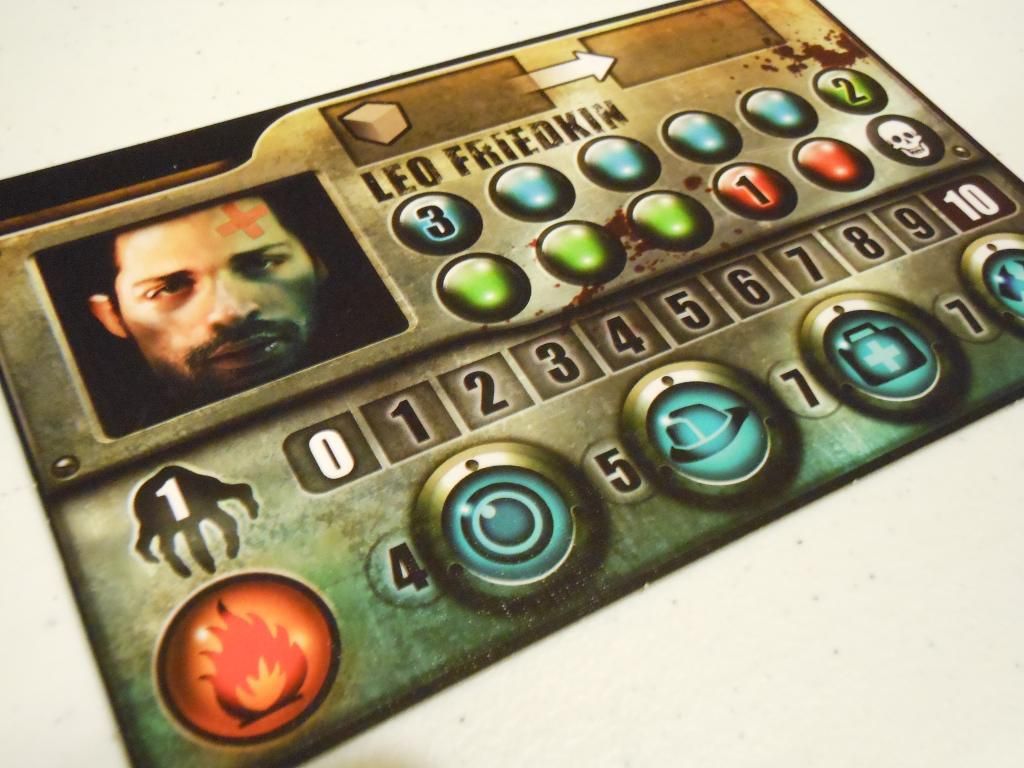
Dark Darker Darkest character board
Character board.


Lucy opened the laboratory, and the crazy scientist lurched at her through the billowing smoke. She set to him with a baseball bat, and for the next two turns they wrestled with each other as the scientist approached the sprinkler room.

Eventually outpacing Lucy, the scientist entered the sprinkler system room. He thrust Bunny into the adjacent room and attacked Leo. As the scientist tore bloody chunks from Leo, he glanced at Bunny, and nodded. She knew what he meant.

With trembling hands, she pulled the pin from the grenade she had found earlier, and lobbed it into the room, bringing the whole place crashing down on the two combatants.


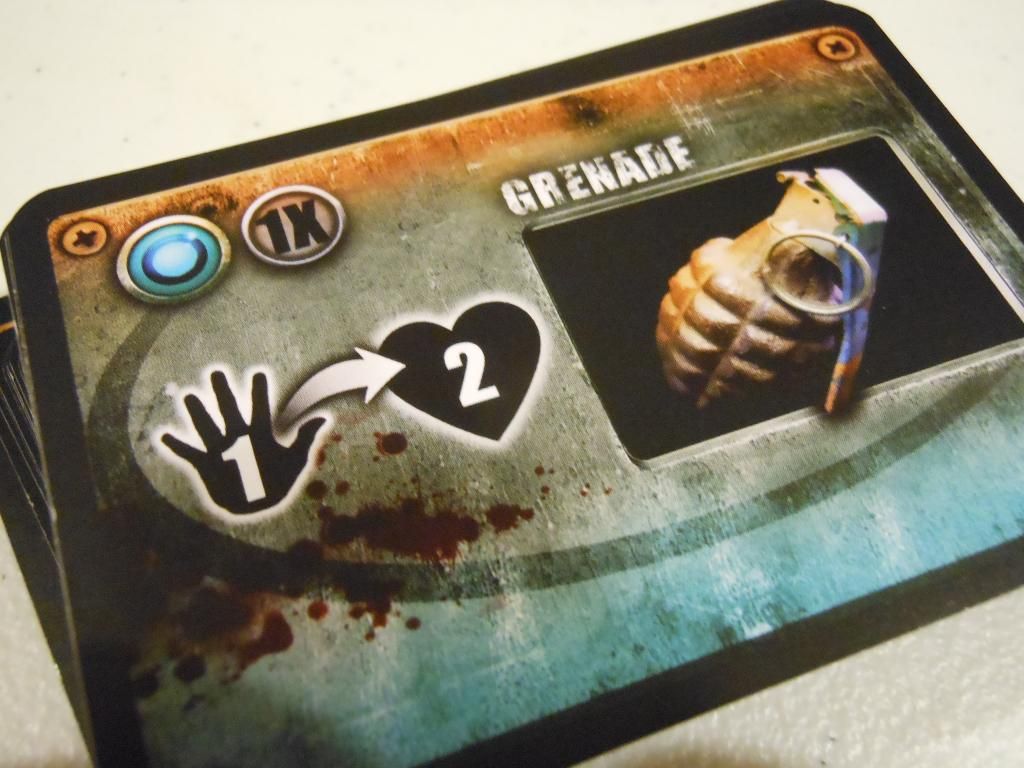
Dark Darker Darkest grenade
This icon does not mean throw grenades at the one you love.


You can chalk that up to a win for the good guys, and a climax that rivals any number of horror films.

And that is why I love the D-Meister.

I can't say you will love this game too, but I can say you should definitely try it if you get the chance.

If nothing else, you will have some stories to tell.

Saturday, 29 March 2014

Fireteam Zero: Inane Ramblings about Kickstarter

Okay, I don't normally do this sort of thing, but it's Saturday evening, my wife is about to head off to work, and I am bored, so screw it... I'm going to talk about a game I'm backing on Kickstarter. This is not a review, it's just some directionless ramblings about a game I liked the look of and threw some money at. Hell, the game isn't even out yet, and won't be for some time.

(If you don't know how Kickstarter works, it is basically a crowdfunding website: You give someone money, they use the money to make something, and then they usually send you a copy of that something. Or they run off with your money.)

(Oh, and fair warning: Everything that follows is my opinion based only on what I have seen on the Kickstarter campaign. I am not privy to any "behind the scenes" stuff. I may be wrong about everything. Caveat emptor. And so on.)

The game in question is Fireteam Zero, which is based on a series of books. The premise is simple: In World War II, an undercover team of badass soldiers takes on supernatural entities in a series of gruelling close-combat scenarios. The soldiers co-operate to achieve a mission, while grotesque, nightmarish monsters swarm towards them in never-ending waves. It's like being in a pressure cooker.

With teeth.

That right there is a hook to swing on.

So, the theme initially sold me on the game. Alternative history stuff is always interesting, and this game does some interesting things with it. I mean, the box art depicts the raising of the flag on Iwo Jima, except the soldiers are driving that flag into a squirming mass of barely identifiable tentacled things.

However, there are two things I really like about the theme. I'm going to list them. Course I am...

1. It's not Lovecraft. At least, not as far as I am concerned.

I absolutely love the work of H. P. Lovecraft, but I feel his work has been used too often as a source for board games. While some people are comparing Fireteam Zero to Lovecraft, the themes are quite different. Fireteam's theme is a fusion of body horror and the supernatural. Having a few creatures with tentacles does not mean the theme is Lovecraftian. Or, at least, I don't think it does.

2. It's schlocky.

I am a big fan of horror movies, and when I look at the creatures in Fireteam, I see many things that remind me of cool, schlock-horror films I love. I see references to The Thing, Slither, The Devil's Chair, Blood Beach, Night of the Scarecrow, Infestation, Blood Glacier, and many other films. And that's just cool.

So, I was already hooked on the theme, and then I saw the gameplay. One of my favourite board games is Gears of War, which is a co-operative game in which a small group of marines work together against a horde of aliens. It is a superb game that allows you to act on an ally's turn by playing cards from your hand that have different "support" benefits. Unfortunately, Fantasy Flight Games never really ran with it, and apart from a small expansion, the game was pretty much neglected. Furthermore, the game is not without its problems: Namely, an ungodly setup time.

I always felt that someone could take the bare mechanisms from Gears of War and turn the dial up to 11, and I really feel that is was the designers of Fireteam have done.

The game also feels incredibly customisable, offering a wealth of replayability. As an example, consider the first mission:

The mission requires the team to search 12 spots for parts to fix a ferry. All the time, they will be harried by eight corrupted animal minions. Minions respawn every time they die, so the horde is endless. The twist is, over time, the enemies mutate. New abilities are drawn randomly from a deck of cards, and the mutations stack. So, you play the mission once, and you might be facing corrupted animals that spit poison, and swarm together in packs. You play the same mission again, but this time, you are facing corrupted animals that sprout extra legs, bleed acid, and swim. (Note: I just made all those abilities up. I have no idea what the real abilities are.)

Same creatures, different rules, different tactics.

But then you can mix things up, by playing the same mission, but swapping out minions for different types of minions.

And did I mention the non-player characters? You get to take two with you, and anyone who kickstarts the project gets a total of four to choose from. These NPCs provide special abilities, but you have to keep them safe from the enemy.

Basically, the combination of choice of heroes, choice of hero special abilities, choice of NPCs, choice of minions, and the random allocation of mutations throughout the mission mean each game should be quite different.

The last thing to mention is the pledge amount. For $85, you get the base game, an exclusive NPC character (a cute doggy), and all the stretch goals. Sure, there are not as many stretch goals as there are with campaigns from bigger companies, but there are still some nice extra plastic miniatures, and some new twist and hero power cards. Enough to make that $85 pledge look like a very nice deal as far as I am concerned.

In fact, people who care about miniatures should be quite pleased with the plastic loadout for this game. There are 52 plastic figures in total, including five heroes, four NPCs, three "families" of monsters, and some bonus beasties. There are 21 unique sculpts, including three massive boss monsters that tower over everything else. I believe they are all sculpted by someone who used to make miniatures for Heroscape, but don't quote me on that.

The company is actually so proud of the miniatures, they are offering a pledge level that just gets the miniatures.

Frankly, I don't care about that. I want the game.

And that's an important point to stress: I want the game. I am very excited about the game. And that's why this whole post sounds like an infomercial. My enthusiasm is going to have crept into every word, so take those words with a good pinch of salt. Go on. Salt makes everything taste better anyway. Stick some bacon on there too.

But, in the sake of being fair and even-handed, I'm going to mention a list of things that concern me about the project:

First of all, one of the stretch goals is a CD. I couldn't be less thrilled with the prospect of a CD to listen to while I play a board game if I tried. If they swapped that CD out for a copy of the first book in the series, I'd do a little Snoopy dance.

It seems like you only get four dice in the box. There should be six, because it is possible for some attacks to involve rolling six dice. I am not opposed to rerolling sometimes, but with four dice, it seems like rerolling will be required for most attacks. Seriously, put six dice in the box, and six dice in a paid add-on. Hell, put six in as stretch goal. Instead of that damned CD.

And then there is delivery time. The Kickstarter claims the game will be available in October. That's a pretty close deadline. I would like to know if that is at all feasible. Most Kickstarters slide a bit, but this is a smaller project than some others. I would at least like to know if it is realistic to expect the game before Christmas.

And there you have it. That's why I'm backing Fireteam Zero.

Thank you for indulging me. I promise I'll review something soon. Probably Dark Darker Darkest, which is another game I got through Kickstarter...

Tuesday, 25 March 2014

Review - World of Warcraft: Miniatures Game - Core Set Booster

World of Warcraft


World of Warcraft: Miniatures GamePublished by Upper Deck Entertainment
Designed by a whole bunch of people
For 2 players, aged 14 to adult

What seems like a very long time ago indeed, I picked up the basic starter set for the imaginatively titled World of Warcraft: Miniatures Game. I thought it seemed like a pretty decent game, but it was hard to tell from the four miniatures provided in the starter.

I really wanted to get the deluxe starter, but that's like hen's teeth these days... Really pointy. Or something.

Anyway, I did the next best thing. I managed to grab two Core Set boosters for the princely sum of £2 each. Frankly, £4 for six prepainted miniatures and a bunch of cards (one character card and two skill cards per figure) is a hard deal to pass up, and I am a sucker for a bargain.

I wasn't really sure what I would get with these boosters. I knew the game had three factions (Horde, Alliance, and Beasts), but I didn't know anything about rarity levels, or how figures were distributed throughout the boxes.

As it turns out, the boosters are random, but all three figures in each booster come from the same faction, which is a really nice touch The two boosters I bought had different pictures on the front, but I have no idea if that is in any way related to which faction the booster is for. I happened to get one booster containing Alliance dudes, and one booster with Horde dudes, so when combined with my starter set, I ended up with five characters for each of those factions, which is just enough for a bit of variety. I would have really liked a set of Beasts, as they seem more interesting to me; but hey... You can't have everything.

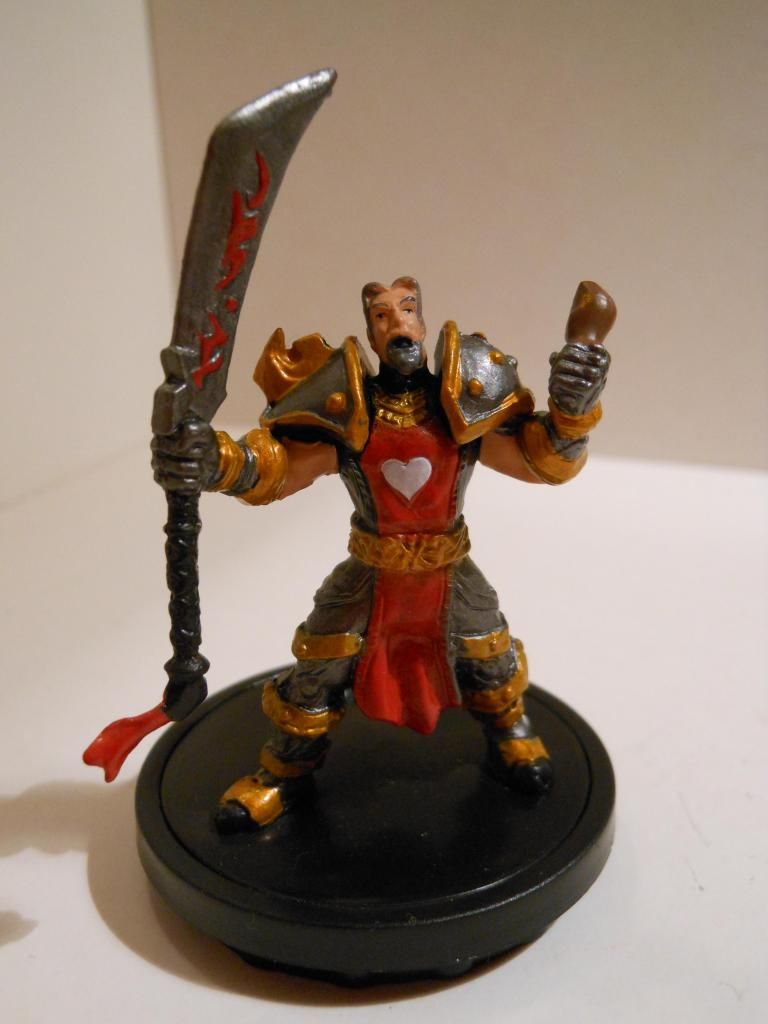
Now, it may surprise some people, but I have never played the World of Warcraft computer game. It never really appealed to me, and I don't really have the time to invest in something like that. However, I do know a few things about the game, and I have heard the story of the infamous Leeroy Jenkins. So, it was with a great degree of pleasure, that I realised the first character to pop out of my Alliance booster was no less than the chicken-loving paladin.

Leeroy Jenkins
"Leeeerrrroooooyyyy Jeeeennnnkkkiiinnss!"


Honestly, that one figure alone made it all worthwhile.

As it turns out, my other alliance characters were pretty cool too. A chunky Drenai shaman (does David Gemmell get royalties for them using that name?), and a dark elf mage. Big, imposing characters, in cool poses. The elf even has translucent bits on her staff. I like that sort of thing. I'm weird.


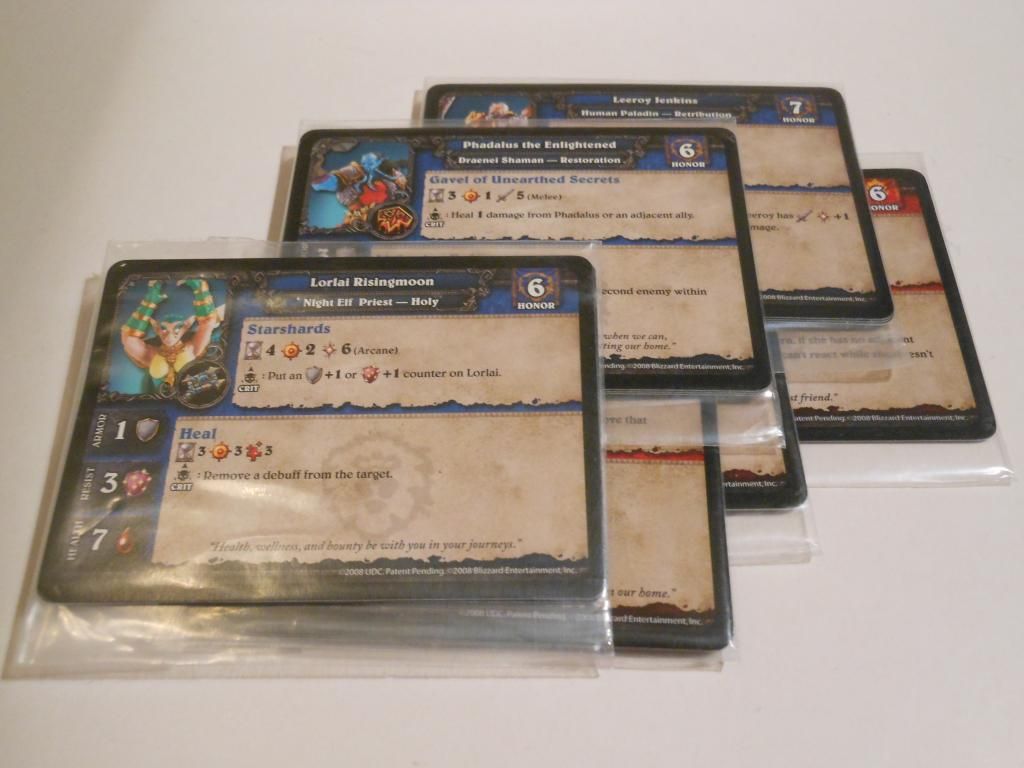
World of Warcraft cards
Character cards.


After that, opening the second box was always likely to be a disappointment. And yeah... It was.

I got a wimpy looking blood elf archer, a forsaken (undead?) rogue that I had to bath in boiling water because she was a bit tipsy, and an orc shaman that is half the size of the awesome orc from the starter set.

Blah.

So, I was not particularly blown away with my Horde figures, possibly because they were all so small compared to the Alliance guys. I think of the Horde as the bad guys, so I always imagine they should look more imposing and threatening.


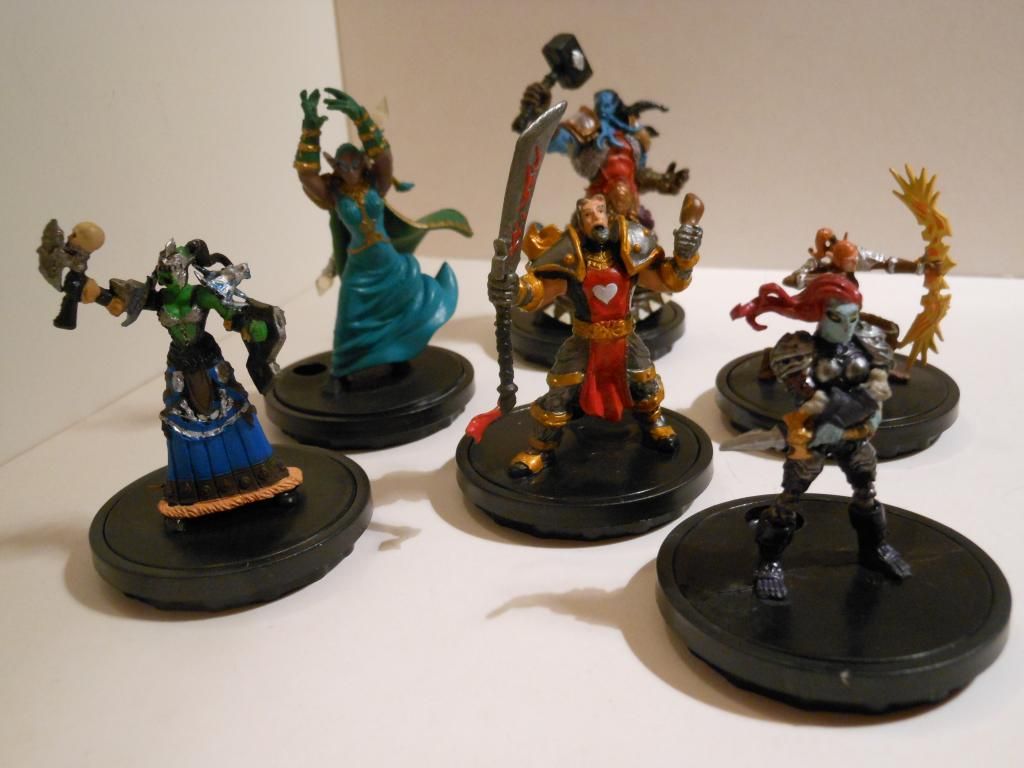
World of Warcraft miniatures
The rogue (front right) looks thoroughly annoyed with Leeroy, dontcha think?


Still, overall, I am happy with what I got from two boosters. If I can find more at a really good price I will buy them (I really want some of those Beasts), but if that never happens, I think the ten figures I have gives a good amount of variety.

Wednesday, 19 March 2014

Review - Zombicide

Zombicide


Zombicide
Published by Cool Mini or Not
Designed by Raphael Guiton, Jean-Baptiste Lullien, and Nicolas Raoult.
For 1-6 players, aged 13 to adult

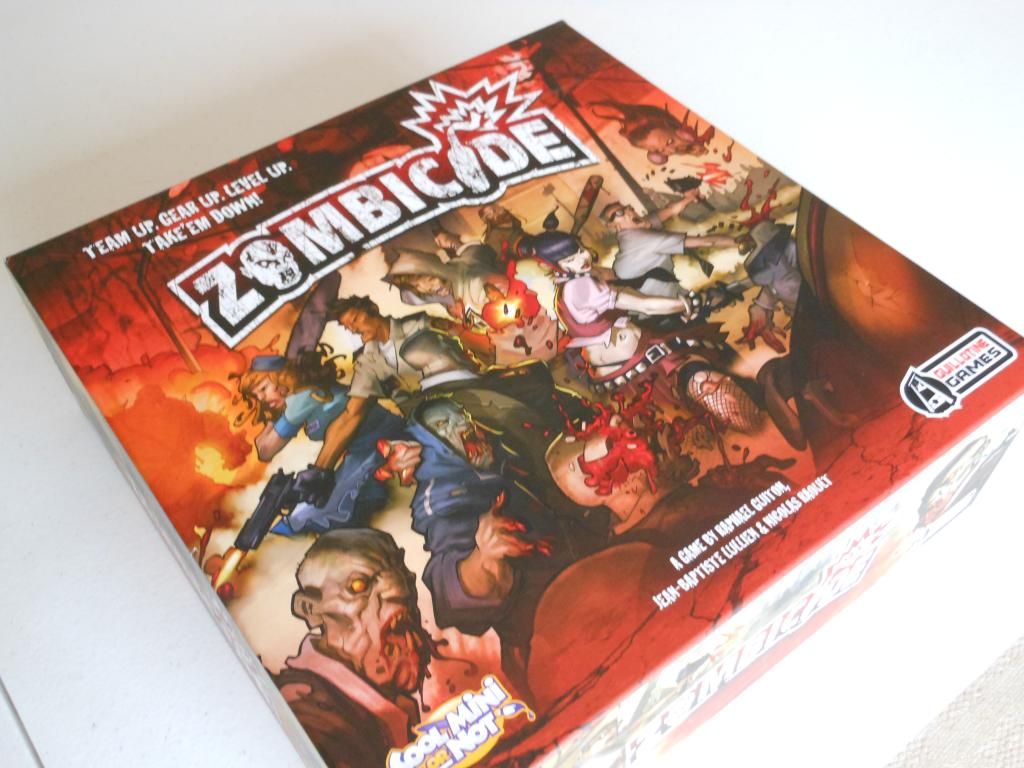
Zombicide board game


I've been staring at my computer screen for 10 minutes trying to think how to tackle this review, and the difficulty I am having really defines how torn I am about this big, bloody mess of a game. You see, I am so torn about how I feel about this game, at the moment, I don't even know if this review is going to be positive or negative.

So, let's flip a coin...

Ready?

I wouldn't be surprised if the coin landed on an edge, but it's "heads." So, let's start the review like this...

I love Zombicide.

I never got onboard the Kickstarter campaign that birthed this monstrous creation, but when I left my life of daily drudgery working as a magazine editor and became self-employed, the people in my office had a bit of a whip-round for me. Normally, co-workers tend to use that sort of money to buy a nice pen, or a carriage clock, or something; but my co-workers put one of my best friends in charge of the pot, and he used the money to buy me board game instead.

Seriously, the look on Ethel from Accounts' face was a picture when she saw that she had chipped in her good money to help buy a grown man toys.

So, anyway, Zombicide was a parting gift from my co-workers, and I have to admit, I was pretty damned pleased with that.


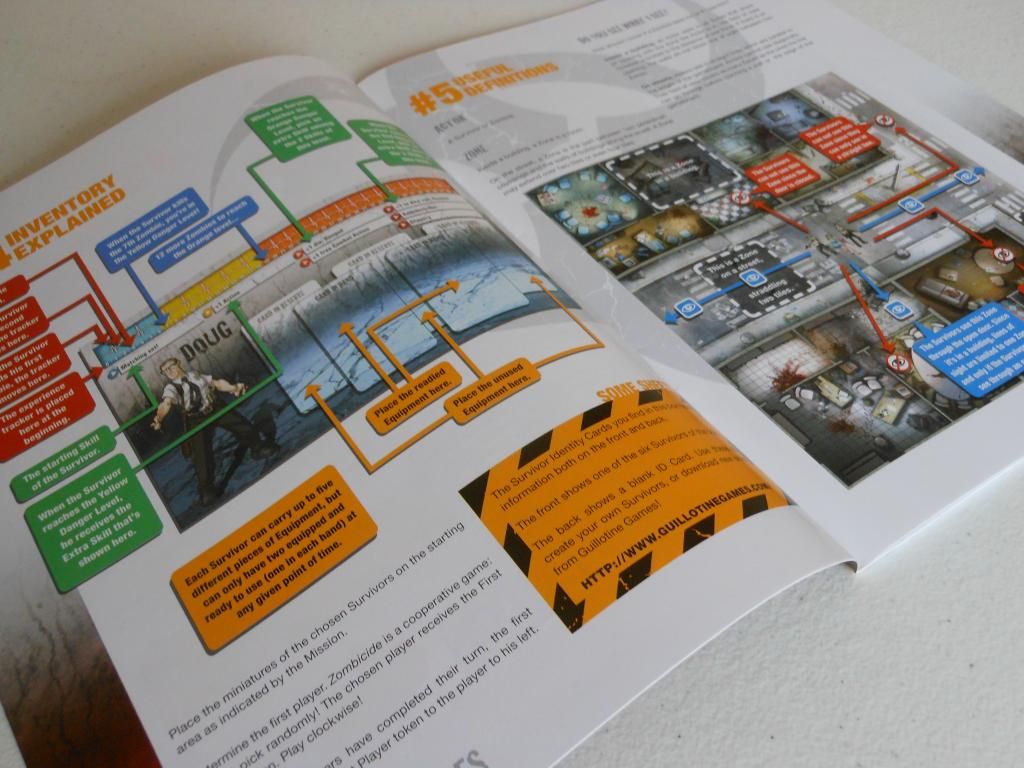
Zombicide rules
The Rules. Or a map of the London Underground. Not sure...


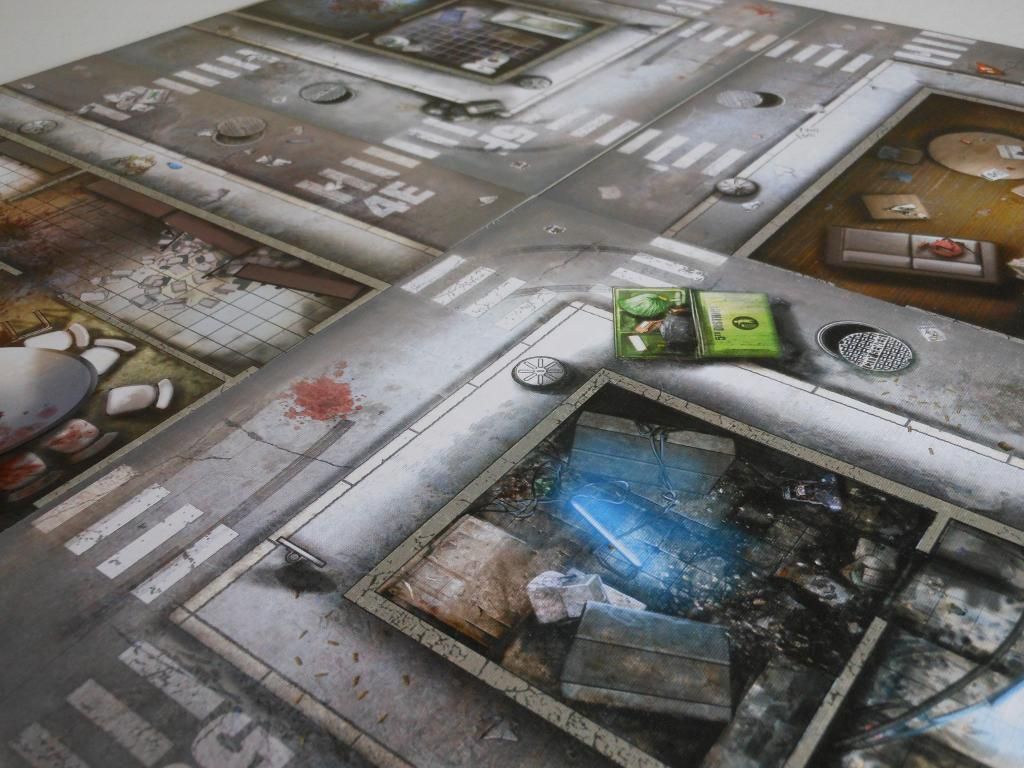
Anyone who knows me, knows I am a bit of a theme junkie, and Zombicide has got so much theme it almost drips off the box and makes an icky puddle on the floor. It has superb art, nicely sculpted miniatures, and detailed map tiles for creating a zombie-infested city block. When the game is sitting on the shelf, I want to take it down and set it up. When the game is on the table, I am excited to play.

In the first few turns, as the zombies begin to shamble into the rubble-choked streets, the adrenaline starts pumping and the game is an absolute joy. And, as the game unfolds, a real story develops as your small band of survivors desperately searches for supplies as the ravenous hordes close in.

You feel trapped. You feel helpless. You feel hopeless. You feel like you would feel if you woke up tomorrow and this was happening in real life, and that makes this game an absolute triumph.

But...

I hate Zombicide.

It is a cluttered mess of a game, with shonky rules, repetitive gameplay, and incredibly violent box art.

Yes, I'm complaining about the box art. Honestly, it is an amazing illustration, and it perfectly sums up the tone and theme; but there are heads flying off, people firing Uzis, and a horribly detailed bit of a zombie's brains exploding. When the box is stacked on the shelf, you still see a gloriously disgusting picture of a zombie being shot in the face with a handgun, which is something I don't want to have to explain to my three-year-old daughter.

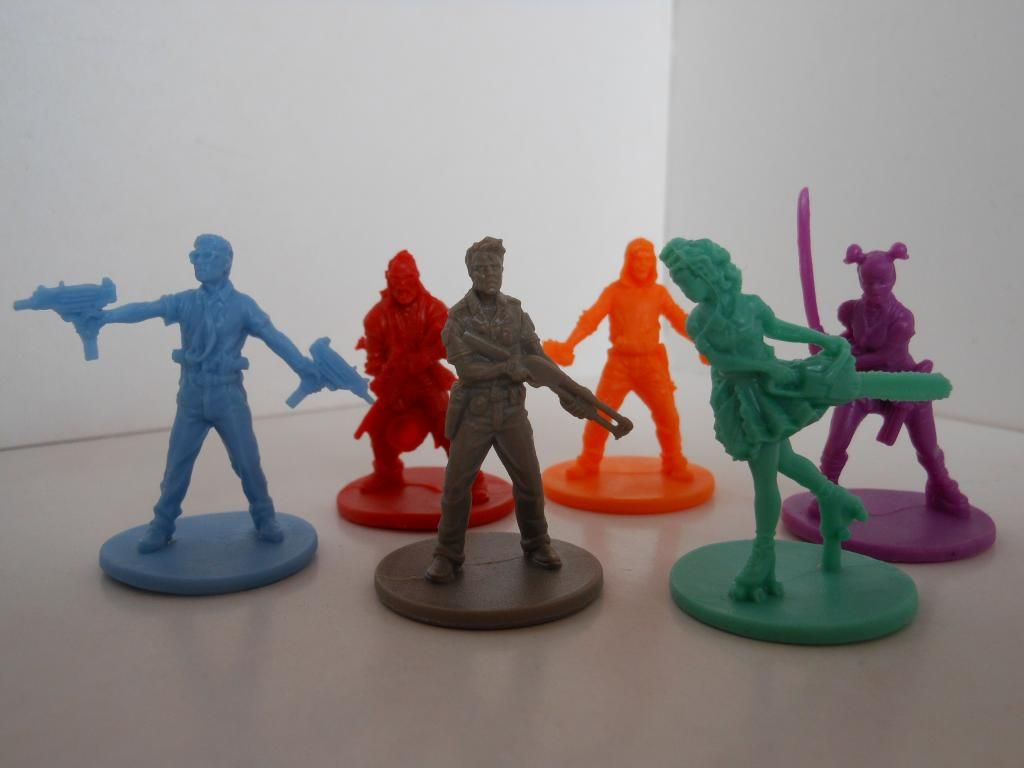
The base game includes six player characters to pick from, and this just isn't enough variety. Every game has to have at least four characters in play, and if you play a three-player game, everyone is supposed to control two characters each. Almost all of my games are three-player games, which means we always have all six characters in play. There is never any variation on the team, so games often end up playing out the same way, using the same characters to pull off the same tricks. Besides, I really hate controlling more than one character in this type of game, as I feel it makes it harder to have a connection with what my character is doing. While I am playing, I want to BE a character; I don't want to be an omnipotent force controlling multiple characters.


Zombicide characters
The gang's all here.


Then there are the crazy escalation rules. As you gain experience (from killing zombies and seizing objectives), more zombies (and more powerful zombies) spawn every turn, or whenever you open a door. I have found that this actively encourages players to avoid killing zombies, as the increase in experience can be catastrophic in the next zombie spawn phase. It also encourages players to run around opening every door to every house before gaining any experience points, as that way, every house is populated with very few zombies, rather than loads of powerful zombies.


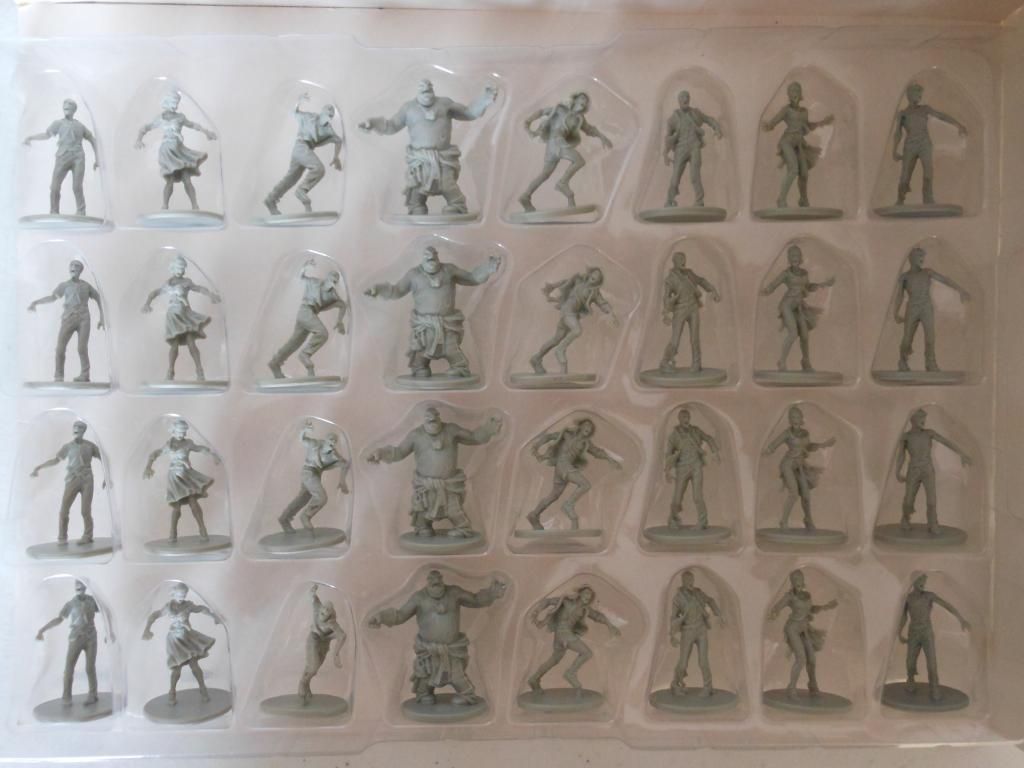
Zombicide zombies
Zombies - You get two trays of these bad boys (and girls).
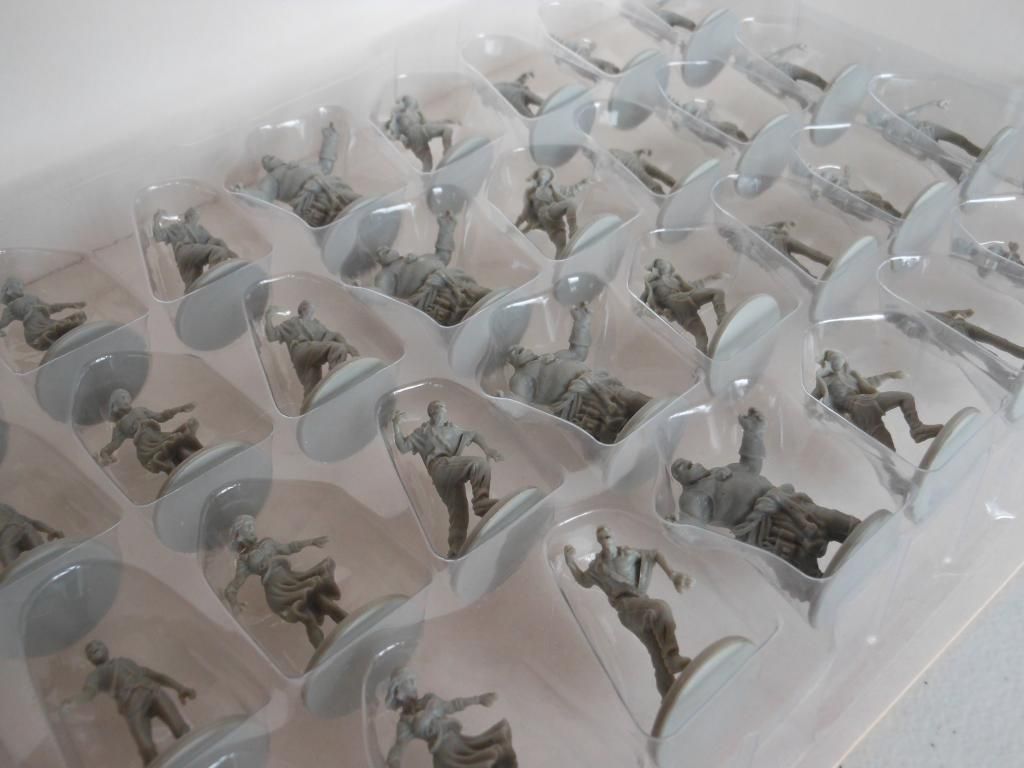
More Zombicide zombies
All in their little sleep chambers. Cute...


And the crazy rule where, if you fire a gun into a space containing heroes and zombies you have to allocate hits to the heroes before you can allocate any to the zombies, is such a gamey, artificial rule, it completely undermines that incredible theme.

Ultimately, using the same six characters, and understanding how zombies become more powerful as characters level up, has meant that every game I have played ends up pretty much the same way. In the first few turns, the fast characters rush around and open doors, thus ensuring only a few zombies are present in the houses. Everyone searches until they get some good kit, and they actively avoid killing zombies or picking up objectives as much as possible, as this would raise experience and cause problems. Then everyone gets into position to snatch objectives, and the kid in the hoodie who has the ability to sneak through spaces containing zombies goes after the hardest to reach objective.

So, every game starts to feel a bit samey. The heroes do bizarre and unthematic things, and by about half an hour in, I am ready to pack up the game and do something else. The mechanisms of the game have ground away the theme, and I am all to aware that I am playing a game, doing something mechanical, rather than experiencing a gruelling experience in a zombie-infested city.


Zombicide boards
A nice place to visit.


Then I put the game on the shelf, and I take a long look at that awesomely awful box art, and I get this twinge... I want to set the game up again. I want to play again, because maybe next time things will be different. Maybe next time the theme won't evaporate. Maybe next time I will feel as enthusiastic at the end of the game as I do at the start.

Because I don't hate this game. Not really.

I mean, I do. It's awful.

But not really.

What it comes down to is I like the theory better than the application. In fact, this is currently the only game I house rule.

Want to know what my house rules are?

Simple:

When you shoot into a space containing heroes and zombies, hits cause a wound on a zombie, and misses cause a wound on a hero.

Any ranged weapon can be used to make a basic close combat attack (to avoid friendly fire).

You can select the turn order the heroes move in.

And that's it.

Those three little changes allow my group to enjoy the game a little more, but I would be lying if I said Zombicide was a big hit for us.


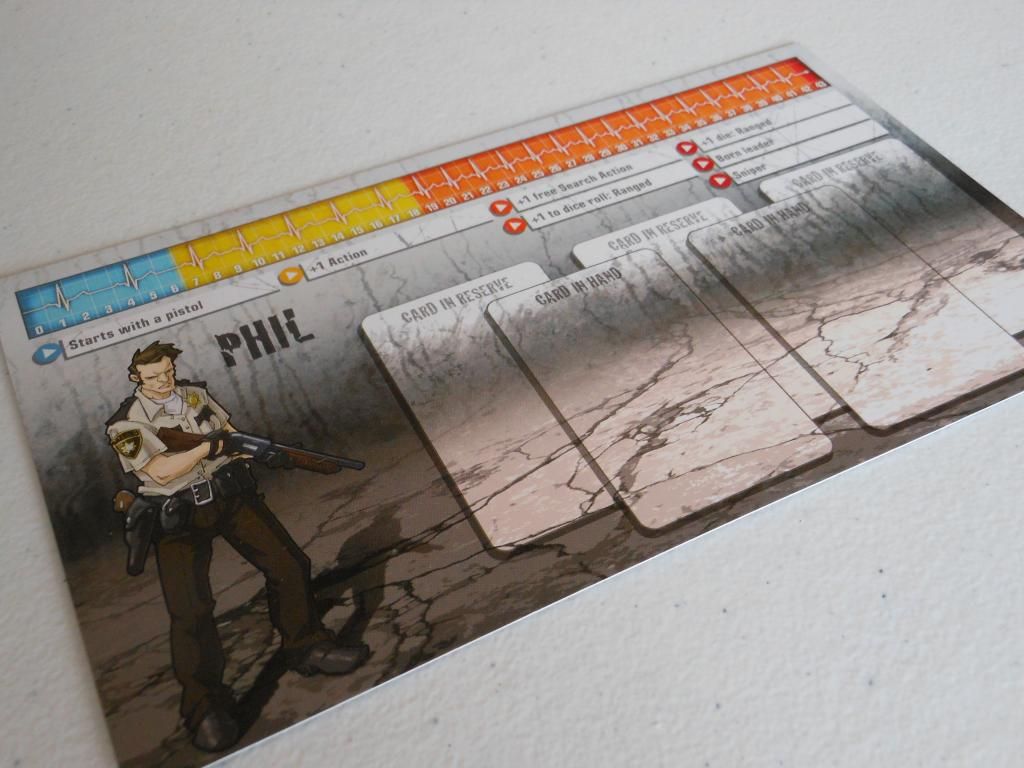
Zombicide - Phil
This guy looks familiar...


Zombicide is a beautiful game (in its own way), and I do have a strong desire to play it. It is easy to learn, and it does create a sense of palpable dread and growing despair as you play. I can see why people enjoy it as much as they do, and I would never suggest someone is wrong for thinking it is an entertaining way to spend an afternoon; but for me, the reality of every game never lives up to the potential.

I think, ultimately, if you put a gun to my head, I would have to say I do not like the game. Which is a shame, really.

I can only imagine what Ethel from Accounts would think if she knew that.