Showing posts with label theme juice everywhere. Show all posts

Sunday, 2 February 2014

Review - Impact: The Battle for Wolf Ridge

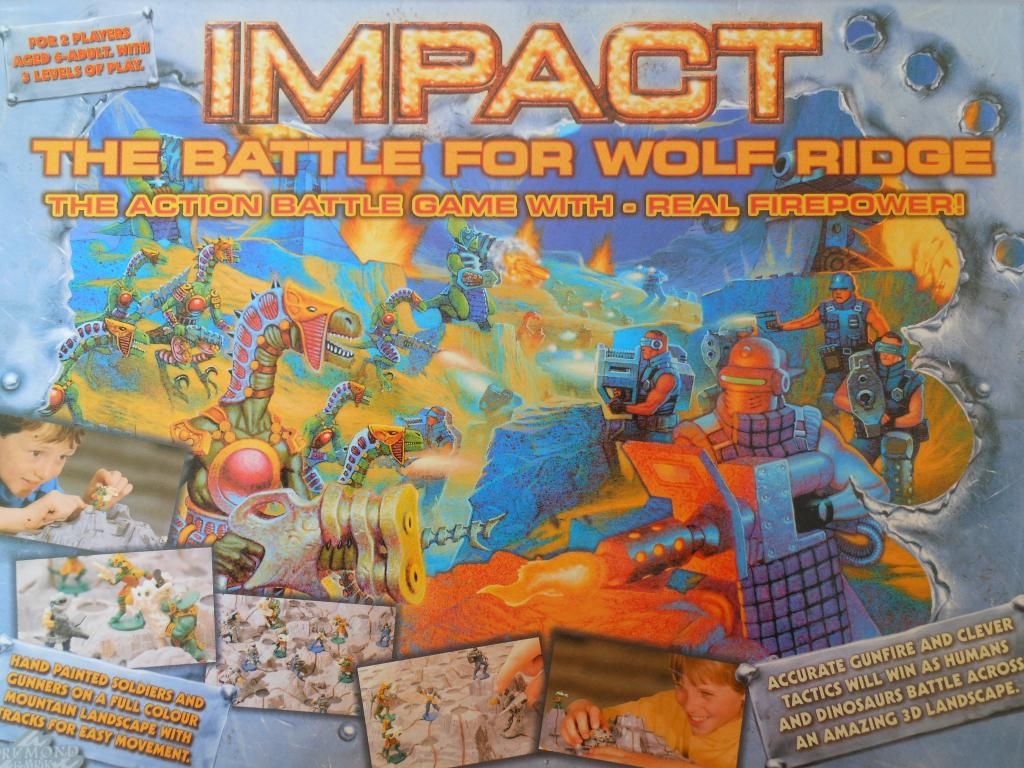
Impact: the Battle for Wolf Ridge


Impact: The Battle for Wolf Ridge
Published by Drummond Park Ltd.
Designed by Captain Awesome and the Theme Juice Brigade
For 2 players, aged 6 to adult


Dinosaurs are cool. I have always loved dinosaurs.

I mean, the day Jurassic Park was released was one of the best days of my childhood, and I still think it is one of the greatest films ever made (no matter how many people try to convince me it's Citizen Kane).

So, if you are going to make a game about dinosaurs, and then put those dinosaurs in a futuristic war with humans, and give them guns, and make those guns really fire, then you, Sir, have my attention.
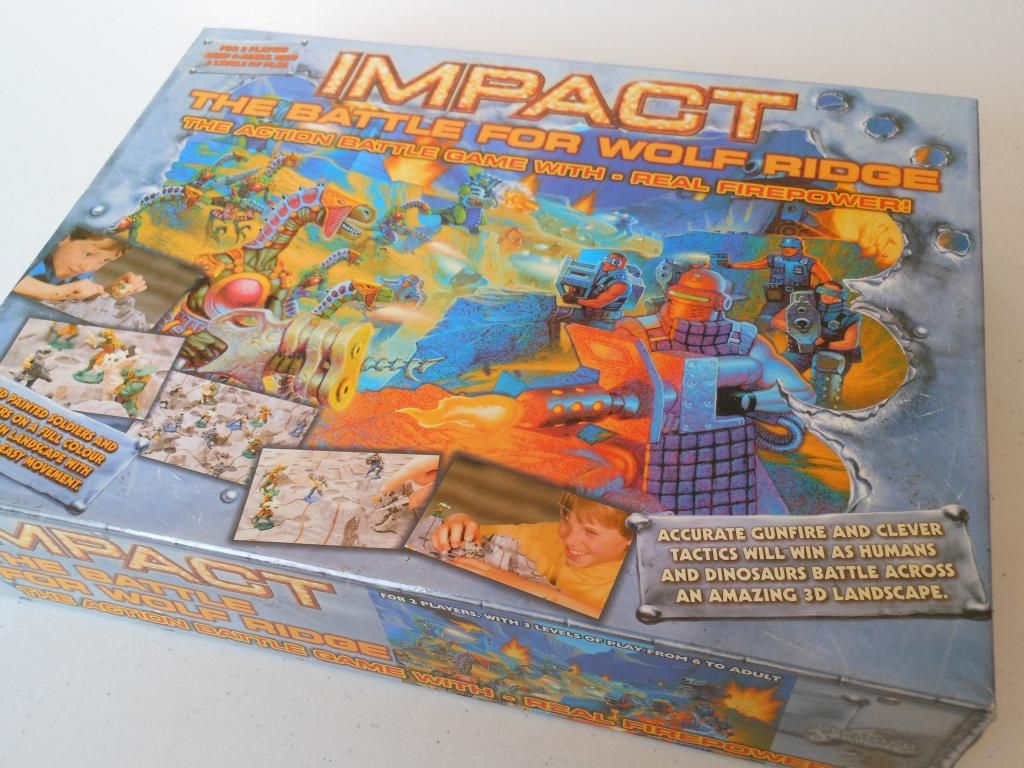

Impact: the Battle for Wolf Ride box
Dinosaurs! Guns! Ned Kelly with a flame thrower!


Oh, yes. Impact: The Battle for Wolf Ridge is probably the most thematically awesome game that has ever been devised. Even the name is awesome.

Really. I'm not kidding here. Listen to this:

An army of dinosaurs with high-tech weaponry is invading Earth. They have sent out a scouting party, which has found an oil-rig in a location called Wolf Ridge. The humans operating the rig hastily fashion weaponry from their drilling apparatus, and prepare to defend themselves from their cold-blooded assailants.

If you don't think that's the best set-up for a game ever, then you just don't appreciate awesomeness. Either that, or you're dead.

I want to see this being made into a film.

As you may have noticed, this game had me hooked on the theme the moment I saw it in my local charity shop, and I had to buy it, even though I suspected the gameplay itself would be dire. I am that sort of a guy.

Luckily, I was pleasantly surprised. While the game does not live up to the awesomeness of the theme (what could?), it is actually well designed. And, of course, it has dinosaurs with guns that really fire.

The game is basically a light two-player strategy war game, with the humans fighting the dinosaurs over a three-dimensional board. Each army has a leader, an NCO, four troopers, one large mobile gun, and one medium mobile gun. Each of the models is pre-painted, and the mobile gun units have guns that really fire! (Did I mention that, yet?)

Each model is well-sculpted, easily identifiable, and the paint jobs are surprisingly good. I particularly like the human gun units, which really look like they have been made from spare bits of the drilling rig.

Apart the models, the only other game component is the board, which comprises four pieces of moulded plastic with circular indents to indicate spaces where units can stand, linked by routes those units can travel. It looks great when it is set up, and is just the right size for the skirmish-level battles you will be fighting.
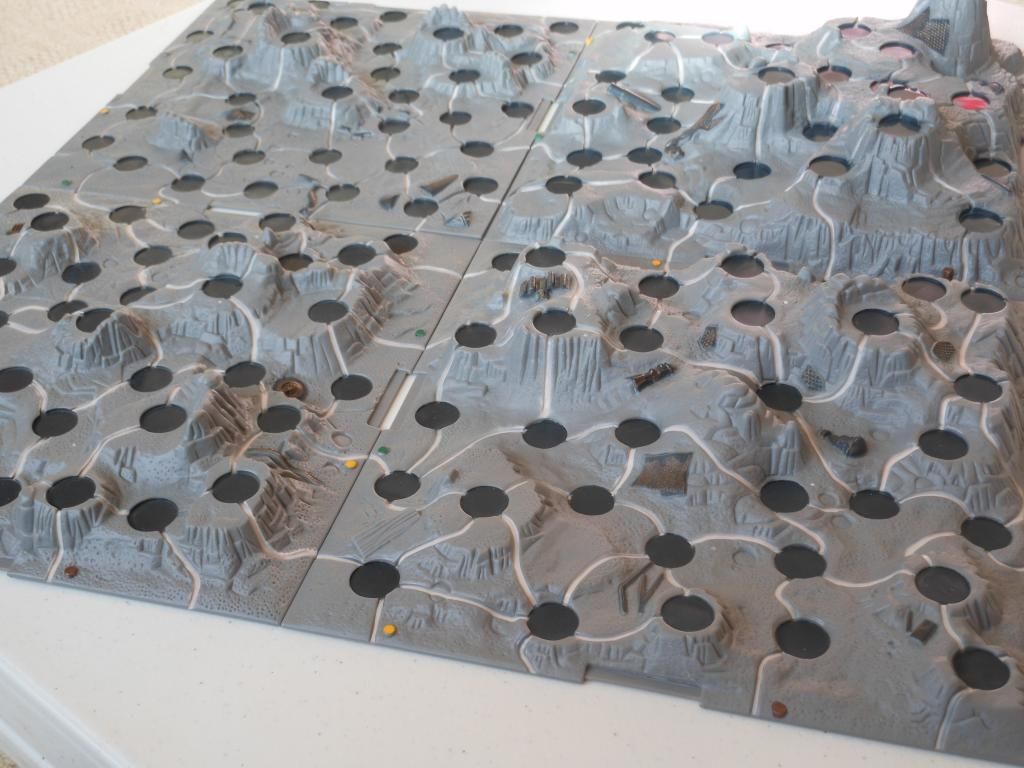

Impact three-dimensional board
The three-dimensional board.


Okay, so in terms of "stuff in the box" you do not really get a lot: 18 figures and four board pieces. However, there is a decent amount of game crammed in there, including three levels of play that range from starter rules so basic you might fall asleep through to rules that are surprisingly involved.
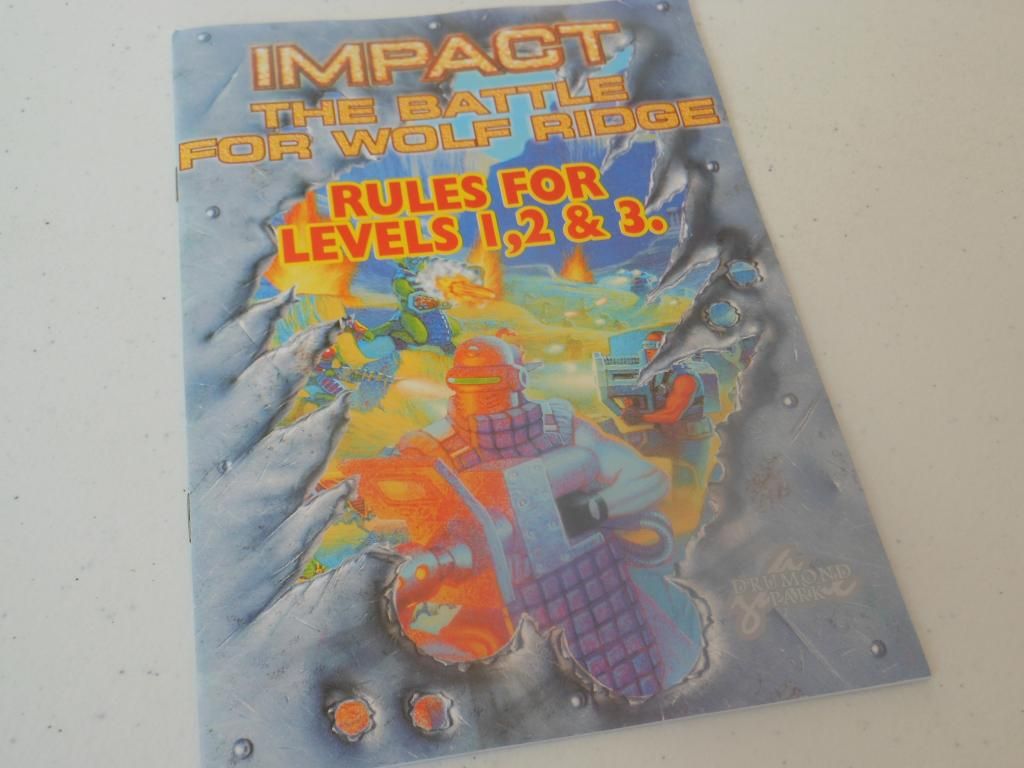

Impact rules book
The rules book, with three levels of play.


In the basic rules, you line up your troops, and then the players take turns firing one of their guns. First person to knock over all of his or her opponent's pieces wins. Sounds boring. It is. Moving on...

The intermediate rules add movement into the game. In turn, players move all their units, following the routes embossed on the board. You get to make twice the number of moves as the number of troops you started the game with (excluding your two gun units). If two of your units move adjacent to an enemy unit, the enemy is captured and removed from the board.

After movement, players take turns to fire their guns. Any units knocked over are removed from the game.

The first player to lose all six troops, or both gun units, loses the game.

This is actually a really fun set of rules. You get the enjoyment of shooting the guns, but strategically moving your pieces to capture enemy units is even more important, and surprisingly thinky. (Okay, that isn't a word. But neither is shpadoinkle. That's just the way life is.)

These intermediate rules are perfect for younger children, and offer enough options so that adult players can tolerate playing.

However, to get the most out of this game, you need to use the advanced rules. These introduce leaders and NCOs. (Yes, dinosaurs have a regimented army structure, and also have NCOs. Go figure.)

Leaders can capture enemy troops single-handedly (but still need assistance to capture NCOs and leaders), and at least one leader or NCO must be present with any other unit in order to capture a gun.
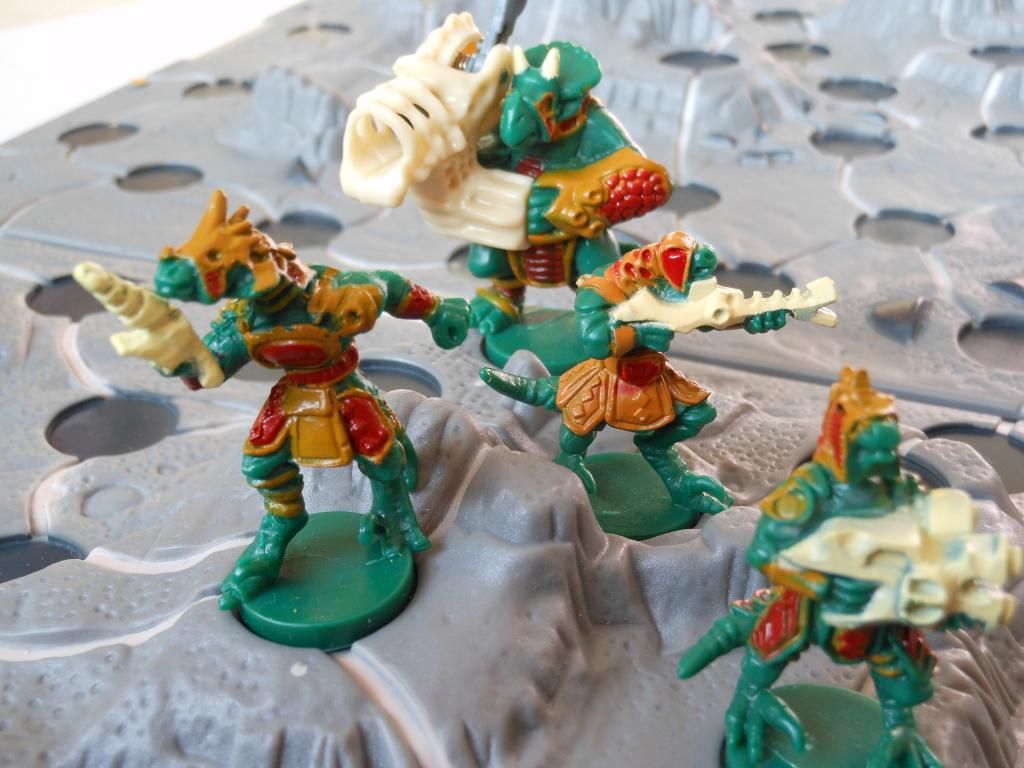

Impact pre-painted dinosaur figures
Question: What do dinosaurs have for lunch?


These two additional troop types, and a few other minor rules tweaks, offer the most engaging experience, and actually make the game pretty entertaining. Notably, winning comes down to skill rather than luck, as there are no dice. If you aim well with your guns, position your troops to effectively use cover, and spring attacks at the right time to surround and capture enemy units, you will win.
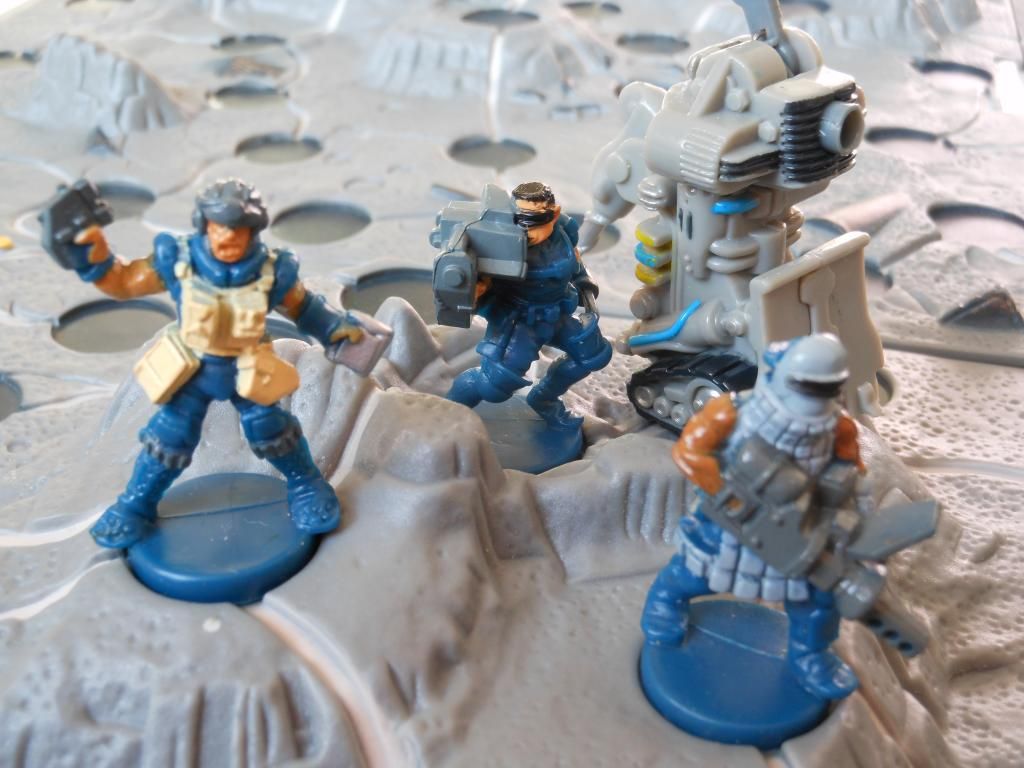

Impact pre-painted human figures
Answer: Whatever they want.


Of course, Impact: The Battle for Wolf Ridge is not without its faults.

For a start, the game is definitely designed with younger gamers in mind. It is on the light side for a strategy game, and it has a rather limited scope. You can only have a maximum of four troops, two special units, and two guns on the field, because that is all you get in the box. Furthermore, the small size of the board would prevent you fielding larger armies anyway. After a while, the game will start to feel a bit samey.

Another problem relates to the gun mechanisms. They are a little fragile, and if you are not careful, the wires can snap or come loose.

The biggest problem is that the game lacks a certain amount of focus, and therefore does several things moderately well without ever doing one thing that is amazing. The strategy element is good, but there are only limited options available due to the small number of troops and special abilities. Meanwhile, the dexterity bit where you get to fire the guns is cool, but with only two guns per side, it pales in comparison to something like Crossbows and Catapults. What we have here is a game that tries to be all things to all people, and ends up being less than the sum of its parts.

So, at the end of the day, is it a good game?

I don't know. I guess not really. But then again, it sort of is.

I'll admit. I'm surprised. When I purchased the game, I expected it to be really dumb. However, the ridiculous (but awesome) theme, is a bit of a smoke screen, disguising a game that has more depth than you might imagine. Okay, it isn't chess; but you aren't just rolling dice and firing missiles. You really need to plan your moves carefully, take your time, capture enemy pieces when they are exposed, and watch out for counter-attacks. Which actually does sound a bit like chess, I suppose.

But chess with dinosaurs. With guns. That really fire!

Tuesday, 17 September 2013

Review - Vampire Hunter

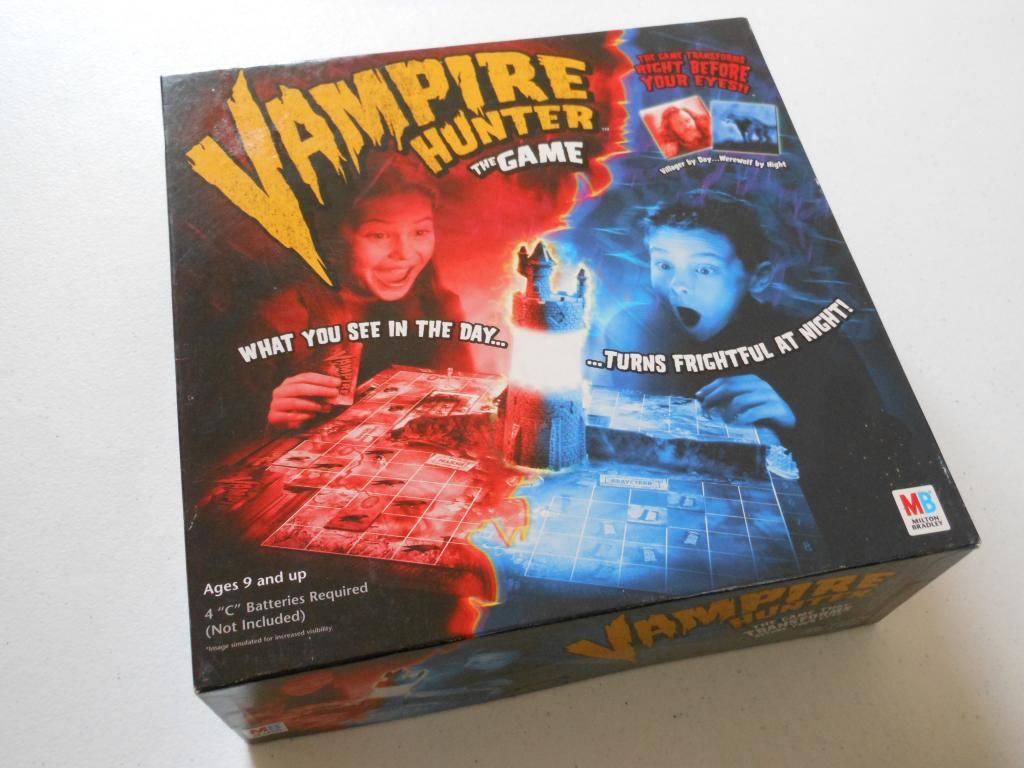
Vampire Hunter


Vampire Hunter
Published by Milton Bradley (Hasbro)
Designed by someone with really good eyesight
For 2-4 players, aged 9 to adult

If you know me at all (and let's be honest, you probably don't) you will know that I like games with a bit of theme. I enjoy abstract games, and I can enjoy cube-pushing games that have a pasted on theme for colour; but what I really want is a game that oozes theme (not in a gross kind of way). I want a game that makes me feel completely involved in what is happening, and totally invested in the success of my character.

Creating theme in a game is more than just suitable artwork and playing pieces (although, of course, that is a major element). It also takes game mechanisms that make sense. If what you are doing makes sense (without having to perform mental backflips to link everything together), then the battle is already won. And if you have a game with a novelty element or gimmick that reinforces the theme in some way... Well... Sign me up.

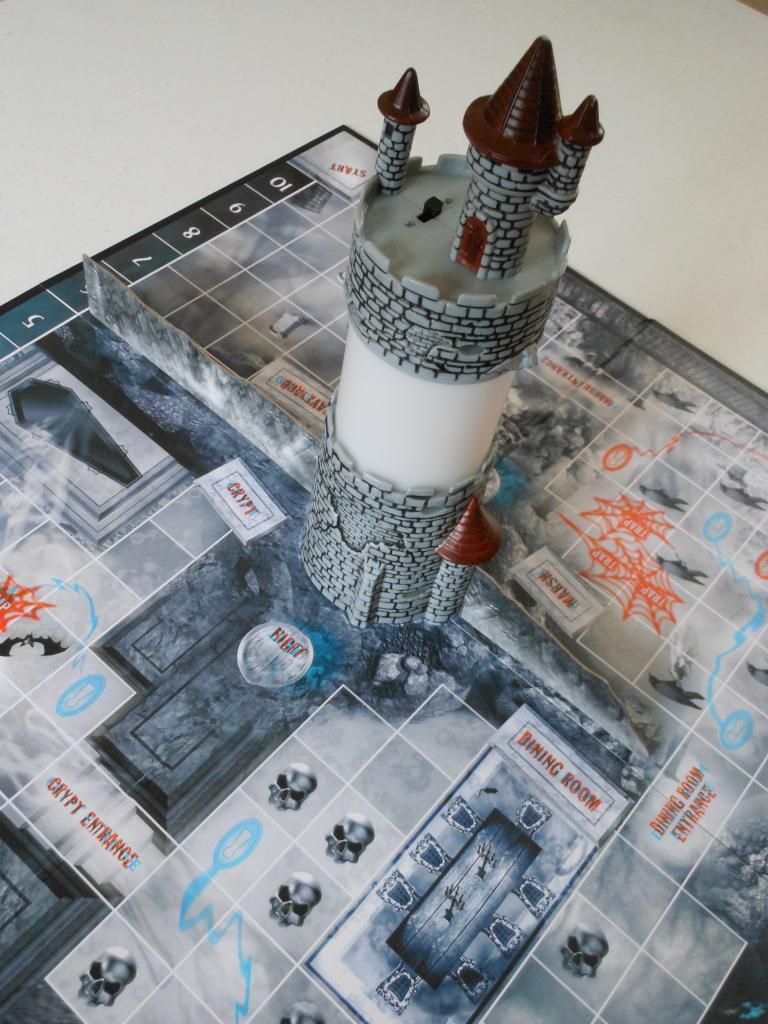
On first blush, Vampire Hunter is a perfect fit. It has suitably moody artwork, plastic miniatures for playing pieces, and a cool 3D tower in the middle of the board. But it is the novelty element of this game that really sells the theme.


Vampire Hunter Tower
The tower.


You see, in that cool 3D tower is a light. Switch it on, and the light glows blue. Press the top of the tower, and the light changes to red. Why? Simple really. Everything in this game is printed twice. Every card, every token, every dice, and even the board, has been printed once in red, and once in blue. When the light is blue, certain elements on the game components are washed out to reveal particular images; but when the light changes to red, different elements are washed out, and the images change.

This is more than just a gimmick: It is the central conceit of the game's mechanisms, and the beating heart of the game's theme. Without the tower, the theme is virtually non-existent; and without the theme, the game is virtually non-existent.

When the red light is on, it is the daytime. The movement dice show higher numbers, graveyard tokens show harmless tombstones, and in the village you will bump into amiable farmers. But when the light goes blue, night has fallen over the land: the movement dice shows lower numbers (because it is harder to travel at night), zombies claw out of the ground beneath the tombstones, and those farmers transform into slavering wolves.

It is incredibly clever, and a beautiful example of how to integrate theme with game mechanisms. The two are literally inseparable.

Unfortunately, beyond this wonderful piece of ingenuity the game is rather sub-standard. Your glasses would need to be as rose-tinted as the board during daylight turns in order to see the game as anything more than a minor distraction.

You may already have noticed I mentioned a movement dice. That should have been the first warning sign: The game is roll and move. The game is also rather boring.


Vampire Hunter
The rules.


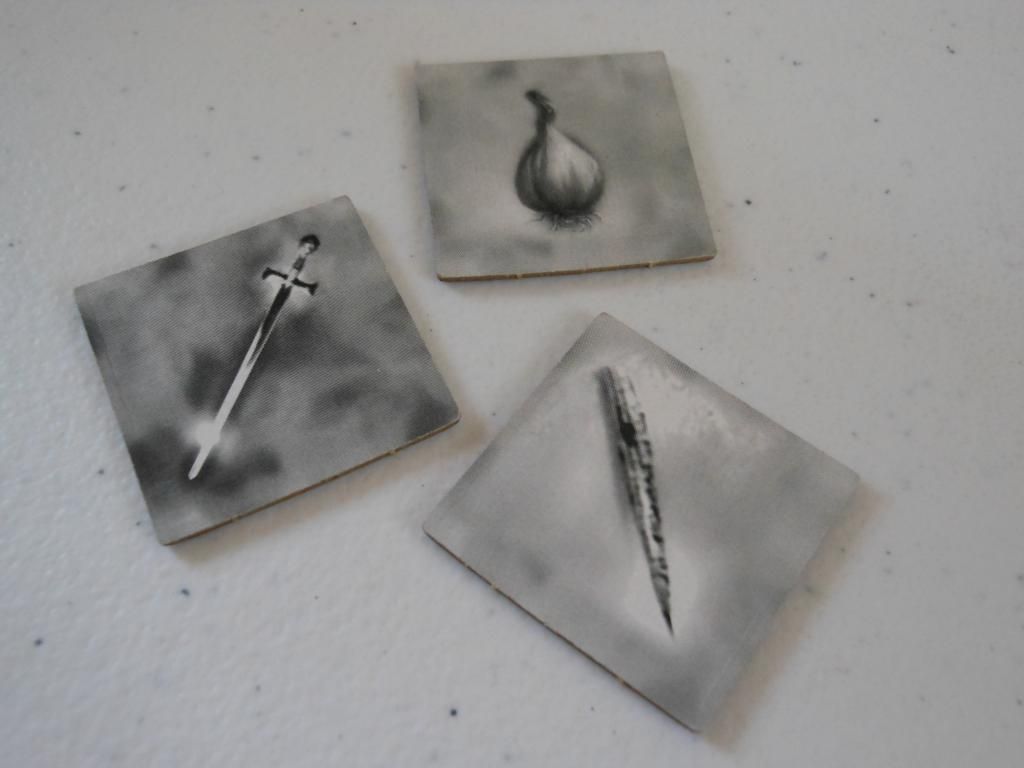
Two to four adventurers are racing to the vampire's tower in order to kill him before he can escape in his ship. To do this they need to move through a graveyard, a marsh, the castle dining hall, and finally the vampire's crypt. On the way, they will flip tokens, which may contain bad things, but may also contain good things. The heroes need to collect garlic, a stake, and a sword, and then defeat the vampire in combat three times (once with each weapon). If they do this before the vampire's ship arrives, they win. If the ship arrives, the vampire escapes, and everyone loses.

You may think this sounds like a co-operative game, but it isn't. Realistically, the vampire will never escape; and really it is just a race between all the hunters to see who can land the killing blow. And yes, it is possible for someone to defeat the vampire twice, and then for a third hunter to turn up and win the third battle, thus claiming total victory for doing only a third of the actual work.


Vampire Hunter Weapons
The weapons.


One of the biggest problems is that it is all incredibly pedestrian. Yes, the changing light mechanism is clever and inventive; but it has been used to disguise a boring game system that is older than Dracula himself. You roll to move, flip a token, take the token if it is good or fight a monster if it is bad, and then... Then you wait until your next turn. Oh, and if you lose a fight? You get pushed back to the entrance space. Like in Mario. Because that's really fun. And thematic.

This is just a bog-standard race game in which you charge around the map gathering up the tools you need to fight the vampire. And of course, whether or not you gather those items is entirely down to luck of the dice (rolling high enough to reach tokens), and luck of the draw (randomly flipping a useful token rather than a harmful one). It may be a children's game, but that's no excuse for this kind of lazy design.

But the biggest problem is also the biggest draw: that tower.

The tower just isn't bright enough. You are supposed to play the game in a darkened room, using only the light of the tower to see what you are doing. But the light is so dim, it is incredibly difficult to see what you are doing. And after 15 minutes, you will have a headache.


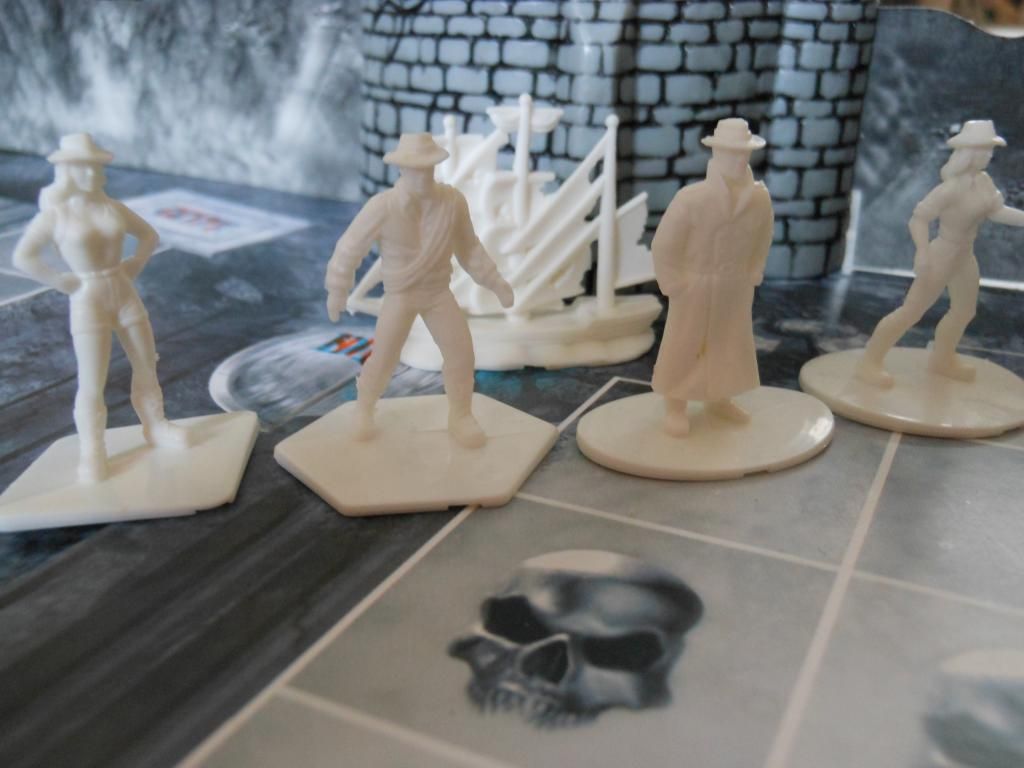
Vampire Hunter playing pieces
Is it just me, or do these guys not look like vampire hunters?


I have had this game for a few years now, and I have made a habit of rolling it out at Halloween. But this is a bad habit, and one I don't intend to continue.

Besides, I have Fury of Dracula in my game collection, which happens to be the most thematic vampire game ever made. And it manages that without a silly light-up tower.

Thursday, 12 July 2012

Another Birthday...

It's been a while since I posted any news about how my collection was expanding. There were two reasons for this:

1. I haven't had a lot of time.
2. The recent additions to my collection were gifts for my thirty-th..... twenty-first birthday, and I didn't want to admit I was getting older.

But you can only put off the inevitable for so long, and at least I can console myself with the fact that I may have more grey hairs than I used to, but I also have more board games.

Although my main interest is in out of production games, I also have an interest in current titles. All of the gifts I received this year were modern titles, and that suits me fine, as it is about a year since I last added anything modern to my collection.

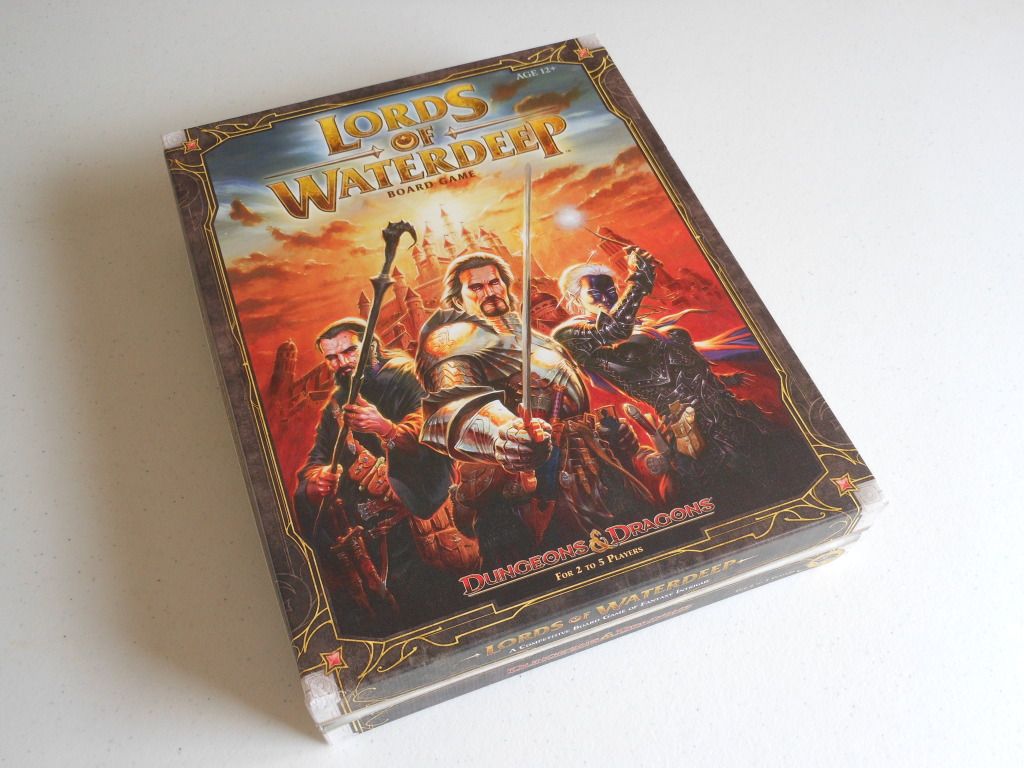
First up, a gift from my brothers: Lords of Waterdeep, a worker-placement Euro game all dolled up in a Dungeons and Dragons theme.

Dungeons and Dragons: Lords of Waterdeep
Lords of Waterdeep - has almost nothing to do with dungeons or dragons.

I don't have many Euro games in my collection. I enjoy them, but I tend to find I prefer games with a good theme. So, of course, plastering Dungeons and Dragons all over a worker-placement game is definitely going to get my interest.

I have now played this game twice, and I would say it is one of the most fun games in my collection. It is quick to set up, plays smoothly, and it took no more than five minutes to explain the rules to my group and get our first game underway. On your turn, you are placing a single worker ("agent") on the board in order to get a benefit that may allow you to solve a mission, so turns move quickly, and there is little in the way of analysis paralysis. The game also adds a "screw you" mechanic with intrigue cards, that can be played to mess with your opponents' plans, and this really helps the game to shine when stacked up against "purer" Euro games, that can sometimes feel a little bit like multi-player solitaire.

However, it should be noted that the Dungeons and Dragons theme, while well-implemented, is relatively thinly applied. For example, you solve quests by sending off fighters, mages, clerics, and thieves. These different types of adventurers are represented by wooden cubes in different colours. Once you are deeply engrossed in the game, you tend to stop thinking along the lines of "how many fighters will I need?", and instead you start thinking "how many orange cubes will I need?"

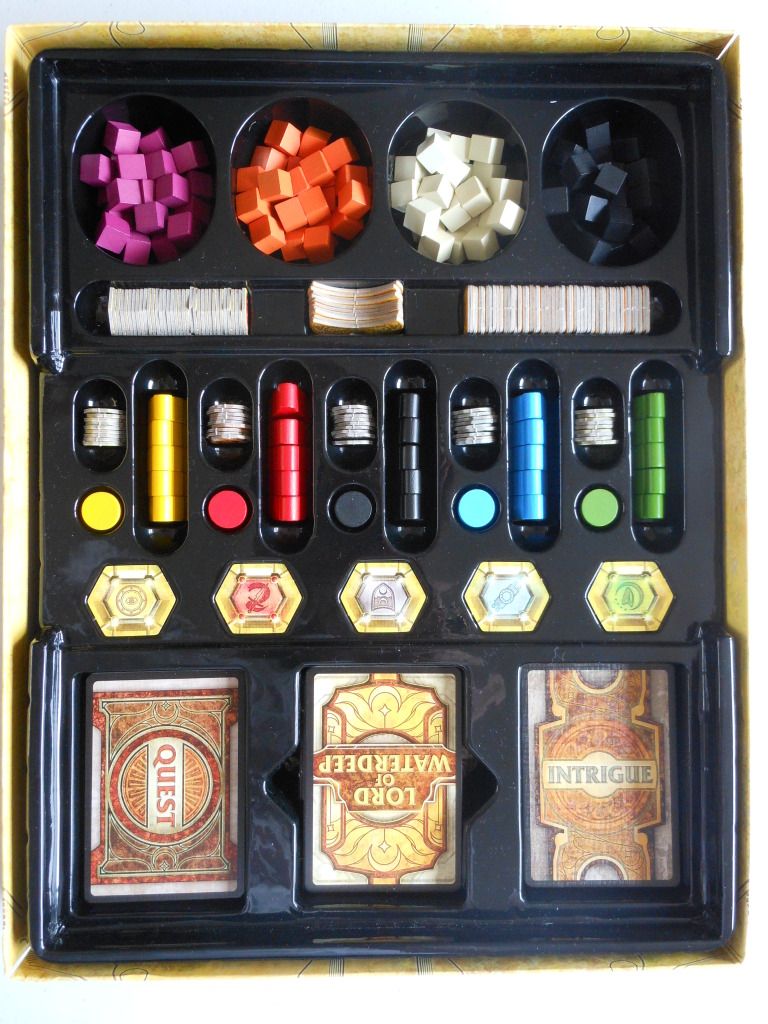
A special mention must also be made of the games production values: They are through the roof. All the components are beautiful, and the game looks amazing when set up. The box insert is also a marvel, with specially designed wells for all the different pieces. Even the recesses where the card decks go are designed so that if you press one end of the cards, the entire deck flips up, allowing you to remove all the cards with ease.

Dungeons and Dragons: Lords of Waterdeep - box insert
A picture doesn't do the box insert justice.

The only thing I am not keen on is the design of the box. It has a split running around the edge that reveals a nicely illustrated gold bar. It looks nice enough, but it means the lid of the box does not fit all the way over the bottom half of the box, and as a result the box is less secure and is more prone to warping. It's a tricky thing to explain, so here's a picshure:


Dungeons and Dragons: Lords of Waterdeep - the box
The lid of the box sits on top of the bottom half, rather than covering it completely.

The second game I was gifted came from my beautiful wife: Thunderstone Advance: Towers of Ruin. The name is slightly misleading, as it makes it sound like a more complicated version of Thunderstone, but really it is just a second edition.


Thunderstone Advance: Towers of Ruin


This is a deck-building game. I've never owned a deck-building game before (never even tried one), and I thought it might be interesting to give one a go. In this sort of game, you start with a basic deck of cards (everyone has the same), and over the course of the game you "buy" more cards to add to your hand, and occasionally "destroy" cards you no longer want, thereby honing your deck until it is totally efficient and full of useful things. On your turn, you draw a hand of cards, do what you can with those cards, and then discard the lot. If you "buy" a card, it goes straight to your discard pile, so you don't get to use it until the next time you reshuffle your deck. It's actually quite an unusual concept the first time you play, especially for people who are used to playing card games where holding on to cards for later turns is part of the strategy. However, after two games, I pretty much know what I'm doing, and I'm really enjoying it.

Of course, the reason I picked Thunderstone Advance rather than a deck-building game such as Dominion is because of the theme. In Thunderstone you are building a party of heroes to send into a dungeon to fight monsters. I never seem to have enough games with that theme.

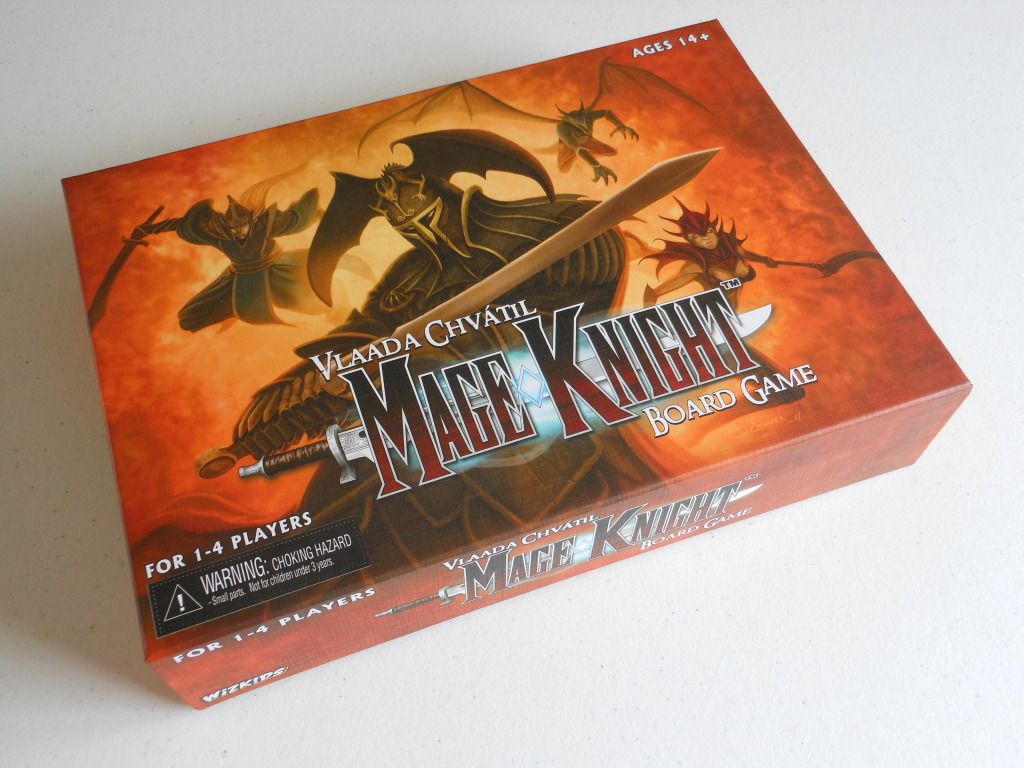
The second game from my wife is the one I was most excited about: Mage Knight.


Mage Knight Board Game
Mage Knight - Complicated and beautiful (like me).


This could well be the best game ever made, and I say that even though I have only played the game solo (something I rarely do, because I believe playing board games is a social activity that should be done with other people). It is also probably the most complicated game I own. It combines elements of deck-building (you expand your basic deck of cards through the course of a game by earning new ones), and world exploration (in the style of Runebound or Talisman). How far you move, how strongly you can attack, and almost everything else in the game is based on the cards you can play in your turn, and combat is entirely deterministic. With very little randomness, you can plan out each of your moves, and the game feels like an intricate puzzle, with your aim being not only to solve it, but to solve it in the most efficient way possible.

The fact the game feels so much like a puzzle is probably why it plays so well solo. I actually get the feeling that solo is really the best way to play it, as there could be a tendency for turns to go long if a player has analysis paralysis, meaning downtime for everyone else at the table.

The game does have lots of fiddly rules, and there is a 20-page introductory walkthrough booklet that you are supposed to read before you even get to the (20-page) rules book; but if you can handle the steep learning curve, this is a highly-recommended title.

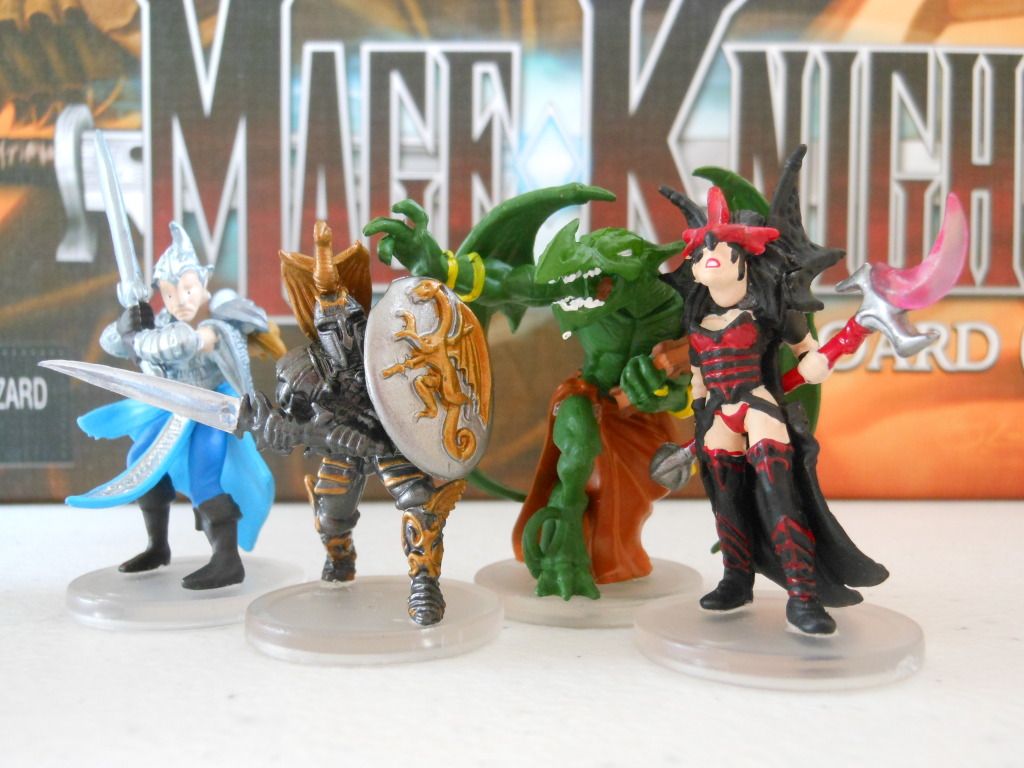
The component quality isn't as great as in some other games (the cards are so thin they really do need to be sleeved, and I normally hate sleeving cards), but everything looks great when it is set up. I particularly like the pre-painted mage knight characters, who even have see-through bases so you can see details of any tokens or map spaces they are standing on.


Mage Knight Board Game characters
The mage knights. Don't they look like a fun bunch to hang out with?

I know I am going to get many hours of entertainment out of Mage Knight, and I am excited to hear there is already an expansion in the works.

Rounding out the collection of games I received for my birthday was a copy of the co-operative game Forbidden Island and two of the print-on-demand expansions for Fantasy Flight Games' Space Hulk: Death Angel co-op card game, all given to me by a very good friend. It is interesting to note that everything he gave me was for co-op play: Guess he must be getting fed up with the number of times I trounce him.

So that's it: Another birthday over. Time to pop out the dentures and take a nap, I think...